Artwork
二月堂焼経|Nigatsudō Burned Sutra
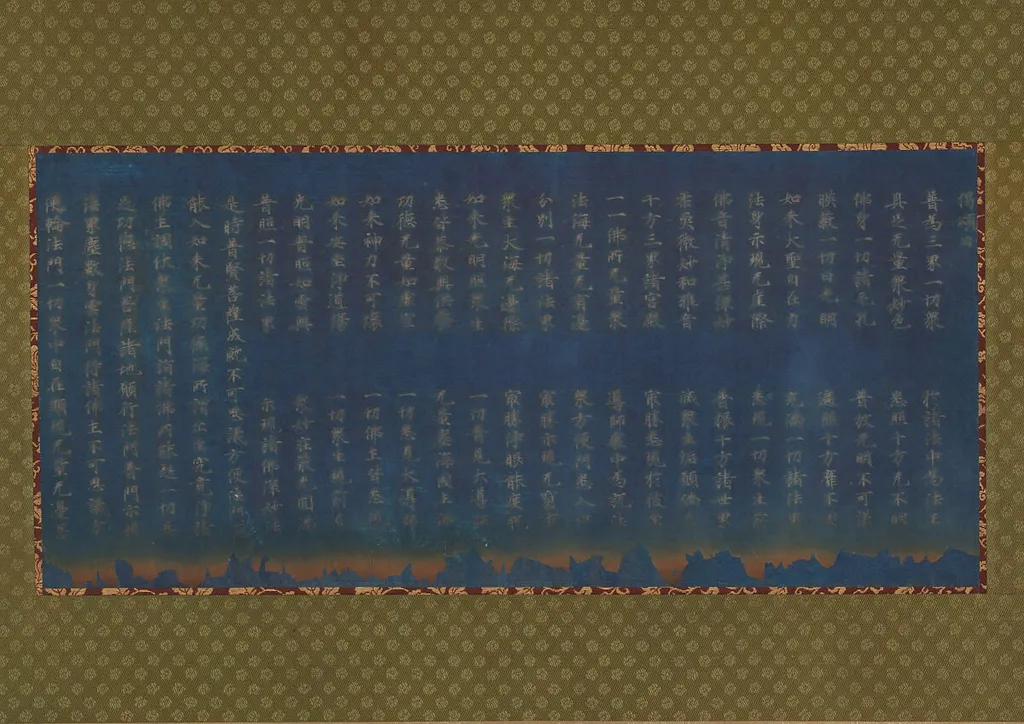
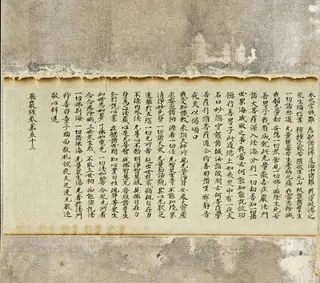
二月堂焼経|Nigatsudō Burned Sutra is an ink painting. It dates from 744 and is held in the collection of the Metropolitan Museum of Art. The work titled “Nigatsudō Burned Sutra” is a hanging scroll composed of indigo‑dyed paper on which silver ink has been applied.
About this work
Technique & Style
The support consists entirely of the dyed paper, which serves as the background for the silver script or imagery.
Created in 744, this religious hanging scroll utilizes silver ink applied onto indigo-dyed paper. The work measures 24.8 cm in height and 53.7 cm in width. As a product of eighth-century Japan, the piece exemplifies the specific material combination of metallic pigment against a dark blue ground, a technique often employed for sacred texts and devotional images of the period.
The support consists entirely of the dyed paper, which serves as the background for the silver script or imagery.
History & Provenance
The work titled 二月堂焼経|Nigatsudō Burned Sutra is an anonymous Japanese religious painting created in 744, executed as a hanging scroll using silver ink on indigo-dyed paper. It is part of the collection at the Metropolitan Museum of Art and was made in Japan.
The hanging scroll known as 二月堂焼経|Nigatsudō Burned Sutra is part of the Metropolitan Museum of Art's collection, cataloged under inventory number 1999.176.1. It was created in 744 and measures 53.7 cm in width and 24.8 cm in height. The work has been featured in exhibitions at the Metropolitan Museum of Art, including the 1999 exhibition "Japanese Art from the Collection of Mr. and Mrs. John D. Rockefeller Jr." and the 2005 exhibition "Sacred Visions: Buddhist and Hindu Art from South and Southeast Asia and the Himalayas."
Overview
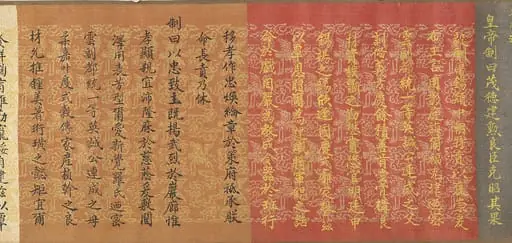
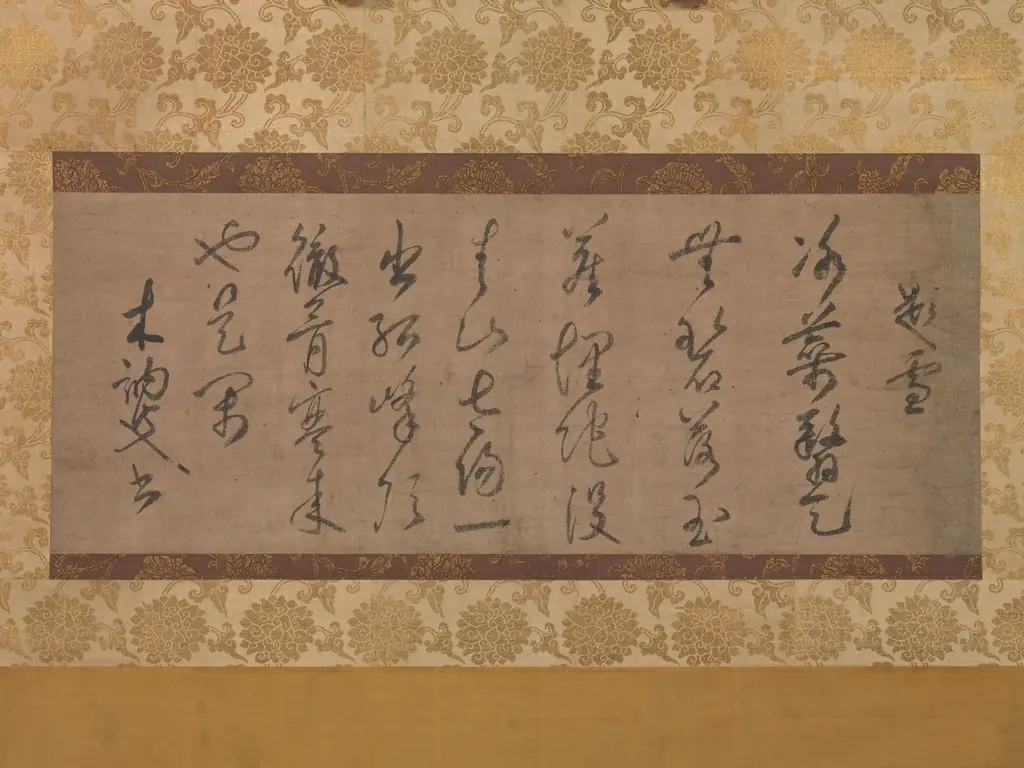
The work titled “Nigatsudō Burned Sutra” is a hanging scroll composed of indigo‑dyed paper on which silver ink has been applied. The scroll is elongated and narrow, its edges framed by a gold pattern and a thin red border. The composition consists of dense, parallel black‑appearing lines that do not form legible characters, accompanied by a subtle orange waveline near the lower edge.
Subject & Meaning
The scroll does not depict a narrative scene; instead it presents an abstract arrangement of lines that may evoke the visual density of sutra text without conveying readable script. The inclusion of a wavy orange band hints at natural motifs such as water or mountains, offering a minimal reference to landscape within an otherwise non‑representational field.
Context
Created as a painted sutra, the piece reflects a tradition of Buddhist devotional objects where text and ornamentation merge. The use of silver ink on indigo paper aligns with Japanese ritual scrolls, and the decorative gold border situates the work within the aesthetic conventions of temple art, where visual austerity often accompanies spiritual contemplation.
Artist & collection