Artwork
伝九条兼実書 『法華経』 の内|Segment of the Lotus Sutra (Hoke-kyō)
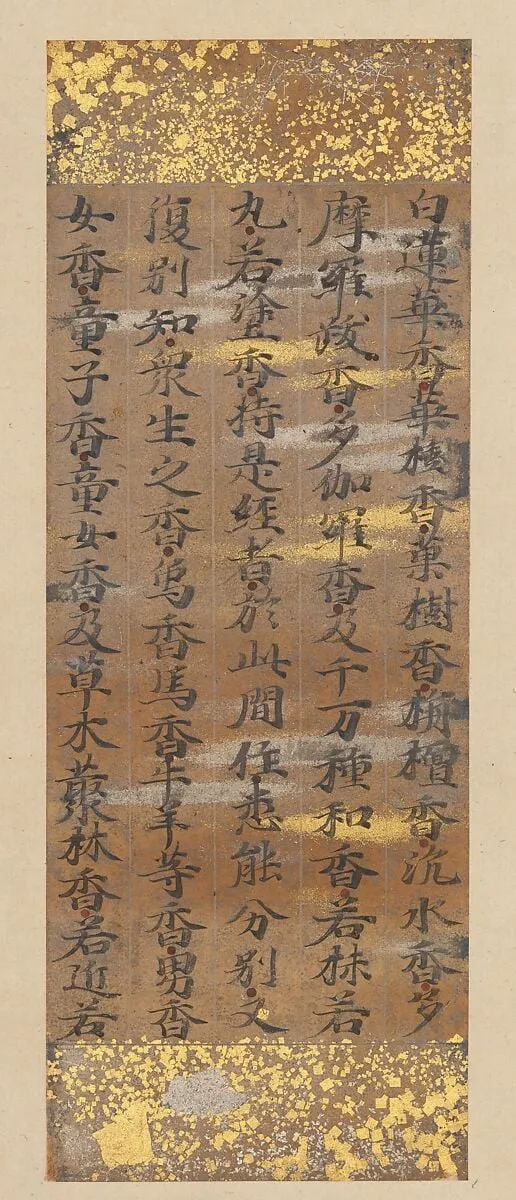
伝九条兼実書 『法華経』 の内|Segment of the Lotus Sutra (Hoke-kyō) is an ink painting by the Joseon dynasty painting artist Kujō Kanezane. It dates from 1176 and is held in the collection of the Metropolitan Museum of Art. This work is a fragment of a handscroll originally part of a larger illustrated copy of the Lotus Sutra.
About this work
Technique & Style
This religious work, attributed to Kujō Kanezane and dated to 1176, is executed in ink on colored paper. The support features elaborate surface decoration utilizing cut gold (kirikane), sprinkled gold (sunago), and silver leaf. Originally created as a section of a handscroll, the artwork has been remounted as a hanging scroll. The surviving fragment measures 25.4 cm in height and 9.1 cm in width.
History & Provenance
The segment of the Lotus Sutra attributed to Kujō Kanezane is held in the collection of the Metropolitan Museum of Art in New York.
The segment of the Lotus Sutra was created by Kujō Kanezane in 1176 in Japan. It is executed in ink on colored paper with decorative elements of cut gold (kirikane), sprinkled gold (sunago), and silver leaf. The work was later acquired by the Metropolitan Museum of Art, where it remains in the collection today.
The segment of the Lotus Sutra attributed to Kujō Kanezane is held in the collection of the Metropolitan Museum of Art in New York. The work, created in 1176, is cataloged as a painting within the museum's holdings. Its physical dimensions are recorded as 25.4 cm in height and 9.1 cm in width. The provided sources do not contain specific accession numbers or a detailed exhibition history for this object.
Overview
This work is a fragment of a handscroll originally part of a larger illustrated copy of the Lotus Sutra. Executed in 1176, the piece measures a narrow vertical format and presents black ink calligraphy on a brown‑toned paper background, framed by decorative borders of gold and silver leaf.
Subject & Meaning
The scroll contains a passage from the Lotus Sutra, a central Mahayana Buddhist scripture. The text is rendered in traditional Japanese vertical columns, emphasizing the sutra’s doctrinal importance and its role in devotional practice during the late Heian period.
Context
During the late Heian era, aristocratic patrons commissioned sutra copies as acts of merit. Kujō Kanezane, a prominent political figure, participated in this tradition, integrating refined court aesthetics with religious text, a practice that linked elite status to spiritual devotion.
Legacy
The piece exemplifies the convergence of calligraphic skill and decorative metalwork that characterises high‑court Buddhist art of its time. It remains a reference point for scholars studying the material culture of Heian‑period sutra production and the visual language of aristocratic piety.
Artist & collection
Artist
Kanezane made delicate handscroll pages for a Buddhist sutra called the Lotus Sutra in the late 1100s.

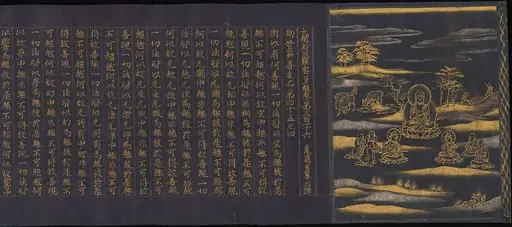
- 大般若経(中尊寺経)|Great Wisdom Sutra (Daihannya-kyō), from the Chūsonji Temple Sutra Collection (Chūsonji-kyō)
 Poem
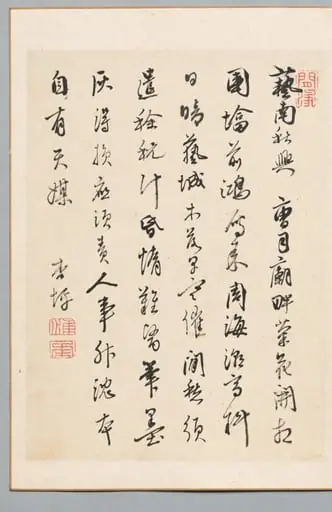
Poem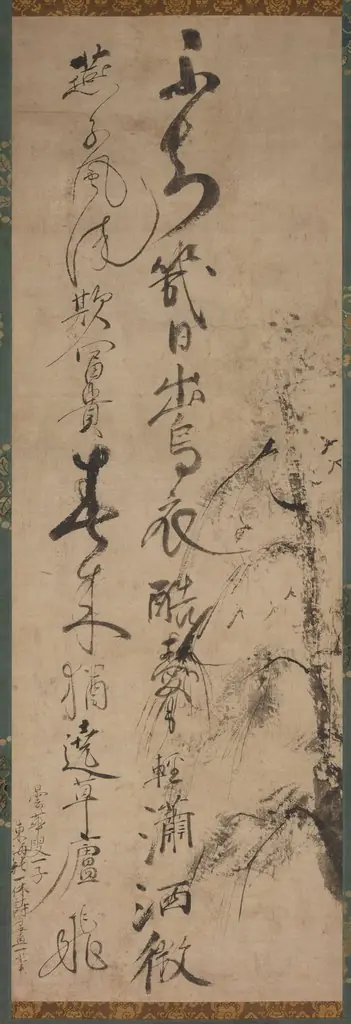 Calligraphy with Willow and Swallows
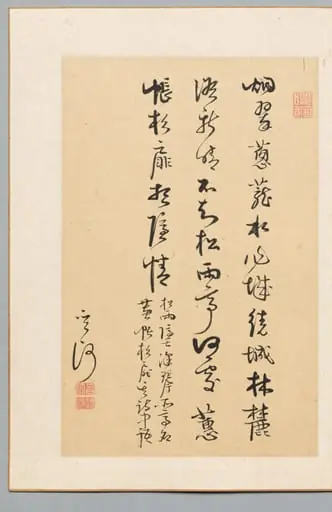 Calligraphy
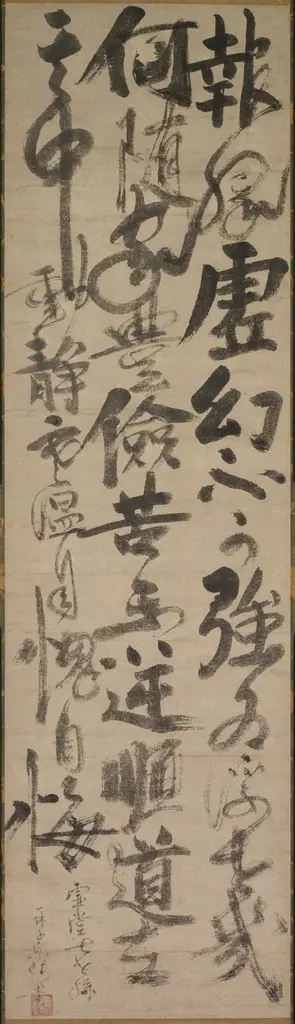 Reflections of Priest Foyen
 Calligraphy with Willow and Swallows
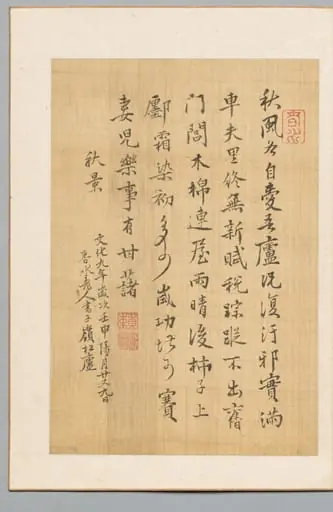 Poem
Poem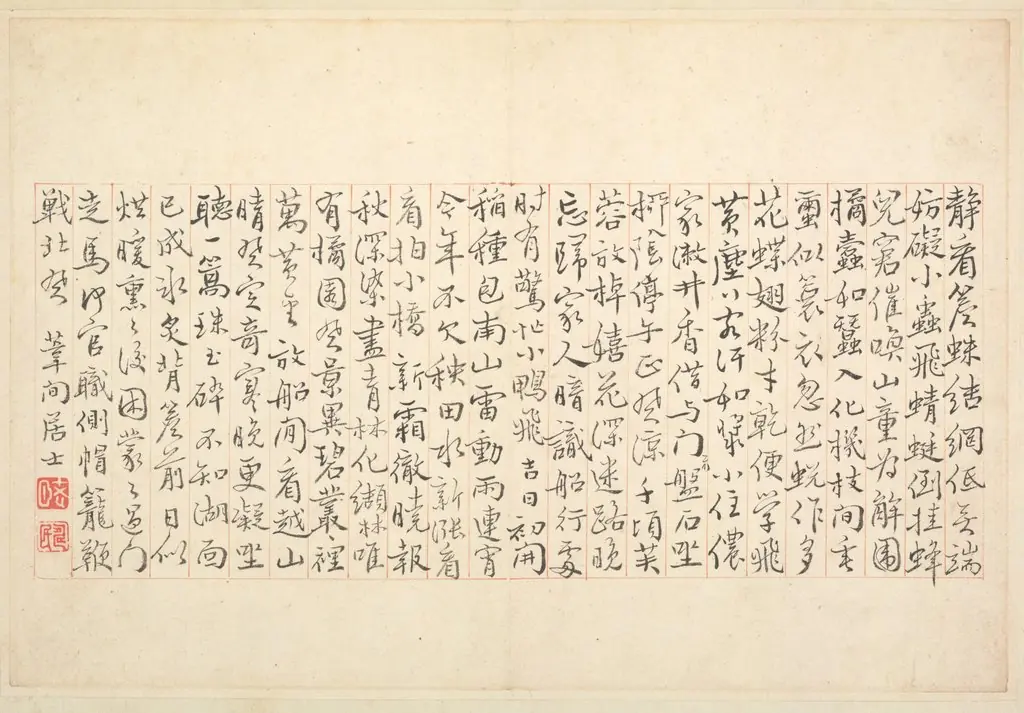 Album of Calligraphy and Paintings
 Traveling to Ugeumam, Buan
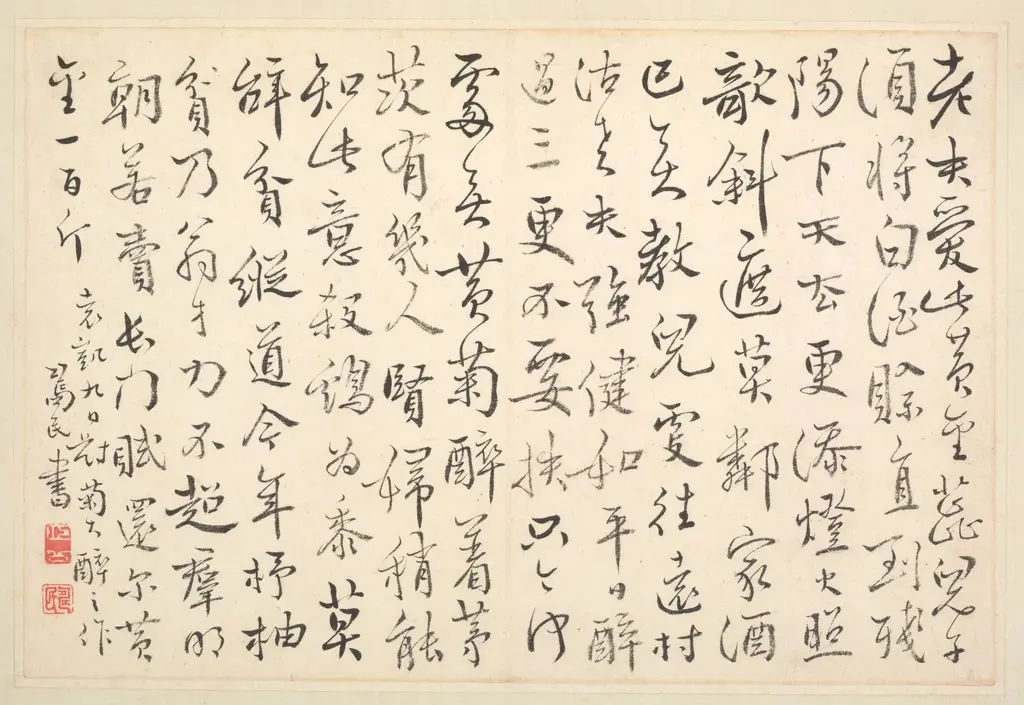 Album of Calligraphy and Paintings
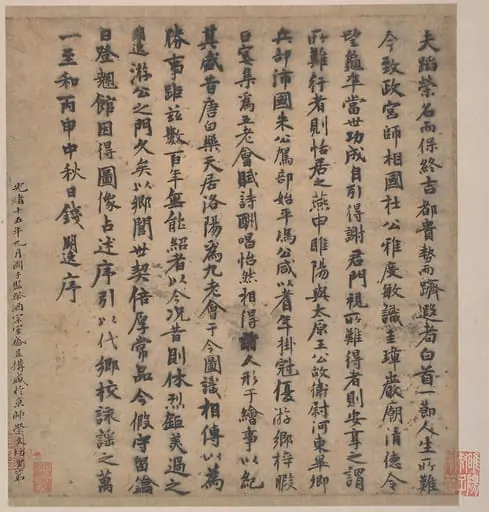 北宋–清 睢陽五老圖引首題跋 冊|Frontispiece and Colophons to the Album "Five Old Men of Suiyang"
 Album of Calligraphy and Paintings