Artwork
五代/北宋 佚名 乞巧圖 軸|Palace banquet
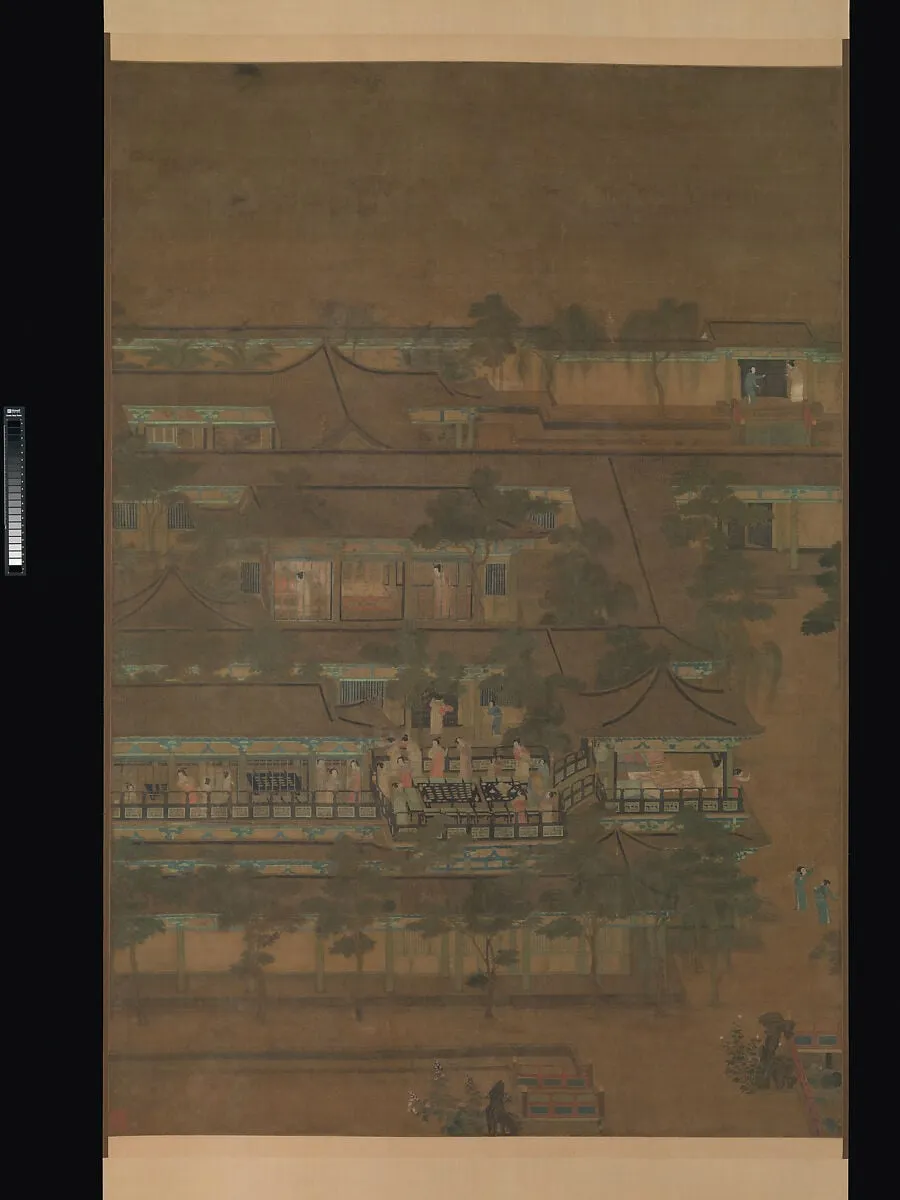
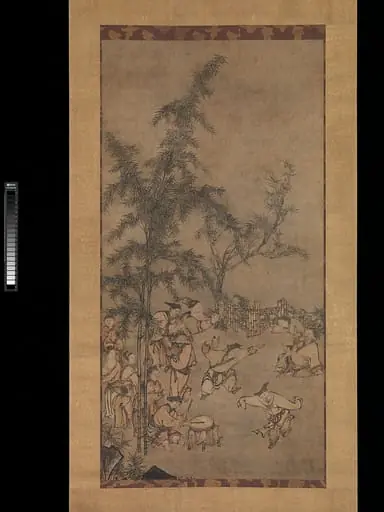
五代/北宋 佚名 乞巧圖 軸|Palace banquet is an ink painting. It dates from 984 and is held in the collection of the Metropolitan Museum of Art. This hanging scroll, titled Palace Banquet (乞巧圖), dates from the Five Dynasties or Northern Song period.
About this work
Subject & Meaning
The work thus serves as a visual record of contemporary aristocratic customs and the symbolic significance of feasting in the period.
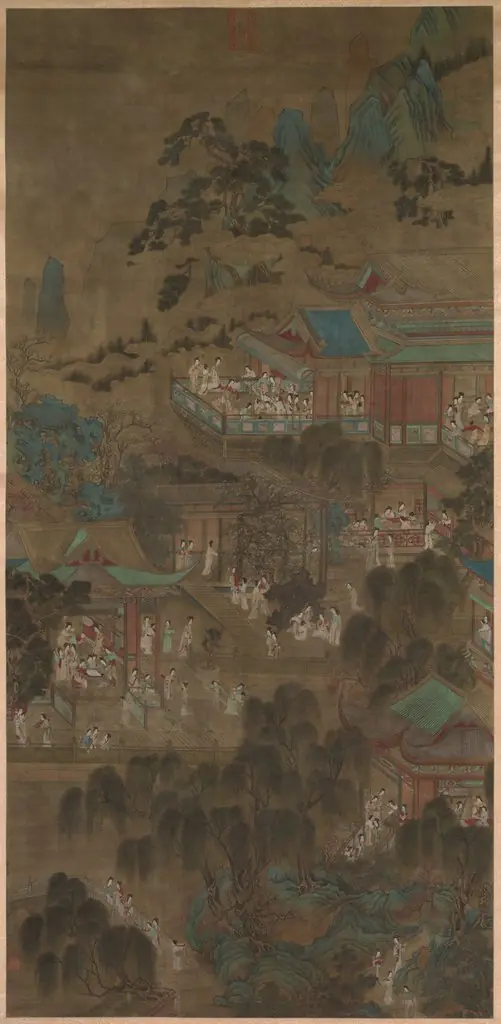
The painting portrays a palace banquet, showing a woman and guests engaged in a feast within an imperial setting; the composition emphasizes courtly cuisine, decorative architecture, and the social act of communal eating. As a genre scene, it reflects elite leisure activities and the ceremonial importance of banquets in the Five Dynasties/Northern Song cultural milieu, using iconography of palace interiors, food items, and a female participant to convey the aesthetics of celebration and status. The work thus serves as a visual record of contemporary aristocratic customs and the symbolic significance of feasting in the period.
History & Provenance
The hanging scroll titled Qiqiao Tu (Palace Banquet) is attributed to an anonymous artist active during the Five Dynasties or Northern Song period in China. Created using ink and color on silk, the work depicts a palace banquet scene featuring women and food. While the specific commission details and exact year of creation remain undocumented due to the artist's anonymity, the piece is currently held in the collection of the Metropolitan Museum of Art.
The provenance chain prior to its acquisition by the museum is not detailed in the available records, which primarily identify the work's origin as Chinese and its current institutional location. The attribution to the Five Dynasties or Northern Song era reflects the stylistic period rather than a confirmed date of execution.
The hanging scroll known as Palace Banquet (or Qiqiao Tu) is held in the collection of the Metropolitan Museum of Art in New York. While specific accession numbers are not detailed in the available records, the institution is confirmed as the current custodian of this anonymous work dating to the Five Dynasties or Northern Song period. The painting, executed in ink and color on silk, depicts a genre scene featuring women, food, and a palace setting.
No specific exhibition history or loan records for this particular scroll are provided in the current documentation, though its classification within the museum's painting department establishes its public accessibility and scholarly recognition as a significant example of Chinese genre painting from this era.
Overview
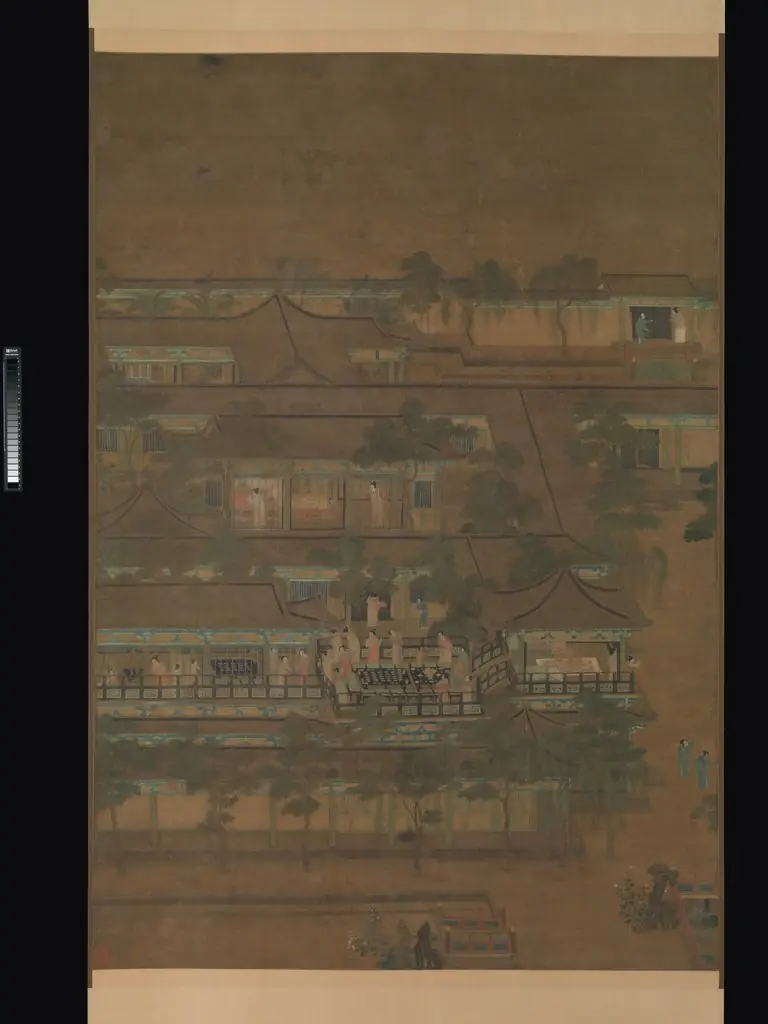
This hanging scroll, titled Palace Banquet (乞巧圖), dates from the Five Dynasties or Northern Song period. Executed with ink and color on silk, the painting depicts an elaborate, multi-tiered palace setting bustling with activity. It captures a scene of gathering and celebration, rendered with a detailed architectural perspective and a vibrant yet harmonious palette. The artist remains anonymous, a common occurrence for works of this era.
Technique & Style
The composition employs a layered perspective, stacking architectural elements and figures to convey depth and scale within the palace grounds. Buildings feature distinct details, from the small windows and dark roofs of upper floors to the bright yellow walls and green railings of lower levels. The artist utilized a soft, earthy color scheme, where subtle blues and greens provide accents against a predominantly brown background, enhancing the intricate details of the silk medium.
Context
Created during the transitional Five Dynasties or early Northern Song period, this painting offers insight into court life and cultural practices of the time. The depiction of a palace banquet, particularly one linked to a specific festival like Qiqiao, highlights the importance of communal celebrations and the visual documentation of such events within imperial settings. It exemplifies the detailed narrative painting tradition prevalent in early imperial China.
Artist & collection

 清 王鑑 倣巨然《溪山高士圖》 軸|Lofty Scholar among Streams and Mountains, in the manner of Juran
 明 周文靖 漁隱圖 軸|Rustic retreat among fishermen
 북새선은도
북새선은도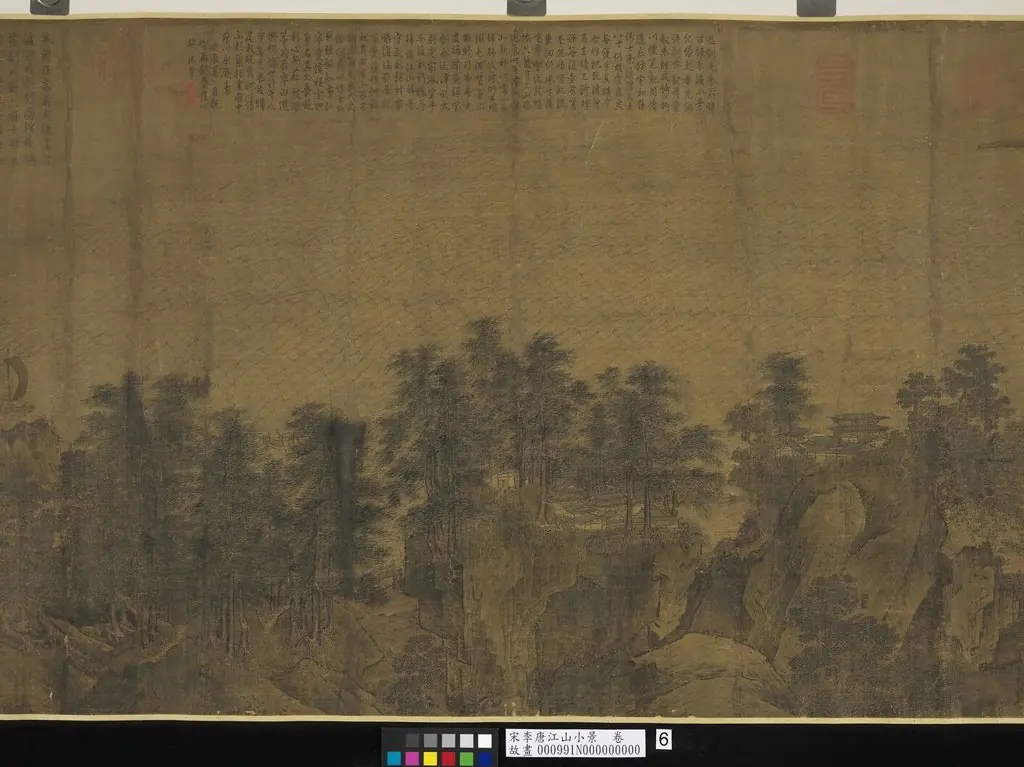 宋李唐江山小景卷
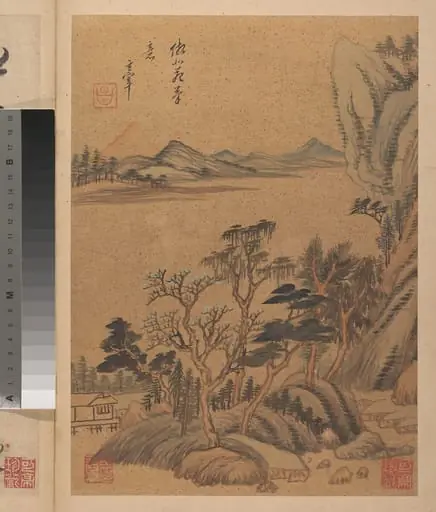 明 董其昌 山水圖詩 冊|Landscapes and Poems
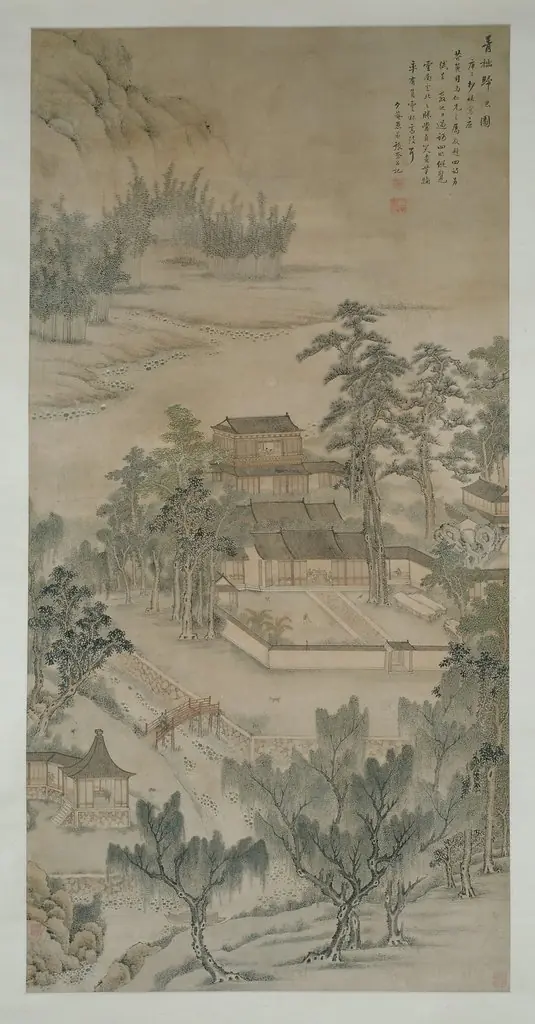 Mansion by the River
 明 佚名 禮佛圖 軸|Shakyamuni with luohan, heavenly king, and boys
 明 傳仇英 文玉圖 軸圖 軸|Lady in a Bamboo Grove
 明 佚名 琴鶴圖 軸|Playing the zither for a crane
 Court Ladies in the Imperial Palace
 雪村周継筆 竹林七聖図|Seven Sages of the Bamboo Grove
- Palace banquet