Artwork
明 傳仇英 文玉圖 軸圖 軸|Lady in a Bamboo Grove
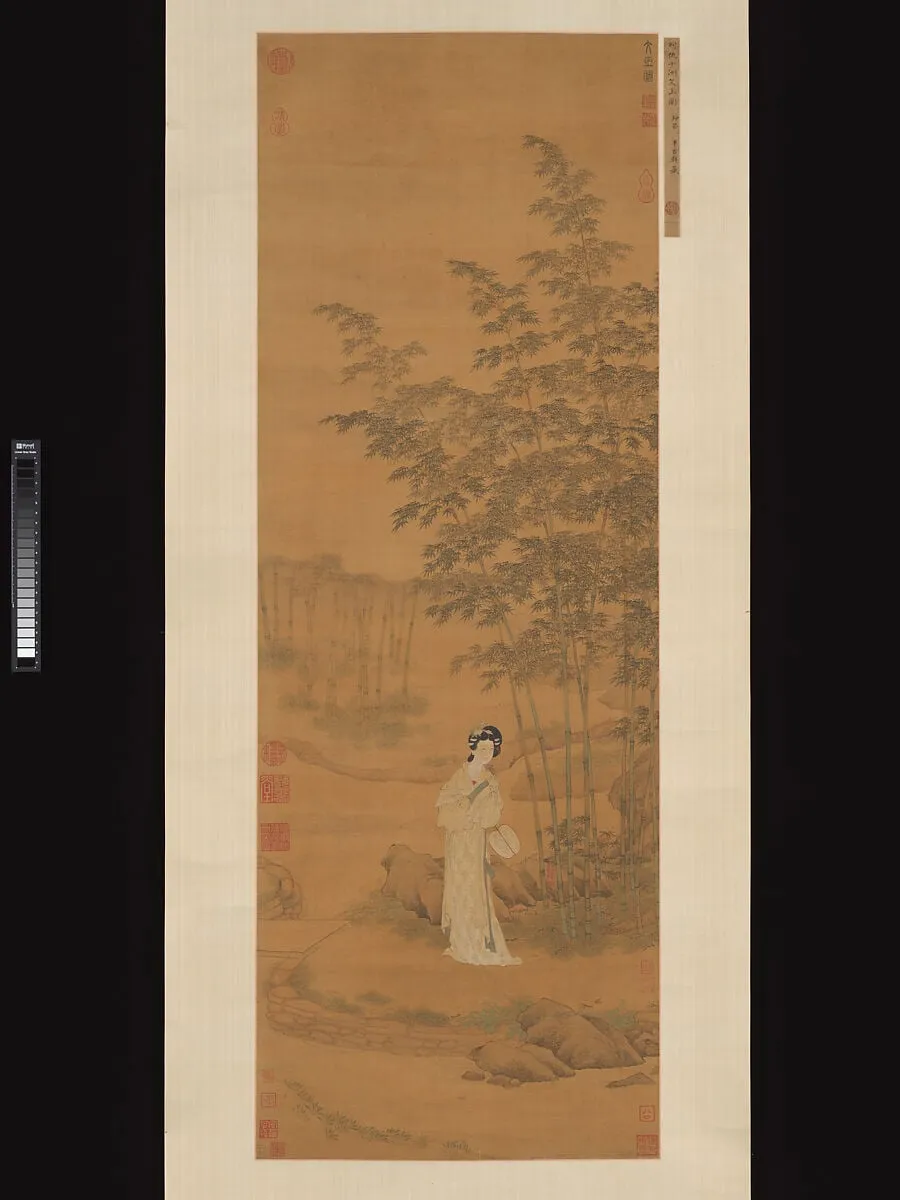
明 傳仇英 文玉圖 軸圖 軸|Lady in a Bamboo Grove is an ink painting by the Ming dynasty painting artist Qiu Ying. It dates from 1523 and is held in the collection of the Metropolitan Museum of Art.
About this work
Subject & Meaning
Lady in a Bamboo Grove depicts a solitary woman set within a grove of bamboo, the two elements named in the title functioning as the painting's principal subjects. The bamboo grove provides the natural setting, while the female figure, rendered in ink and color on silk, occupies this sylvan environment as a literati theme of refined seclusion. In Chinese painting tradition, bamboo has long served as a symbol of moral integrity, resilience, and the virtuous character of the scholar, qualities transferred through visual association onto the cultivated lady who dwells among them.
The pairing of an elegant woman with bamboo thus communicates ideals of feminine grace, chastity, and inner strength, presenting the figure as an embodiment of Confucian virtues expressed through nature. The work, dated to 1523 and attributed to Qiu Ying, translates these layered symbolic associations into a hanging-scroll composition in which landscape and figure together convey a meditation on virtuous retreat.
Technique & Style
Qiu Ying's handling combines meticulous brushwork in fine lines with layered mineral pigments to model the woman's costume and the bamboo grove's foliage.
The work is executed as a hanging scroll using ink and color on silk, a standard support for Ming-dynasty figure painting. Qiu Ying's handling combines meticulous brushwork in fine lines with layered mineral pigments to model the woman's costume and the bamboo grove's foliage. Formal qualities emphasize delicate contouring and subtle tonal modulation, reflecting the refined courtly taste of the 1520s.
The composition balances the figure's upright posture within a structured recession of overlapping bamboo stalks, producing a serene yet spatially articulated scene.
History & Provenance
Attributed to the Ming dynasty painter Qiu Ying, this hanging scroll, Lady in a Bamboo Grove, was created in 1523 in China. Executed in ink and color on silk, it depicts a woman amid a bamboo grove and is held in the Metropolitan Museum of Art's Asian art collection. While the specific commission details and full chain of ownership prior to the museum's acquisition are not detailed in the available records, the work's inception is dated to the early sixteenth century, aligning with Qiu Ying's active period.
No specific accession or inventory number is published in the available documentation, and the work's exhibition history is not recorded in the cited sources.
Context
The painting, dated 1523, is attributed to Qiu Ying, a leading Ming dynasty artist celebrated above all for his figure painting and meticulous blue-and-green landscapes. Executed as a hanging scroll in ink and color on silk, it portrays a woman standing in a bamboo grove. The work is part of the Metropolitan Museum of Art's collection, where it serves as a reference point for the study of Ming figural painting and the period's synthesis of figure and botanical motifs. Its provenance in a major Western museum has facilitated scholarly examination of Ming artistic technique.
Legacy
The hanging scroll attributed to Qiu Ying, dated 1523, is treated as a representative example of Ming figure painting. Its presence in the Metropolitan Museum of Art has made it a touchstone for scholars studying Qiu Ying's work and the broader figure-in-nature tradition in Chinese painting, its depiction of a woman amid bamboo underscoring both technical refinement and thematic depth.
Overview
This ink and color painting on silk, titled Lady in a Bamboo Grove, is attributed to the Ming dynasty artist Qiu Ying and dates to 1523. The hanging scroll presents a solitary female figure amidst a dense stand of bamboo. It exemplifies the era's artistic focus on integrating human presence within natural settings, inviting viewers into a tranquil, contemplative scene.
Artist & collection




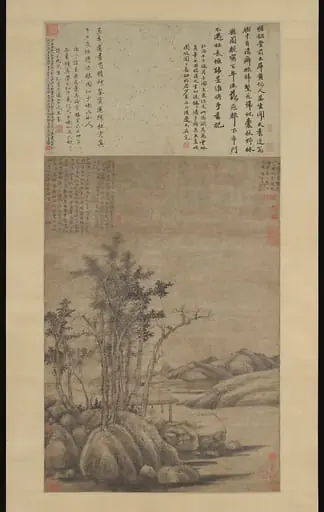
 明 沈周 秋林閒釣圖 軸|Silent fisherman in an autumn wood
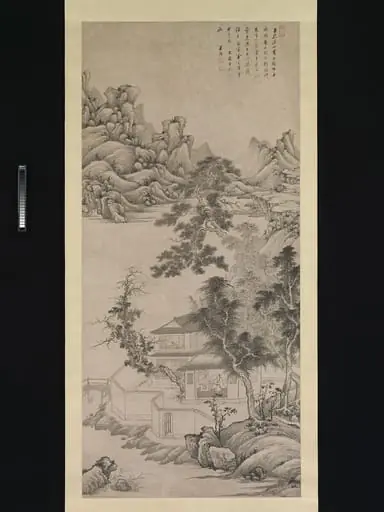 清 王鑑 倣巨然《溪山高士圖》 軸|Lofty Scholar among Streams and Mountains, in the manner of Juran
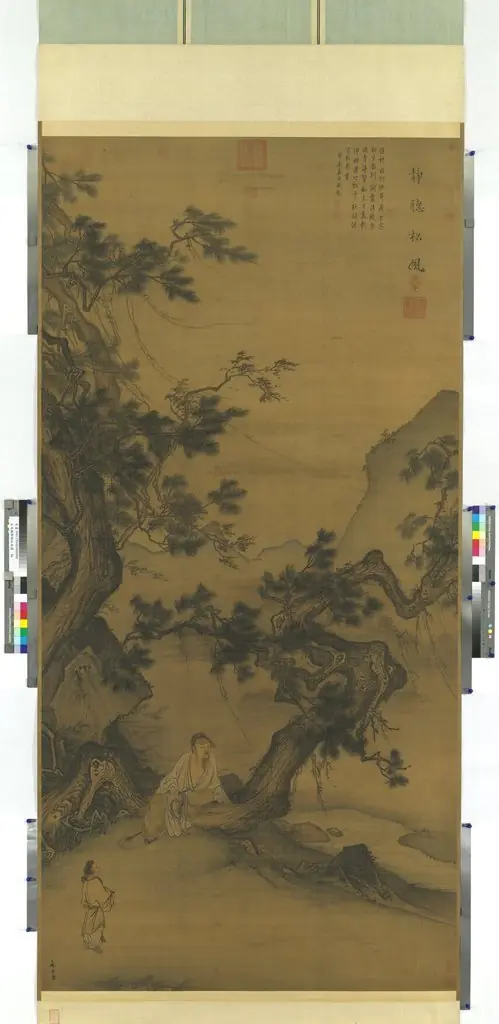 宋馬麟靜聽松風圖 軸
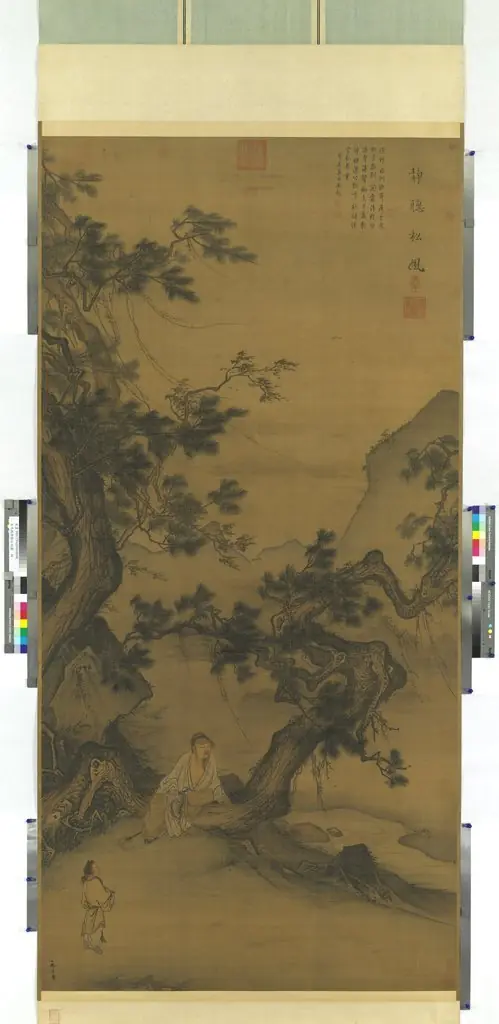 Listening Quietly to Soughing Pines
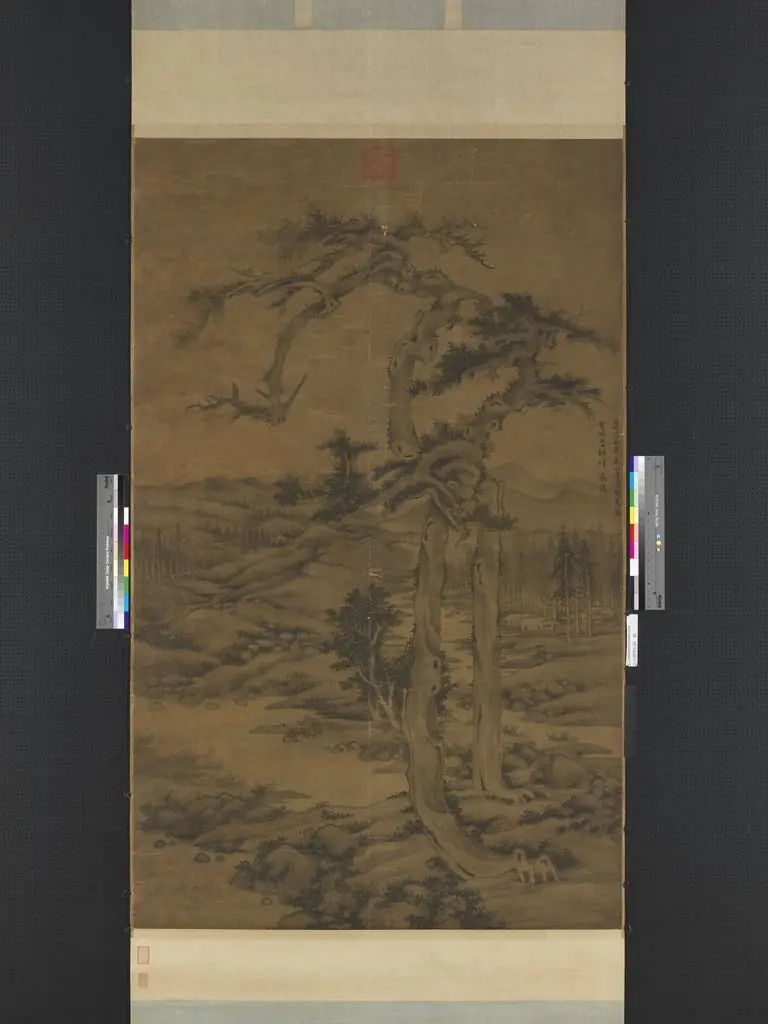 元吳鎮雙松圖 軸
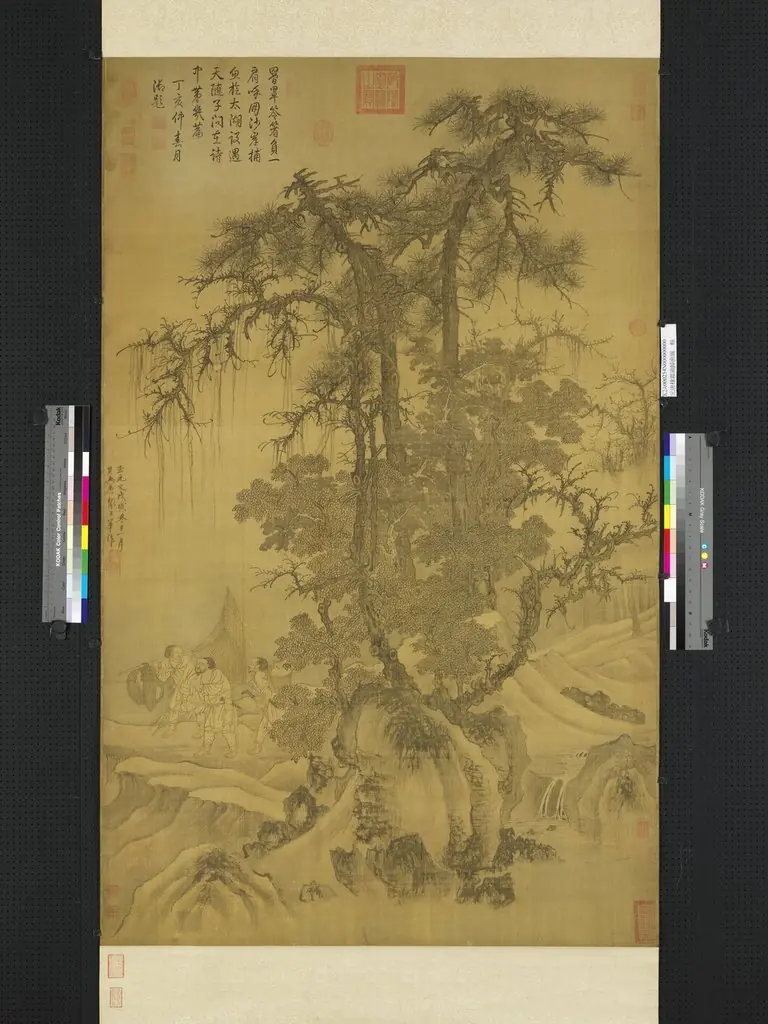 元唐棣霜浦歸漁圖 軸
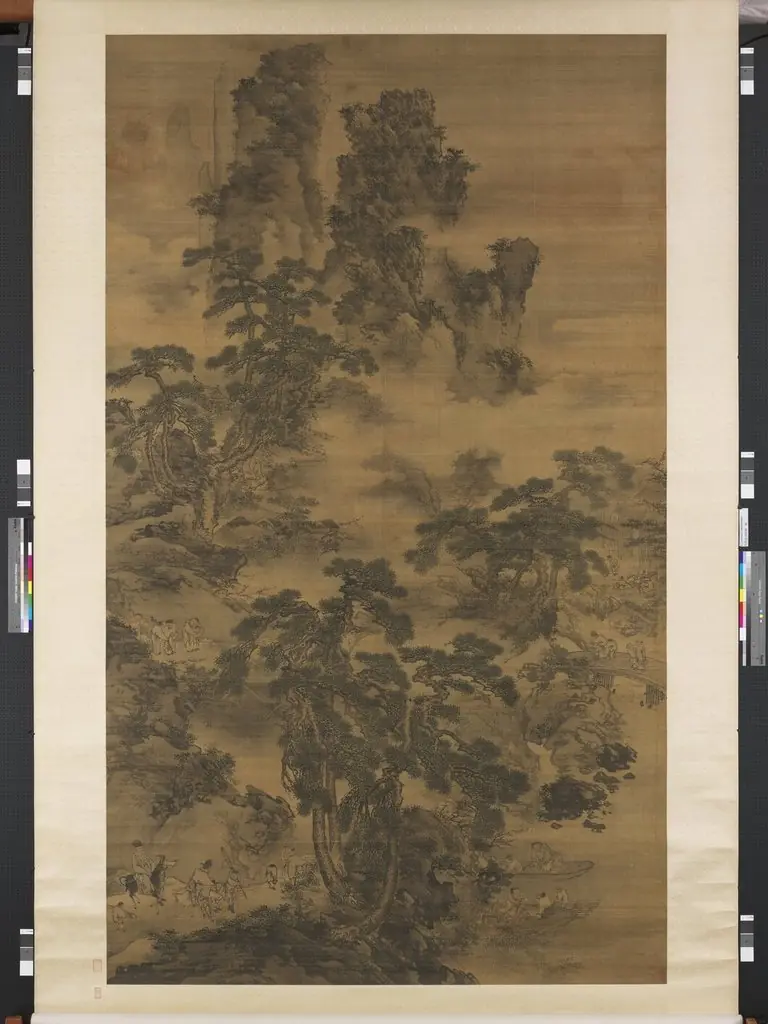 明戴進春酣圖 軸
 Landscapes with Figures (one of a pair)
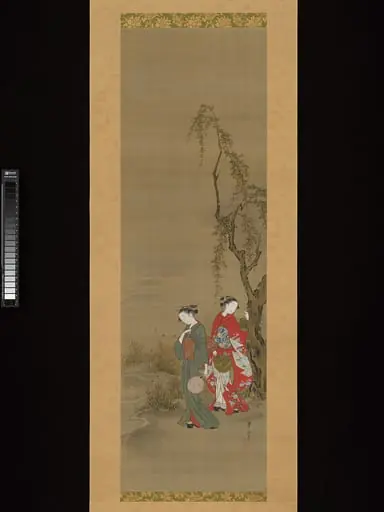 Untitled
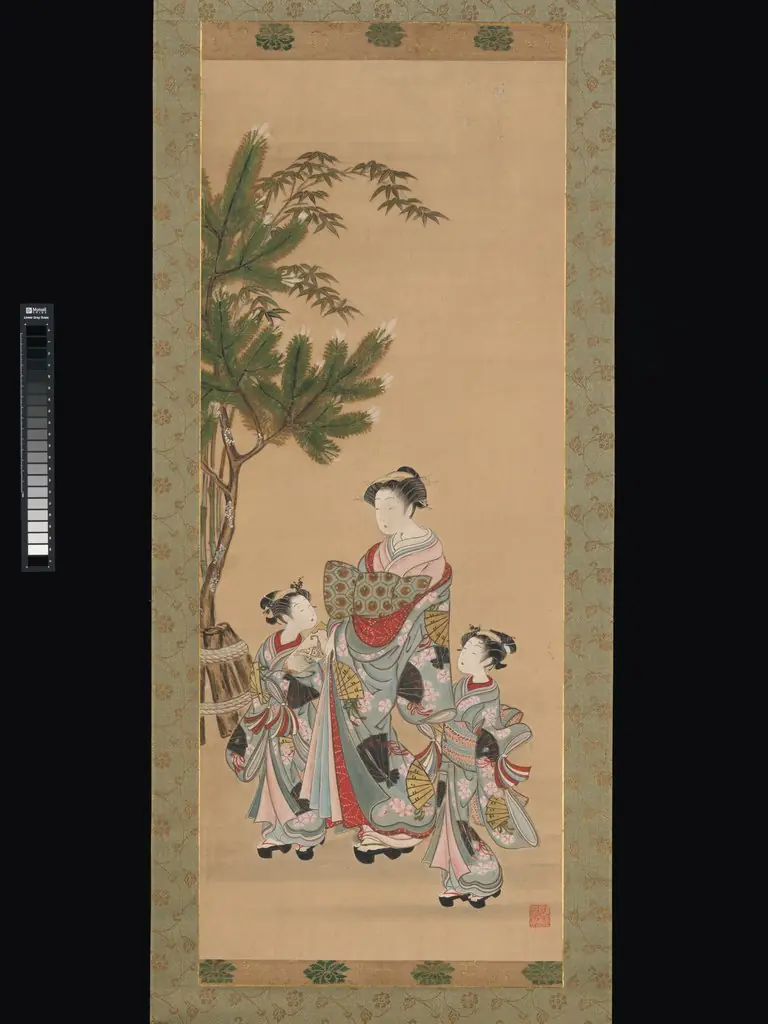 Courtesan and Two Attendants on New Year's Day
- 元 倪瓚 秋林野興圖 軸|Enjoying the Wilderness in an Autumn Grove
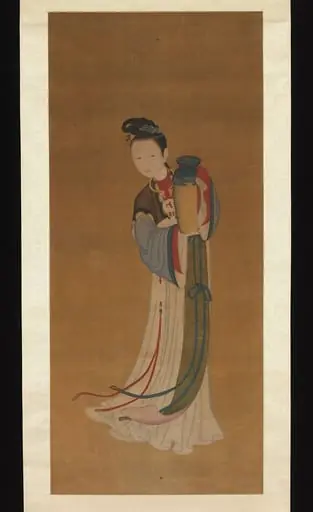 清 佚名 持瓶仕女 軸|Girl Bringing Jar of Wine