Artwork
『妙法蓮華経』 「薬草喩品第五」の内|“Parable of the Medicinal Herbs,” Chapter 5 of the Lotus Sutra
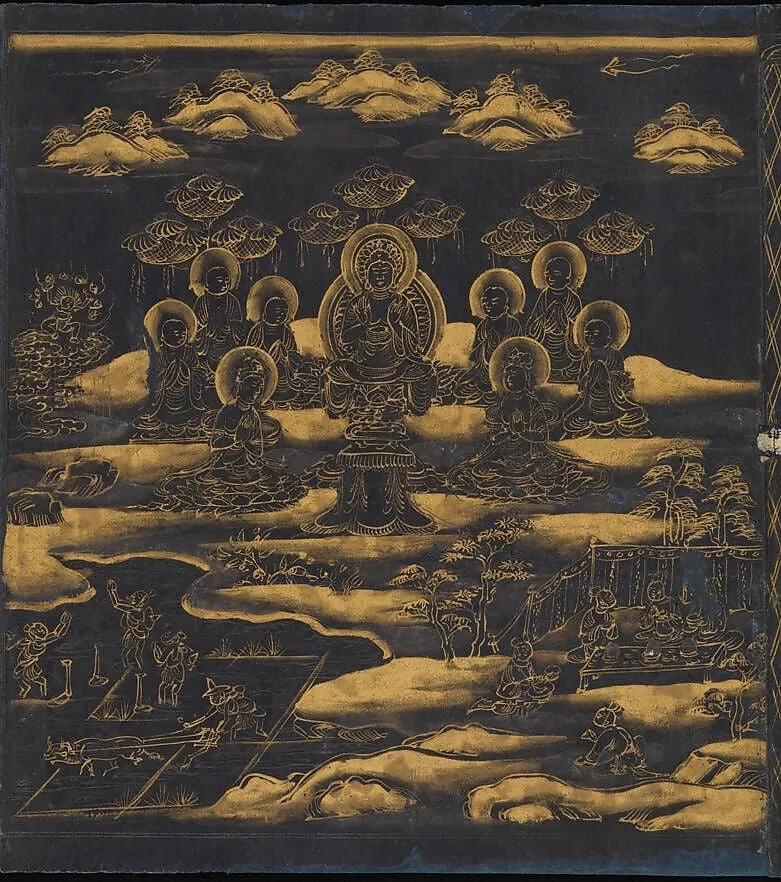
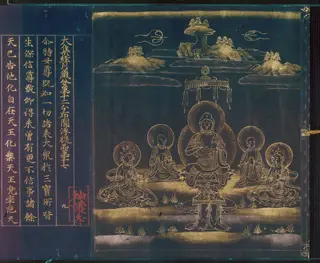
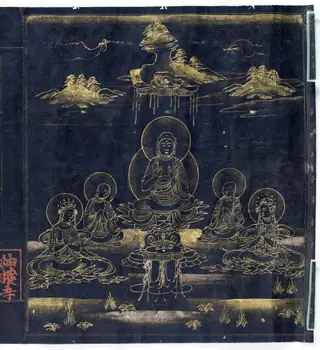
『妙法蓮華経』 「薬草喩品第五」の内|“Parable of the Medicinal Herbs,” Chapter 5 of the Lotus Sutra is an ink painting. It dates from 1142 and is held in the collection of the Metropolitan Museum of Art. This handscroll, titled “Parable of the Medicinal Herbs,” illustrates a section from Chapter 5 of the Lotus Sutra.
About this work
A scene of the Buddha among herbs, painted in the 12th century with gold and silver ink on indigo-dyed paper. Those materials point to fine craftsmanship and close attention to detail.
Subject & Meaning
The handscroll portrays the "Parable of the Medicinal Herbs," the fifth chapter of the Lotus Sutra, showing the Buddha seated amid a variety of plants.
The handscroll portrays the "Parable of the Medicinal Herbs," the fifth chapter of the Lotus Sutra, showing the Buddha seated amid a variety of plants. The central Buddha figure embodies the enlightened teacher, while the surrounding herbs symbolize the diverse, healing teachings that the sutra offers to believers. In this iconography the plants represent spiritual medicine that cures the suffering of ignorance, reflecting the Buddhist notion that the Dharma nourishes and restores the mind.
Thus the work conveys the idea that the Buddha's doctrine functions as a universal remedy, accessible to all who seek liberation.
Technique & Style
Created in 1142, this Japanese handscroll utilizes indigo-dyed paper as its support, a dark ground that contrasts with the application of gold and silver ink. The work measures 25.6 centimeters in height and extends 1,058.6 centimeters in width, typical of the elongated format used for narrative religious texts. As a religious painting depicting the Buddha and herbs, the anonymous artist employed precious metal inks to highlight spiritual elements against the deep blue background.
The medium of ink on dyed paper allows for the delicate rendering of the Parable of the Medicinal Herbs, with the metallic pigments likely intended to shimmer and convey sacredness. The scroll format facilitates the sequential reading of the text and images, guiding the viewer through the narrative of Chapter 5 of the Lotus Sutra.
History & Provenance
The handscroll titled 『妙法蓮華経』「薬草喩品第五」の内, also known as "Parable of the Medicinal Herbs," Chapter 5 of the Lotus Sutra, was created in Japan in 1142. Executed in gold and silver ink on indigo-dyed paper, the work belongs to the religious painting genre and depicts Buddha and herbal motifs. It is attributed to an anonymous painter and entered the collection of the Metropolitan Museum of Art.
The handscroll is held in the collection of the Metropolitan Museum of Art in New York. The work is executed on indigo-dyed paper using gold and silver ink and measures 25.6 centimeters in height and 1,058.6 centimeters in width. The museum classifies the object as a religious painting by an anonymous artist.
The sources confirm its location and physical dimensions but do not contain information regarding specific inventory numbers or a history of public exhibitions.
Overview
This handscroll, titled “Parable of the Medicinal Herbs,” illustrates a section from Chapter 5 of the Lotus Sutra. Created in the 12th century, the painting depicts a scene featuring the Buddha alongside various herbs. Its distinctive medium, gold and silver ink applied to indigo-dyed paper, highlights a sophisticated artistic approach prevalent during its period of creation.
Artist & collection