Artwork
Welcoming Descent of Amida (Amida Raigō)
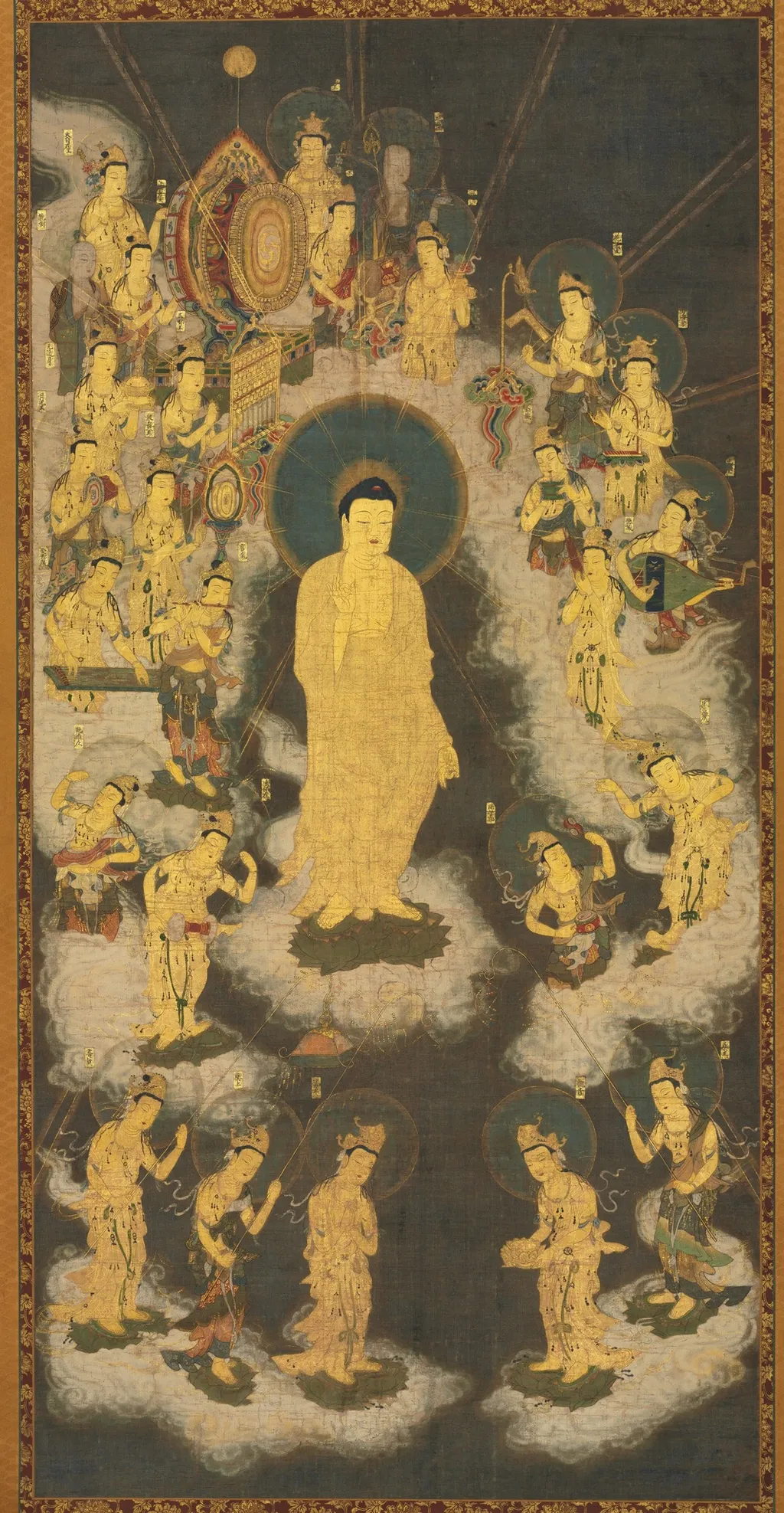
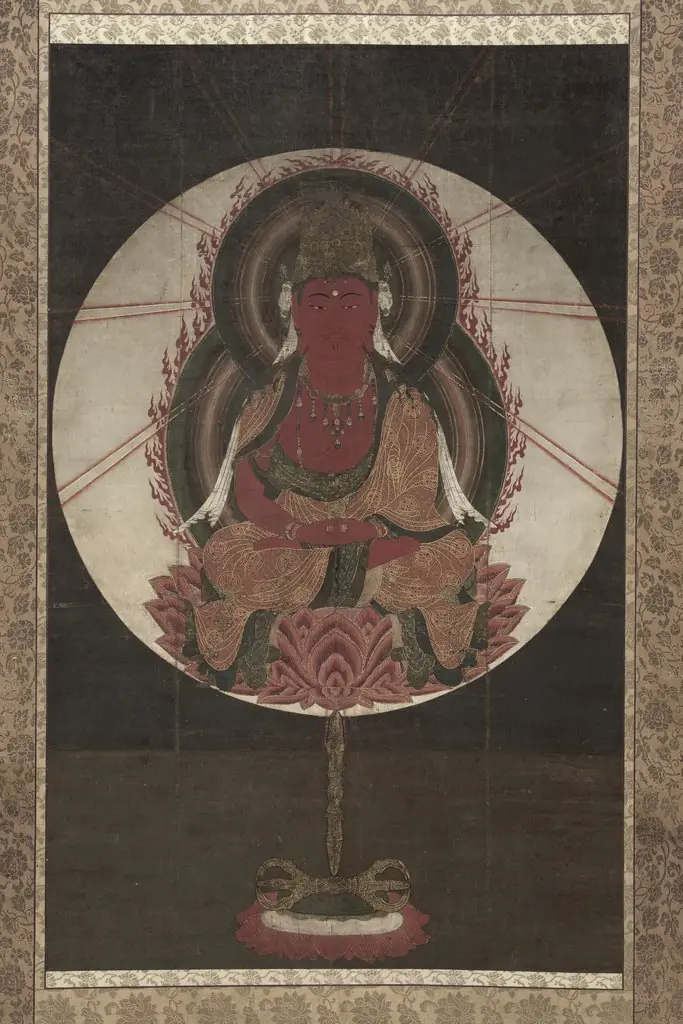
Welcoming Descent of Amida (Amida Raigō) is an unspecified painting. It dates from 1316 and is held in the collection of the Cleveland Museum of Art.
About this work
Subject & Meaning
The composition serves as a visual aid for devotion, representing the ultimate hope for liberation from the cycle of rebirth through faith in Amida's vow.
The painting depicts the Welcoming Descent of Amida, a religious scene central to Pure Land Buddhism known as Amida Raigō. Created in 1316 in Japan, the work illustrates the moment the Buddha Amida descends from the Pure Land to welcome a dying believer's soul. As a piece of religious art, the iconography symbolizes the promise of salvation and the compassionate intervention of Amida to guide the faithful toward rebirth in the Western Paradise.
The composition serves as a visual aid for devotion, representing the ultimate hope for liberation from the cycle of rebirth through faith in Amida's vow.
History & Provenance
Created in Japan in 1316, this religious painting titled Welcoming Descent of Amida was produced by an artist whose identity remains unknown. The work, also referred to as Amida Raigō, entered the collection of the Cleveland Museum of Art, where it is held under the accession number 1953.123. While the specific circumstances of its original commission and the details of its ownership history prior to its museum acquisition are not documented in the available records, its inception is firmly established as occurring in the early fourteenth century.
Overview
This painting, titled Welcoming Descent of Amida (Amida Raigō), depicts a celestial scene centered around a prominent golden figure. The artwork portrays a divine being descending from the heavens, accompanied by a retinue of smaller, attendant figures. The composition emphasizes the central deity's arrival, rendered with luminous colors against a dramatic, cloud-filled sky.
Technique & Style
The artist employs a striking visual language, featuring a dominant golden palette for the main figure, contrasted with pale hues for the accompanying deities. The background is characterized by dark, swirling clouds, which enhance the ethereal atmosphere and highlight the luminous forms. The central placement and scale of Amida underscore his importance, while the overall glow created by the gold and light colors imbues the scene with a sense of divine radiance and serenity.
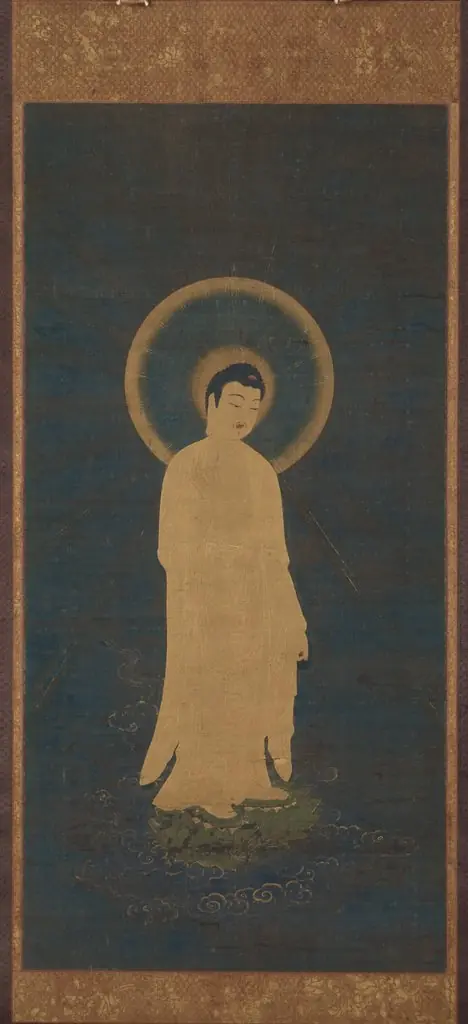
Artist & collection

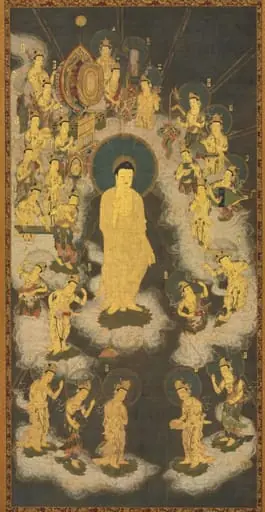 Welcoming Descent of Amida (Amida Raigō)
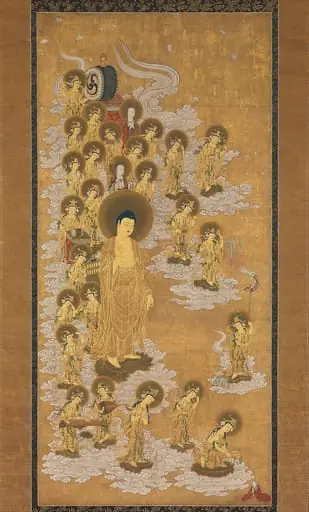 阿弥陀二十五菩薩来迎図|Welcoming Descent of Amida Buddha and Twenty-five Bodhisattvas
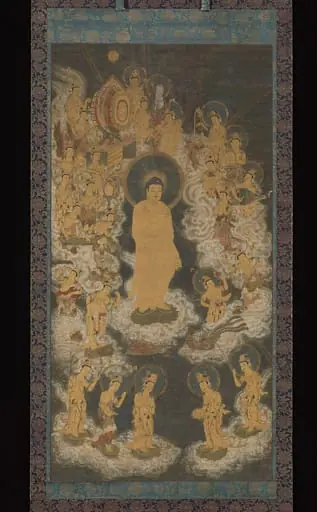 阿弥陀聖衆来迎図 |Welcoming Descent of Amida and Bodhisattvas
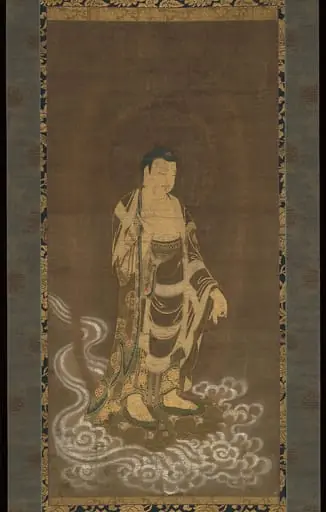 阿弥陀如来像|Welcoming Descent of Amida Buddha
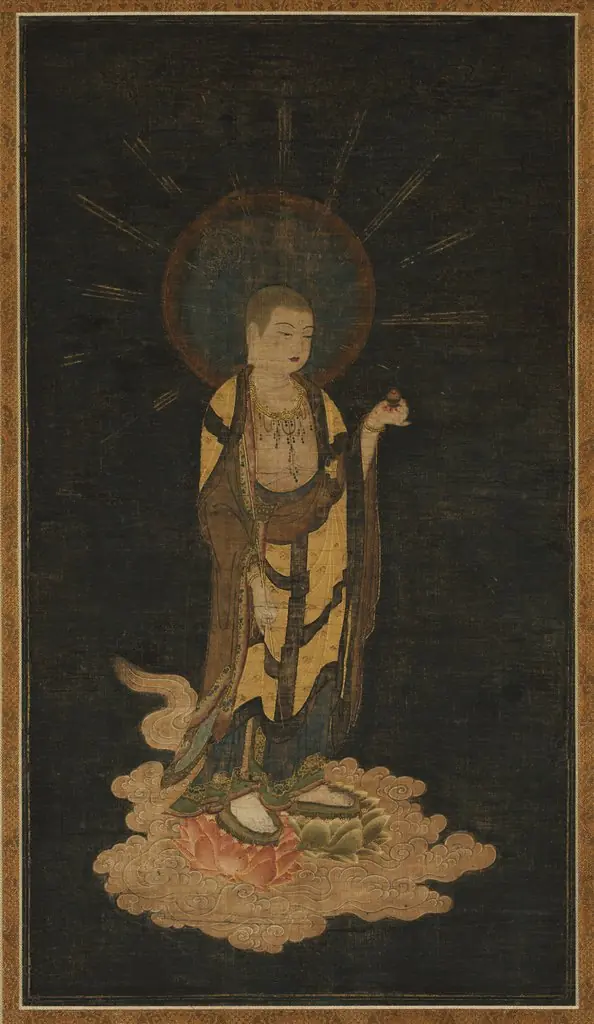 Welcoming Descent of Jizō
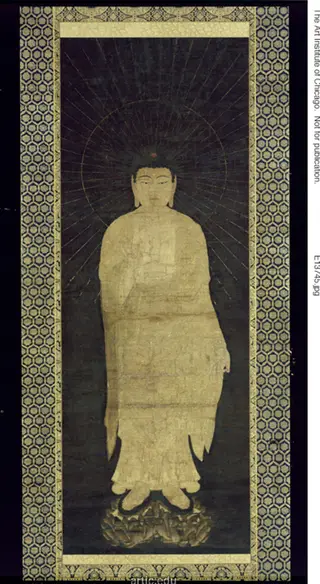 The Buddha Amida, from the triptych Approach of the Amida Trinity
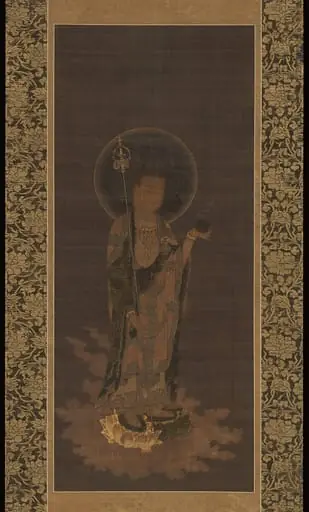 地蔵菩薩来迎図|Welcoming Descent of the Bodhisattva Jizō
 Red Amida