Artwork
阿弥陀二十五菩薩来迎図|Welcoming Descent of Amida Buddha and Twenty-five Bodhisattvas
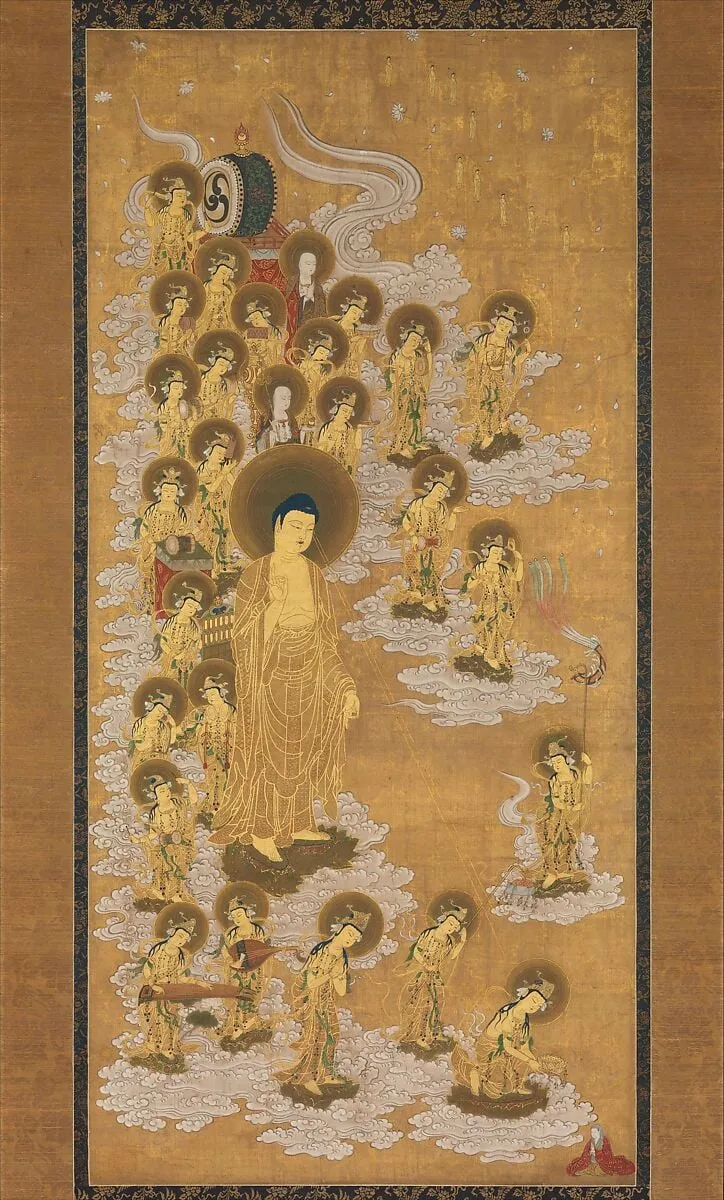
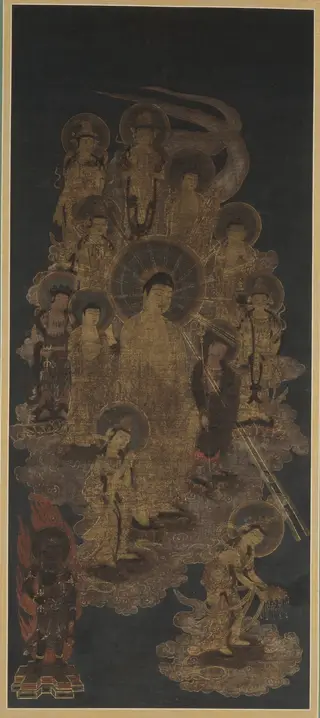
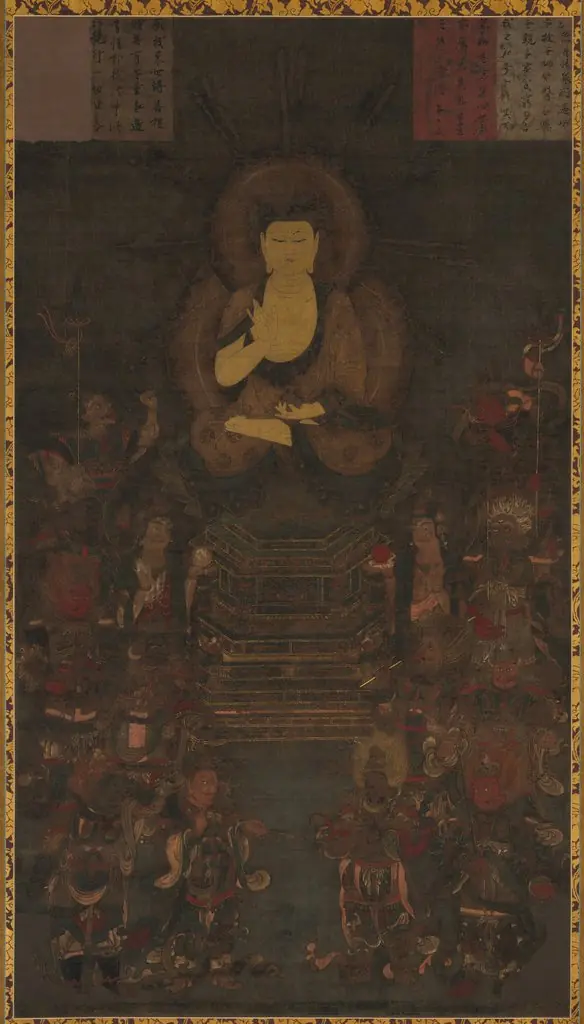
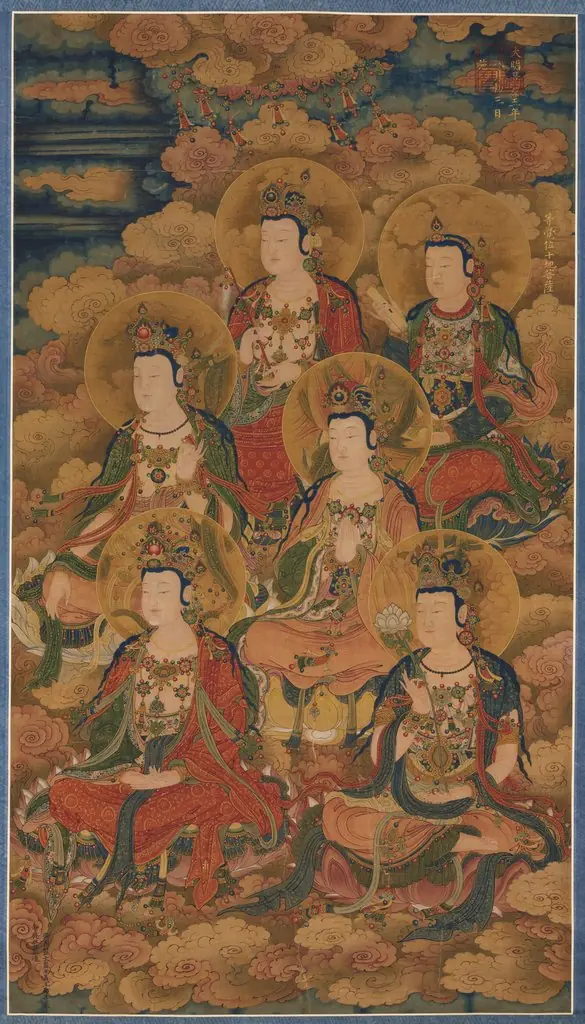
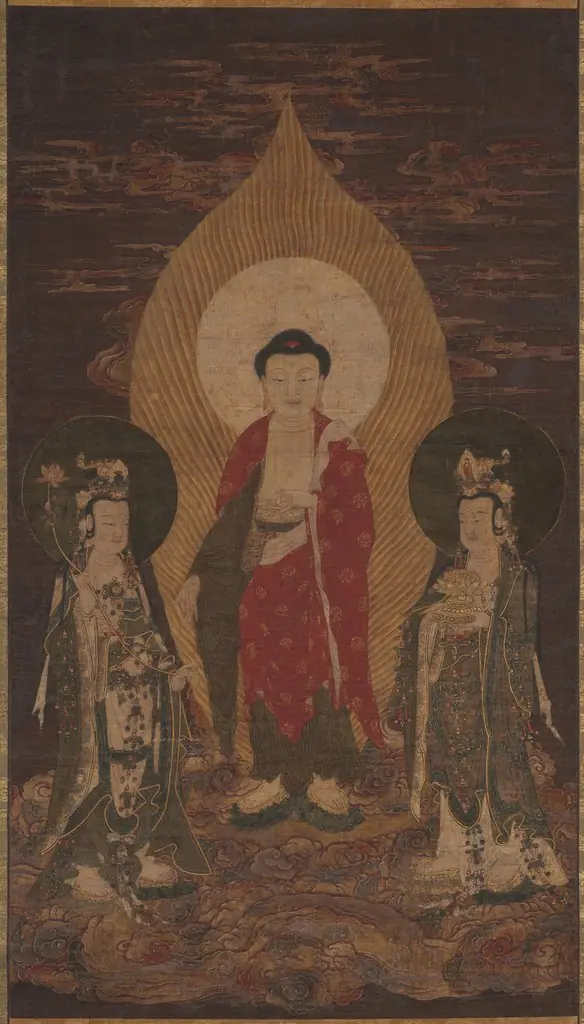
阿弥陀二十五菩薩来迎図|Welcoming Descent of Amida Buddha and Twenty-five Bodhisattvas is an ink painting. It dates from 1668 and is held in the collection of the Metropolitan Museum of Art.
About this work
Subject & Meaning
The composition emphasizes the welcoming of the Buddha by enlightened beings, symbolizing the promise of rebirth in the Pure Land for faithful devotees.
The painting portrays Amitābha Buddha descending in a heavenly descent accompanied by twenty‑five bodhisattvas, a standard iconographic motif in Japanese Pure Land art. The composition emphasizes the welcoming of the Buddha by enlightened beings, symbolizing the promise of rebirth in the Pure Land for faithful devotees. As a religious work classified under Buddhist paintings, it reflects the doctrinal focus on salvation through devotion to Amida.
The depiction of Buddha and bodhisattvas aligns with the described subject matter in the source records, confirming the work’s thematic emphasis on divine reception and intercession.
Technique & Style
The work is executed as a hanging scroll on silk, employing ink outlines filled with polychrome pigments and applied gold leaf. The composition follows a conventional Japanese Buddhist format, arranging Amida Buddha flanked by twenty‑five attendant bodhisattvas in a vertical, devotional arrangement. Pigment layers are built up to create subtle gradations, while gold highlights accentuate the halos and ornamental details, enhancing the sacred atmosphere.
The scroll dates to 1668 and was produced in Japan, likely for ritual display within a temple or patron’s household. Its formal style reflects the Edo‑period emphasis on refined line work and luminous surface treatment.
History & Provenance
The painting is dated to 1668 and is attributed to an anonymous artist working in Japan, executed as a hanging scroll in ink, color, and gold on silk. No information is available regarding its original commission, patron, or early ownership history. The work is now held in the collection of the Metropolitan Museum of Art, where it is classified within the museum's paintings holdings. Beyond this institutional custody, the documented provenance does not include intermediate owners, dealers, or acquisition circumstances.
The work titled 阿弥陀二十五菩薩来迎図 (Welcoming Descent of Amida Buddha and Twenty-five Bodhisattvas) is housed in the collection of the Metropolitan Museum of Art in New York. The painting, an ink, color, and gold on silk hanging scroll dated 1668, is attributed to an anonymous Japanese painter. Its accession number is not listed in the available catalog entries.
No exhibition record is documented for this piece in the sources consulted. The artwork belongs to the religious genre and depicts Buddhist figures, consistent with its classification as a painting.
Context
The work titled 阿弥陀二十五菩薩来迎図, also known as Welcoming Descent of Amida Buddha and Twenty-five Bodhisattvas, is a 1668 Japanese hanging scroll painted in ink, color, and gold on silk. The anonymous artist produced the piece within the religious genre of Buddhist painting, depicting Amida Buddha surrounded by twenty‑five bodhisattvas, a common devotional subject in Edo‑period Buddhism. Its creation in Japan and subsequent acquisition by the Metropolitan Museum of Art illustrate its significance within museum collections of Asian Buddhist art.
The painting’s composition and materials reflect contemporary artistic practices of the mid‑seventeenth century, positioning it as an exemplar of anonymous workshop production in Buddhist iconography.
Overview
Created in 1668, the 'Welcoming Descent of Amida Buddha and Twenty-five Bodhisattvas' is a hanging scroll executed in ink, color, and gold on silk. The composition depicts the Pure Land Buddhist eschatological vision of Amida Buddha descending from the Western Paradise accompanied by twenty-five bodhisattvas to receive the soul of a dying believer. The central figure of Amida is rendered with a luminous aura, flanked by the attendant bodhisattvas who are distinguished by their flowing red and blue robes and dynamic postures.
Several figures are shown playing musical instruments or scattering flowers, signifying the joyous celebration of the soul's arrival. The background is extensively covered in gold leaf, creating a radiant, otherworldly atmosphere that emphasizes the divine nature of the event. This work serves a specific ritual function as a 'raigōzu' (welcoming descent painting), intended to be displayed in the room of a dying person to focus their mind on Amida and ensure a peaceful transition to the Pure Land.
While the artist remains anonymous, the work exemplifies the devotional art traditions of the Edo period, reflecting the widespread influence of Pure Land Buddhism in Japan during the 17th century.
Artist & collection

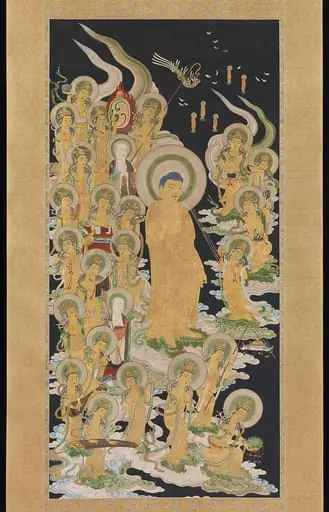
- 阿弥陀二十五菩薩来迎図|Buddha and Attendants
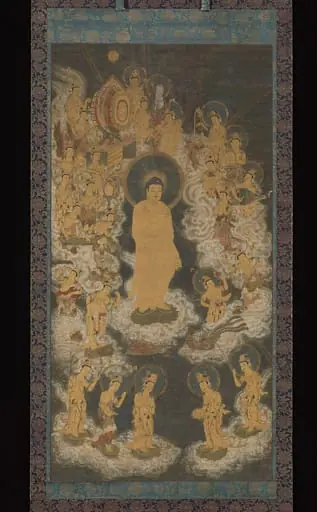 阿弥陀聖衆来迎図 |Welcoming Descent of Amida and Bodhisattvas
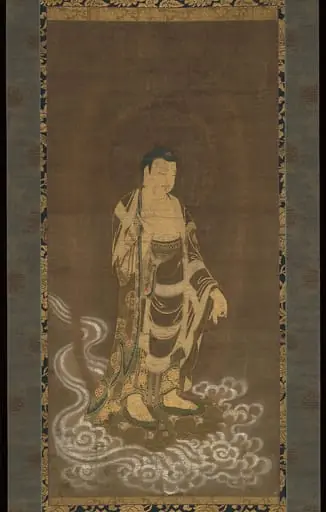 阿弥陀如来像|Welcoming Descent of Amida Buddha
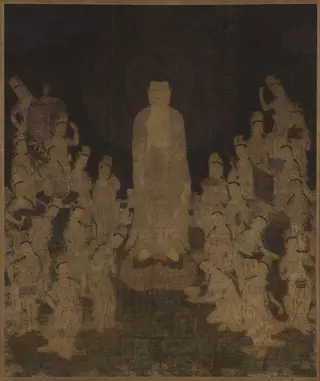 Welcoming Descent of Amida with Twenty-Five Bodhisattvas
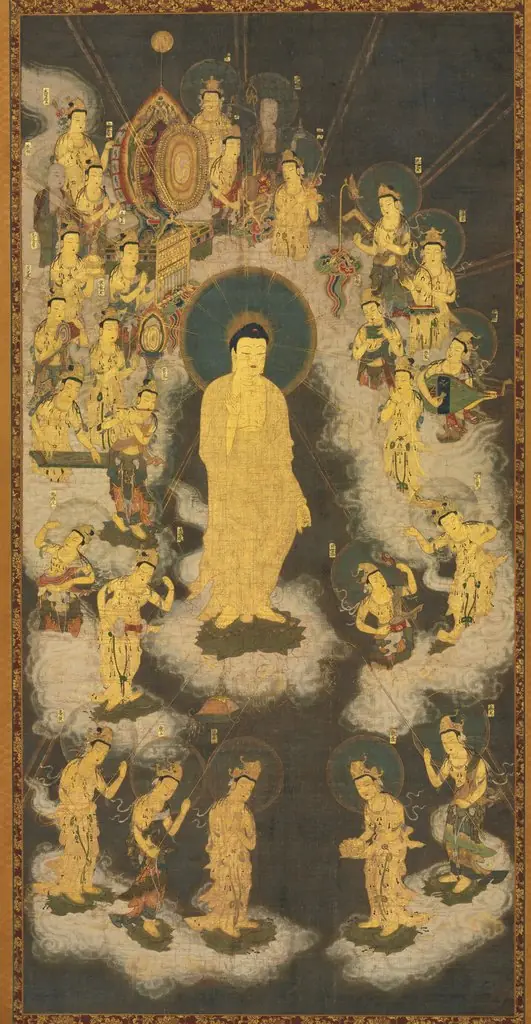 Welcoming Descent of Amida (Amida Raigō)
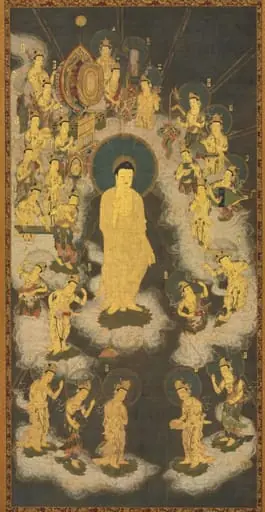 Welcoming Descent of Amida (Amida Raigō)
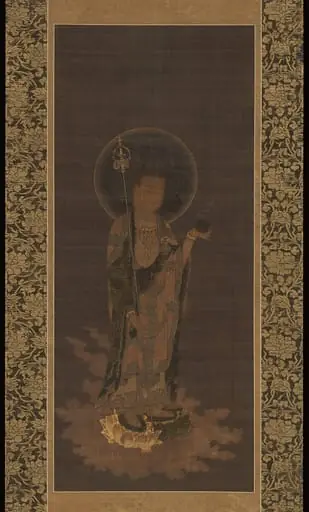 地蔵菩薩来迎図|Welcoming Descent of the Bodhisattva Jizō
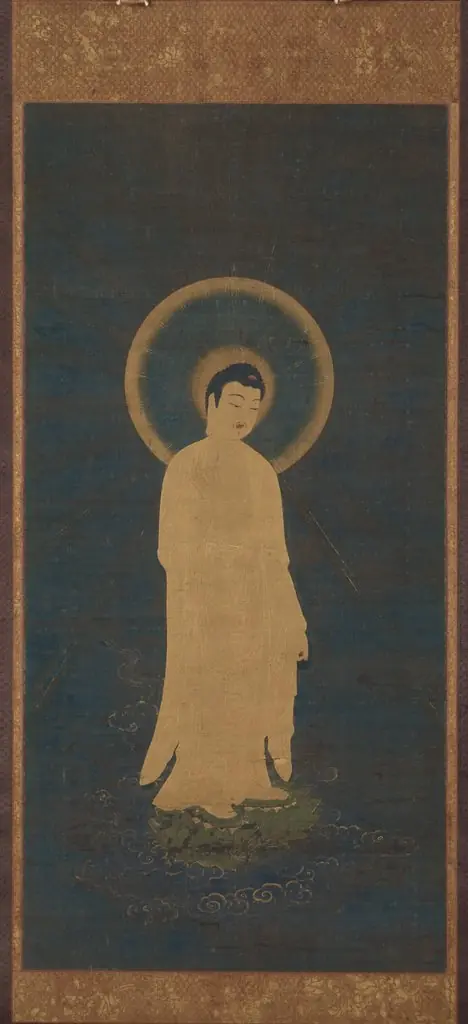 Welcoming Descent of Amida Buddha (Raigō)
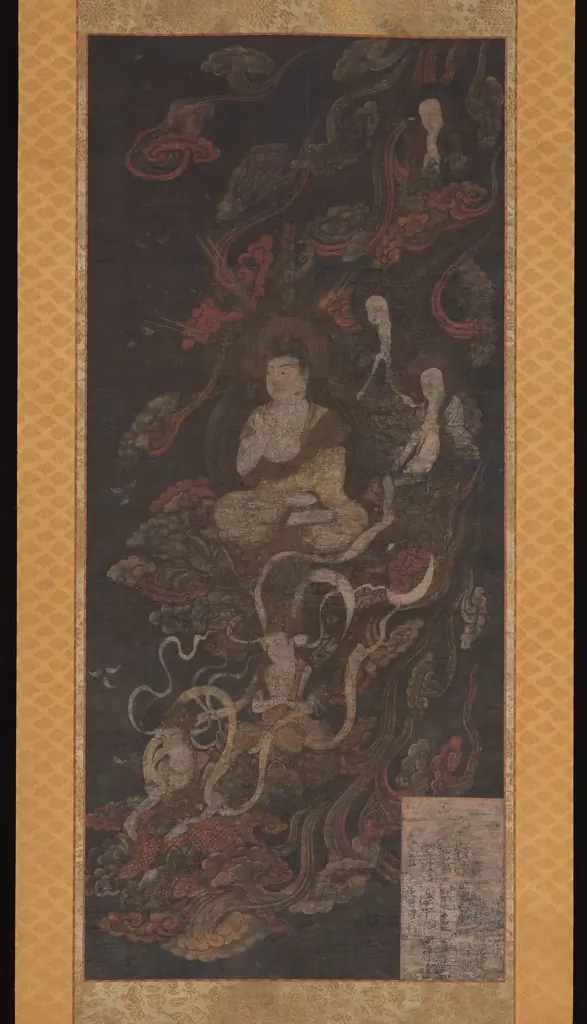 Welcoming Descent of Amida, the Buddha of Infinite Light, and His Holy Retinue
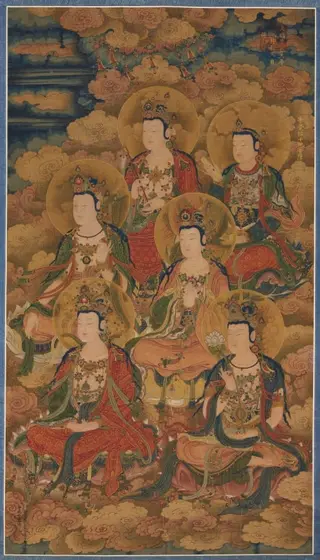 The Bodhisattvas of the Ten Stages in Attaining the Most Perfect Knowledge
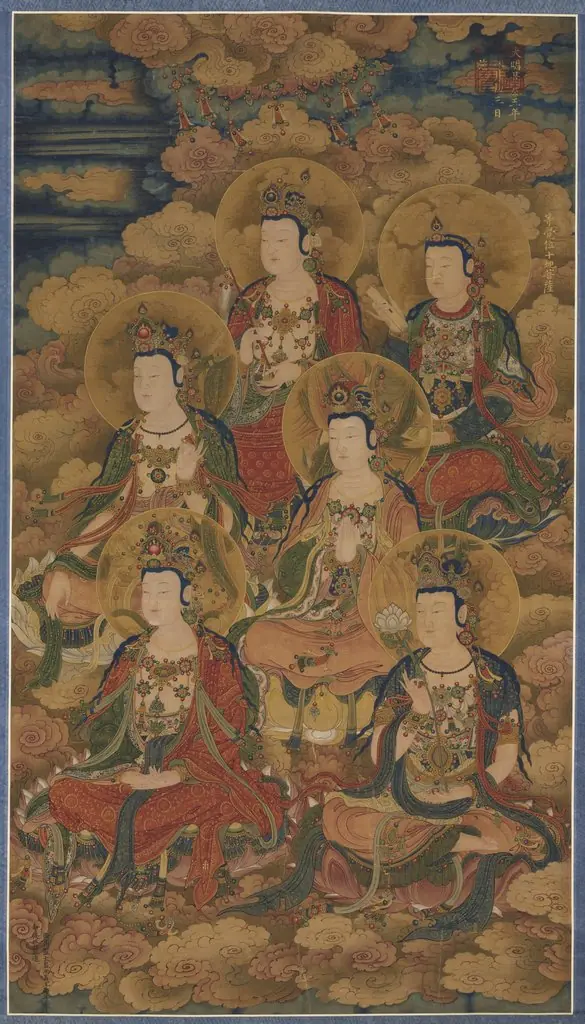 The Bodhisattvas of the Ten Stages in Attaining the Most Perfect Knowledge
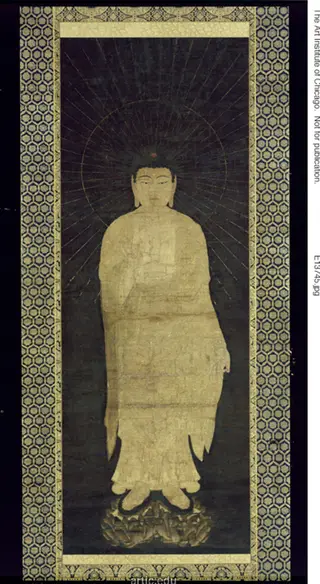 The Buddha Amida, from the triptych Approach of the Amida Trinity