Artwork
Anoku-Fu Sutra
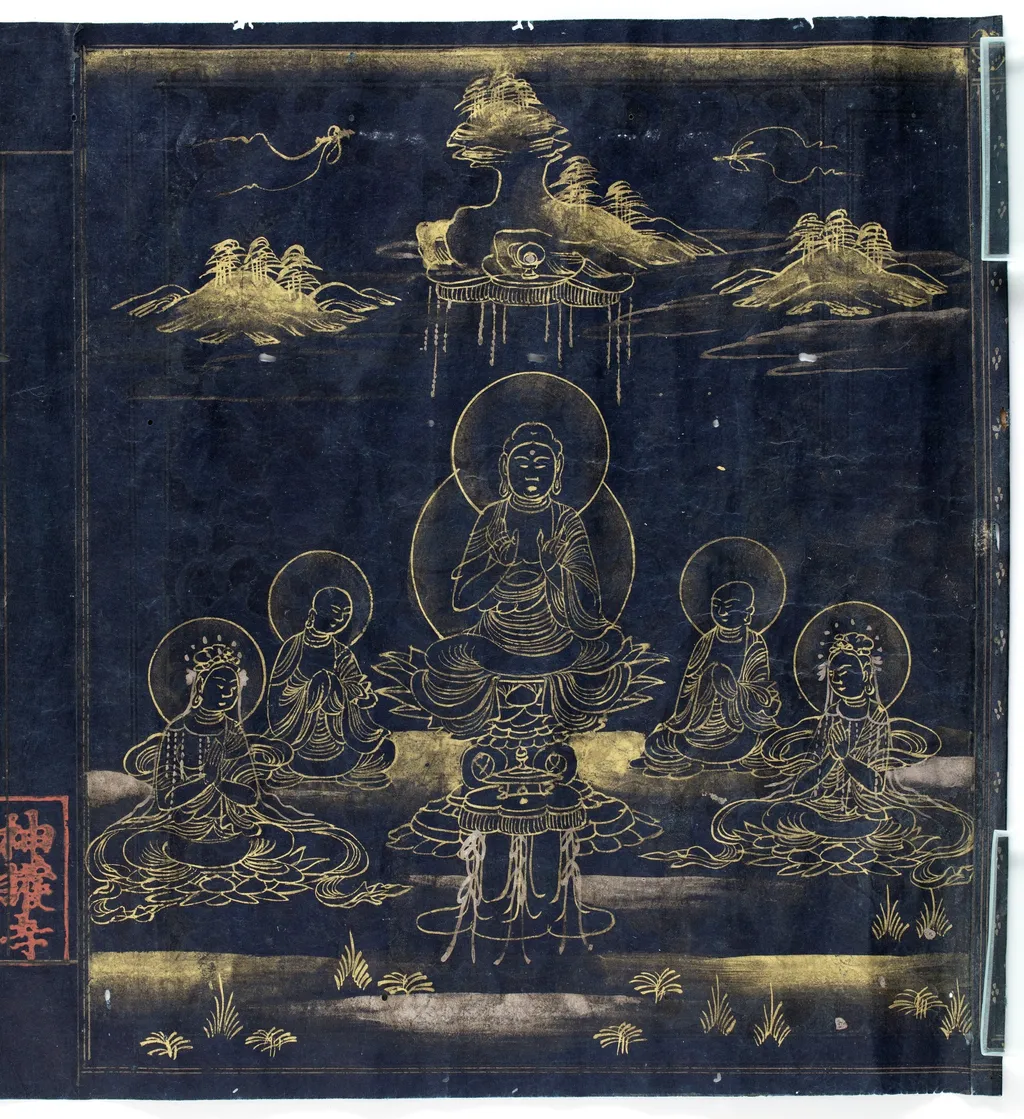
Anoku-Fu Sutra is an unspecified painting by the Song dynasty landscape artist Unknown. It dates from 1192 and is held in the collection of the Detroit Institute of Arts. The work, titled Anoku‑Fu Sutra, is a painted composition dominated by a deep blue field that serves as a night‑sky backdrop.
About this work
Overview
Golden silhouettes hover within the space, the central figure seated serenely and clasping an object, flanked by four smaller, haloed beings.
The work, titled Anoku‑Fu Sutra, is a painted composition dominated by a deep blue field that serves as a night‑sky backdrop. Golden silhouettes hover within the space, the central figure seated serenely and clasping an object, flanked by four smaller, haloed beings. Beneath them a golden platform rests on a cloud‑laden base, accented with diminutive foliage, all appearing to float without contact.
Subject & Meaning
The central seated figure, rendered in gold, suggests a spiritual or divine presence, likely a bodhisattva or enlightened teacher, while the surrounding haloed figures may represent attendant deities or disciples. The elevated platform and floating clouds evoke a celestial realm, reinforcing themes of transcendence and the sutra’s teachings about liberation from earthly bonds.
Technique & Style
The painting employs a stark contrast between a dark indigo ground and luminous gold pigment, creating a radiant effect that emphasizes the figures’ otherworldly nature. The use of flat, weightless forms and minimal shading aligns with East Asian devotional art, where line and color convey spiritual presence rather than realistic depth.
Context
Anoku‑Fu Sutra belongs to a tradition of Buddhist visualizations that illustrate scriptural narratives for meditation. The emphasis on gold against a dark sky reflects a visual language intended to draw the viewer’s eye toward the sacred central figure, a common device in ritual paintings used in temples and monastic settings.
Legacy
While specific provenance details are scarce, works of this type have informed later Buddhist iconography and continue to be studied for their compositional clarity and symbolic use of color. The painting’s aesthetic has parallels in collections such as the Detroit Institute of Arts, where similar devotional canvases are displayed.
Artist & collection









 Shakyamuni Triad: Buddha Attended by Manjushri and Samantabhadra
 The Buddha Preaching the Law
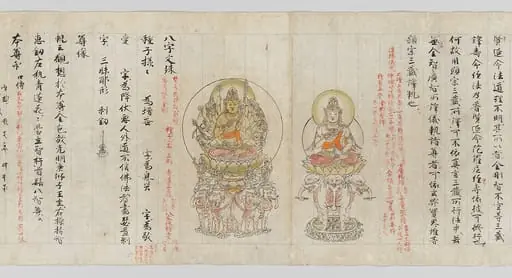 真言諸尊図像抄|Scroll from the Compendium of Iconographic Drawings (Zuzōshō)
 Untitled
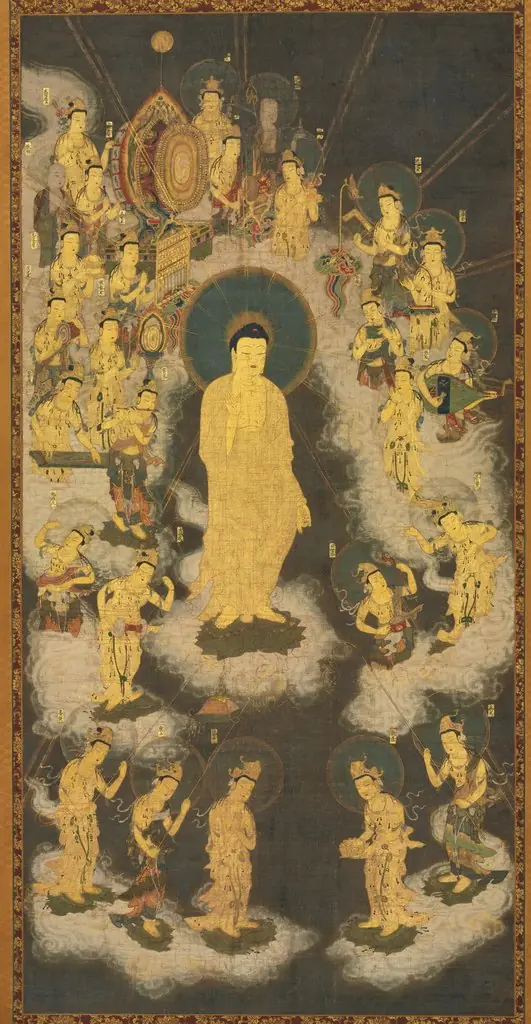 Welcoming Descent of Amida (Amida Raigō)
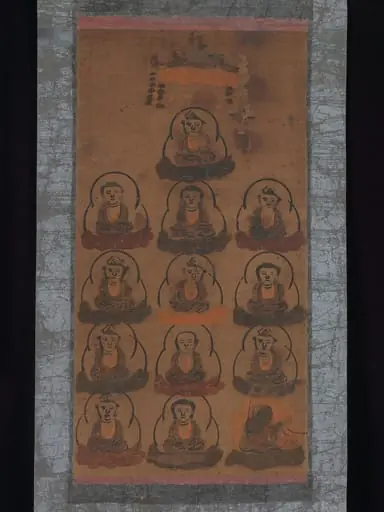 十三仏図大津絵|Ōtsu-e of Thirteen Buddhist Deities
 Amitabha
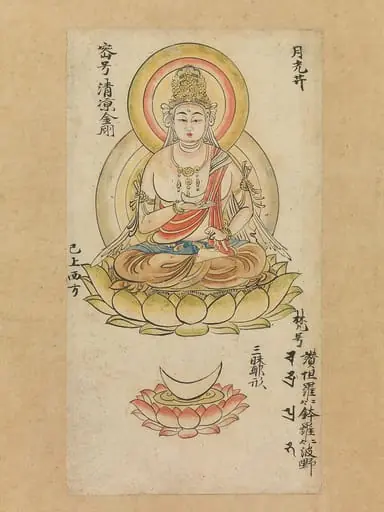 伝託磨為遠筆 月光菩薩像 「金胎仏画帖」断簡|Gakkō Bosatsu, from “Album of Buddhist Deities from the Diamond World and Womb World Mandalas” (“Kontai butsugajō”)
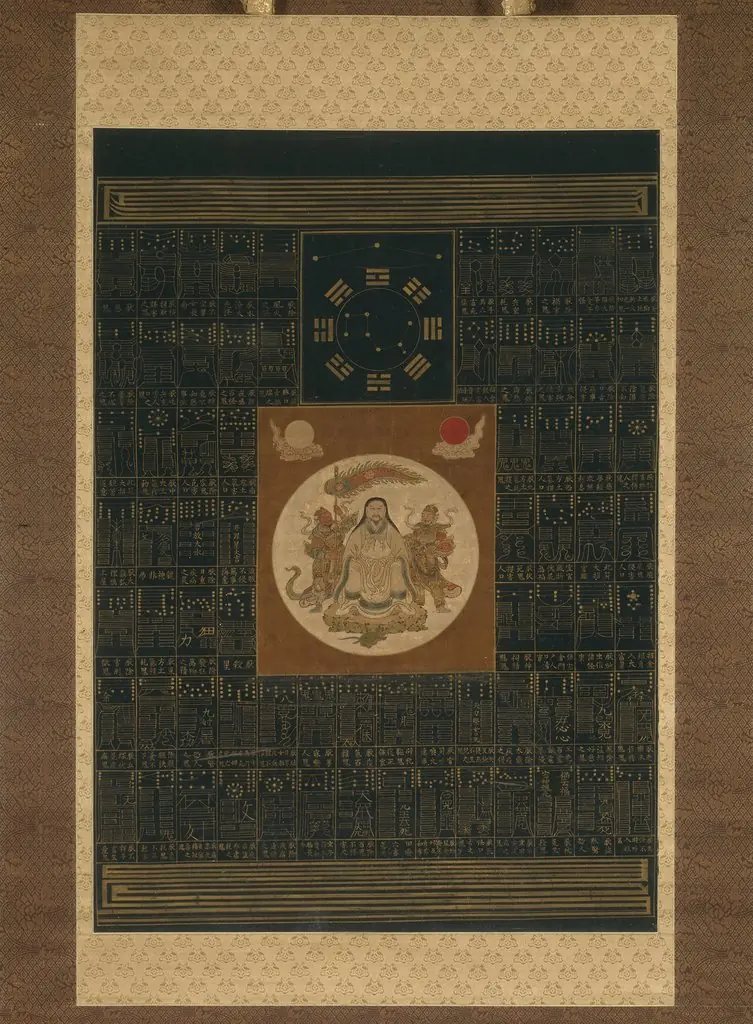 Zhenwu with the Eight Trigrams, the Northern Dipper, and Talismans