Artwork
Francis Bacon, Viscount, Saint Albans
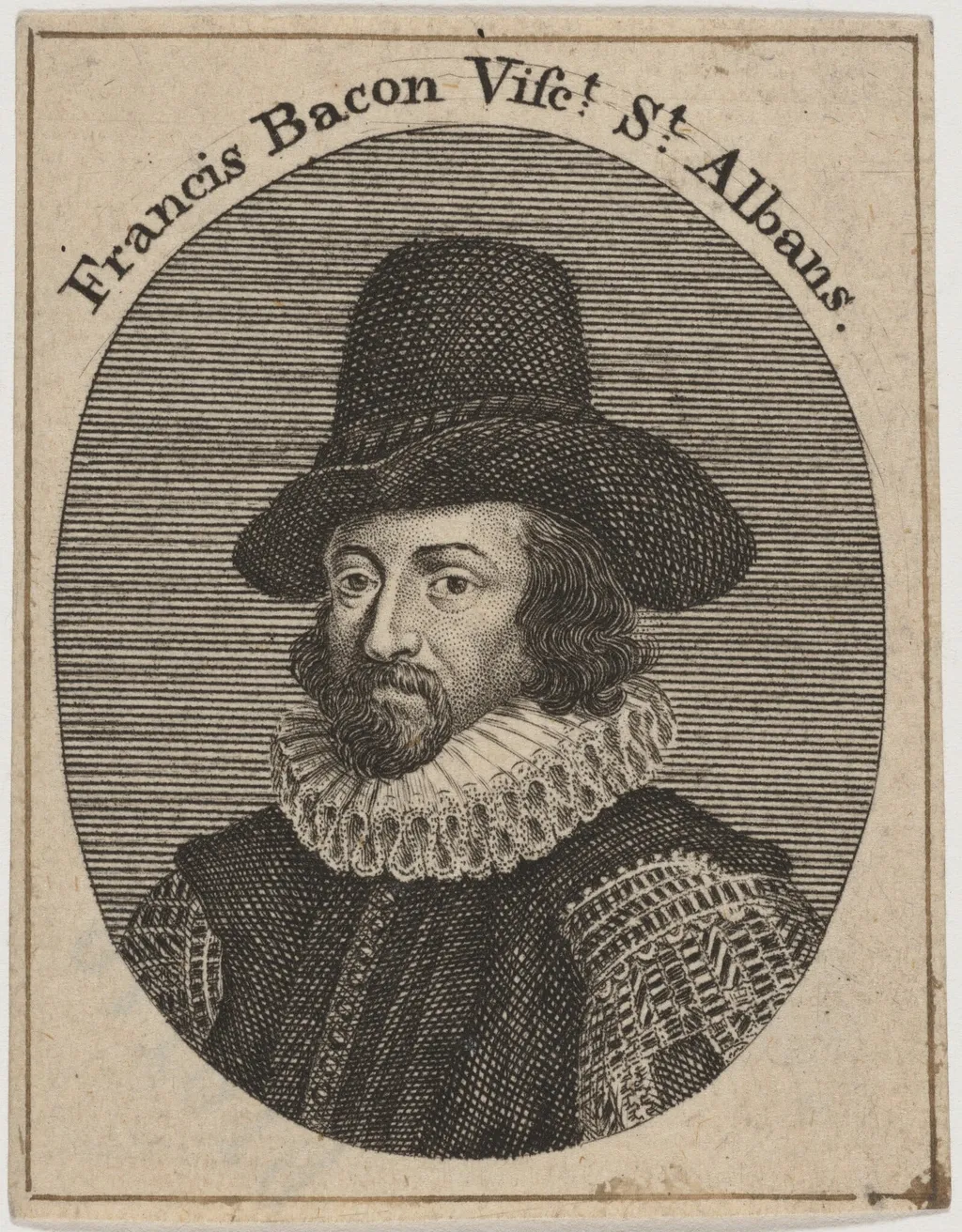
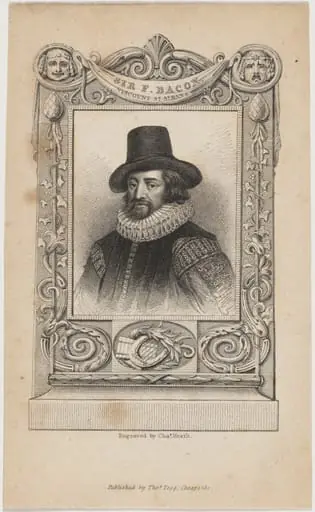
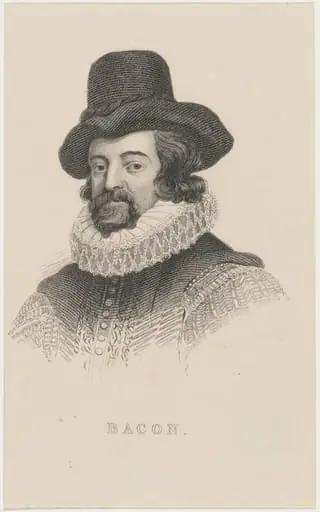
Francis Bacon, Viscount, Saint Albans is an ink print by the Romanticist artist Unknown 19th Century. It dates from 1850 and is held in the collection of the National Gallery of Art.
About this work
Overview
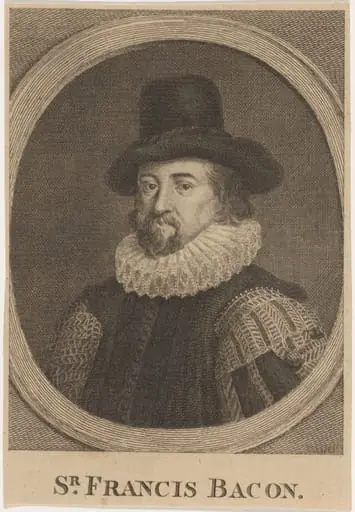
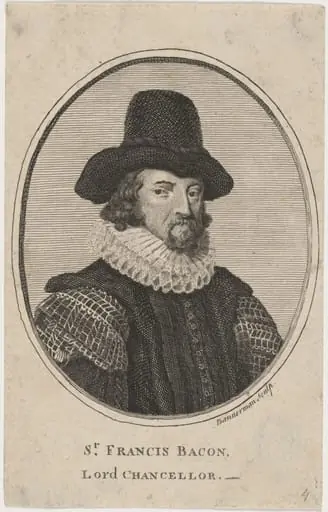
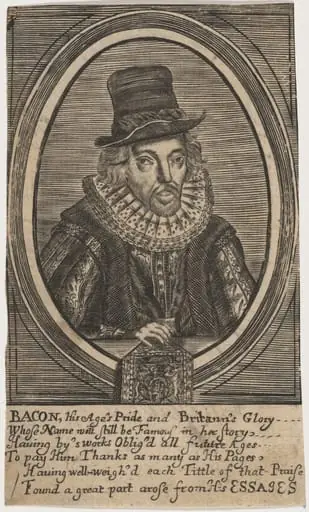
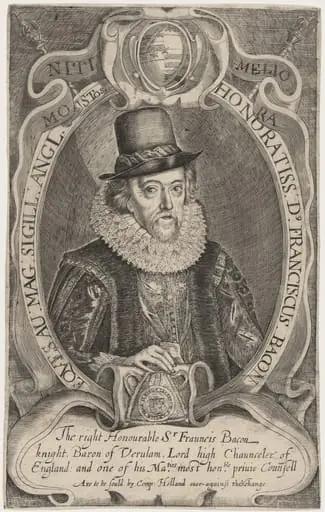
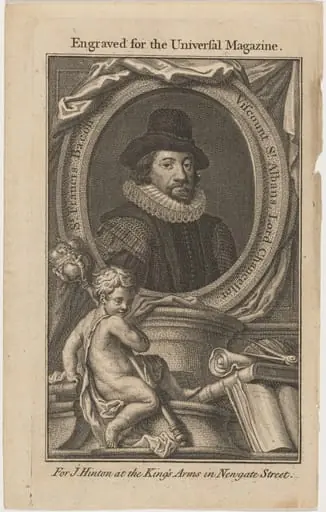
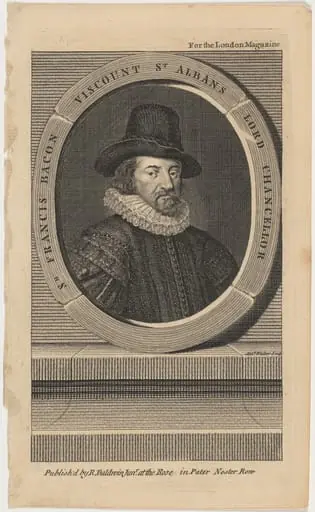
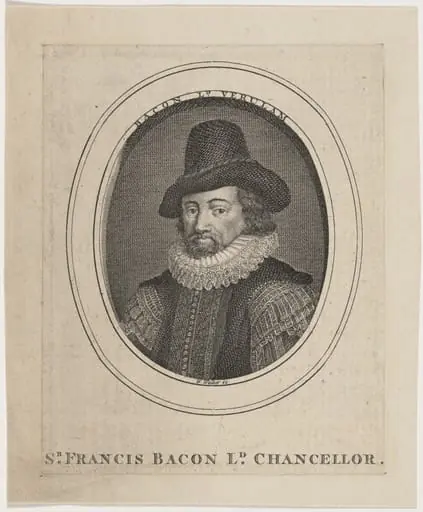
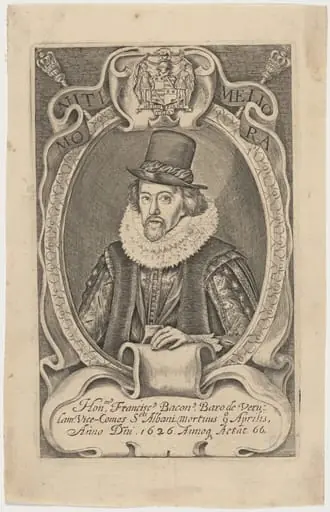
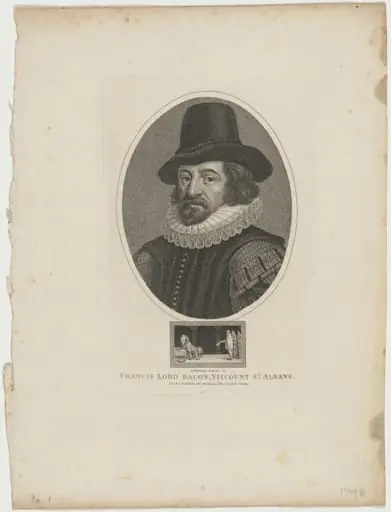
This black-and-white engraving depicts Francis Bacon, Viscount St Albans, rendered in fine linear detail typical of 17th-century portrait prints. The image is confined to an oval frame, with the subject’s face and attire defined by dense cross-hatching. No artist is credited, and the background remains minimal, emphasizing the figure through tonal contrast rather than environmental context.
Subject & Meaning
The portrait presents Bacon in formal attire, including a high ruffled collar and a tall, pointed hat, signaling his status as a philosopher and statesman. His serious expression and composed posture reflect the dignity associated with intellectual authority in early modern England. The image functions as a visual record of his public identity, not a personal characterization.
Technique & Style
The work employs traditional engraving methods, using a burin to incise fine lines into a metal plate. Shadows and texture are built through meticulous cross-hatching, a hallmark of reproductive printmaking. The absence of color and the flat oval background align with conventions of engraved portraiture, prioritizing clarity and permanence over decorative flourish.
History & Provenance
Created likely in the decades following Bacon’s death in 1626, the engraving was probably made to circulate his likeness among scholars and patrons. Its anonymous authorship suggests it was produced by a commercial printmaker rather than a named artist. Such prints were commonly used to disseminate the images of prominent figures before photography.
Context
In early 17th-century England, engraved portraits served as tools of legacy, especially for figures like Bacon who shaped political and scientific thought.
In early 17th-century England, engraved portraits served as tools of legacy, especially for figures like Bacon who shaped political and scientific thought. The format echoes earlier Renaissance engravings of thinkers, reinforcing Bacon’s place in a lineage of learned men. The style, though somewhat dated by the time of its production, maintained symbolic weight in an age of emerging scientific imagery.
Legacy
Though not attributed to a known artist, this engraving contributed to the visual canon of Bacon’s image, influencing later depictions in textbooks and biographies. Its restrained aesthetic reflects the period’s preference for intellectual gravitas over theatricality. As a reproductive print, it helped standardize his public face across generations.
Artist & collection

Artist