Artwork
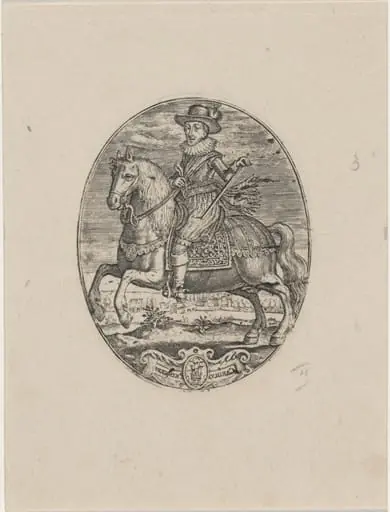
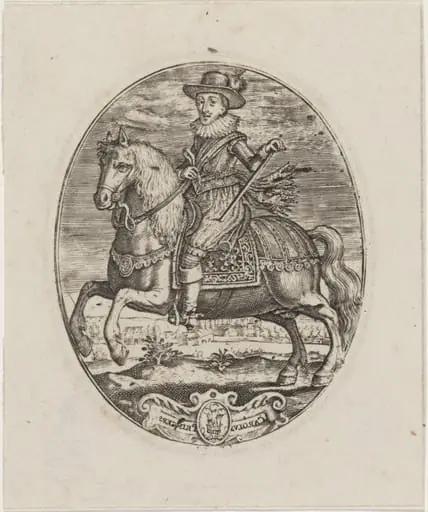
James I on Horseback
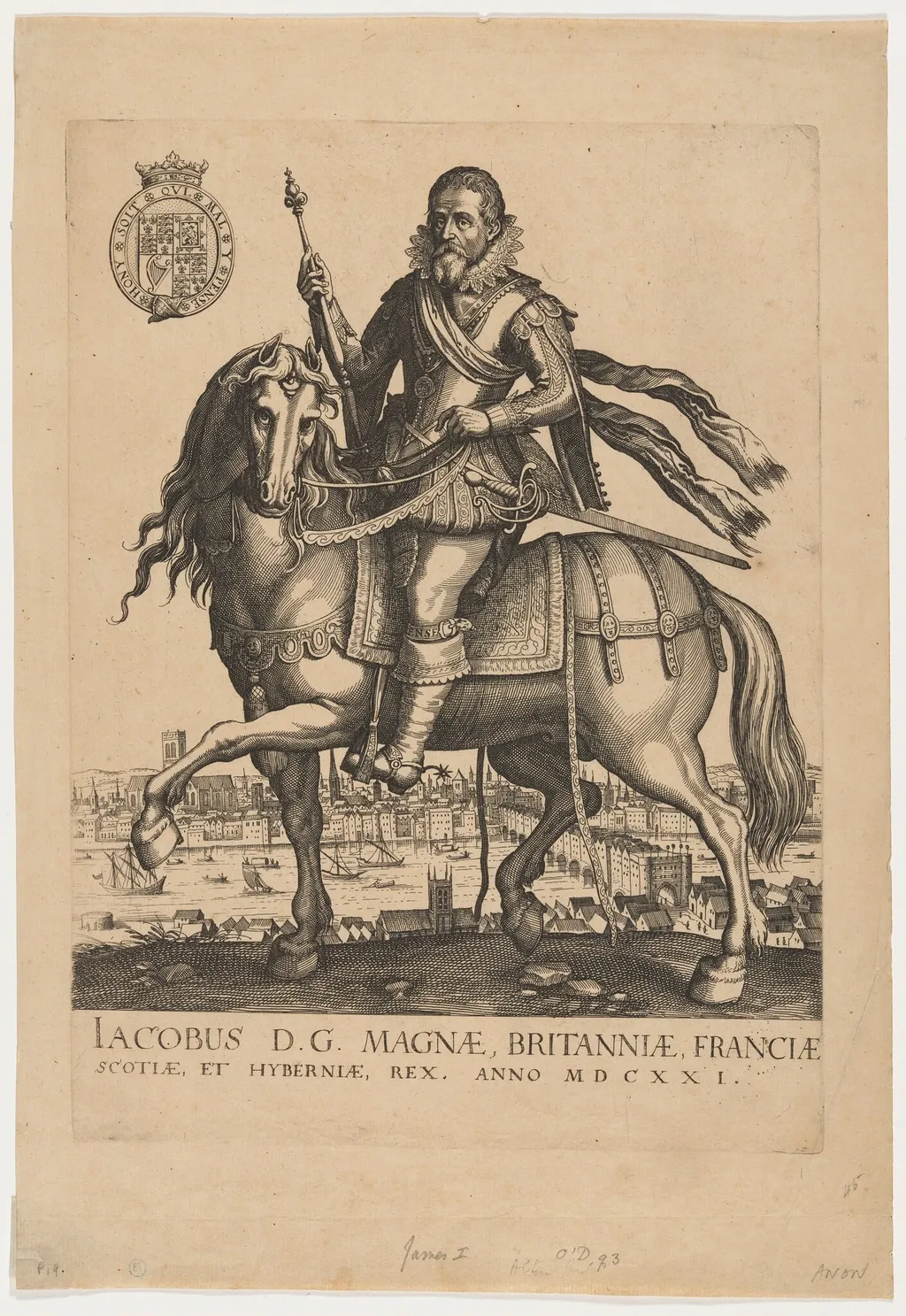
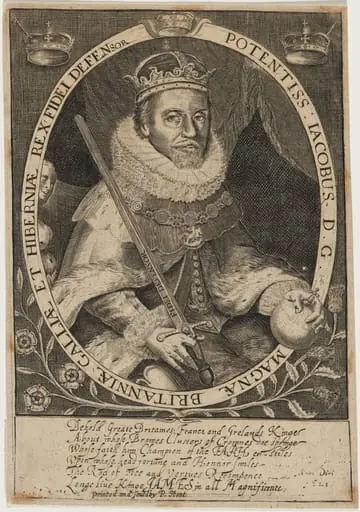
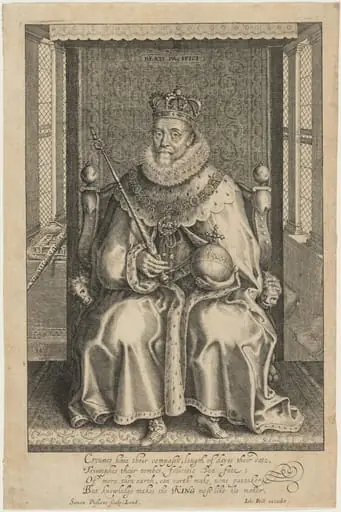
James I on Horseback is an ink print by the Romanticist artist Unknown 19th Century. It dates from 1850 and is held in the collection of the National Gallery of Art.
About this work
Overview
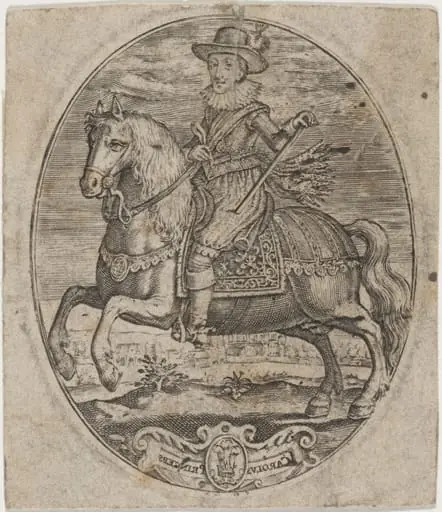
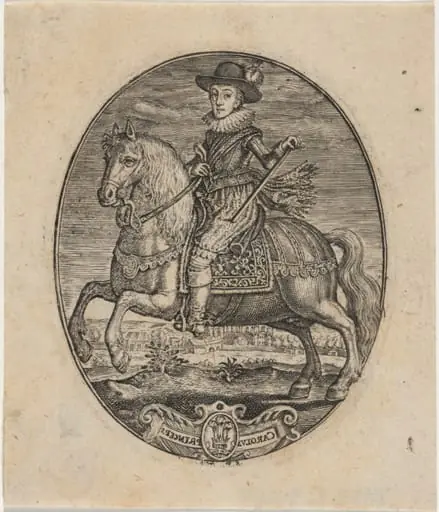
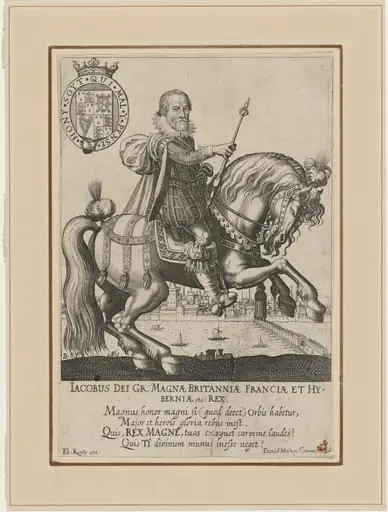
This engraving depicts James I of England mounted on a rearing horse, rendered in fine cross-hatched lines that emphasize texture and spatial depth.
This engraving depicts James I of England mounted on a rearing horse, rendered in fine cross-hatched lines that emphasize texture and spatial depth. The composition conveys authority through dynamic posture and elaborate detail, typical of early 17th-century printmaking. The scene is set against a distant cityscape with waterborne vessels, reinforcing the monarch’s connection to both land and trade.
Subject & Meaning
James I is portrayed in regalia, cloak, scepter, and sword, symbolizing royal power and martial readiness. The rearing horse suggests control over chaos, a common metaphor for sovereign authority. The urban and maritime backdrop implies his rule over a thriving, globally engaged kingdom, aligning the monarch with the prosperity and reach of his realm.
Technique & Style
The artist employs meticulous cross-hatching to model form and create contrast, a hallmark of Northern European engraving traditions. Fine lines define fabric folds, horse musculature, and architectural details, demonstrating technical precision. The absence of color focuses attention on line and tone, enhancing the dramatic tension of the mounted figure against the layered background.
History & Provenance
Created during James I’s reign, the engraving likely served as a political image to reinforce royal legitimacy. Such prints were circulated among elites and institutions to project monarchical presence beyond the court. Its survival suggests it was valued as a document of state imagery, though the engraver’s identity remains unconfirmed in available records.
Context
In early 17th-century England, printed portraits of monarchs were tools of propaganda, especially amid religious and political tensions. Engravings like this one echoed continental traditions, particularly those from the Low Countries, where detailed line work was highly developed. The inclusion of a cityscape reflects growing civic pride and the king’s role as patron of urban and maritime commerce.
Legacy
This engraving exemplifies the use of print to disseminate royal iconography before photography. While not widely reproduced today, it contributes to the visual record of Stuart-era portraiture and the evolution of engraving as a medium for political expression. Its stylistic choices influenced later British printmakers who sought to blend realism with symbolic grandeur.
Artist & collection

Artist