Artwork
Jan van der Straet, Artist
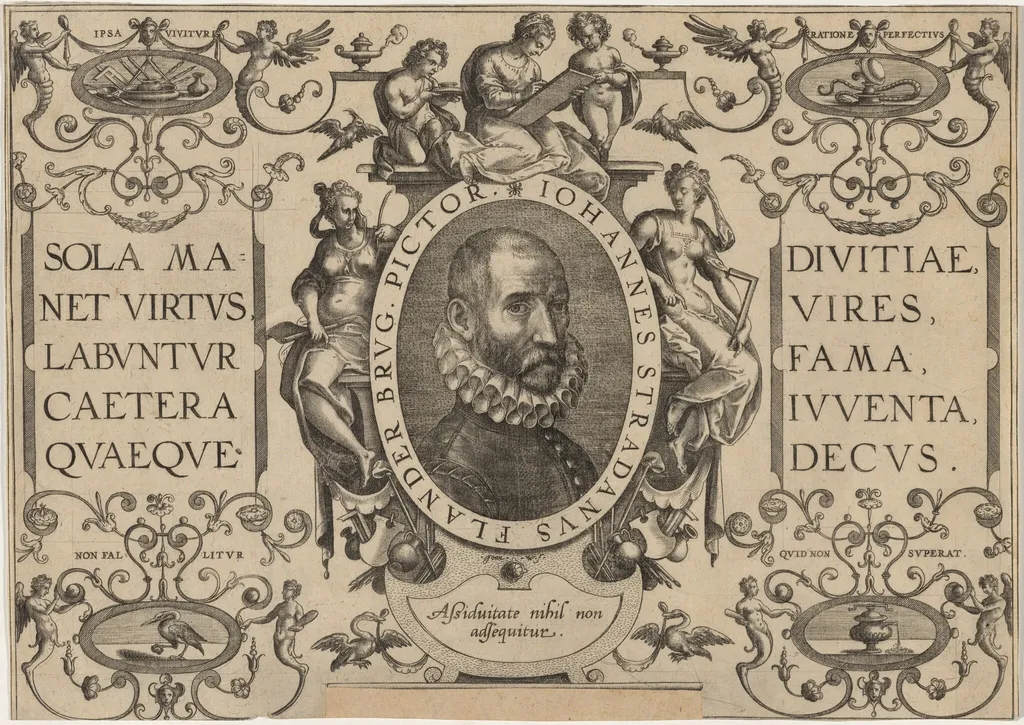
Jan van der Straet, Artist is an ink print by the Romanticist artist Unknown 19th Century. It dates from 1850 and is held in the collection of the National Gallery of Art.
About this work
Overview
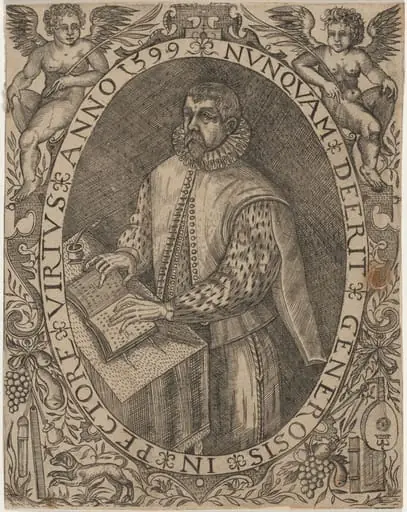
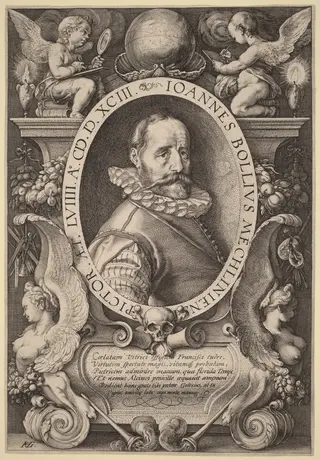
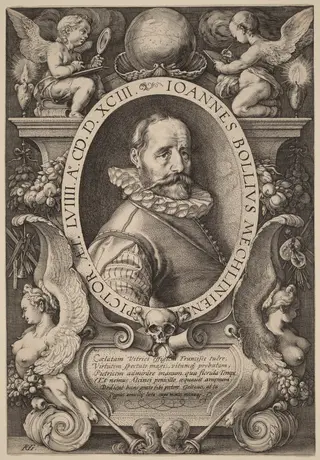
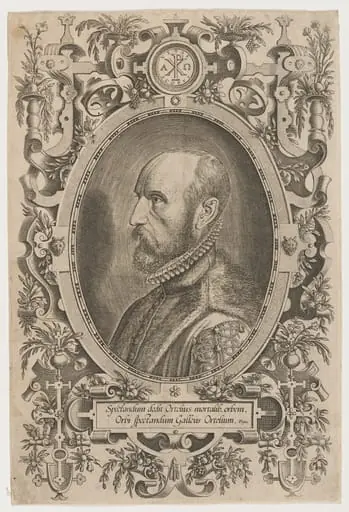
This copperplate engraving presents a bearded gentleman at its center, encircled by a laurel-like wreath bearing the inscription Johannes Straet.
This copperplate engraving presents a bearded gentleman at its center, encircled by a laurel-like wreath bearing the inscription Johannes Straet. Four winged allegorical figures flank the portrait, each supporting a scroll with Latin text that functions primarily as ornamental framing. The background is densely filled with intricate motifs, stylized foliage, blossoms, and tiny faces, rendered in fine line work typical of early modern printmaking.
Subject & Meaning
The central figure is identified as the artist himself, Jan van der Straet, who signed his name within the surrounding wreath. The accompanying winged figures and their scrolls evoke classical themes of learning and virtue, though the Latin phrases serve more as decorative elements than explicit messages, suggesting a self‑portrait that also celebrates the intellectual culture of the period.
Technique & Style
Executed with a burin on a copper plate, the print demonstrates the high level of detail achievable in engraving. Fine hatching creates tonal variation, while the densely packed ornamental patterns showcase the artist’s skill in rendering complex decorative borders. The crisp, linear quality and the interplay of light and shadow are characteristic of Northern Renaissance print aesthetics.
Context
Jan van der Straet (also known as Giovanni di Strada) was active in the mid‑16th century, working in the tradition of Flemish and Italian engraving. Portraits that combine a likeness with elaborate allegorical framing were common among artists seeking to assert their learned status and to appeal to patrons interested in humanist symbolism.
Artist & collection

Artist