Artwork
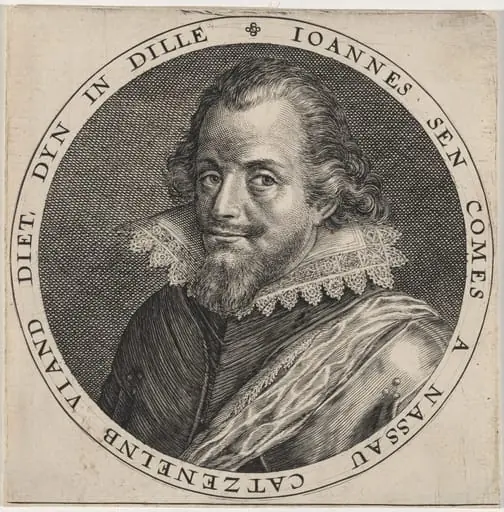
Johan the Elder of Nassau
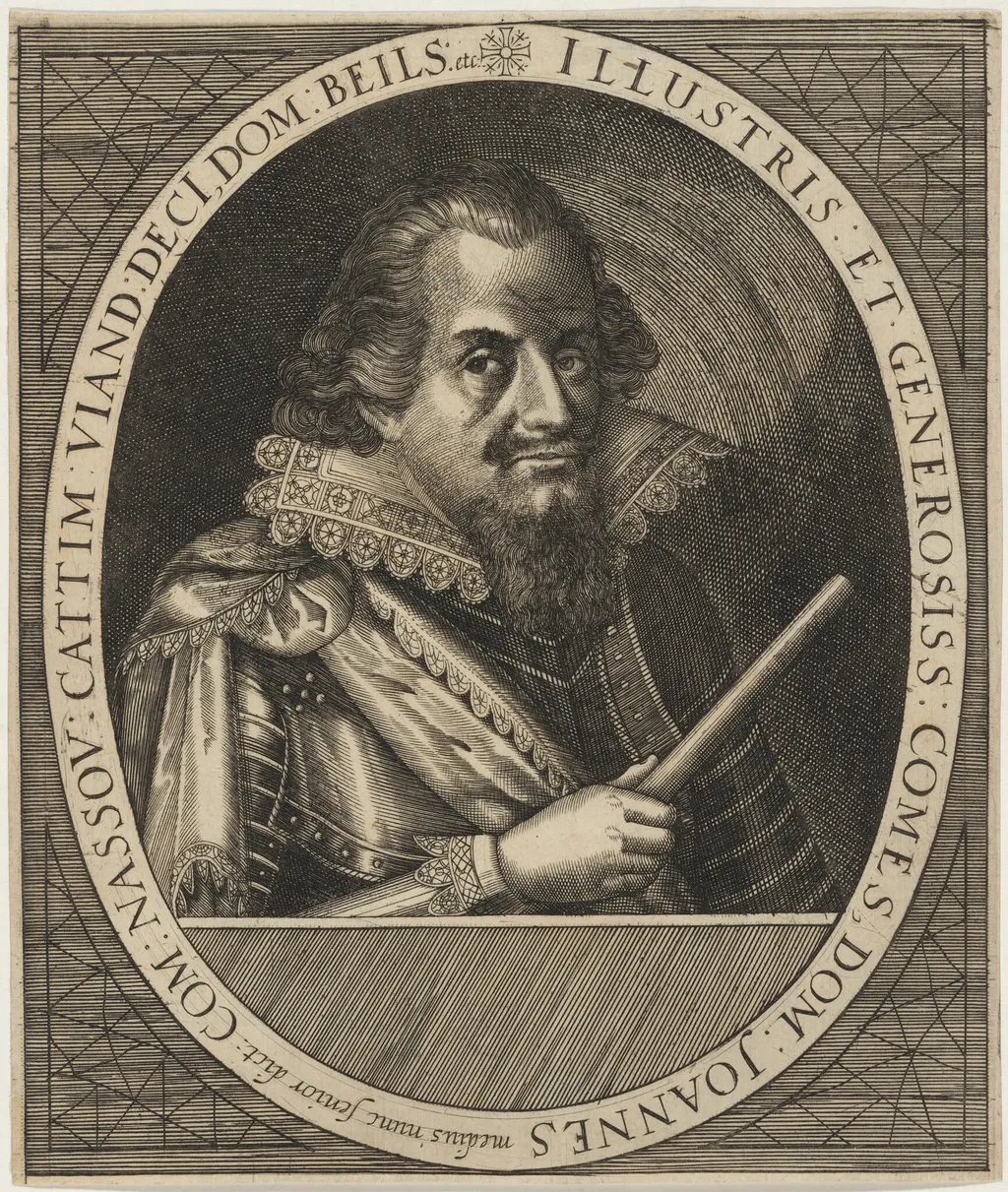
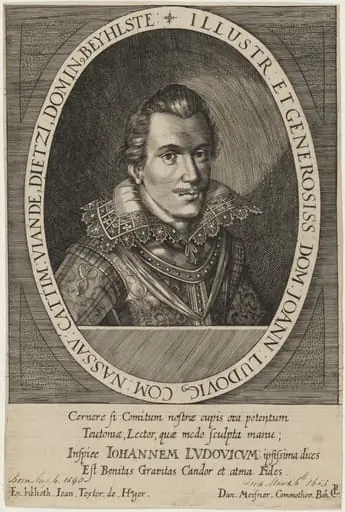
Johan the Elder of Nassau is an ink print by the Romanticist artist Unknown 19th Century. It dates from 1850 and is held in the collection of the National Gallery of Art.
About this work
Overview
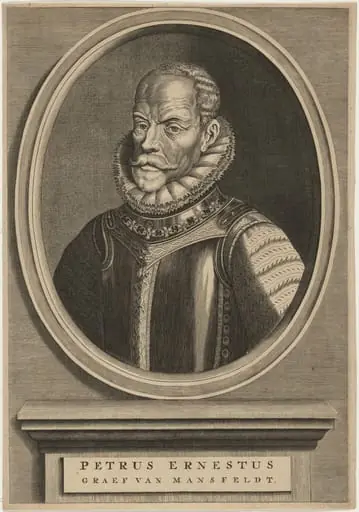
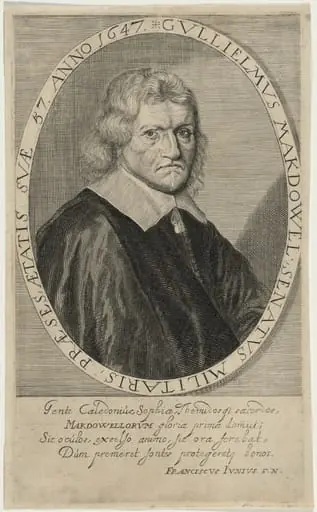
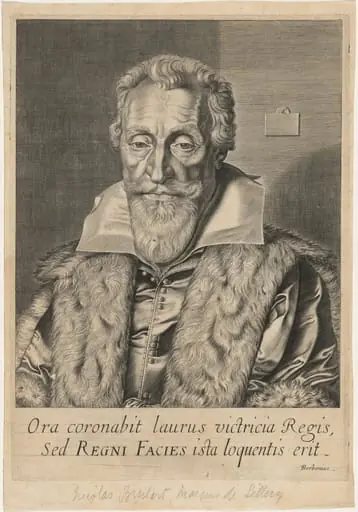
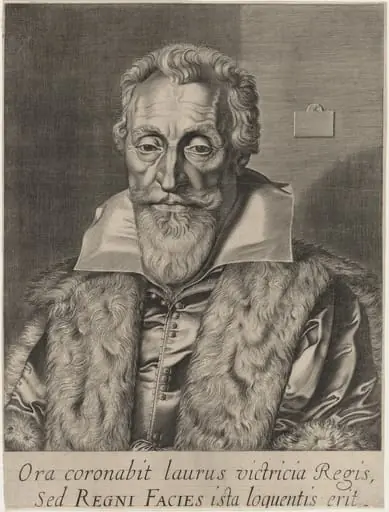
Johan the Elder of Nassau is a black-and-white engraving portrait depicting a bearded man within a circular frame. Prominent details include a ornate collar, a heavy chain, and a held scroll or paper, set against a plain background with Latin inscriptions along the frame's edges.
Subject & Meaning
The subject, Johan the Elder of Nassau, is portrayed with symbols of status: the heavy chain likely denotes nobility or office, while the scroll/paper may indicate literary or administrative pursuits. The overall demeanor conveys dignity and authority.
Technique & Style
The engraving utilizes cross-hatching, a technique involving closely packed parallel lines at varying angles, to achieve deep shading and texture. This method imparts a near three-dimensional quality to the subject's face and attire.
History & Provenance
[Thin Facts - Brief Placeholder] - Detailed historical context and ownership history of 'Johan the Elder of Nassau' are not provided in the supplied facts. The work's creation date and artist's identity beyond the medium (engraving) are unspecified.
Context
Given the use of Latin inscriptions and the portrayal of nobility, the engraving reflects the cultural and social values of its time, emphasizing learning, status, and the patronage of artistic works among the nobility.
Legacy
[Limited Information] - The specific impact, influence, or current significance of 'Johan the Elder of Nassau' within the broader art historical canon or Nassau's historical legacy is not detailed in the provided information.
Artist & collection

Artist