Artwork
Aberystwyth
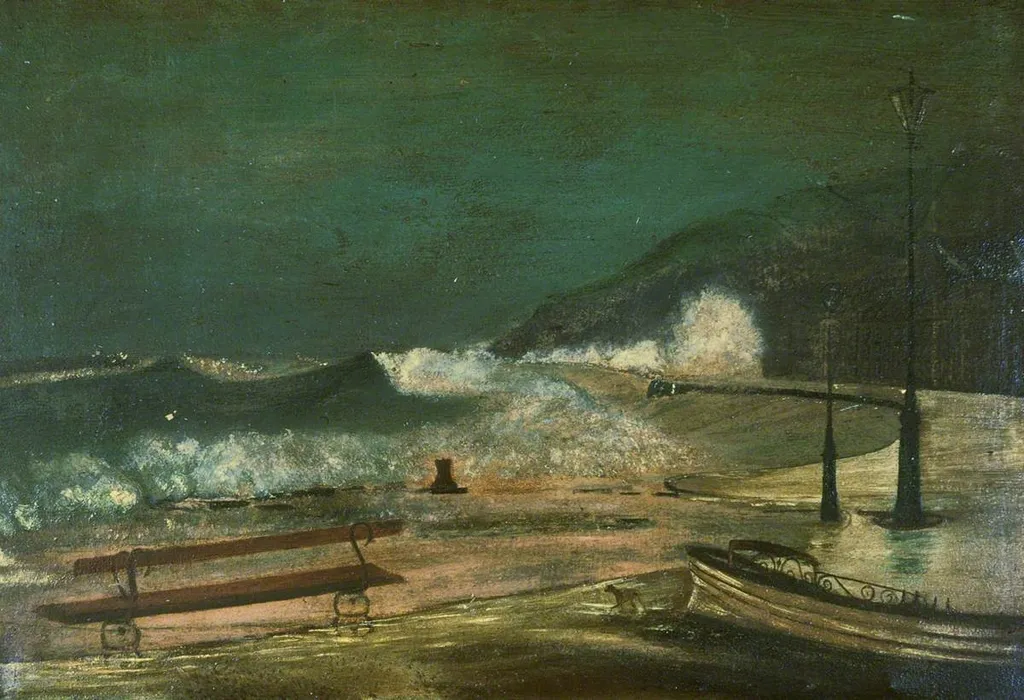
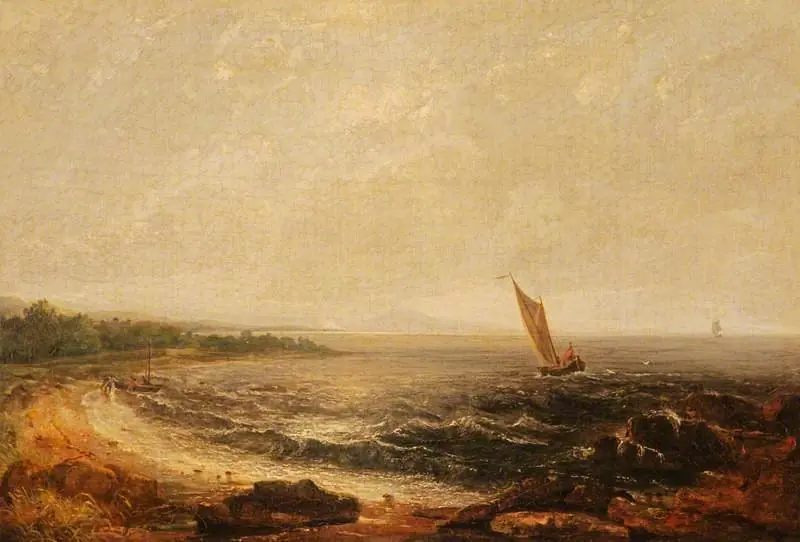
Aberystwyth is an oil painting by the Impressionist artist Unknown. It dates from 1900 and is held in the collection of the National Library of Wales.
About this work
Overview
3 cm, the work is held in the National Library of Wales as part of its Framed Works of Art Collection, having been acquired from Mrs Jonathan Jones in 1959.
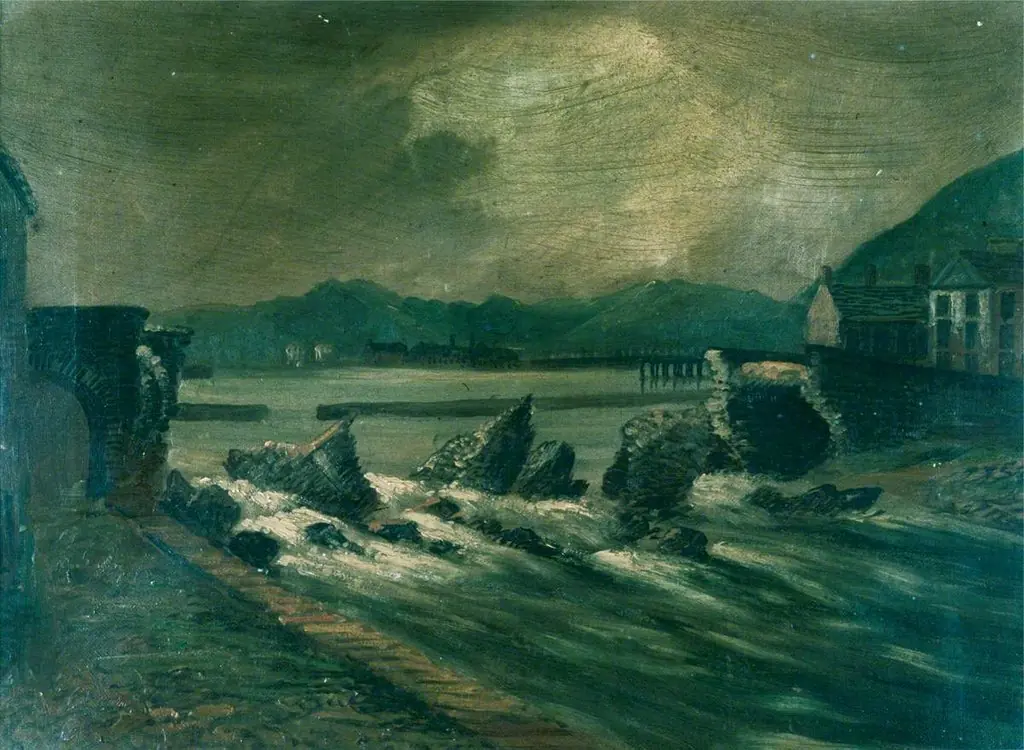
Aberystwyth is an oil-on-canvas landscape painting depicting a stormy night on the Welsh coast, created around 1900 by the British artist T. E. Young. Measuring 43 by 63.3 cm, the work is held in the National Library of Wales as part of its Framed Works of Art Collection, having been acquired from Mrs Jonathan Jones in 1959. The painting matters as a document of late Victorian or Edwardian British coastal painting, capturing the particular atmosphere and topography of Aberystwyth, a town that was emerging as a significant seaside resort and cultural center in Wales during this period.
Subject & Meaning
The painting depicts a nocturnal coastal scene at Aberystwyth, a seaside town on Cardigan Bay in west Wales. The composition is divided between a turbulent sea on the left and a paved promenade or seawall on the right. In the foreground, a wooden bench with iron armrests and legs occupies the left side, while a small beached boat rests on the right. Two tall lampposts stand along the walkway, their dark silhouettes set against a greenish sky. Waves break with white foam against the wall and a distant headland. The subject encompasses the town's identity as a coastal resort, with the promenade and seafront amenities that had developed during the Victorian period. The stormy conditions and nocturnal setting convey a sense of nature's power against human structures of leisure and habitation, a common theme in British coastal painting of the era. The depiction of Aberystwyth specifically, rather than a generic seascape, ties the work to the growing cultural significance of Welsh seaside towns in the late nineteenth and early twentieth centuries.
Technique & Style
The work is executed in oil on canvas, a standard medium for British landscape painting of this period. The palette is dominated by dark greens, blues, and browns, with touches of white in the surf. The paint surface appears relatively smooth, with some visible brushwork in the sky and water areas. The handling of the nocturnal atmosphere, with the greenish sky and the contrast between the dark forms of the lampposts and the illuminated foam of the waves, suggests an interest in tonal effects and atmospheric conditions. The composition's division between the wild sea and the ordered promenade creates a formal tension between nature and human construction. The relatively small scale of the canvas, at 43 by 63.3 cm, indicates a work intended for intimate viewing rather than grand public display, consistent with many British landscape paintings of the period that circulated in private collections before entering institutional holdings.
History & Provenance
The painting is dated to approximately 1900, a period when Aberystwyth was firmly established as a seaside resort following the opening of its railway station and Royal Pier in 1865, and the development of its promenade and associated amenities during the Victorian and Edwardian eras. The work was acquired by the National Library of Wales from Mrs Jonathan Jones in 1959, with the accession number PB03822. It entered the library's Framed Works of Art Collection, where it remains. The National Library of Wales, established in Aberystwyth, serves as a major repository of Welsh cultural heritage, and the painting's place in this collection reflects its value as a document of Welsh coastal topography and social history. No exhibition history is recorded in the available sources.
Context
T. E. Young worked within a tradition of British coastal and landscape painting that flourished during the late nineteenth and early twentieth centuries, when seaside resorts became increasingly popular subjects for artists responding to the growth of tourism and leisure culture. Aberystwyth itself was undergoing significant development during this period, with its promenade, pier, and associated amenities drawing visitors from across Wales and beyond. The town's status as a university location, with University College Wales established in 1872, and its position as a cultural link between North and South Wales, contributed to its significance within Welsh national life. The painting can be situated within a broader visual culture documenting the Welsh coast, which attracted artists drawn to its dramatic seascapes and distinctive atmospheric conditions. The work's acquisition by the National Library of Wales, rather than a fine art museum, indicates its primary valuation as a document of place and social history within Welsh cultural heritage.
Legacy
The painting's legacy is primarily institutional and documentary rather than art-historical in the conventional sense. As part of the National Library of Wales collection, it contributes to the visual record of Aberystwyth and the Welsh coast during a formative period in the town's development as a resort and cultural center. The work is accessible through Art UK, the online platform for public art collections in Britain, which indicates its availability for non-commercial research and private study under UK copyright exceptions. Its continued presence in the National Library's holdings ensures its preservation as part of Wales's visual heritage, though no specific scholarly attention or critical reception has been documented in the available sources. The painting's afterlife is thus bound up with the broader project of the National Library of Wales in preserving and making accessible materials relating to Welsh history and culture.
Artist & collection