Artwork
Adoration of the Magi
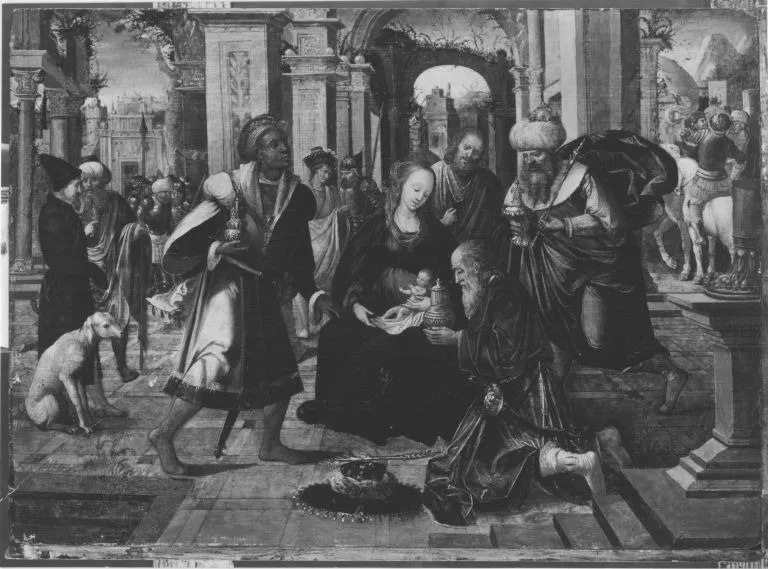
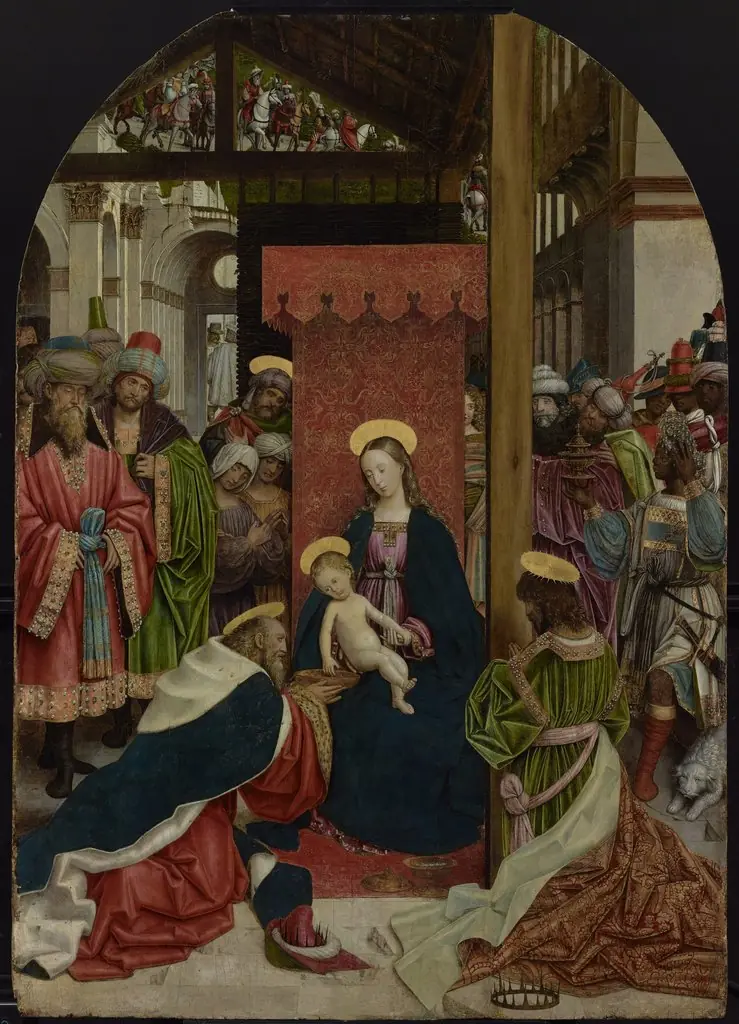
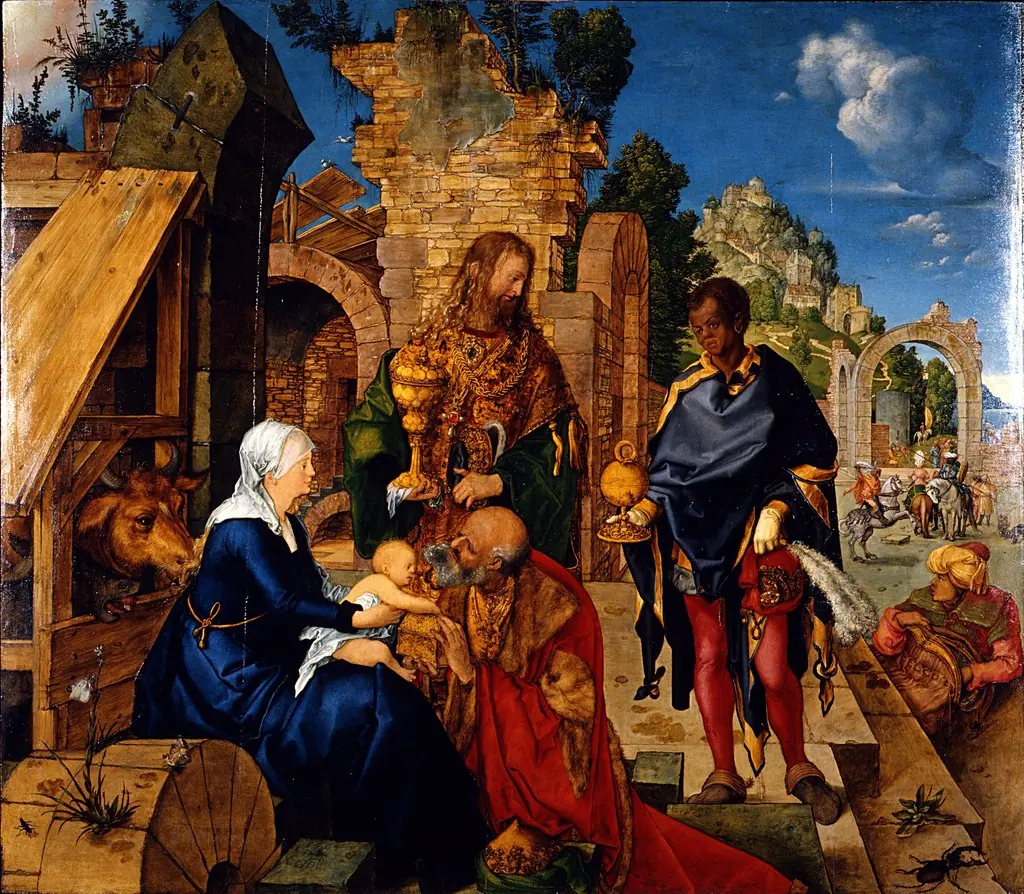
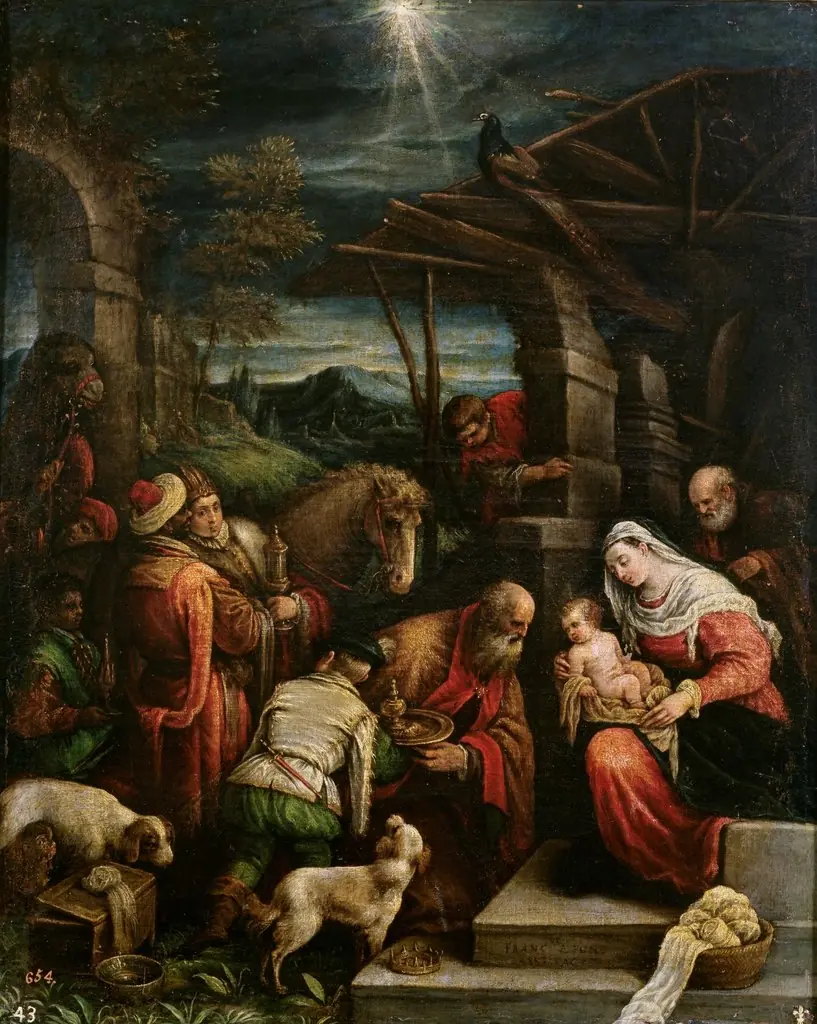
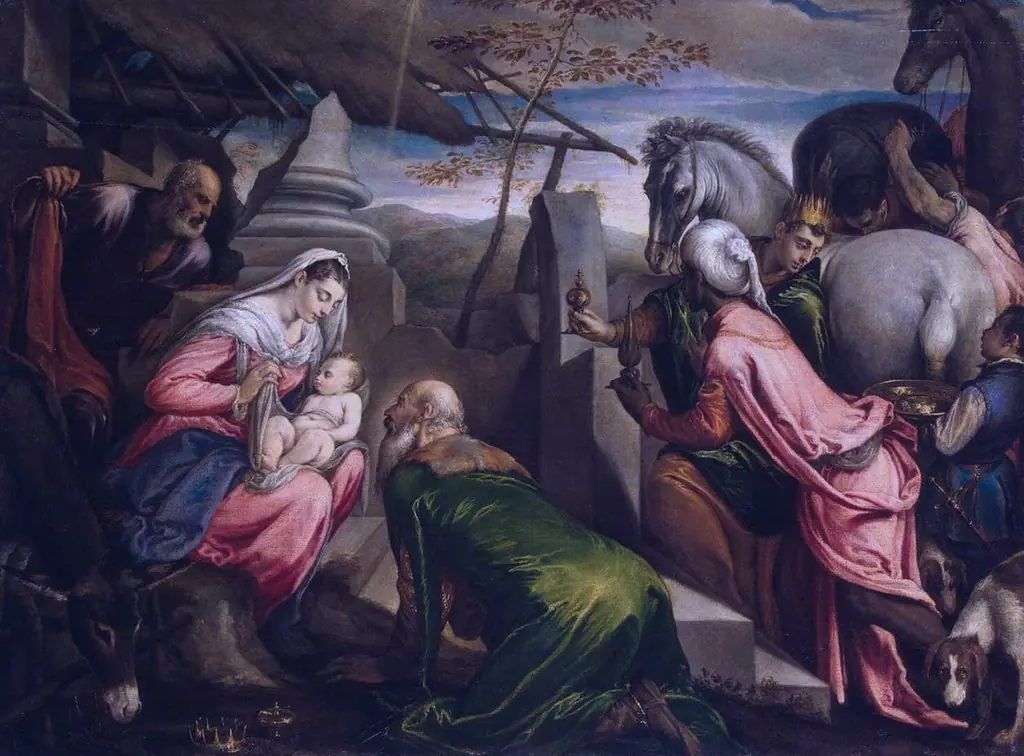
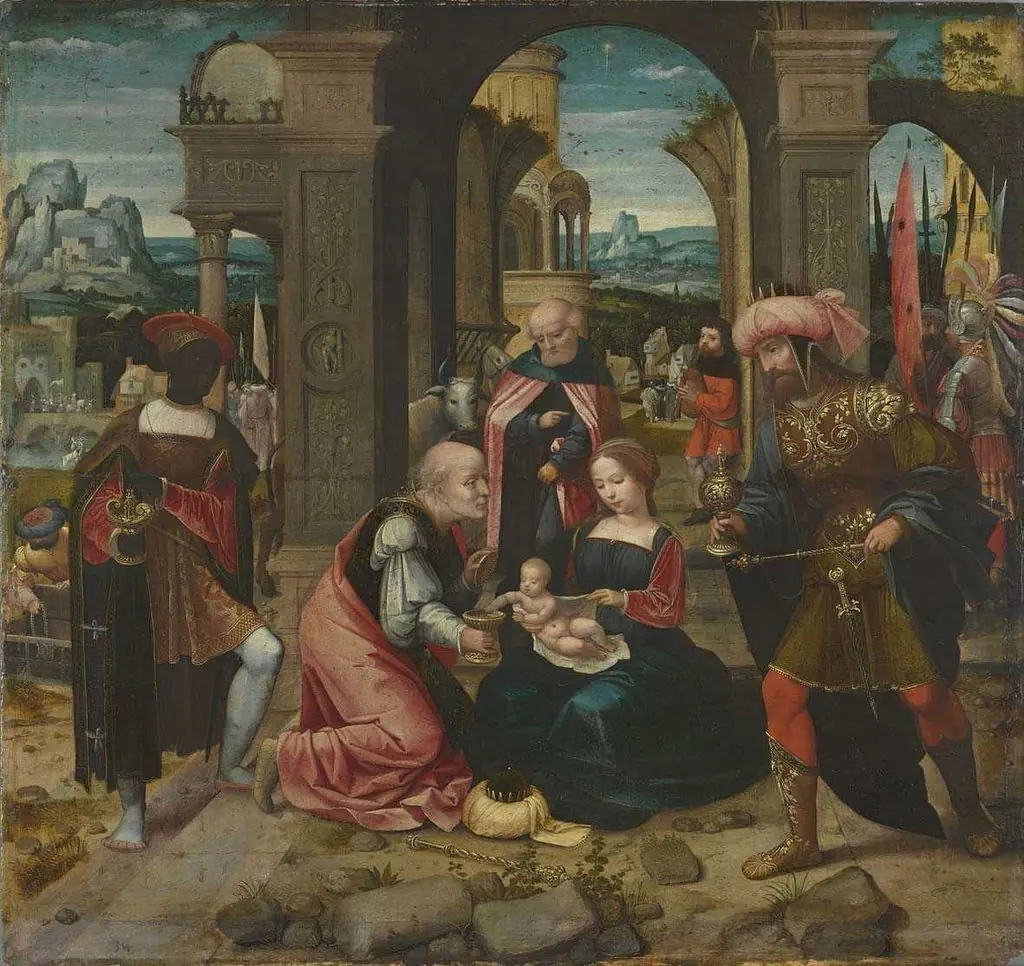
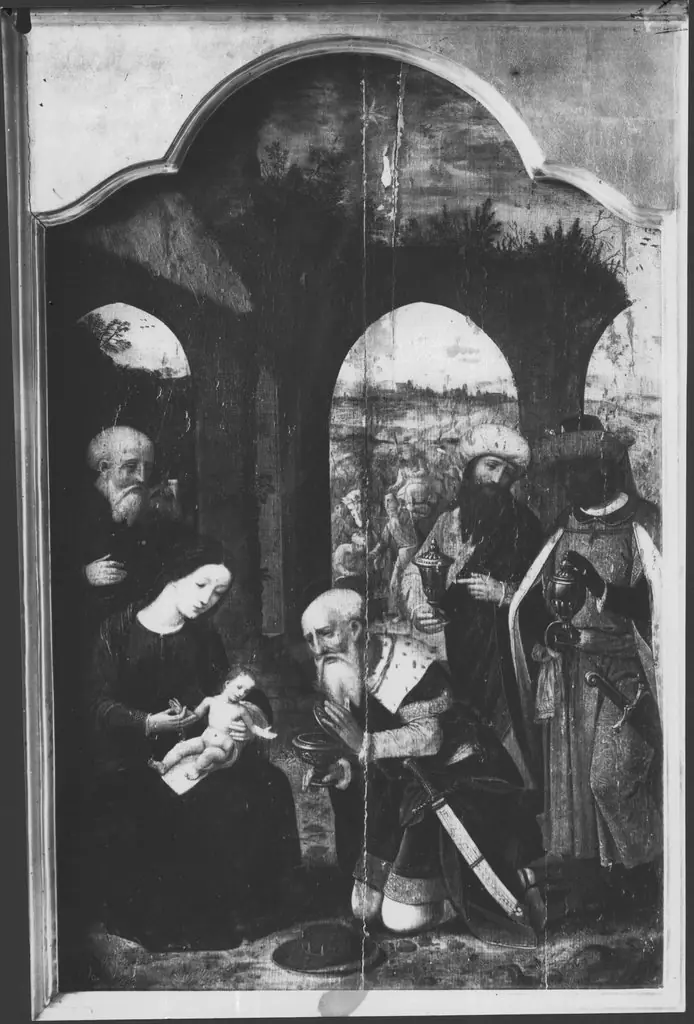
Adoration of the Magi is an oil painting by the Mannerist artist Unknown. It dates from 1540 and is held in the collection of the Bavarian State Painting Collections. The work depicts a domestic interior where a woman cradles an infant, surrounded by three richly dressed figures who present gifts.
About this work
Technique & Style
Created around 1540 in Antwerp, this religious painting utilizes oil paint applied to an oak panel support. The work measures 32 cm in height and 44.5 cm in width. It currently resides in the Alte Pinakothek as part of the Bavarian State Painting Collections.
The piece depicts the Adoration of the Magi, focusing on the Christ Child as the central subject within the composition.
History & Provenance
The work, which depicts the Adoration of the Magi, eventually entered the holdings of the Bavarian State Painting Collections.
Created in 1540, this oil painting on oak panel was produced in Antwerp by an anonymous master associated with that city. The work, which depicts the Adoration of the Magi, eventually entered the holdings of the Bavarian State Painting Collections. It is currently housed within the Alte Pinakothek museum.
The painting is held by the Bavarian State Painting Collections and is on display at the Alte Pinakothek in Munich. It was produced in Antwerp around 1540 on an oak panel, and its modest dimensions, 32 cm in height by 44.5 cm in width, are consistent with a small devotional panel of that period. No inventory or accession number is recorded in the available documentation, and no exhibition history beyond its current placement at the Alte Pinakothek is documented in the sources.
Overview
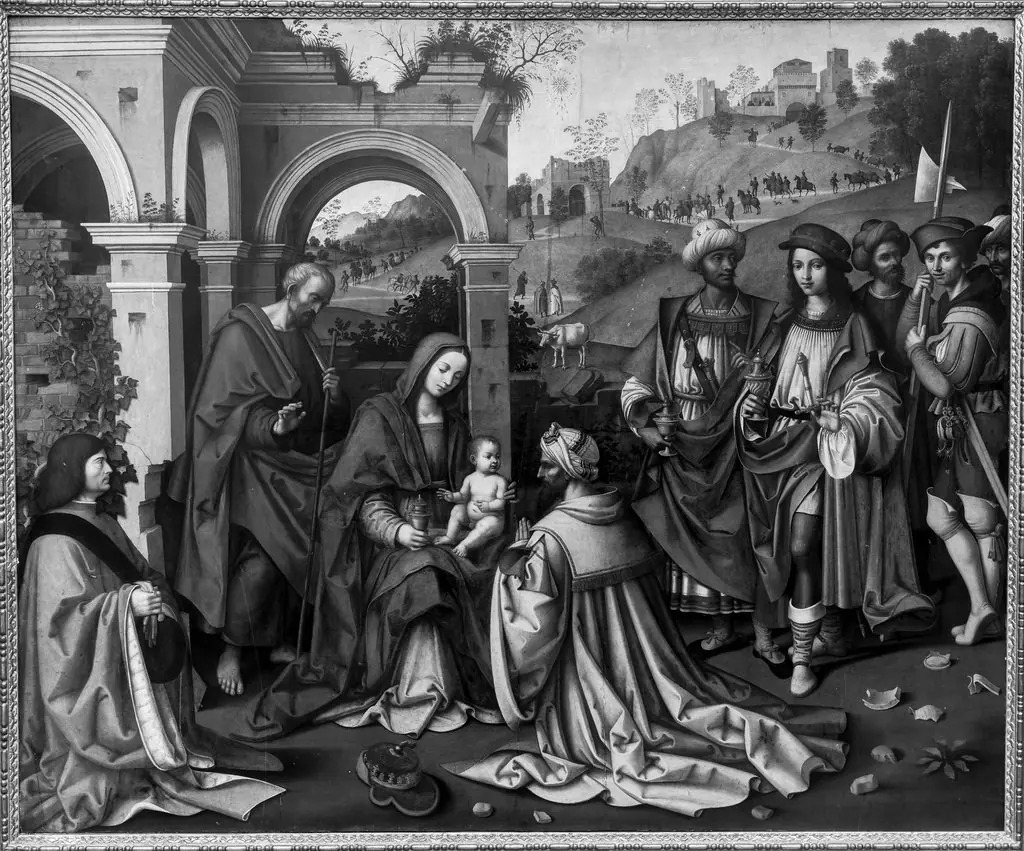
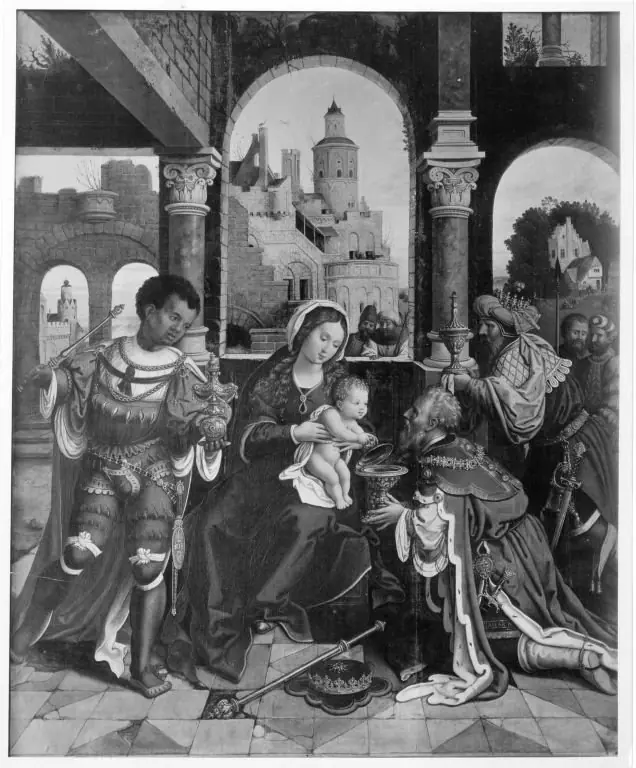
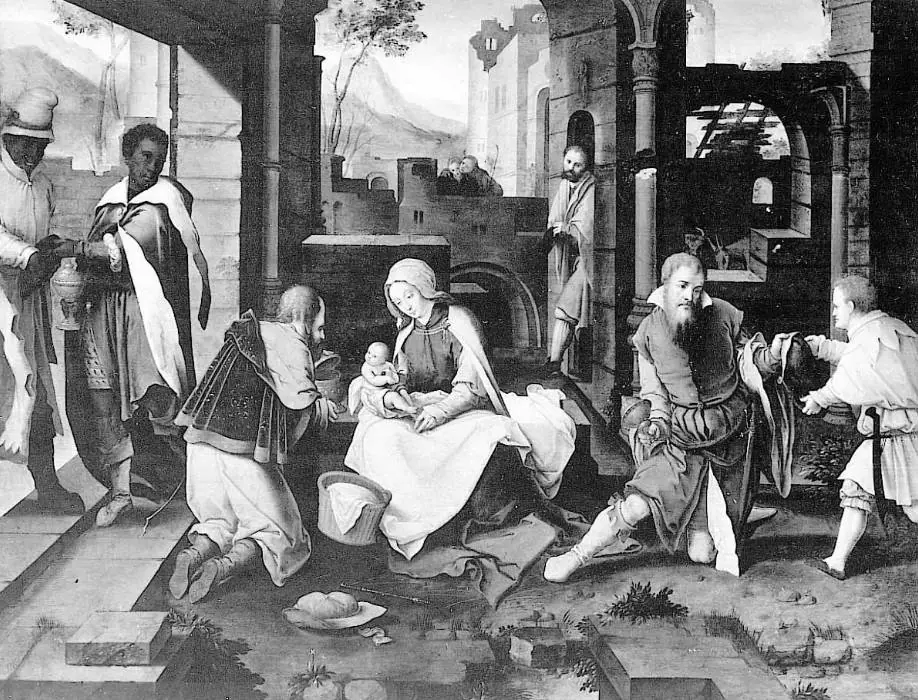
The work depicts a domestic interior where a woman cradles an infant, surrounded by three richly dressed figures who present gifts. A dog rests in the foreground, while the surrounding space is defined by an arched hall, columns, and distant city vistas. The composition is organized to guide the viewer’s eye toward the central mother and child, emphasizing their prominence within the scene.
Subject & Meaning
The central figures represent the biblical episode of the Adoration of the Magi, with the woman identified as the Virgin Mary and the infant as the Christ child. The three male visitors, clothed in elaborate robes, embody the Magi offering symbolic gifts, a small box, a staff, and a bag, signifying tribute and recognition of the newborn’s significance.
Context
Set within an expansive, vaulted interior, the painting situates the sacred narrative in a recognizable, architectural space, linking the holy event to contemporary settings. The inclusion of a domestic animal and the detailed cityscape beyond the arches reflects a trend toward integrating everyday elements into religious scenes, thereby making the story more accessible to viewers.
Legacy
The composition’s careful arrangement of figures, use of light, and incorporation of architectural depth have influenced subsequent treatments of the Adoration theme, serving as a reference for artists exploring the balance between devotional content and realistic spatial settings.
Artist & collection