Artwork
Alessandro de' Medici (1510–1537)
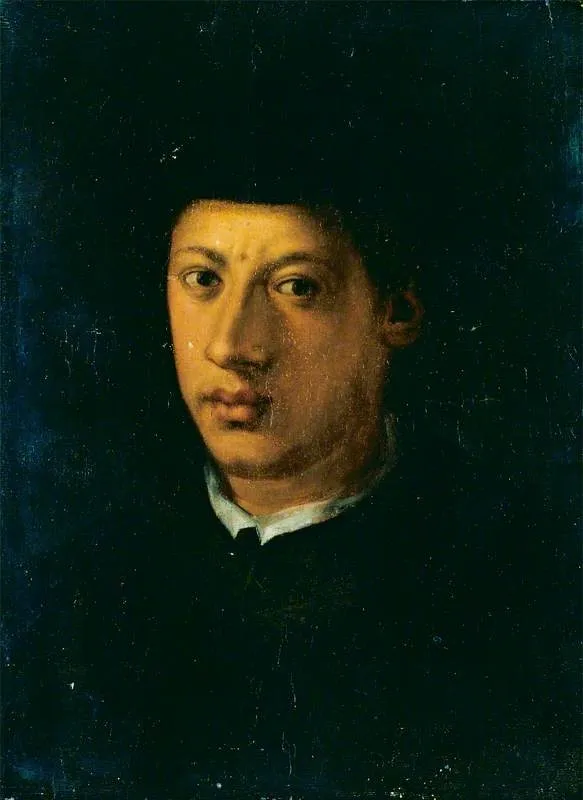
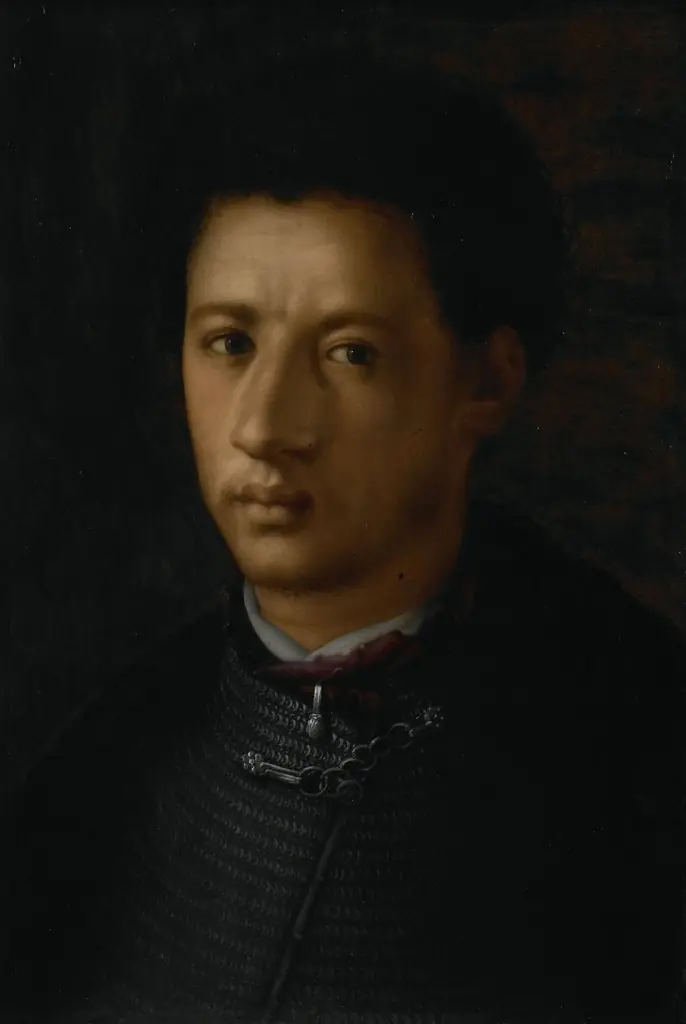
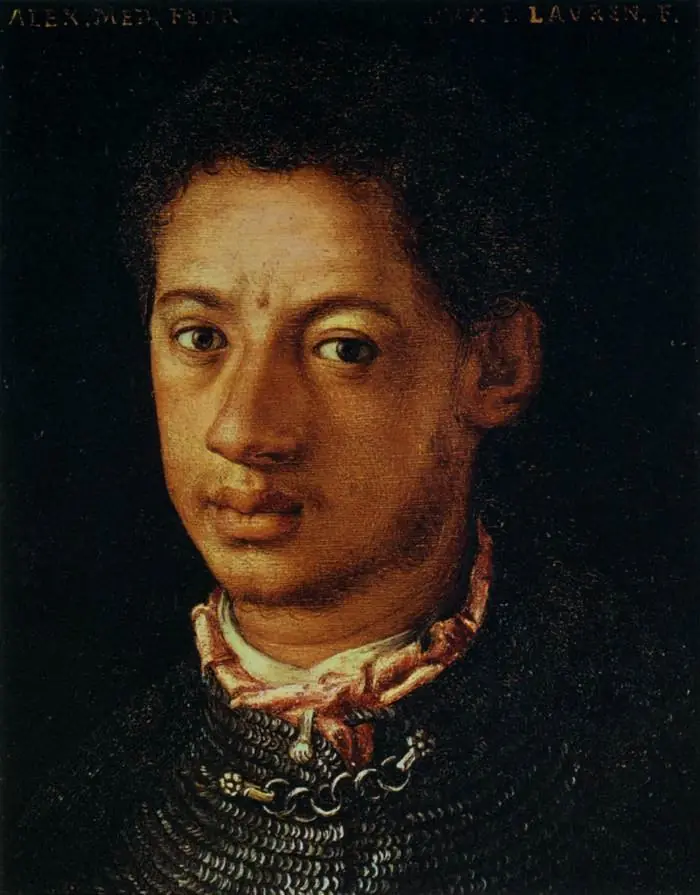
Alessandro de' Medici (1510–1537) is an oil painting by the Late Mannerist artist Unknown. It dates from 1600 and is held in the collection of the Victoria and Albert Museum. This oil painting depicts Alessandro de' Medici, the first Duke of Florence, rendered in a tightly focused portrait.
About this work
Overview
The composition isolates his upper body against a deep, unbroken background, emphasizing his presence through controlled lighting.
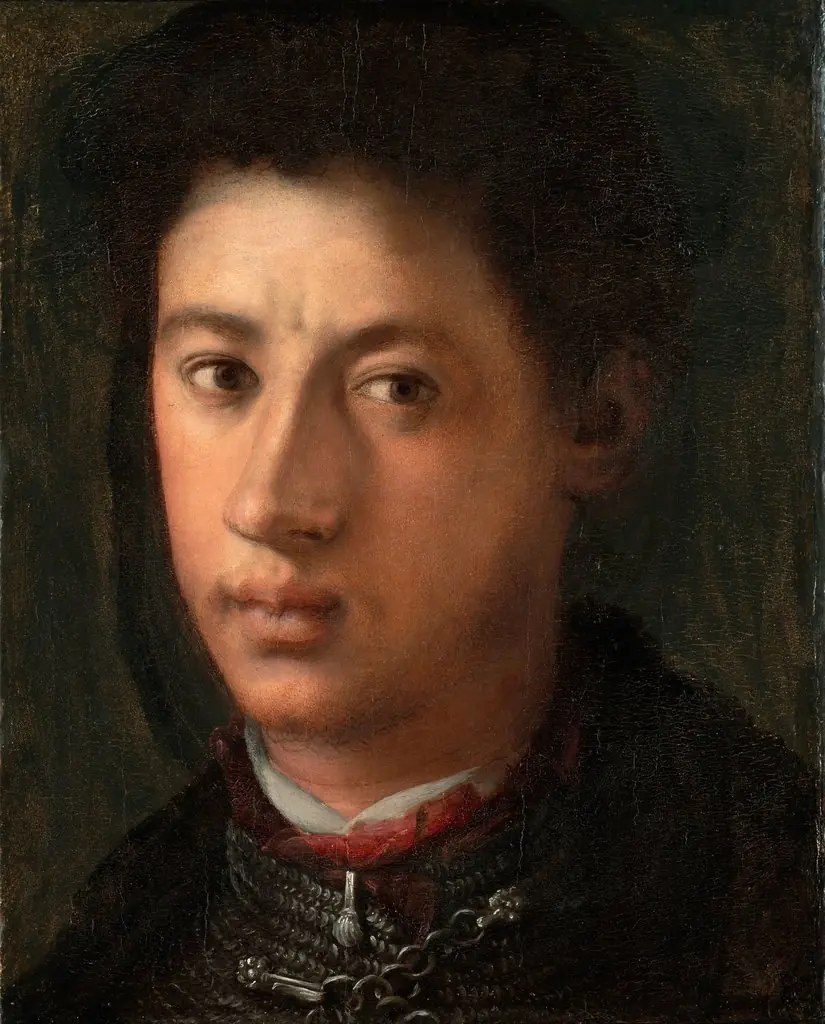
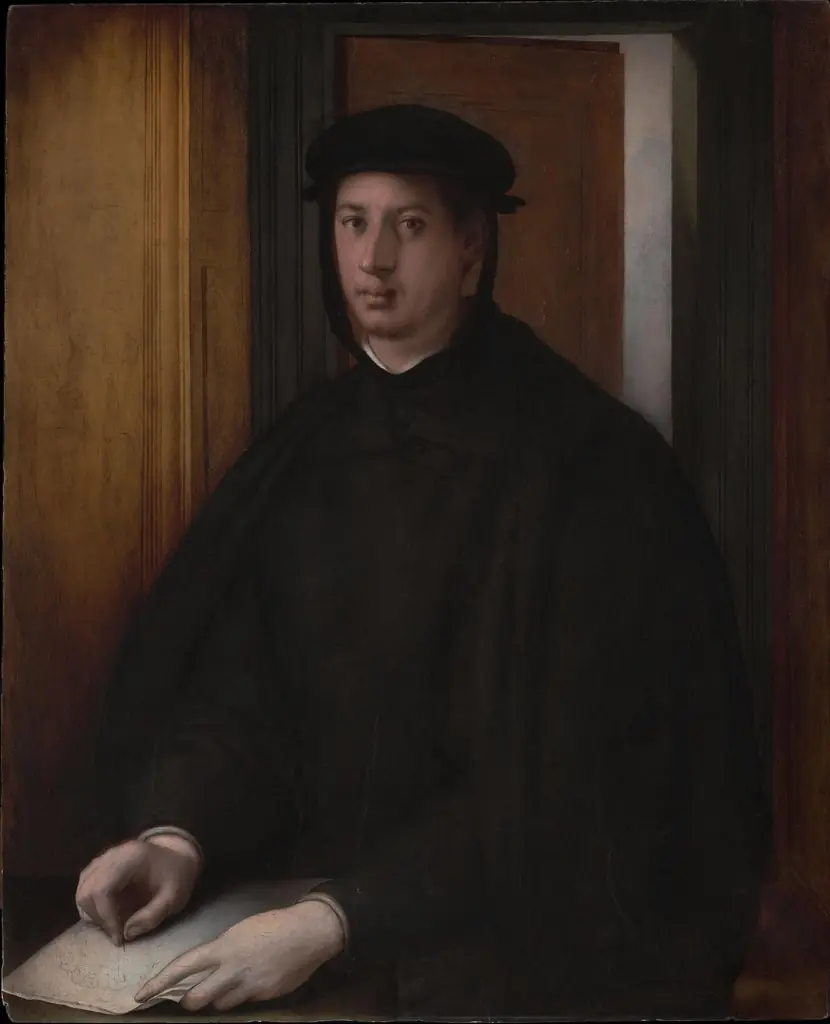
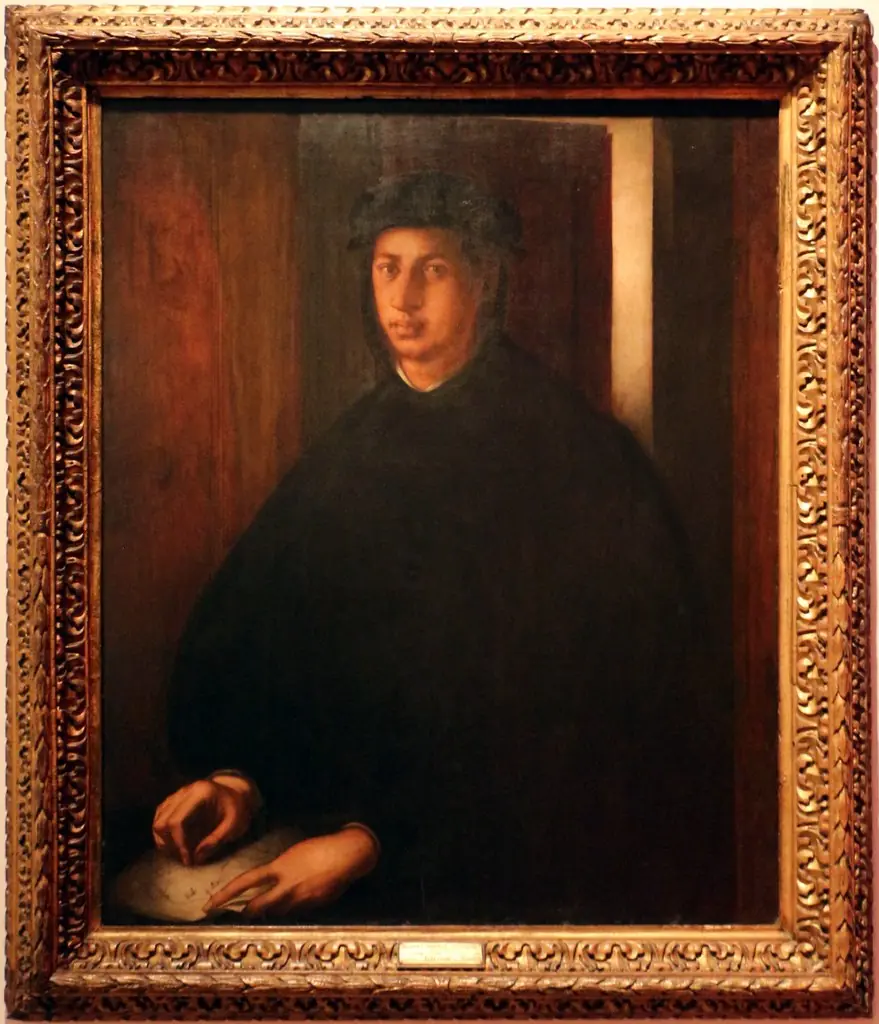
This oil painting depicts Alessandro de' Medici, the first Duke of Florence, rendered in a tightly focused portrait. The composition isolates his upper body against a deep, unbroken background, emphasizing his presence through controlled lighting. His dark attire and pale collar create a stark contrast, drawing the eye to his face. The technique prioritizes psychological presence over ornamentation, reflecting the political gravity of his role.
Subject & Meaning
Alessandro de' Medici, born to an unknown mother and likely the son of Lorenzo de' Medici, was a controversial figure who ruled Florence as its first hereditary duke. His portrait conveys authority through stillness and direct gaze, avoiding theatricality. The seriousness of his expression may reflect the tensions of his position, a ruler of mixed heritage in a republic wary of autocracy. The image functions as a statement of legitimacy rather than personal intimacy.
Technique & Style
The artist employs chiaroscuro to model the face with subtle gradations of light and shadow, giving the skin a tactile, three-dimensional quality. The dark background eliminates distractions, heightening the focus on facial expression and texture. Brushwork is restrained, with smooth transitions between tones and precise rendering of the beard and collar. The palette is limited to blacks, whites, and warm mid-tones, reinforcing the portrait’s solemn tone.
History & Provenance
Painted shortly before Alessandro’s assassination in 1537, the portrait likely served as a political instrument to affirm his status. It was probably commissioned by the Medici court and remained in Florentine collections afterward. Early records associate it with the Medici family’s private holdings, and it later entered the Uffizi Gallery, where it has been preserved as a key document of 16th-century Florentine power.
Context
In early 16th-century Florence, portraiture was increasingly used to assert dynastic legitimacy. Alessandro’s rise, from illegitimate son to duke, challenged republican ideals, making his image a tool of propaganda. Artists were expected to balance realism with dignity, avoiding overt flattery while projecting stability. This portrait aligns with broader trends in Italian court art, where psychological depth replaced idealized beauty.
Legacy
The portrait remains one of the few surviving images of Alessandro de' Medici, offering rare visual evidence of a ruler whose lineage and rule were contested. Its restrained realism influenced later Medici portraiture and contributed to the evolution of psychological portraiture in Renaissance Italy. Today, it is studied for its technical precision and as a window into the intersection of race, power, and representation in early modern Europe.
Artist & collection