Artwork
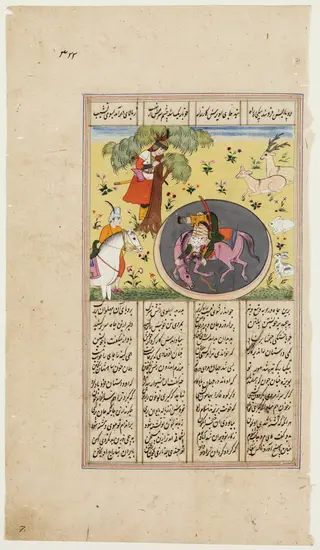
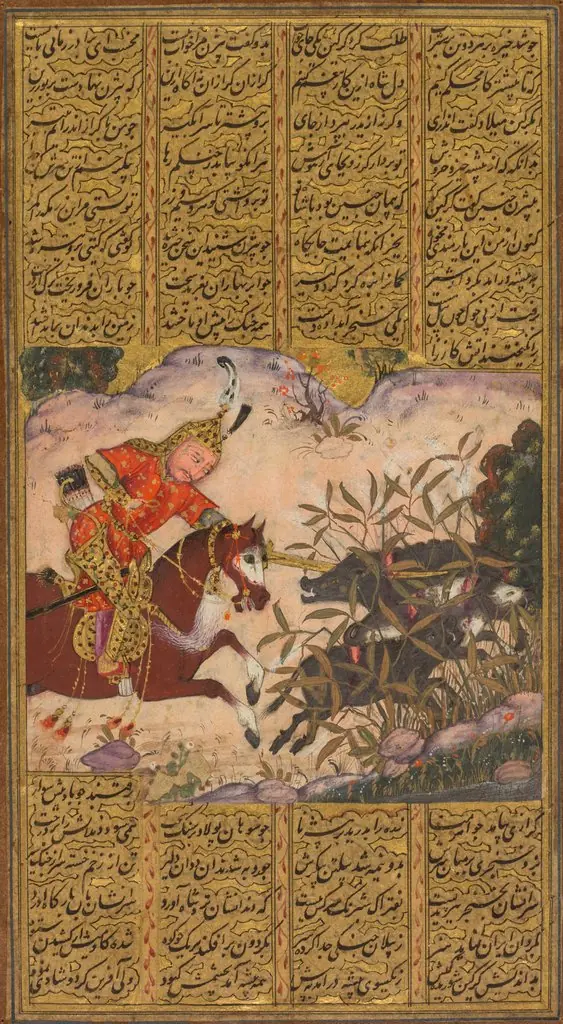
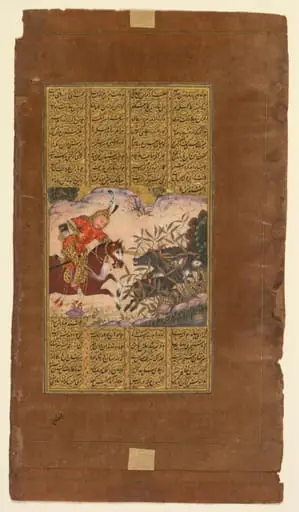
Bijan killing the wild boars of Irman, from a Shah-nama (Book of Kings) of Firdausi (Persian, about 934–1020) (verso)
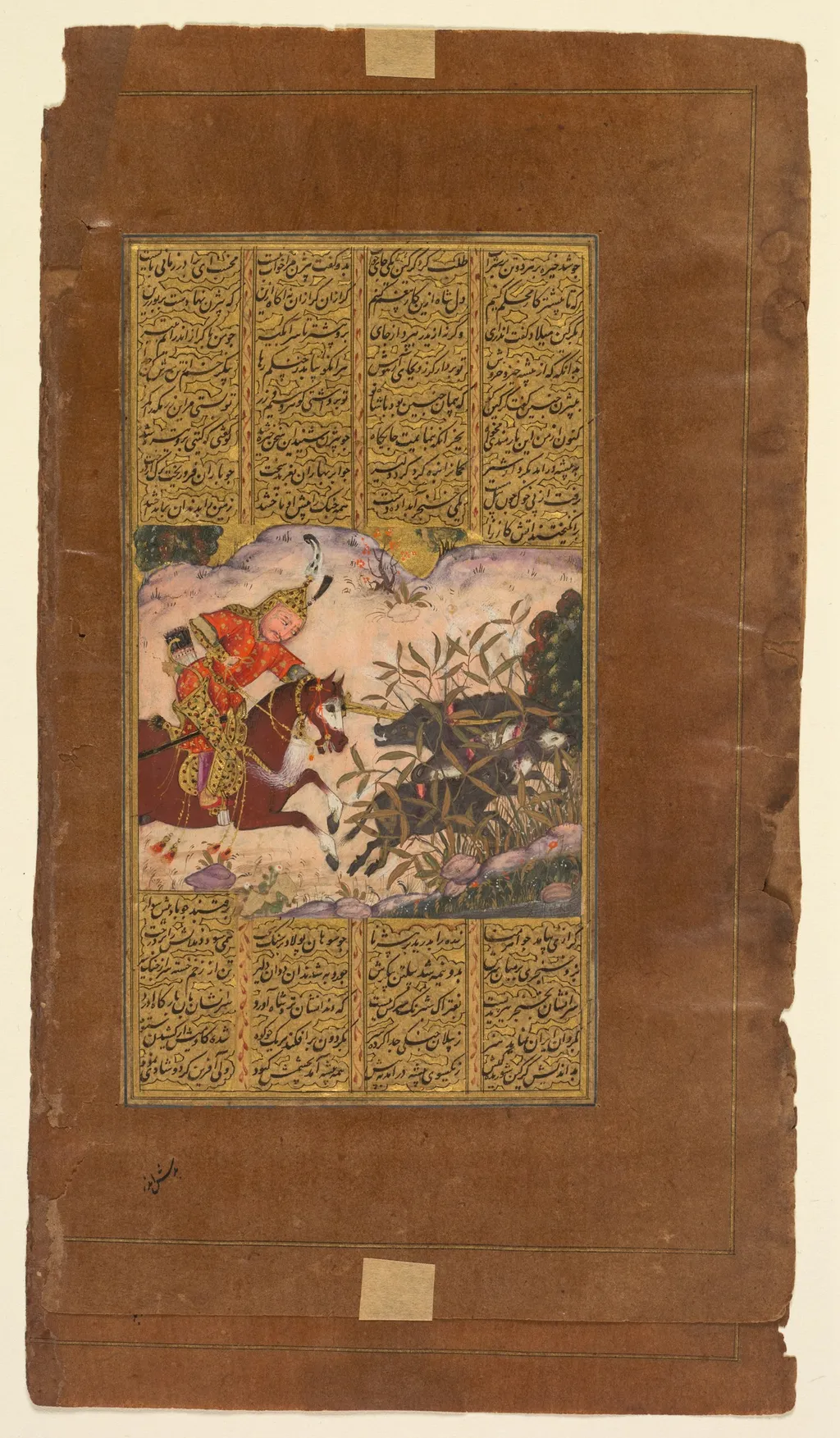
Bijan killing the wild boars of Irman, from a Shah-nama (Book of Kings) of Firdausi (Persian, about 934–1020) (verso) is an unspecified painting. It dates from 1610 and is held in the collection of the Cleveland Museum of Art. The work is a miniature painting illustrating the episode of Bijan confronting wild boars, a scene taken from the Persian epic Shah‑nama.
About this work
Context
The painting depicting Bijan slaying the wild boars of Irman, a folio from a 17th-century Persian Shah-nama, reflects the enduring narrative power of Firdausi's epic in Safavid visual culture. Scholarship identifies its composition as rooted in the artistic traditions of 17th-century Persian manuscript illumination, where heroic narratives were rendered with dynamic motion and intricate detail to emphasize valor and divine favor. This work's stylistic elements align with the broader context of Safavid book arts, which synthesized Persian literary heritage with courtly aesthetics, reinforcing cultural identity through visual storytelling.
Legacy
The verso of a 1610 Persian miniature from the Shah-nama of Firdausi depicts Bijan killing the wild boars of Irman, a scene later echoed in contemporary reinterpretations of epic narratives. Its composition informed modern visual retellings, particularly in exhibitions that juxtapose Safavid miniatures with present-day responses to mythic violence.
Overview
The work is a miniature painting illustrating the episode of Bijan confronting wild boars, a scene taken from the Persian epic Shah‑nama. Executed on the verso of a folio, the image presents a mounted warrior amid a rocky, grassy terrain under a pale sky illuminated by a golden sun.
Subject & Meaning
The narrative portrays Bijan, a heroic figure, engaged in a perilous hunt, symbolizing bravery and the triumph of order over chaos. The surrounding Persian verses, inscribed in neat columns, echo the literary source and reinforce the moral dimension of the tale.
Technique & Style
Rendered with delicate brushwork, the miniature employs a restrained palette of earthy reds, muted greens, and soft blues, punctuated by gold highlights that accentuate the sun and ornamental details. The composition balances figure and landscape, while the black ink border frames the scene with calligraphic precision.
History & Provenance
Created for a patron named Prince Salim, the piece reflects the courtly patronage typical of the period. Although the Shah‑nama was compiled between the 10th and 11th centuries, the illustration itself dates from a later manuscript tradition that continued to copy and embellish the epic.
Artist & collection

- Bijan killing the wild boars of Irman, from a Shah-nama (Book of Kings) of Firdausi (Persian, about 934–1020)
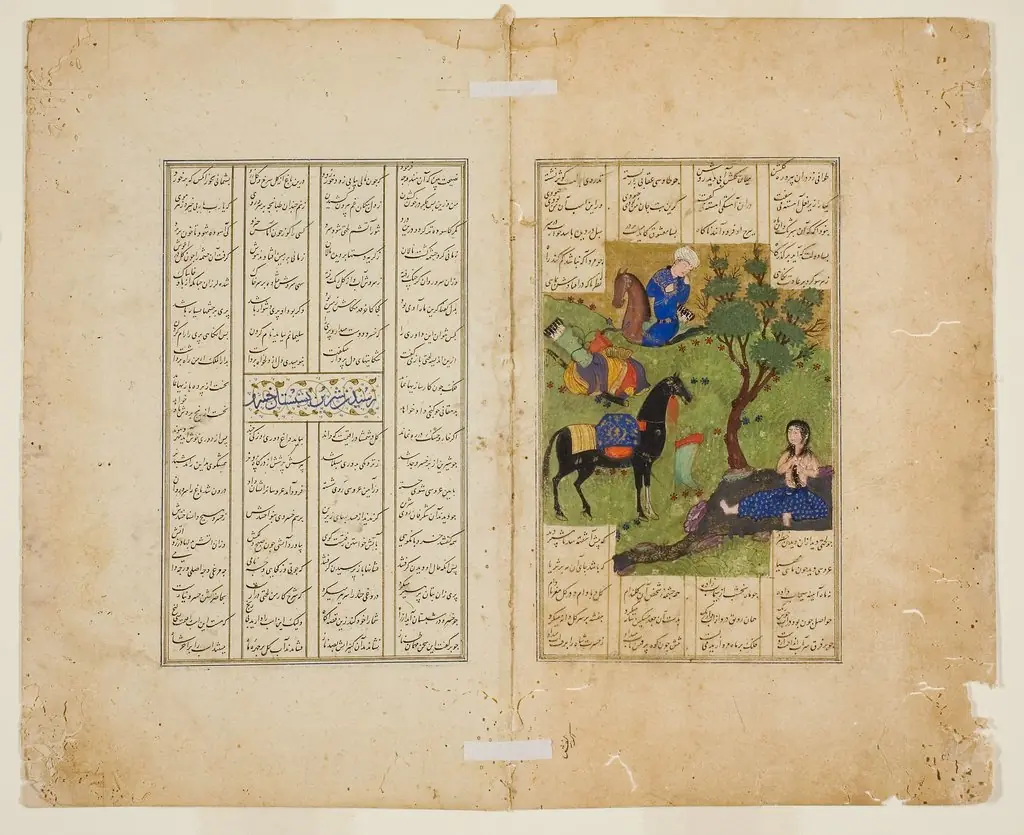
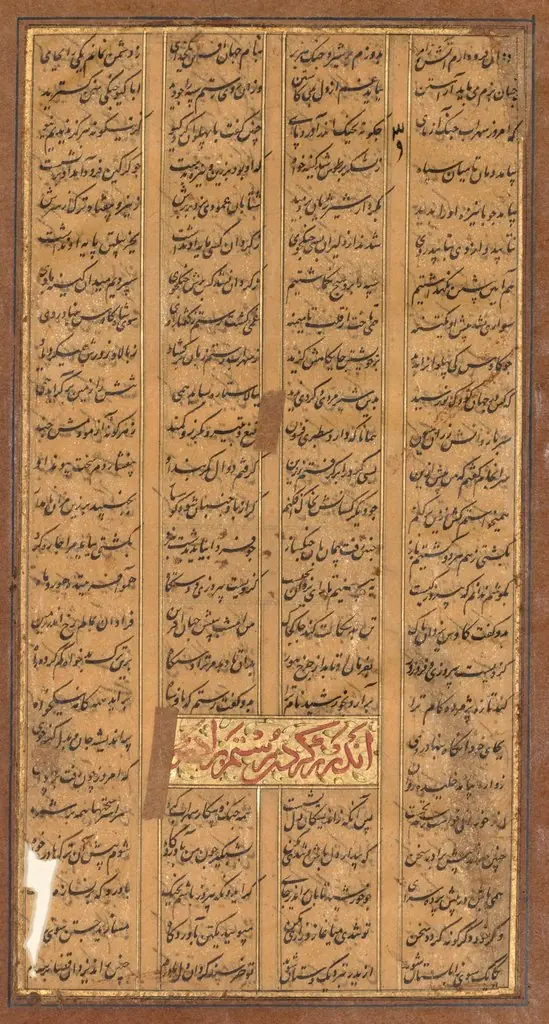 Text of Rustam and Suhrab, from the Shah-nama of Firdausi (Persian, c. 934–1020) (recto)
 Bijan killing the wild boars of Irman, from a Shah-nama (Book of Kings) of Firdausi (Persian, about 934–1020) (verso)
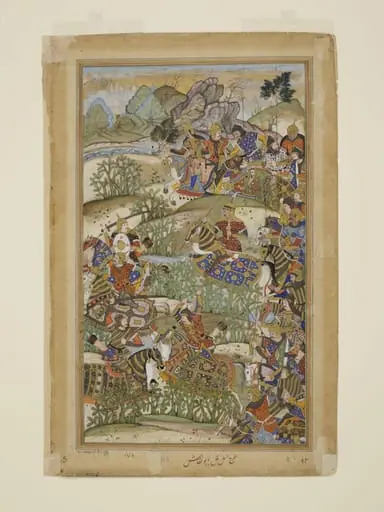
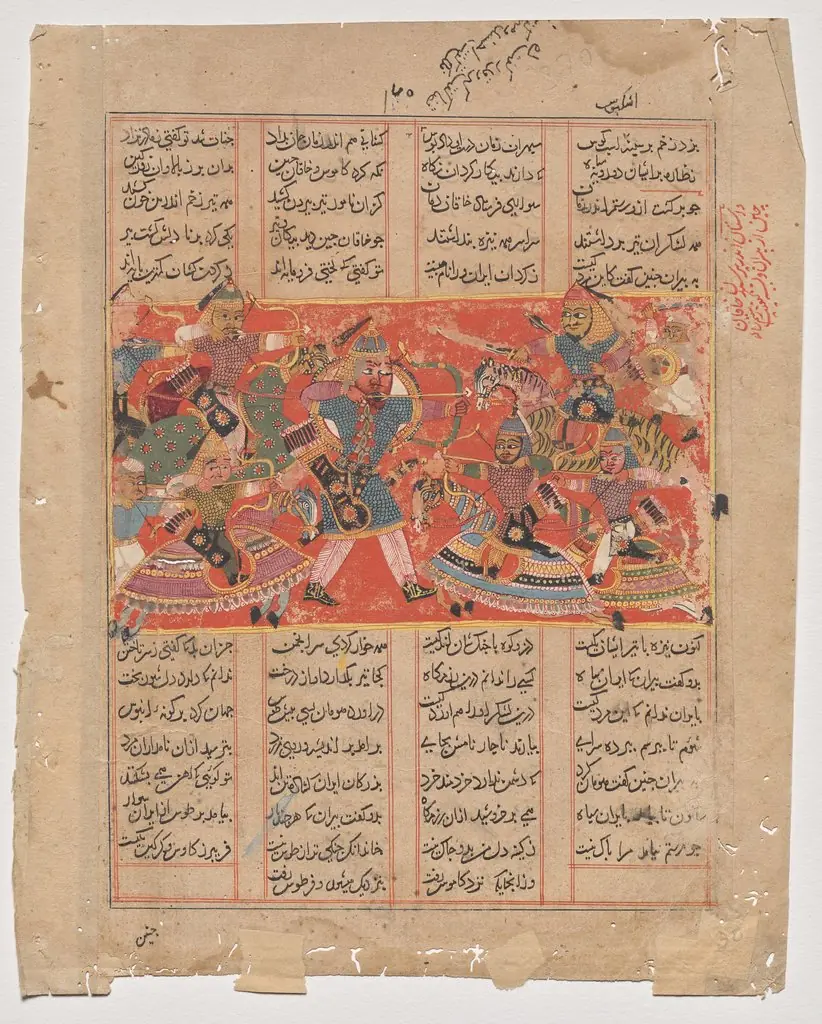 Rustam Takes Aim at Ashkabus, from a Shah-nama (Book of Kings)
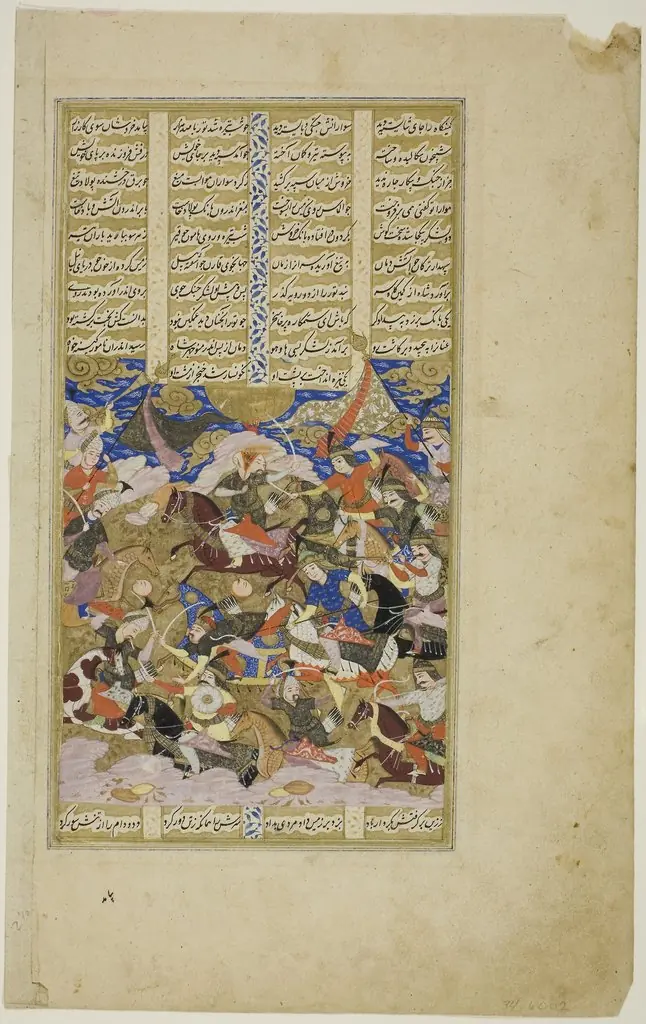 Manuchehr Kills Tur, Manuscript from Shahnama
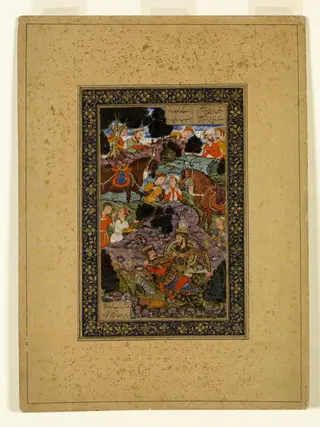
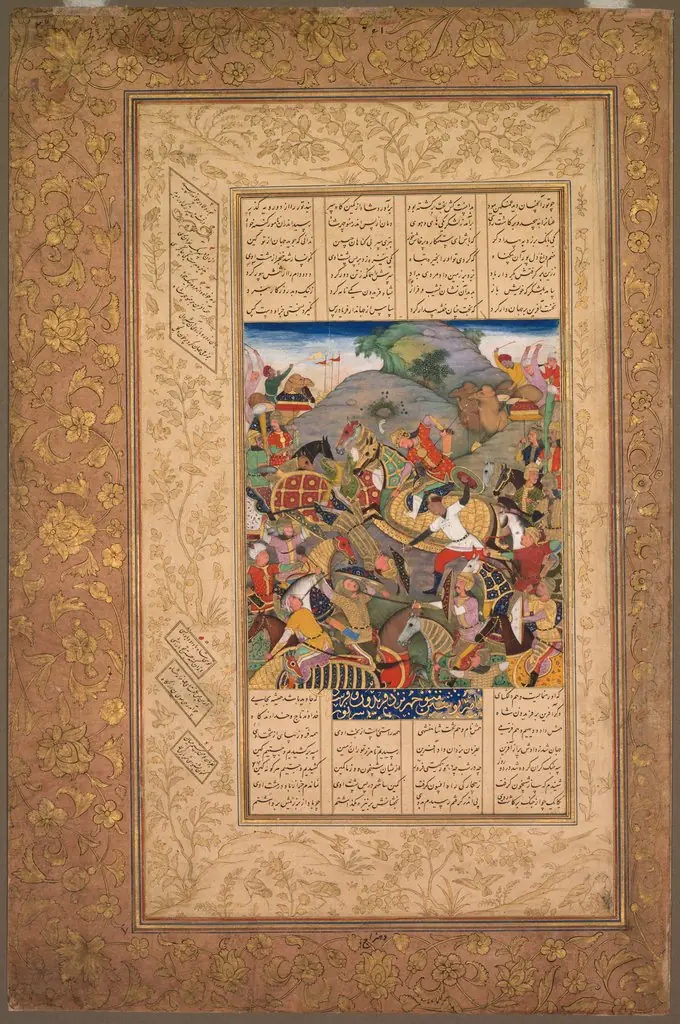 Battle between Manuchihr and Tur, from a Shah-nama (Book of Kings) of Firdausi (Persian, c. 934–1020)
 Battle between Manuchihr and Tur, from a Shah-nama (Book of Kings) of Firdausi (Persian, c. 934–1020)
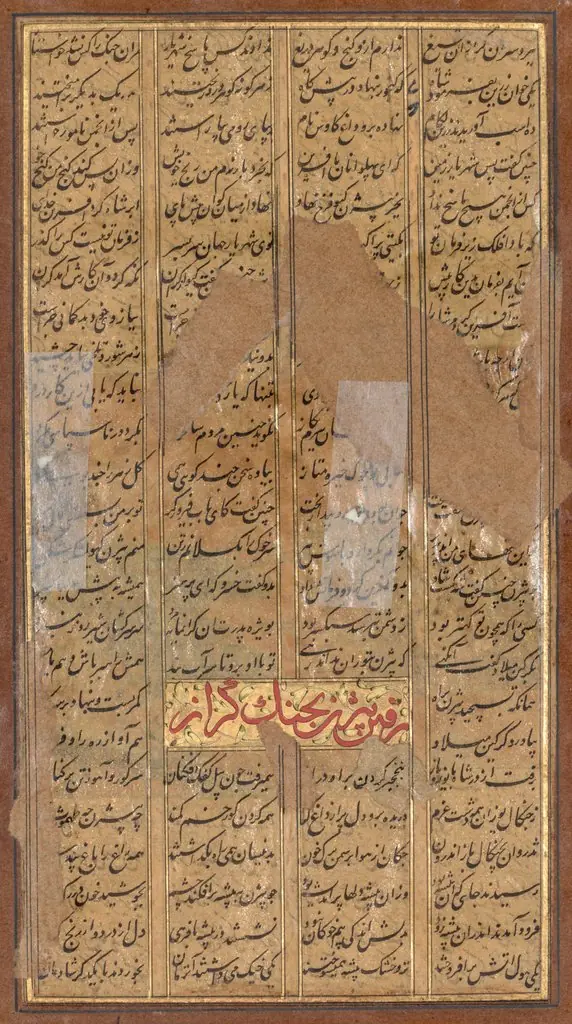 Bijan killing the wild boars of Irman, from a Shah-nama (Book of Kings) of Firdausi (Persian, about 934–1020), (recto)
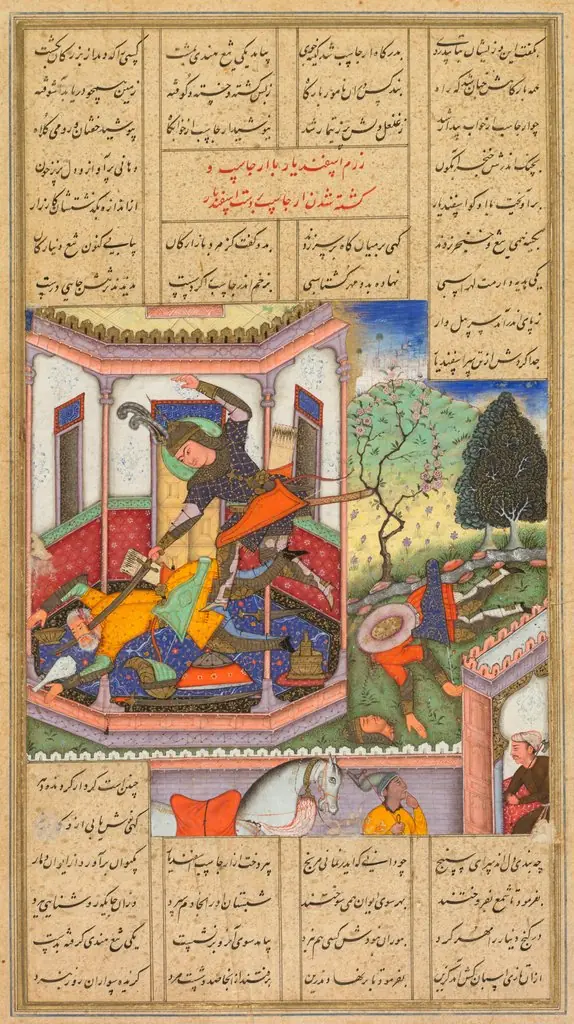 Isfandiyar slays Arjasp, the king of Turan, from a Shah-nama (Book of Kings) of Firdausi (Persian, about 934–1020)
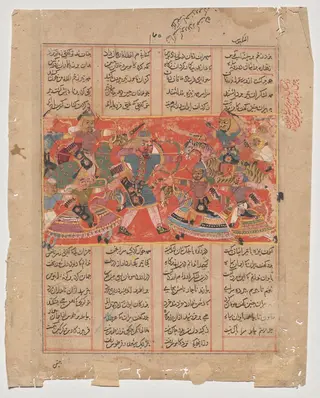 Rustam Takes Aim at Ashkabus, from a Shah-nama (Book of Kings)
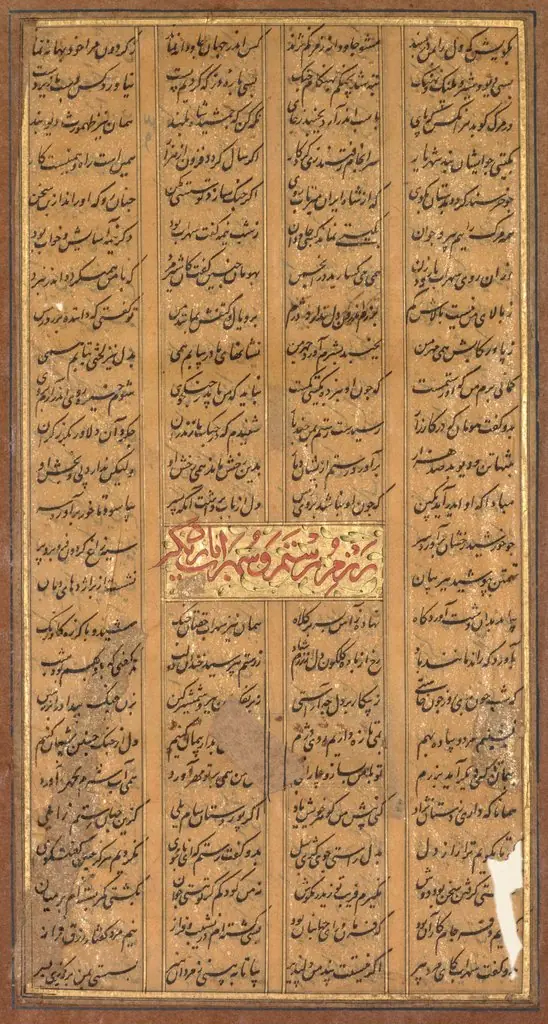 Text of Rustam and Suhrab, from the Shah-nama of Firdausi (Persian, c. 934–1020) (verso)