Artwork
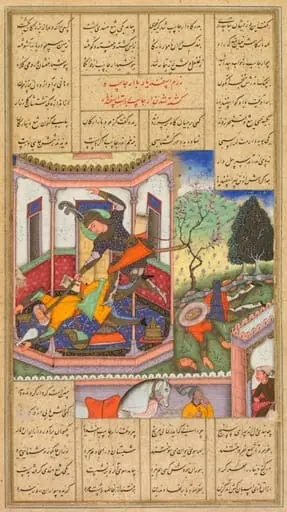
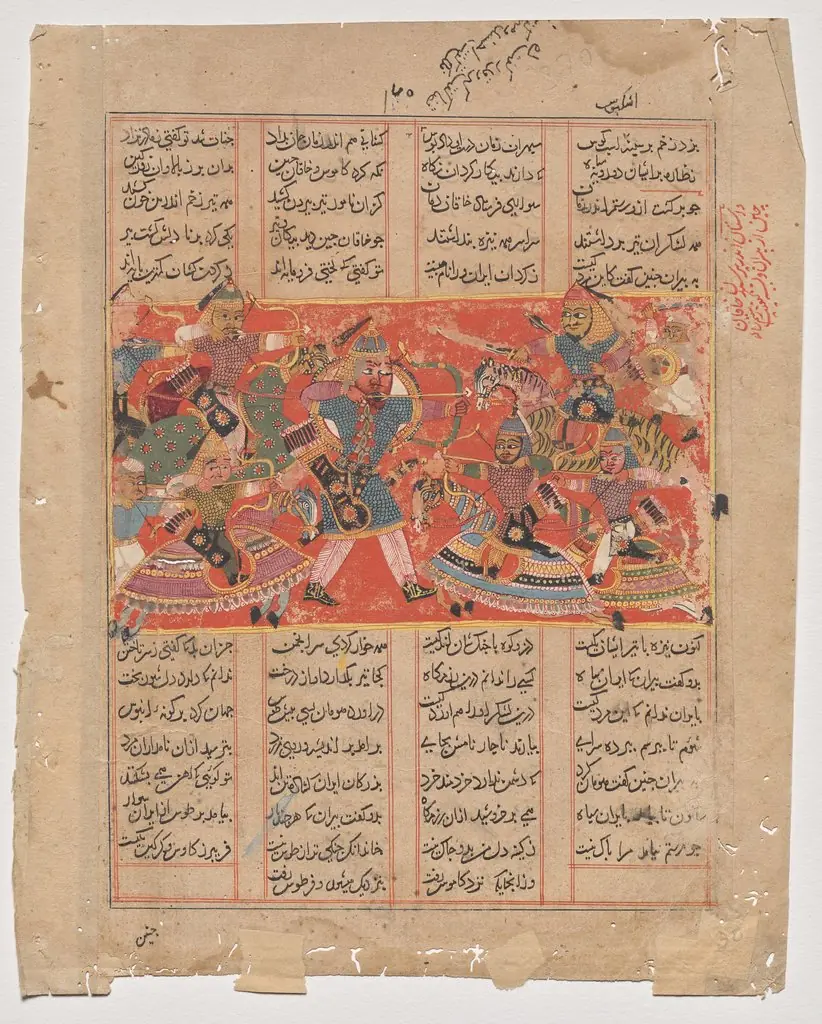
Isfandiyar slays Arjasp, the king of Turan, from a Shah-nama (Book of Kings) of Firdausi (Persian, about 934–1020)
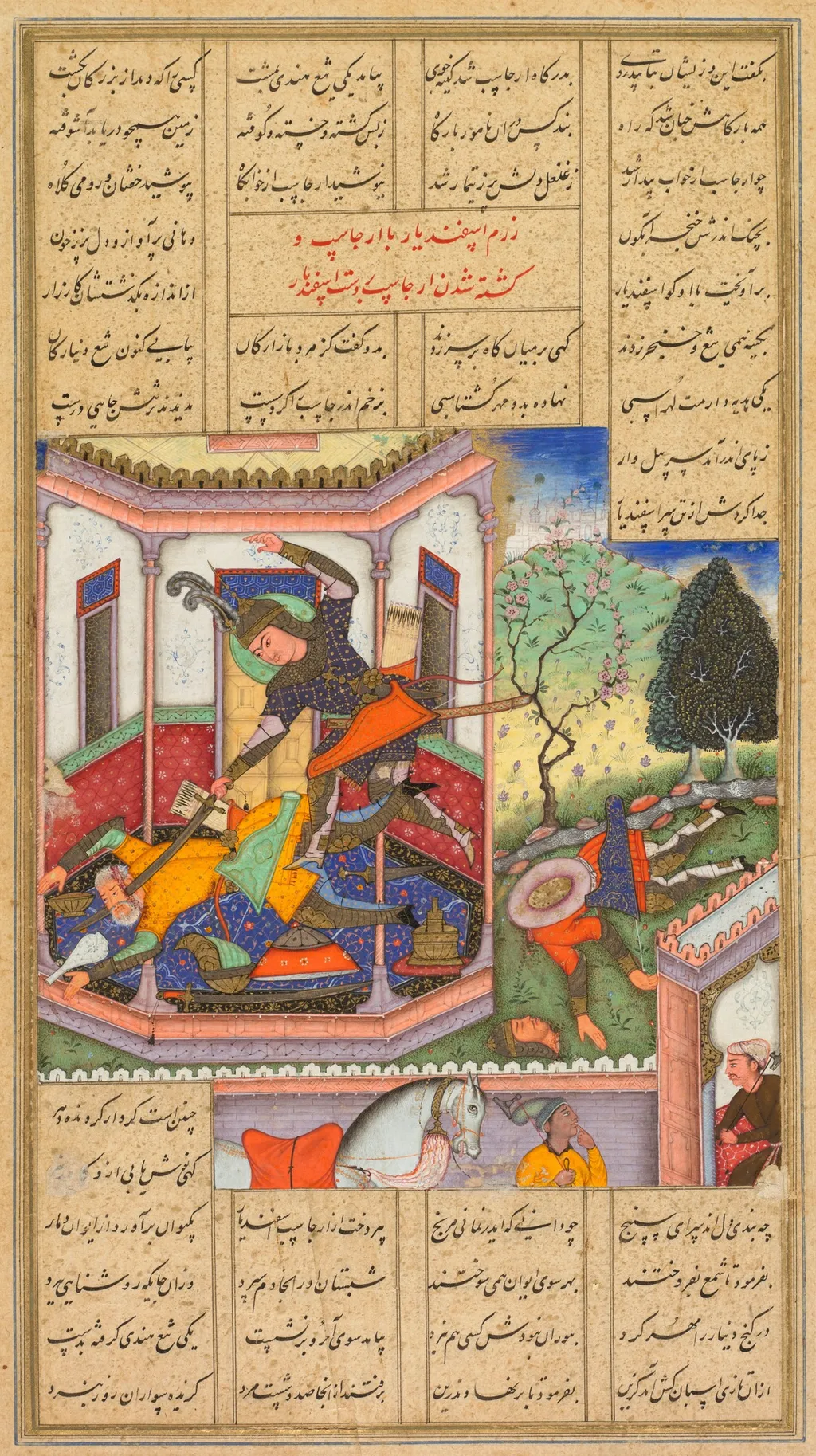
Isfandiyar slays Arjasp, the king of Turan, from a Shah-nama (Book of Kings) of Firdausi (Persian, about 934–1020) is an unspecified painting. It dates from 1602 and is held in the collection of the Cleveland Museum of Art.
About this work
Subject & Meaning
The painting depicts the moment when the Persian prince Isfandiyar slays Arjasp, the king of Turan, an episode drawn from Ferdowsi’s Shah‑nama (Book of Kings).
The painting depicts the moment when the Persian prince Isfandiyar slays Arjasp, the king of Turan, an episode drawn from Ferdowsi’s Shah‑nama (Book of Kings). As a Mughal‑era work attributed to the Kashmiri artist Haidar Kashmiri, it illustrates how Persian literary narratives were adopted into Indian court painting, serving as a visual exemplar of the epic’s heroic ideals. The scene conveys the virtue of righteous valor and the defeat of tyrannical rule, themes central to the Shah‑nama’s portrayal of legitimate kingship.
History & Provenance
The painting is dated 1602 and was produced in the Mughal Empire. While one source lists the artist as unknown, another attributes the work to Haidar Kashmiri, an Indian painter active in the late 1500s–early 1600s. It is now part of the Cleveland Museum of Art’s holdings, accession number 2013.314, having entered the collection in 2013. The sources do not provide further details about earlier ownership, commission, or subsequent provenance.
Overview
The work depicts a climactic moment from the Persian epic Shah‑nama, in which the hero Isfandiyar, mounted on a rearing horse, raises his sword to strike the fallen king Arjasp of Turan. The scene is set against an architectural backdrop with columns and a garden, rendered in vivid hues that emphasize the drama of the encounter.
Technique & Style
Executed in a richly colored palette, the painting employs intricate detailing in the costumes and architectural elements. The rider’s blue‑orange attire and green headscarf contrast sharply with the golden tones of the fallen king, while the rearing horse adds kinetic energy. Fine brushwork captures the texture of fabrics and foliage, creating a lively, narrative tableau.
Artist & collection

- Isfandiyar slays Arjasp, the king of Turan, from a Shah-nama (Book of Kings) of Firdausi (Persian, about 934–1020)
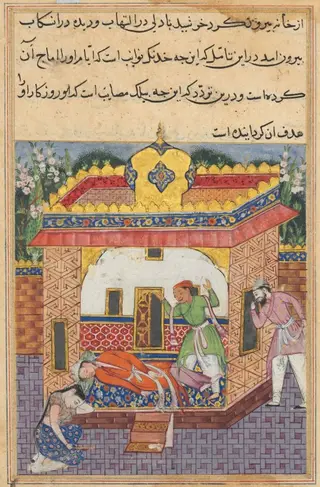 Latif, who has murdered his brother, falsely accuses Khurshid of the deed, from a Tuti-nama (Tales of a Parrot): Thirty-second Night
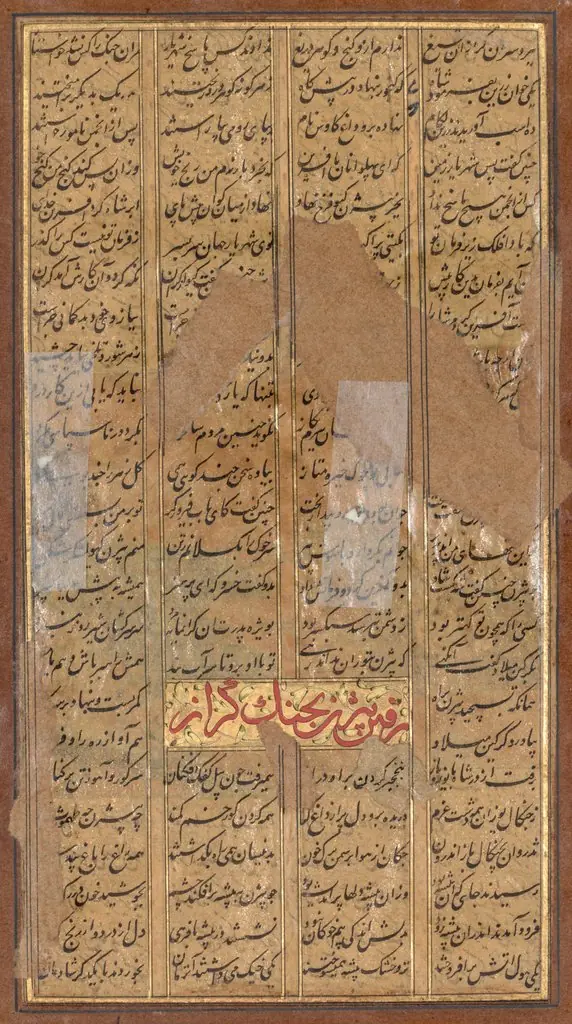 Bijan killing the wild boars of Irman, from a Shah-nama (Book of Kings) of Firdausi (Persian, about 934–1020), (recto)
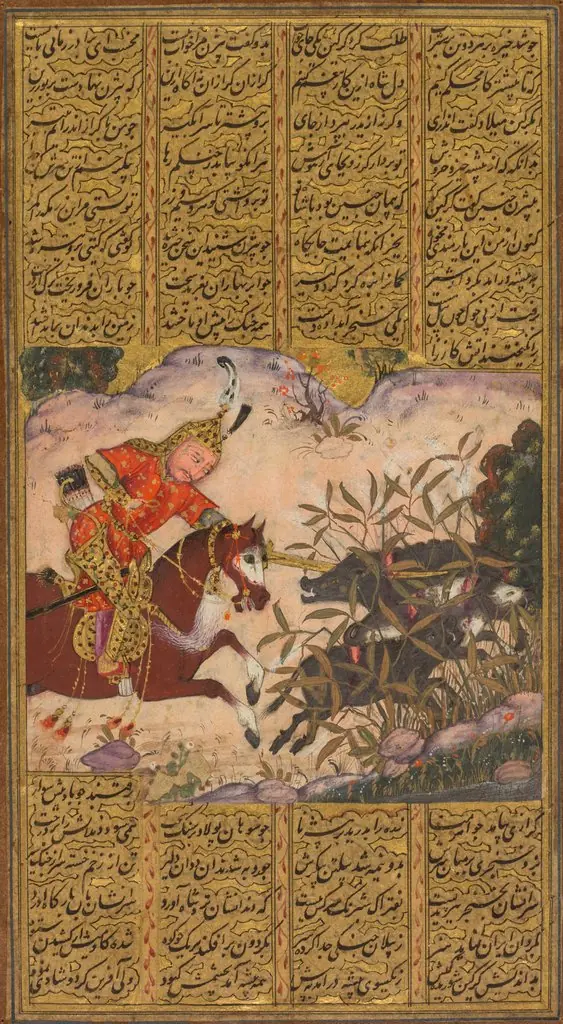 Bijan killing the wild boars of Irman, from a Shah-nama (Book of Kings) of Firdausi (Persian, about 934–1020)
 Text of Rustam and Suhrab, from the Shah-nama of Firdausi (Persian, c. 934–1020) (recto)
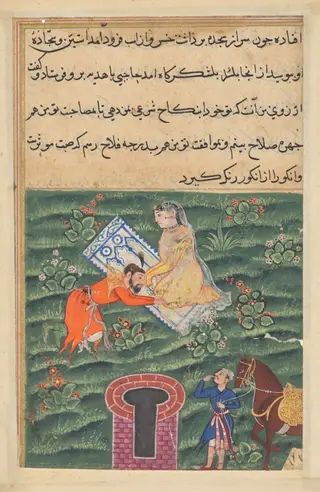 Khusrau, the King of Kings, pays homage to the pious daughter of Khassa, from a Tuti-nama (Tales of a Parrot): Fifty-first Night
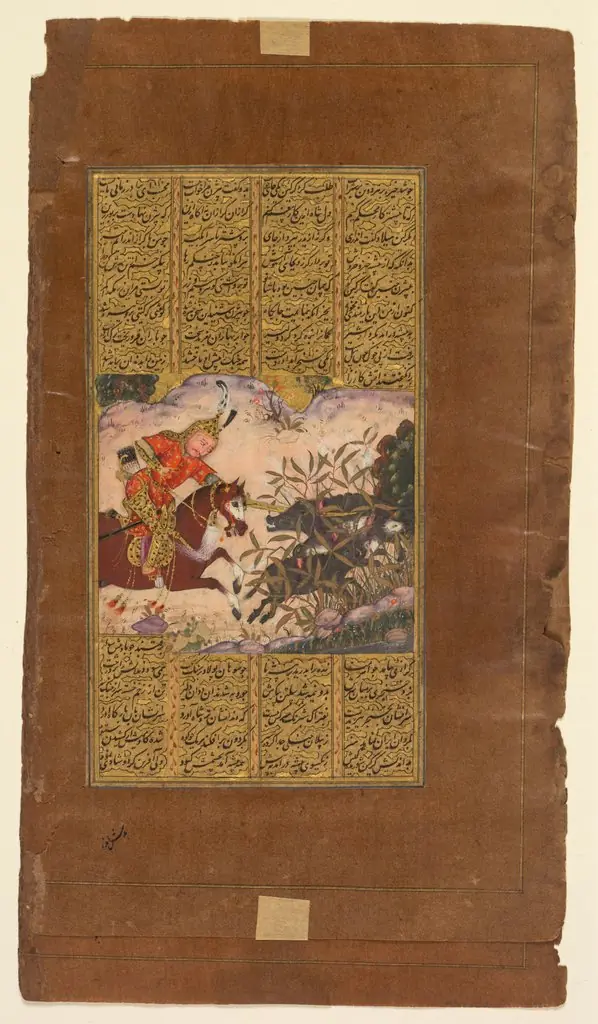 Bijan killing the wild boars of Irman, from a Shah-nama (Book of Kings) of Firdausi (Persian, about 934–1020) (verso)
 Text of Rustam and Suhrab, from the Shah-nama of Firdausi (Persian, c. 934–1020) (verso)
 Rustam Takes Aim at Ashkabus, from a Shah-nama (Book of Kings)