Artwork
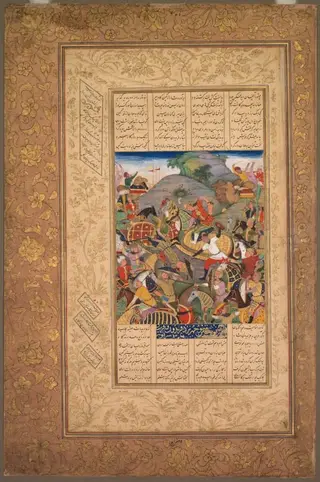
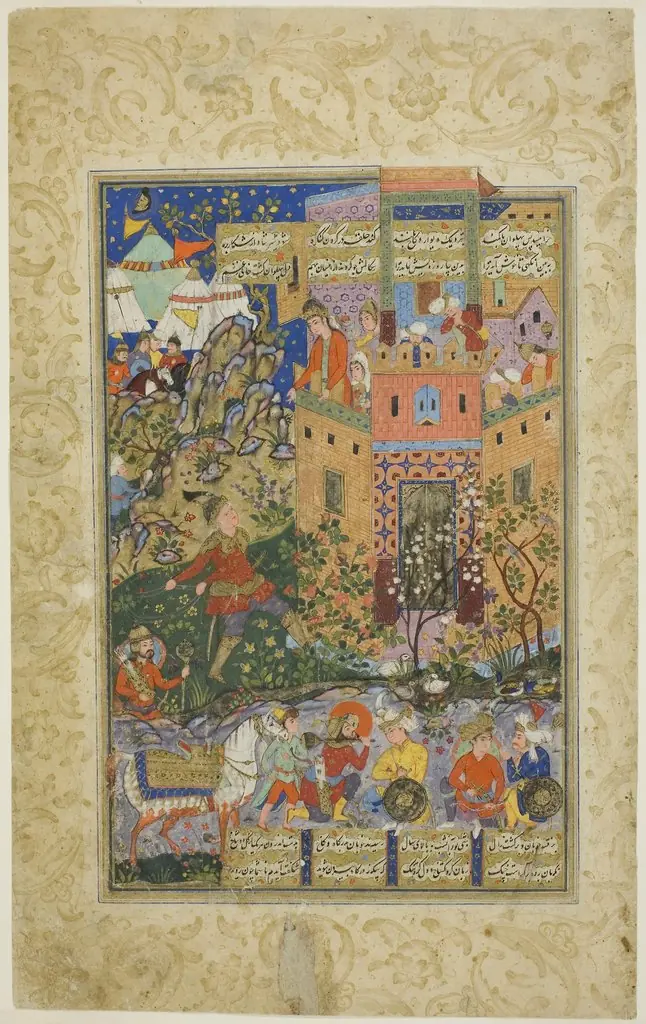
Battle between Manuchihr and Tur, from a Shah-nama (Book of Kings) of Firdausi (Persian, c. 934–1020)
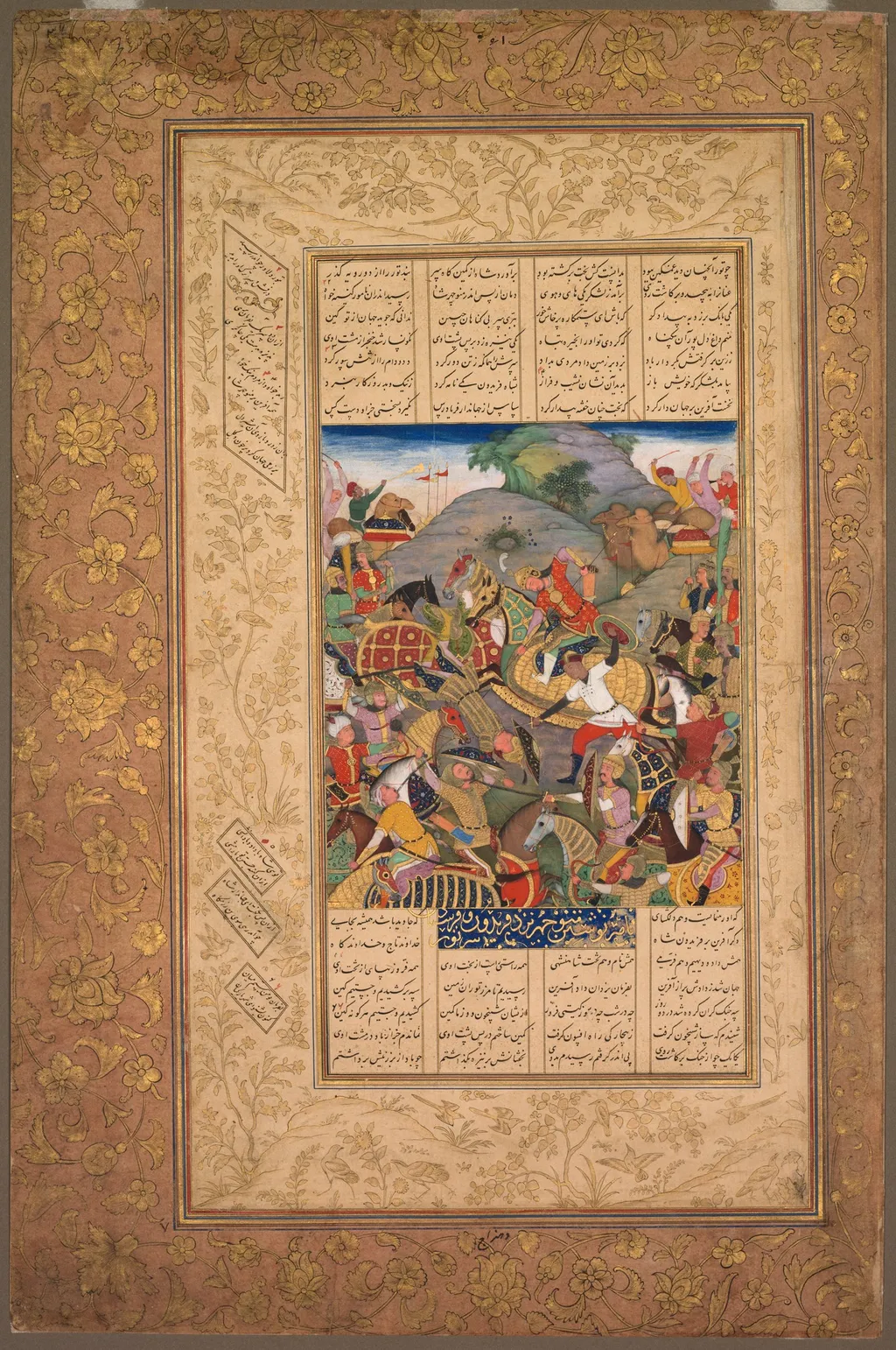
Battle between Manuchihr and Tur, from a Shah-nama (Book of Kings) of Firdausi (Persian, c. 934–1020) is an unspecified painting. It dates from 1610 and is held in the collection of the Cleveland Museum of Art.
About this work
History & Provenance
The painting Battle between Manuchihr and Tur, created in 1610 within the Mughal Empire, is held in the collection of the Cleveland Museum of Art.
The manuscript painting Battle between Manuchihr and Tur was produced in the Mughal Empire around 1610, during the early modern period of Persianate art under imperial patronage.
The work entered the Cleveland Museum of Art in 1945 as part of a collection accession (1945.171), where it has remained in the museum’s holdings.
The painting Battle between Manuchihr and Tur, created in 1610 within the Mughal Empire, is held in the collection of the Cleveland Museum of Art. It is cataloged under the accession number 1945.171. The work remains part of the museum's permanent holdings, where it is identified as a painting by an unknown artist.
Context
The painting depicting the Battle between Manuchihr and Tur originates from a 1610 Persian manuscript of the Shah-nama, produced during the Mughal period in India. Attributed to an unknown artist, it is part of the Cleveland Museum of Art's collection and exemplifies the historical painting genre within Persianate manuscript traditions. Scholarship situates this work within the broader context of Safavid-influenced Persian miniature painting, reflecting the transmission of Safavid artistic styles into Mughal court culture through manuscript production.
Its composition and narrative treatment have been analyzed as representative of early 17th-century Persianate visual storytelling, particularly in how it dramatizes epic confrontations from Ferdowsi's epic. The work's significance lies in its role as a cross-cultural artifact bridging Persian literary heritage with Mughal artistic patronage.
Legacy
The painting later came to be recognized as an early example of Mughal court illustration, influencing subsequent manuscript commissions in the region. Its depiction of the legendary clash between Manuchihr and Tur was frequently referenced in later Persian literary works and inspired a series of lithographic reproductions in the early twentieth century. Today it remains on view in the Cleveland Museum of Art, where it is cited as a key work for understanding cross-cultural artistic exchanges between Safavid and Mughal patronage networks.
Overview
The work depicts a tumultuous cavalry clash identified as the battle between Manuchihr and Tur, a narrative taken from the Persian epic Shah‑nama. Rendered in vivid reds, blues and gold, the composition is densely packed with riders and horses, creating a sense of frantic movement within a richly ornamented frame.
Subject & Meaning
The scene illustrates a legendary confrontation recounted in Firdausi’s Shah‑nama, a medieval chronicle of kings and heroes. By portraying the combatants in close proximity, the image emphasizes the drama and heroism associated with royal warfare in Persian literary tradition.
Technique & Style
Executed with bold pigments and intricate line work, the painting combines flat areas of colour with elaborate decorative borders. The surrounding script, rendered in a flowing, vine‑like calligraphic style, functions both as caption and ornamental element, typical of Persian miniature illumination.
Artist & collection

- Battle between Manuchihr and Tur, from a Shah-nama (Book of Kings) of Firdausi (Persian, c. 934–1020)
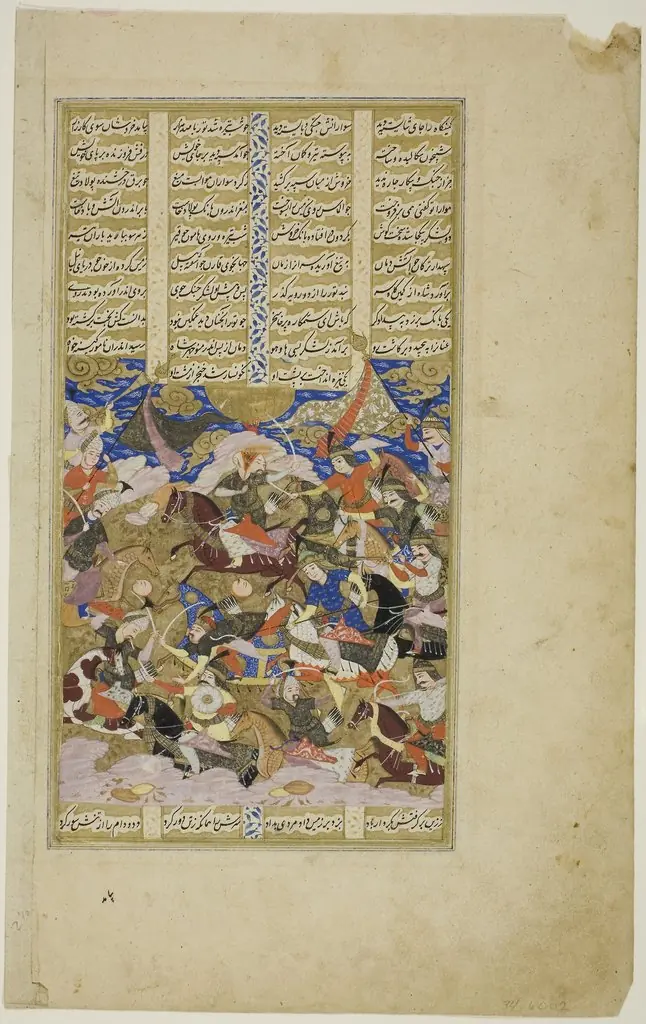 Manuchehr Kills Tur, Manuscript from Shahnama
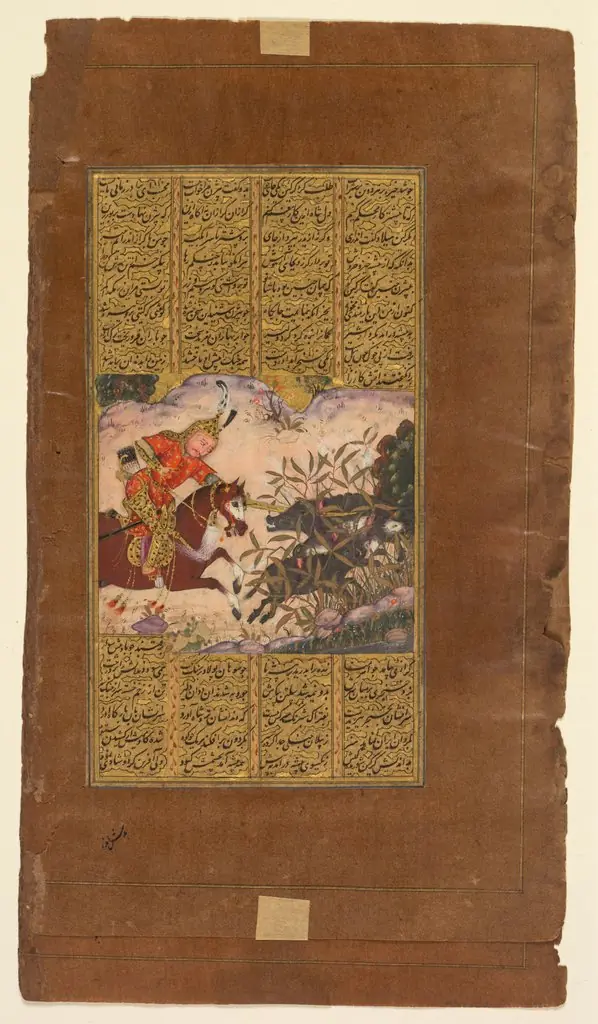 Bijan killing the wild boars of Irman, from a Shah-nama (Book of Kings) of Firdausi (Persian, about 934–1020) (verso)
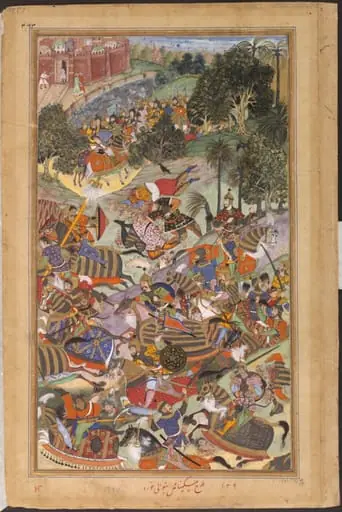 Husain Mirza
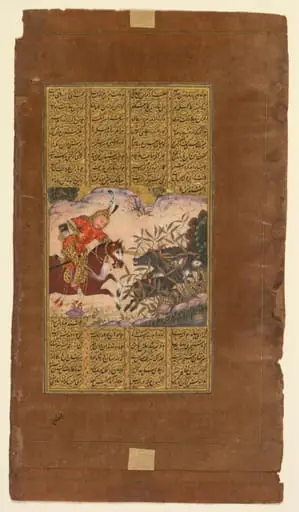 Bijan killing the wild boars of Irman, from a Shah-nama (Book of Kings) of Firdausi (Persian, about 934–1020) (verso)
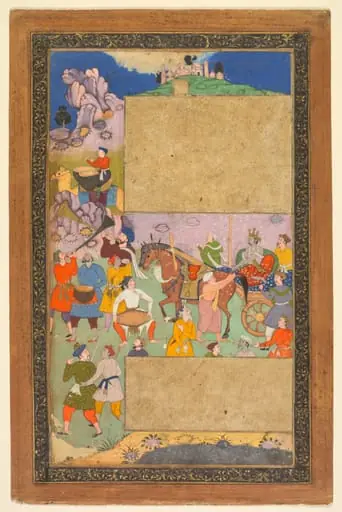 A charioteer riding through a rocky landscape with an entourage of footmen and musicians, page from a Razm-nama (Book of Wars) adapted from the Sanskrit Mahabharata and translated into Persian by Mir Ghiyath al-Din Ali Qazvini, known as Naqib Khan (Persian, d. 1614)
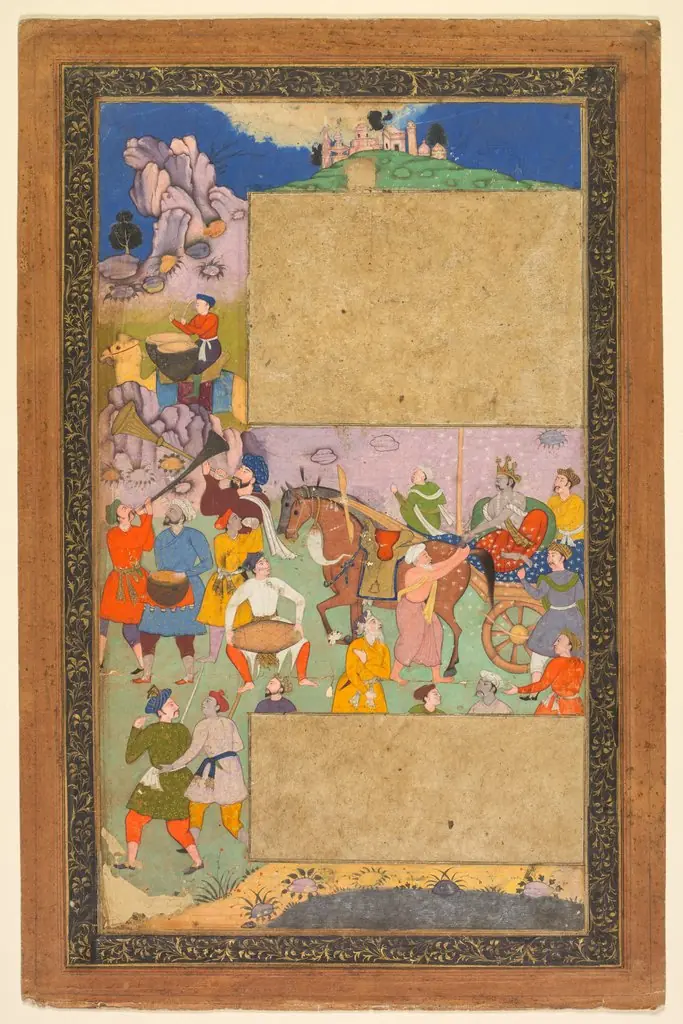 A charioteer riding through a rocky landscape with an entourage of footmen and musicians, page from a Razm-nama (Book of Wars) adapted from the Sanskrit Mahabharata and translated into Persian by Mir Ghiyath al-Din Ali Qazvini, known as Naqib Khan (P
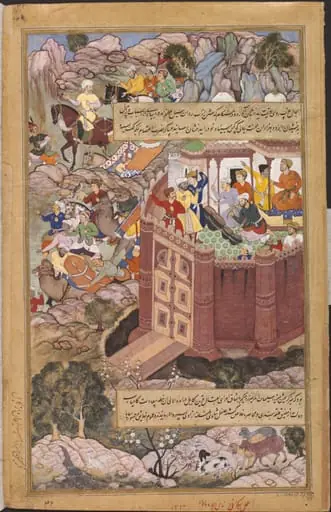 Mirza Sulayman
 Zal Climbing to Rudaba, page from a copy of the Shahnama of Firdausi