Artwork
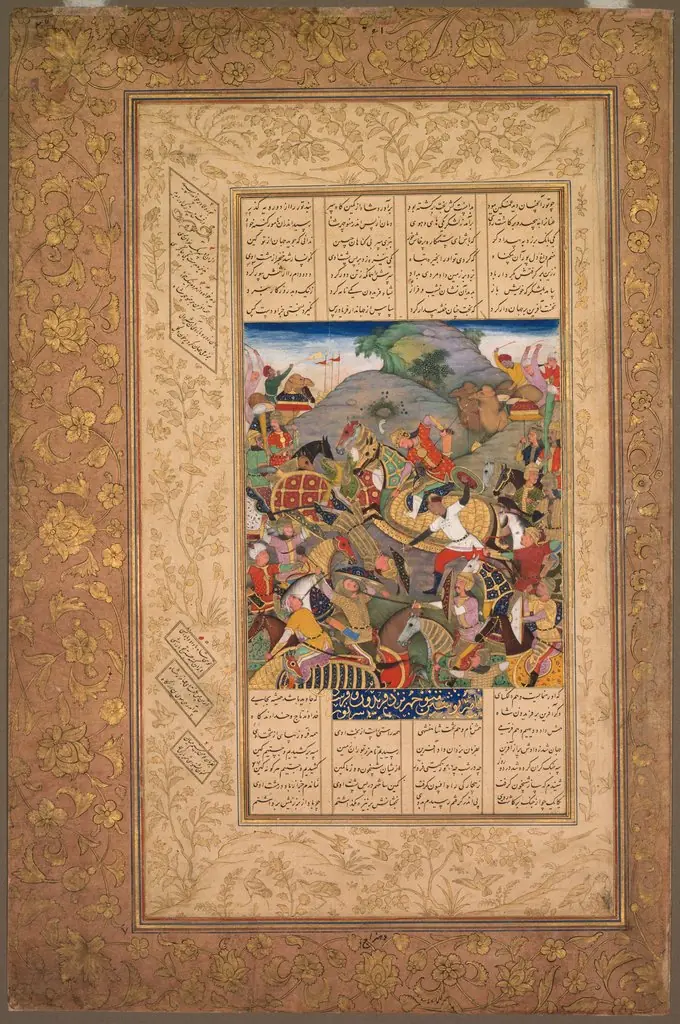
Battle between Manuchihr and Tur, from a Shah-nama (Book of Kings) of Firdausi (Persian, c. 934–1020)
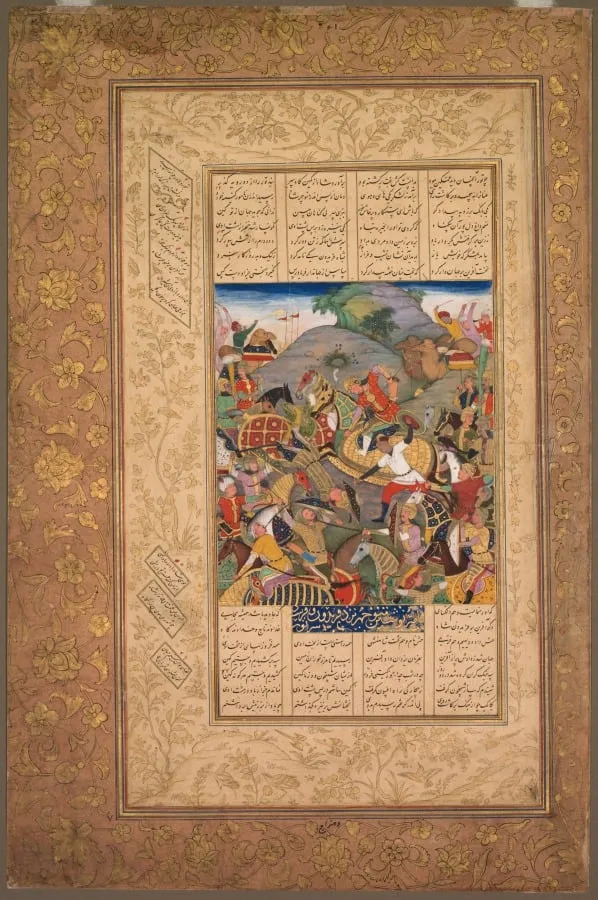
Battle between Manuchihr and Tur, from a Shah-nama (Book of Kings) of Firdausi (Persian, c. 934–1020) is an unspecified painting by the Baroque artist Unknown. It dates from 1610 and is held in the collection of the Cleveland Museum of Art. This painting depicts a pivotal battle from the Shah-nama, a Persian epic poem.
- Accession no.
- 1945.171
- Credit line
- Edward L. Whittemore Fund
About this work
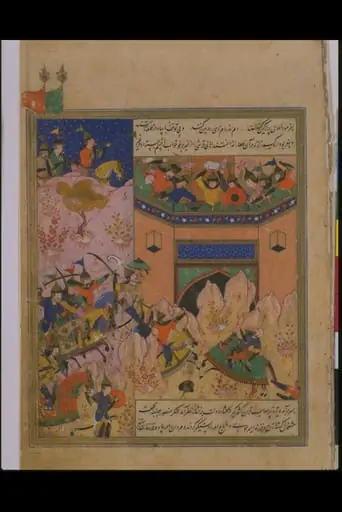
You see two armies clashing on a rocky hillside, warriors in bright armor and flowing robes, horses rearing, swords swinging.
You see two armies clashing on a rocky hillside, warriors in bright armor and flowing robes, horses rearing, swords swinging. A man in the center, Manuchihr, wears a golden crown and lifts his sword high, leading the charge.
This painting comes from a Shah-nama, a Persian epic poem about kings and heroes. But it was made in Mughal India, where Persian stories were loved and illustrated with local flair. The artist mixed Persian style with Indian details, like the patterned textiles and jewel-like colors.
To see more of this mix, look up Mughal India, court of Jahangir (reigned 1605–27).
Overview
This painting depicts a pivotal battle from the Shah-nama, a Persian epic poem. It illustrates the conflict between Manuchihr, grandson of Iraj, and Tur, an older brother of Iraj, set against a backdrop of rocky terrain and clashing armies.
Subject & Meaning
The scene represents a key moment in the Shah-nama's narrative, where Manuchihr avenges his grandfather's murder by slaying Tur, fueling the long-standing enmity between Iran and Turan.
Technique & Style
The artist skillfully conveys the chaos of battle through a dynamic composition, featuring varied postures, colors, and patterns among the warriors and warhorses. The painting blends Persian style with Indian influences, evident in the use of patterned textiles and vibrant colors.
History & Provenance
Although the painting illustrates a Persian epic, it was created in Mughal India, where Persian stories were popular and often illustrated with local artistic flair.
Context
The artwork is associated with the court of Jahangir, who reigned from 1605 to 1627, a period characterized by the blending of Persian and Indian cultural influences.
Artist & collection









 Rani Durgavati
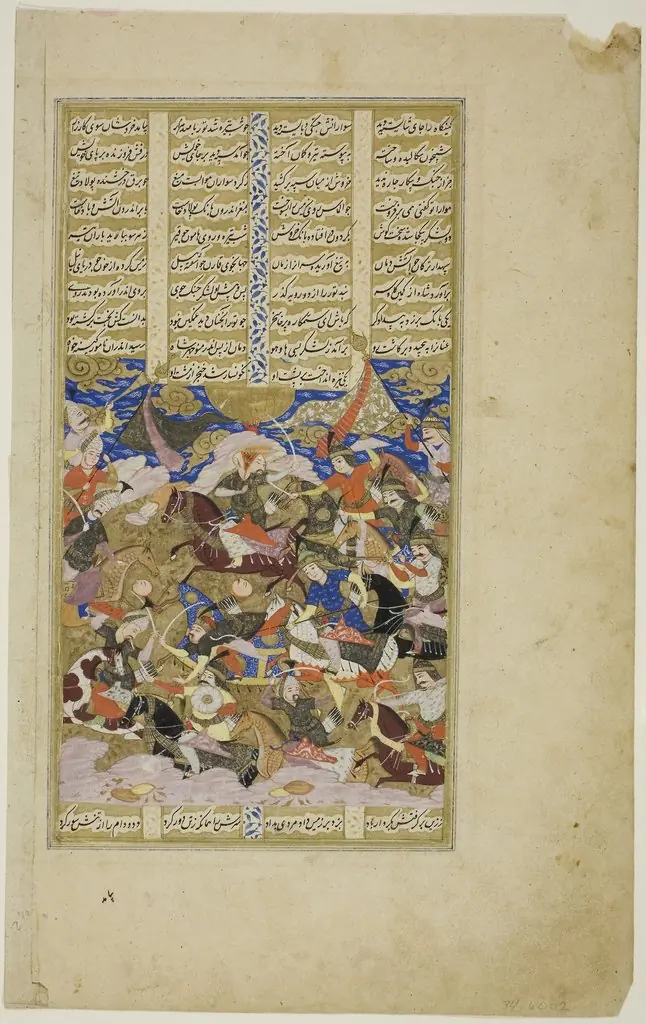 Manuchehr Kills Tur, Manuscript from Shahnama
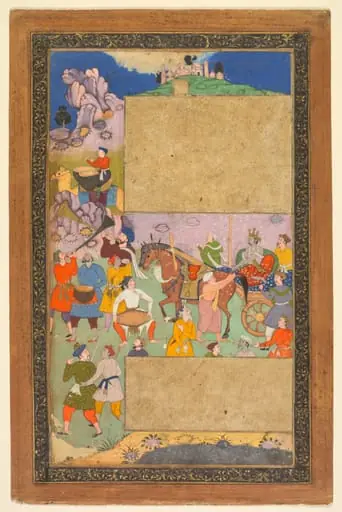 A charioteer riding through a rocky landscape with an entourage of footmen and musicians, page from a Razm-nama (Book of Wars) adapted from the Sanskrit Mahabharata and translated into Persian by Mir Ghiyath al-Din Ali Qazvini, known as Naqib Khan (Persian, d. 1614)
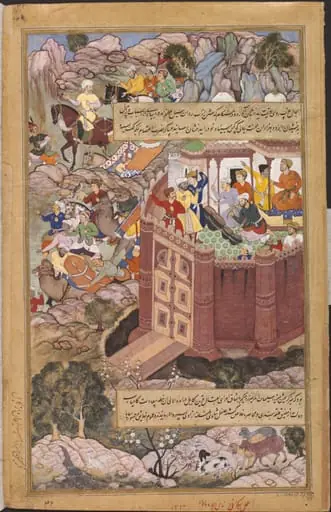 Mirza Sulayman
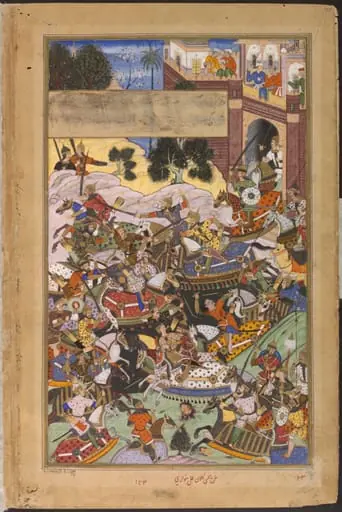 Mirza Ibrahim Husain
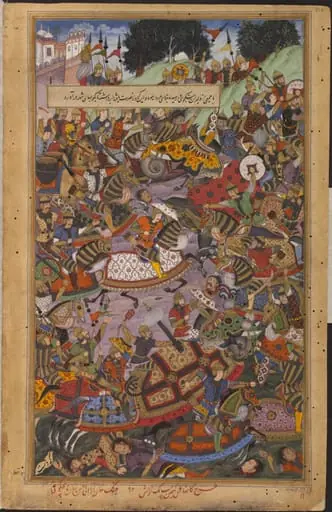 Ali Quli Khan
 Attack on a walled city
 Mu'nim Khan