Artwork
Bodhisattva Manjushri with two forms of Avalokiteshvara, folio 348 (recto) from a Gandavyuha-sutra (Scripture of the Supreme Array)

Bodhisattva Manjushri with two forms of Avalokiteshvara, folio 348 (recto) from a Gandavyuha-sutra (Scripture of the Supreme Array) is an unspecified painting by Unknown. It dates from 1104 and is held in the collection of the Cleveland Museum of Art. This painting is a folio from a Nepalese manuscript of the Gandavyuha-sutra, created over 900 years ago.
- Accession no.
- 1955.49.7.a
- Credit line
- Purchase from the J. H. Wade Fund
About this work
Overview
This painting is a folio from a Nepalese manuscript of the Gandavyuha-sutra, created over 900 years ago. It depicts three golden figures on a deep red background.
Subject & Meaning
The central figure is Bodhisattva Manjushri, shown in a preaching gesture and surrounded by a flaming halo, flanked by two forms of Avalokiteshvara, representing the bodhisattvas of wisdom and compassion.
Technique & Style
The use of flames around Manjushri's halo signifies spiritual energy. The depiction of Avalokiteshvara in two different forms, with two and four arms, illustrates the varied representations of a single concept in Buddhist art.

Artist & collection









- Folio 348 from a Gandavyuha-sutra (Scripture of the Supreme Array): Bodhisattva Manjushri with two forms of Avalokiteshvara (recto); Bodhisattva Samantabhadra purifies the path to enlightenment, with Manjushri (verso)
 Bodhisattva Manjushri with two forms of Avalokiteshvara, folio 348 (recto) from a Gandavyuha-sutra (Scripture of the Supreme Array)
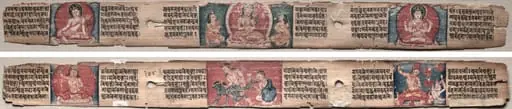 Folio 348 from a Gandavyuha-sutra (Scripture of the Supreme Array): Bodhisattva Manjushri with two forms of Avalokiteshvara (recto); Bodhisattva Samantabhadra purifies the path to enlightenment, with Manjushri (verso)
 Prajnaparamita flanked by two bodhisattvas, folio 187 (recto), from a Manuscript of the Perfection of Wisdom in Eight Thousand Lines (Ashtasahasrika Prajnaparamita-sutra)
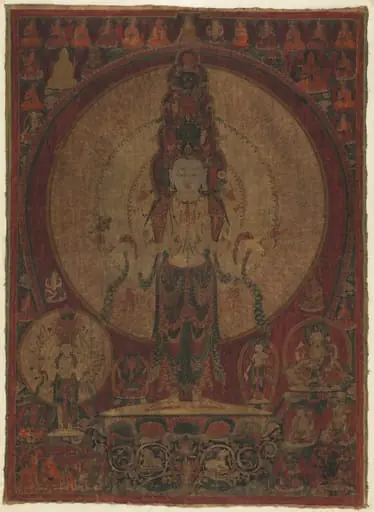 Eleven-Headed, Thousand-Armed Bodhisattva of Compassion (Avalokiteshvara)
 Preaching Amitabha with Avalokiteshvara and Manjushri, folio 186 (verso), from a Manuscript of the Perfection of Wisdom in Eight Thousand Lines (Ashtasahasrika Prajnaparamita-sutra)
 Sudhana and the rishi Bhishmottaranirgosha, folio 94 (recto) from a Gandavyuha-sutra (Scripture of the Supreme Array)
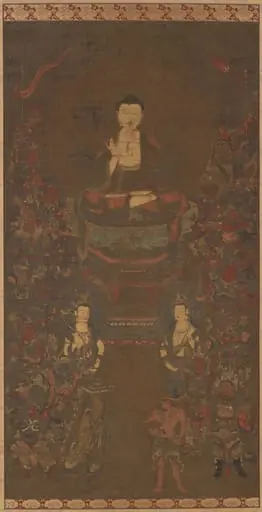 Shakyamuni with the Sixteen Benevolent Deities
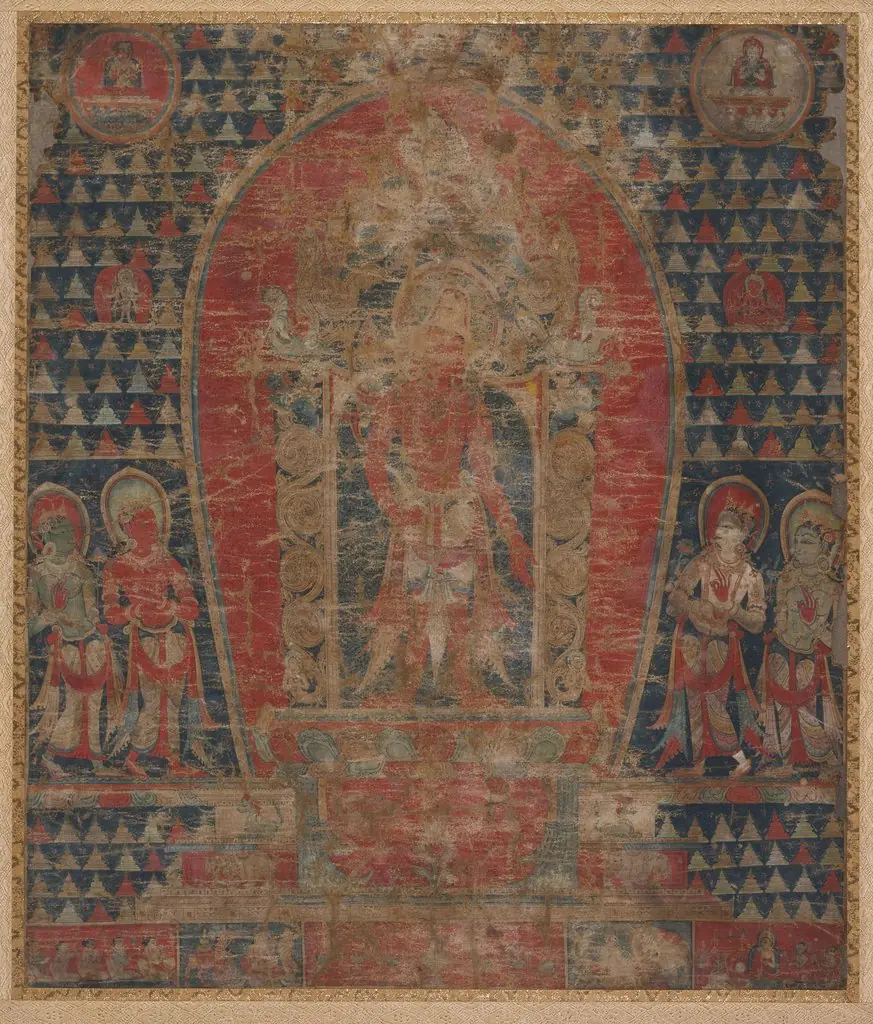 The Bodhisattva Avalokiteshvara and Four Taras