Artwork
Carrying a Qin on a Visit
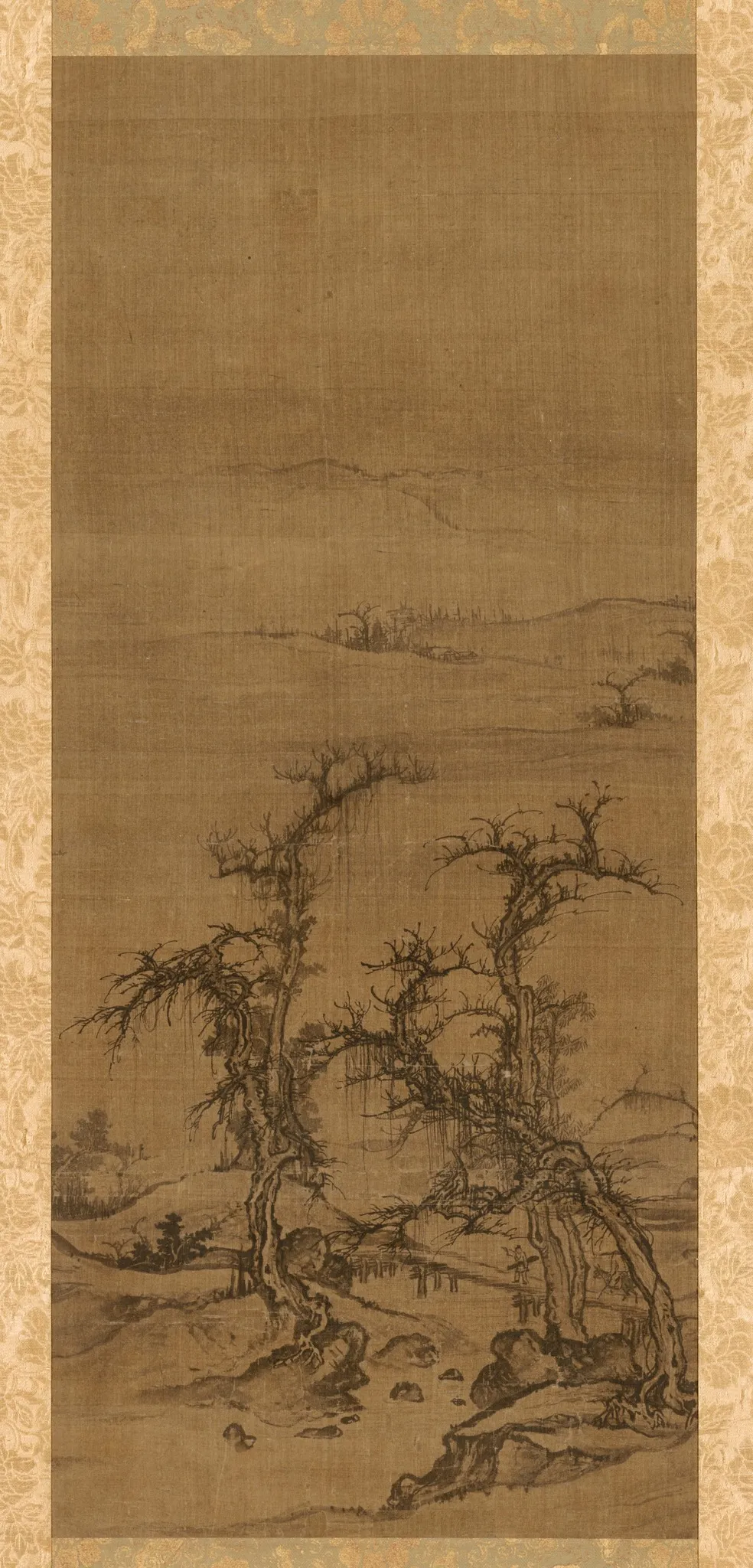
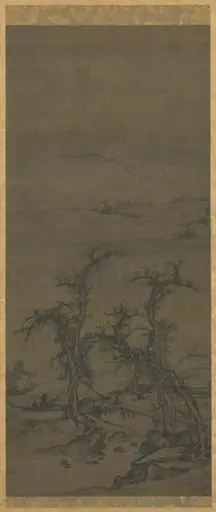
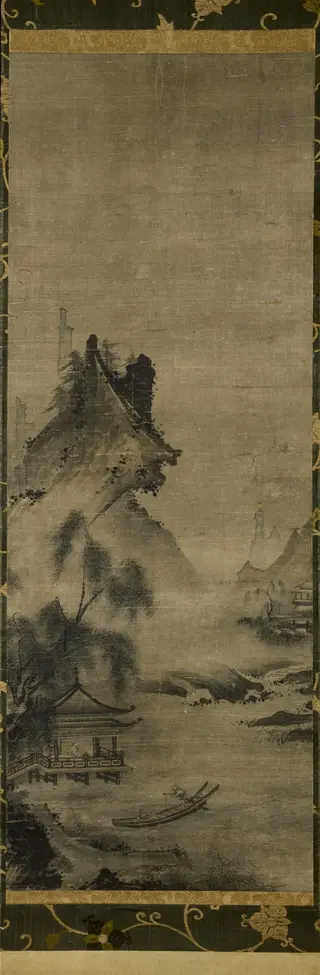
Carrying a Qin on a Visit is an unspecified painting. It dates from 1319 and is held in the collection of the Cleveland Museum of Art. The work presents an ink‑washed landscape rendered in muted browns and greys.
About this work
Technique & Style
Formal analysis notes the balanced spatial arrangement and restrained palette typical of elite literati subjects from this period.
The work depicts a figure bearing a qin on a visit, painted in thirteenth-century China. It is executed in ink and color on silk, forming part of the Cleveland Museum of Art's collection.
The composition demonstrates restrained line work and subtle tonal modeling characteristic of Southern Song court painting. The figure's posture and the instrument's depiction reflect scholarly connoisseurship of qin culture in Yuan-era visual culture. Formal analysis notes the balanced spatial arrangement and restrained palette typical of elite literati subjects from this period.
History & Provenance
Created in 1319, the painting Carrying a Qin on a Visit is attributed to the Chinese artist Luo Zhichuan, who was active during the late thirteenth and early fourteenth centuries. The work originated in China and is dated specifically to January 1, 1319. It is currently held in the collection of the Cleveland Museum of Art, where it is cataloged under the accession number 1919.974.
The specific circumstances regarding the original commission or the chain of ownership prior to its arrival at the Cleveland institution are not detailed in the available records.
Carrying a Qin on a Visit is held by the Cleveland Museum of Art. The work is catalogued under accession number 1919.974. No exhibition history is documented in the available sources.
The painting, attributed to Luo Zhichuan and dated 1319, entered the Cleveland Museum of Art's collection, where it remains. Beyond its institutional location and accession identifier, no loans, displays, or prior exhibitions are recorded in the provided materials.
Context
The painting known as Carrying a Qin on a Visit is attributed to Luo Zhichuan, an active artist in the 1280s-1320s, as documented in scholarly records and held in the Cleveland Museum of Art's collection. Created in 1319 in China, the work exemplifies Yuan dynasty painting traditions and contributes to understanding the transmission of artistic practices during this period. Its depiction of musical transmission reflects broader cultural values of the era, situating it within the evolution of Chinese literati art and scholarly discourse on artistic lineage.
Overview
The work presents an ink‑washed landscape rendered in muted browns and greys. In the foreground, a handful of stark trees with sharply twisting branches extend toward the viewer, while a modest village nestles beside a river in the middle distance. Beyond, gentle hills recede into a hazy horizon, creating a tranquil, almost suspended atmosphere.
Subject & Meaning
The composition juxtaposes the resilience of the gnarled trees with the quiet domesticity of the riverside settlement, suggesting a contemplation of human habitation within a broader natural setting. The restrained palette and stillness convey a sense of timelessness, inviting reflection on the relationship between the built environment and the surrounding landscape.
Artist & collection

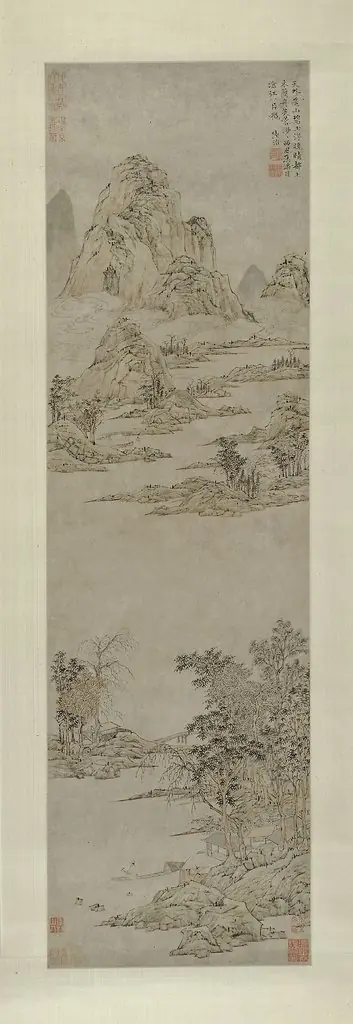 Pulling Oars under Clearing Autumn Skies (Distant Mountains)
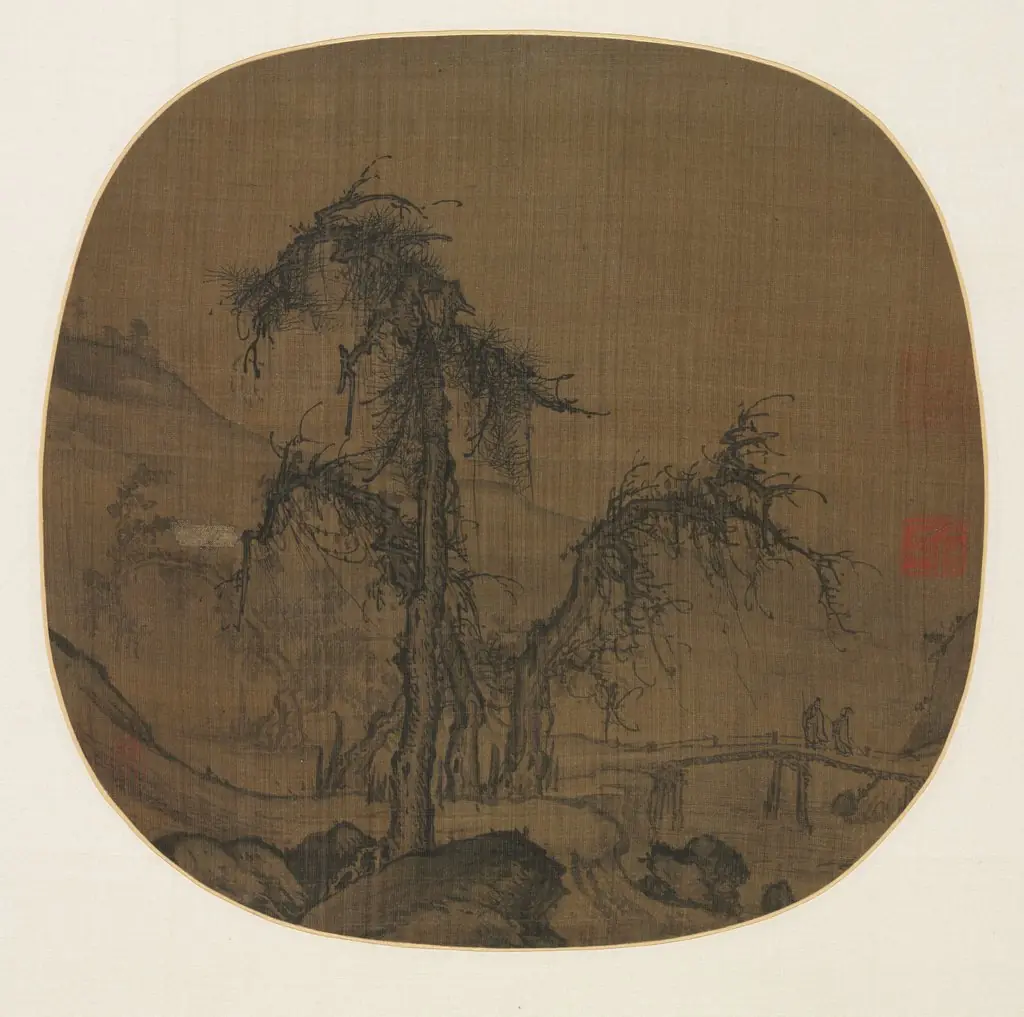 Ramblers over a Winding Stream
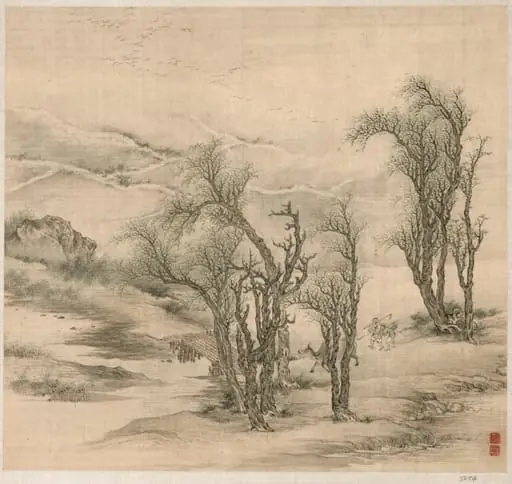 Returning Peasants in a Spring Evening
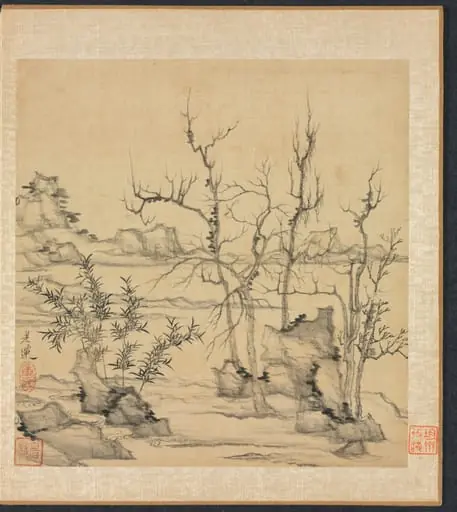 Paintings after Ancient Masters: Landscape in the Style of Ni Zan
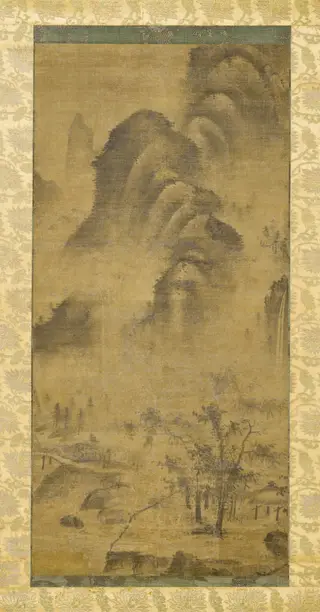 Landscape
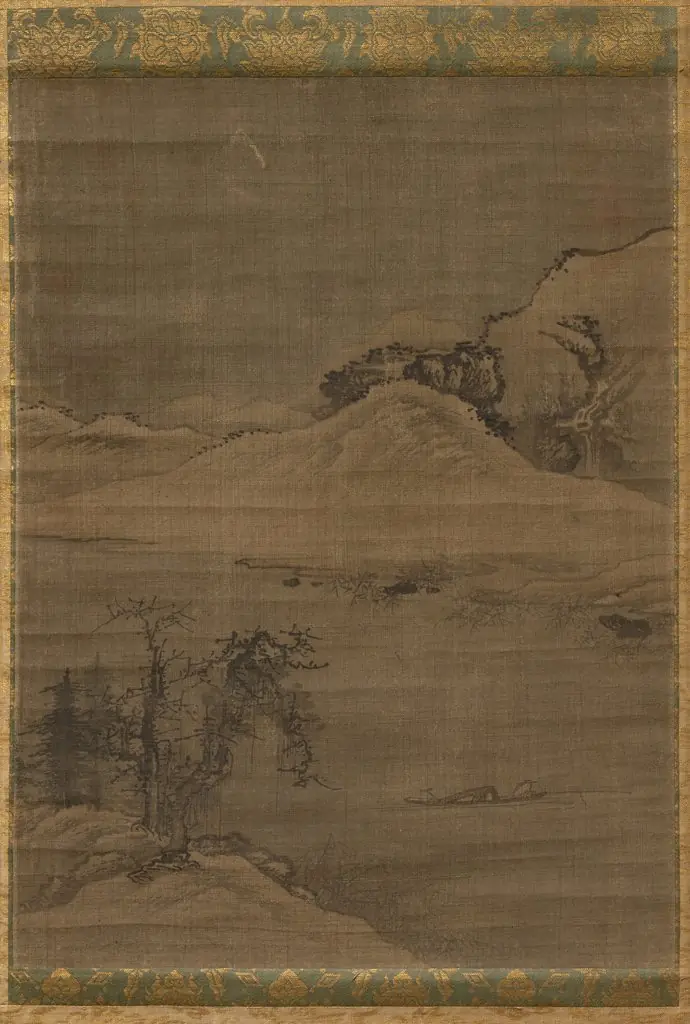 Landscape with Fishermen
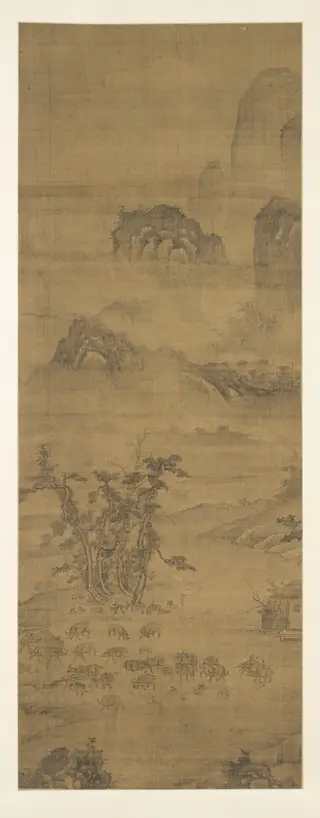 Water Buffaloes in a Mountain Valley
 Lakeside Retreat
- Carrying a Qin on a Visit