Artwork
Cassone
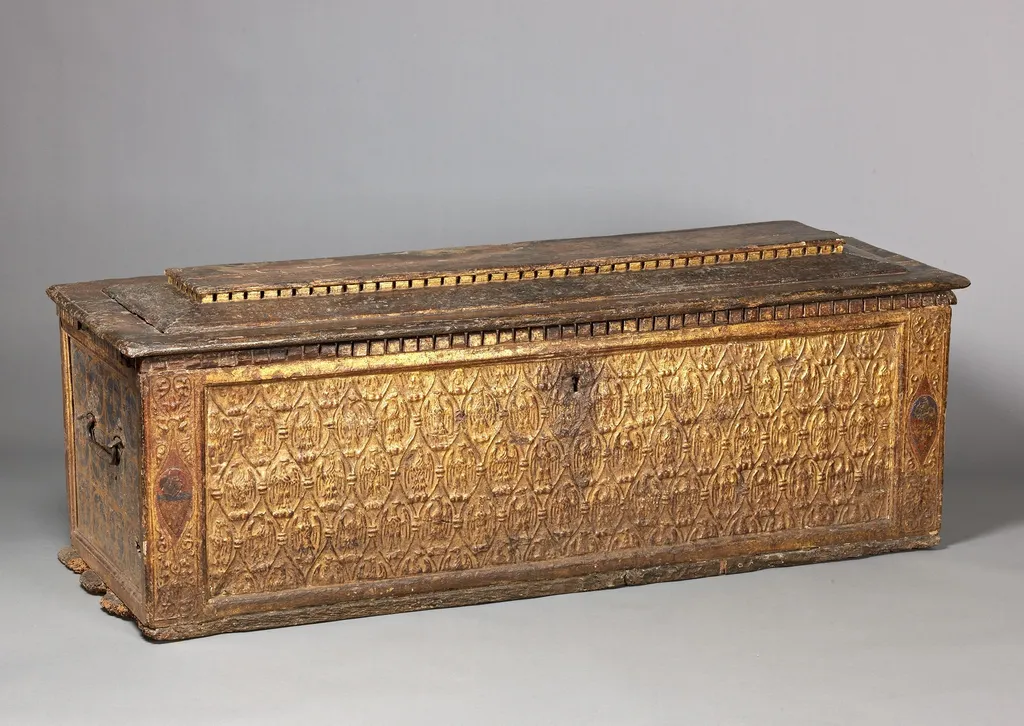
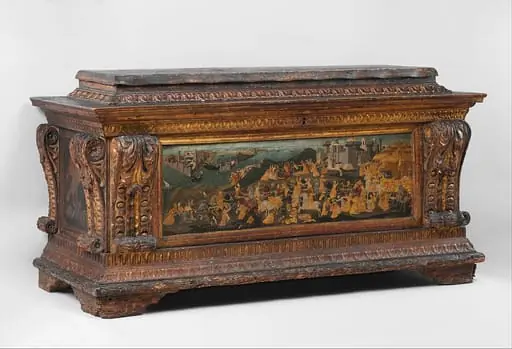
Cassone is a paint painting. It dates from 1425 and is held in the collection of the Metropolitan Museum of Art.
About this work
Subject & Meaning
The work was created in 1425 and is housed in the Metropolitan Museum of Art, formerly part of the Robert Lehman collection.
The subject depicted is a single-headed eagle rendered in gold leaf and paint on a pine and poplar wood panel, part of a painted marriage chest known as a cassone. The eagle symbolizes heraldic authority and dynastic power, aligning with the ceremonial and familial significance of cassoni in 15th-century Italian nuptial customs. Its presence emphasizes themes of lineage and status within the context of elite marriage rituals.
The work was created in 1425 and is housed in the Metropolitan Museum of Art, formerly part of the Robert Lehman collection.
The iconography of the eagle draws from both secular and religious symbolism, often associated with empire and divine sanction, reinforcing the social and political messages embedded in domestic art of the period.
Technique & Style
Dating to 1425, this cassone panel is constructed from pine and poplar wood supports. The surface preparation involves a layer of gesso, which serves as the ground for the application of paint and gold leaf. The work measures 51.4 cm in height and 149.2 cm in width.
Stylistically, the painted decoration features the depiction of an eagle. The object is currently held in the collection of the Metropolitan Museum of Art, having formerly been owned by Robert Lehman.
History & Provenance
The cassone was created in 1425 as a painted wooden chest, likely commissioned for a marriage in the Florentine elite, and was made from pine and poplar wood with gesso, gold leaf, and paint. The work features an eagle motif and was originally owned by Robert Lehman before entering the collection of the Metropolitan Museum of Art, where it remains on display.
Its creation history is tied to 15th‑century Florentine nuptial customs, and the piece is documented as having been produced in the mid‑1420s, reflecting contemporary craftsmanship and decorative practices.
The cassone is held in the collection of the Metropolitan Museum of Art. It was formerly owned by Robert Lehman and carries the accession number 1975.1.1938. Created in 1425, the panel is constructed from pine and poplar wood, prepared with gesso and decorated with gold leaf and paint. The available records do not list specific exhibitions for this object.
Context
The cassone originates from 1425 and was painted on pine and poplar wood using gesso, gold leaf, and pigment, depicting an eagle. It was owned by Robert Lehman and is now part of the Metropolitan Museum of Art's collection. Scholars have studied its stylistic connections to early Renaissance decorative painting, noting its role within cassone tradition and the broader context of 15th-century Florentine artistic production.
Overview
The object is a wooden cassone, a chest traditionally used for storing garments or personal items. Its surface is predominantly dark brown, overlaid with painted and carved ornamentation, and accented with gold leaf that highlights the intricate decorative scheme.
Legacy
Objects like this chest illustrate the convergence of utility and artistry in historic interior décor, informing modern understandings of social customs and material culture in pre‑modern Europe.
Artist & collection

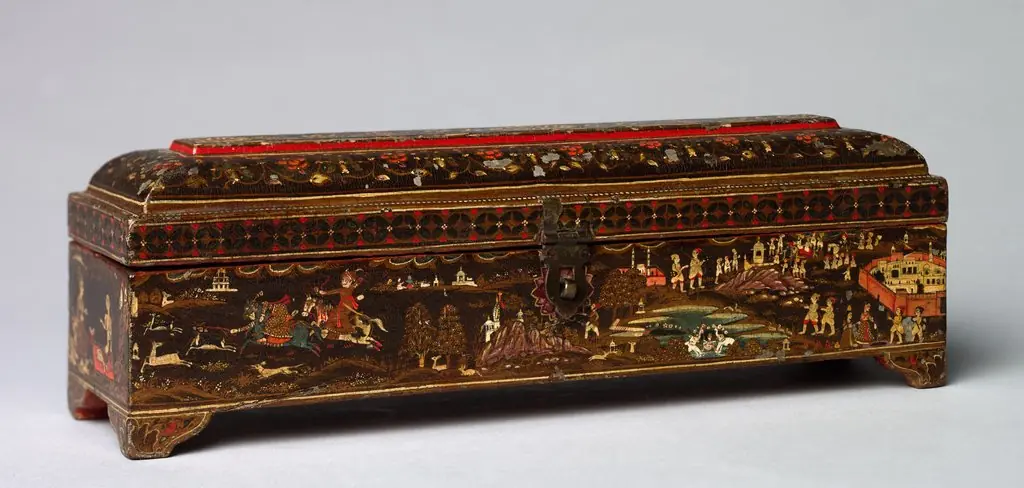 Rajput Box with Various Scenes
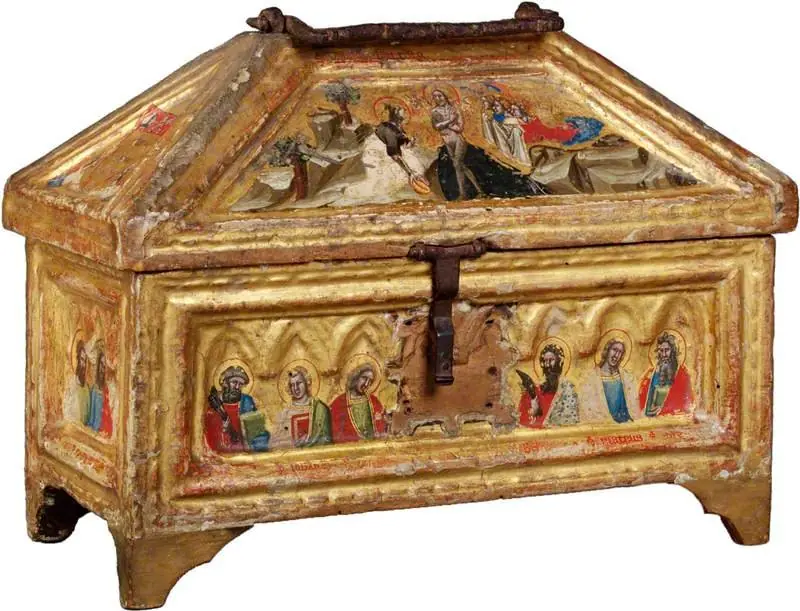 The Baptism of Christ (casket lid, front); Saint Peter, Saint John the Evangelist, Saint Matthew and Two Unknown Saints (casket, front)
 Rajput Box with Various Scenes
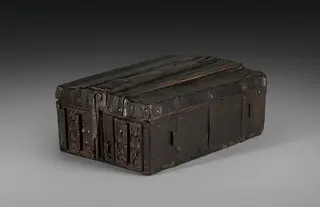 Coffret with Woodcut of Saint Veronica's Vernicle
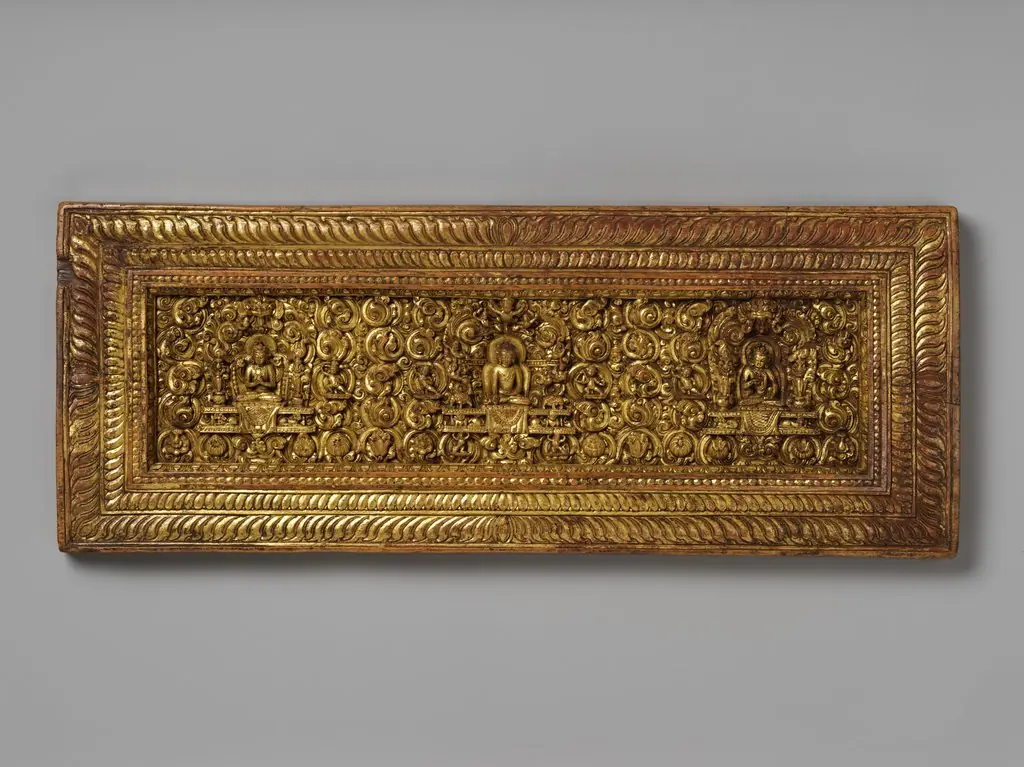 Manuscript Cover Interior with Mahasiddhas, Bodhisattvas, and Protectors
 Icoana este un prăznicar, cu patru scene, fiind împărțită de o cruce, asemenea unei ferestre. Icoana are pictura deteriorată, fiind mari pierderi de culoare, astfel scenele iconografice nefiind foarte clar dezvăluite. În registrul superior, pornindu-se prezentarea în ordinea acelor de ceasornic, prima este Acoperământul Maicii Domnului, minune săvârșită în Biserica din Vlaherne, unde toți sfinții și oamenii sunt luați sub Acoperământul omoforului Maicii Domnului. Următoarea scenă îi reprezintă pe Sfinții Apostoli Petru și Pavel, întemeietorii Bisericii sobornicești și apostolicești. În registrul inferior sunt Sfinții Mari Mucenici Dimitrie Izvorâtor de Mir și Gheorghe Purtător de Biruință. Trăsăturile chipurilor sfinților sunt expresive. Cromatica este armonioasă, chiar dacă este sumară și mai săracă, prin deteriorare: brun, cafeniu, bej, crem, alb, negru.
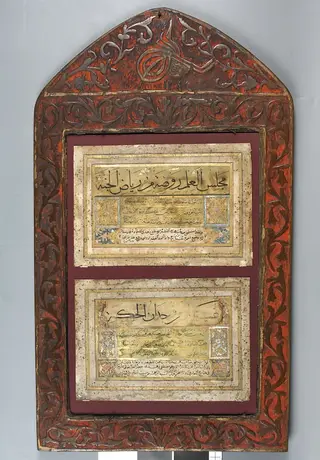 Tabliczka z dwoma tekstami iluminowanymi
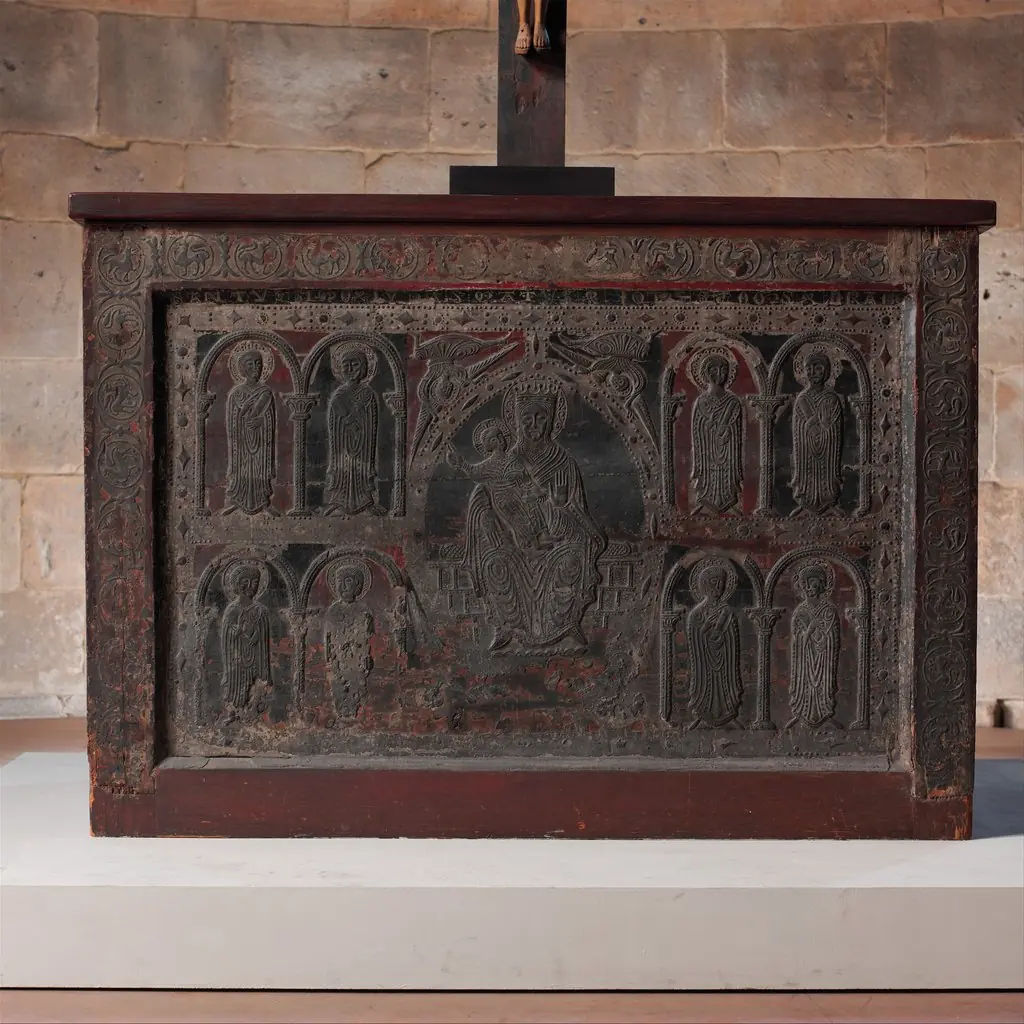 Altar Frontal
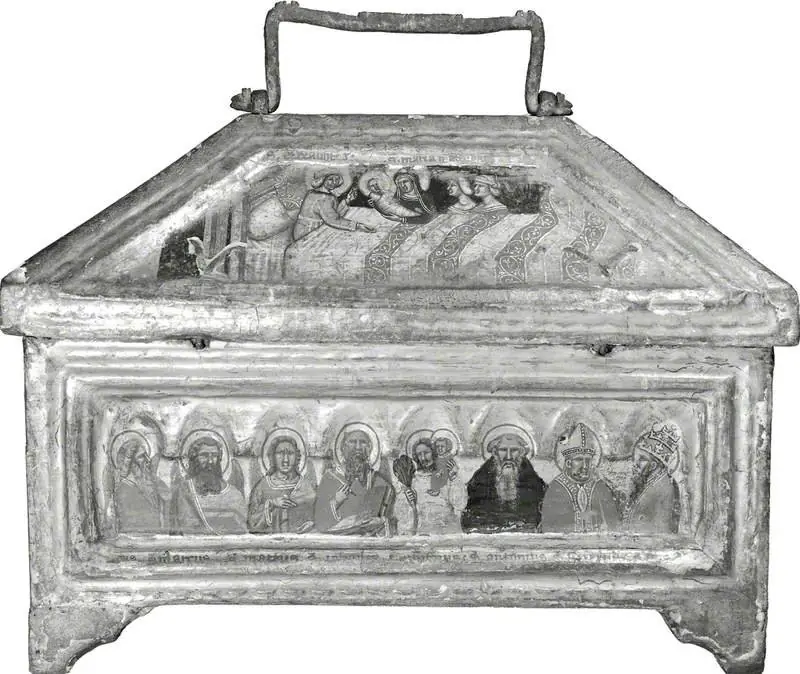 The Virgin and Saint Elizabeth with the Infant Saint John (casket lid, back); The Four Evangelists with Saint Christopher, Saint Anthony Abbot, Saint Liberius (casket, back)