Artwork
Altar Frontal
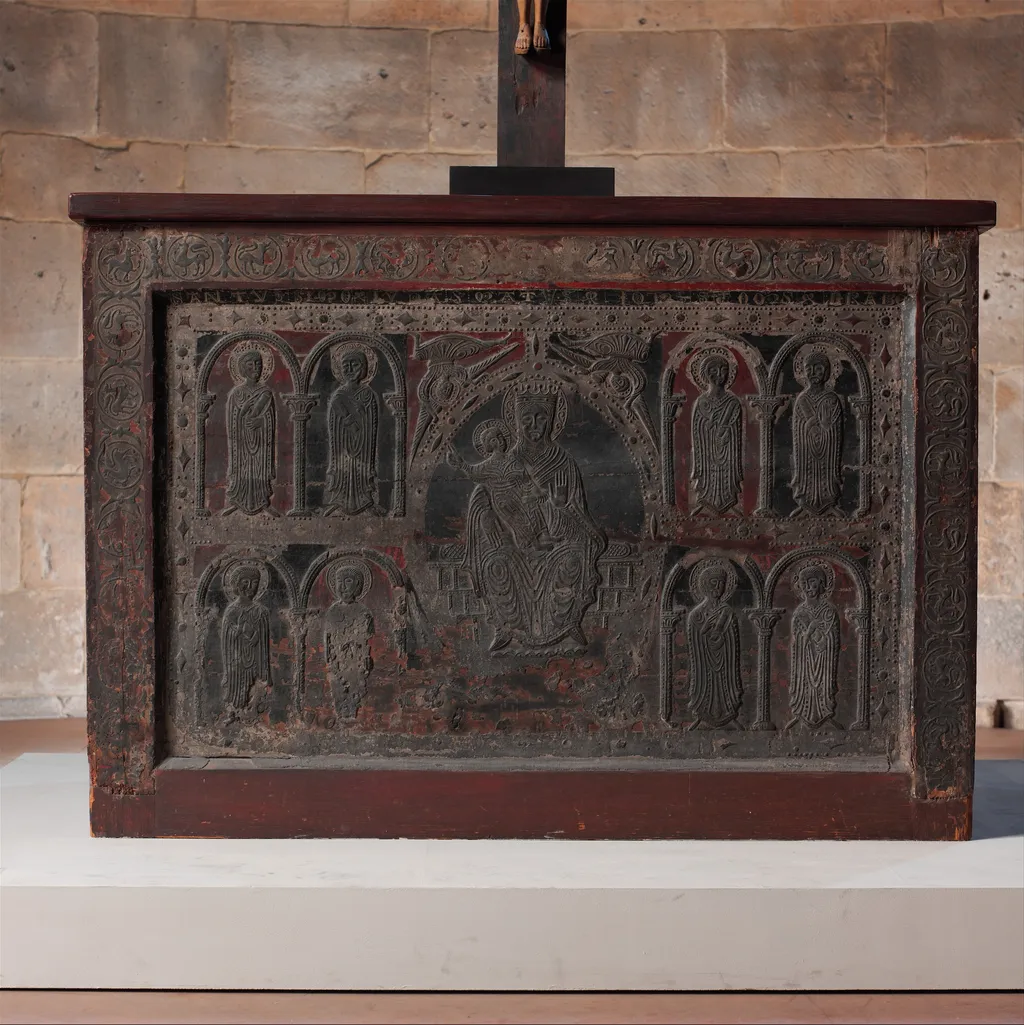
Altar Frontal is an unspecified painting. It dates from 1225 and is held in the collection of the Metropolitan Museum of Art.
About this work
History & Provenance
Dating to approximately 1225, this anonymous religious painting depicts the Madonna and Child alongside saints and apostles.
Created circa 1225, this religious altar frontal is attributed to an anonymous artist. The work, which depicts the Madonna and Child alongside saints and apostles, measures approximately 95.9 by 147.3 centimeters. While specific details regarding its original commission or early ownership history are not provided in the available records, the piece is currently held in the collection of the Metropolitan Museum of Art.
There, it is cataloged under the accession number 25.120.256, indicating its entry into the museum's holdings in 1925. The object is classified as a painting within the genre of religious art.
The Altar Frontal is currently held in the collection of the Metropolitan Museum of Art in New York. The work is cataloged under the accession number 25.120.256. Dating to approximately 1225, this anonymous religious painting depicts the Madonna and Child alongside saints and apostles.
While the provided sources confirm its institutional location and inventory details, they do not contain information regarding a specific exhibition history for this piece.
Overview
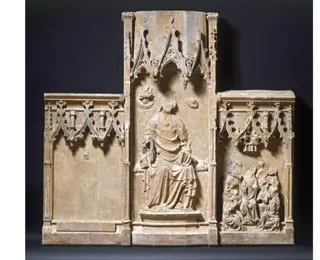
This artwork is an altar frontal, a carved wooden panel intended for a liturgical setting. It depicts a central enthroned figure holding a child, flanked by six standing figures arranged in pairs. The composition is structured in three rows, set against a background featuring architectural elements and decorative patterns.
The panel's edges are adorned with leaf motifs, and its original vibrant colors have diminished over time, now appearing primarily in muted tones of brown, gray, red, and gold.
Subject & Meaning
The central image strongly suggests a depiction of the Madonna and Child, a prevalent theme in Christian art. This motif traditionally symbolizes the Virgin Mary with the infant Jesus, representing divine motherhood and salvation. The surrounding six figures, positioned symmetrically, are likely intended to represent saints or apostles, common companions to the Virgin Mary in devotional imagery. Their simplified and stylized facial features, however, preclude specific identification.
Technique & Style
Crafted from a carved wooden panel, the artwork demonstrates a sculptural approach to its figures and decorative elements. The artistic style is characterized by a degree of stylization, particularly evident in the simplified rendering of the figures' faces. Architectural forms and repeating patterns define the background, while leaf designs frame the composition.
The current faded state of the pigments, dominated by dark browns, grays, and traces of red and gold, suggests a loss of the original color intensity and detail.
Artist & collection

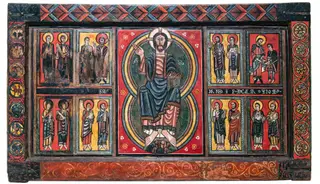
- Altar frontal from Ix
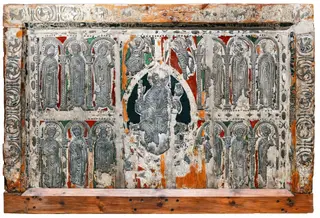 Altar frontal from Esterri de Cardós
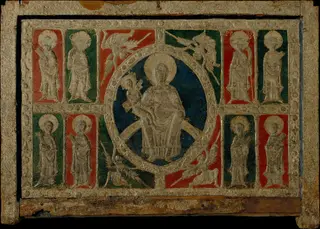 Altar frontal from Alós d'Isil
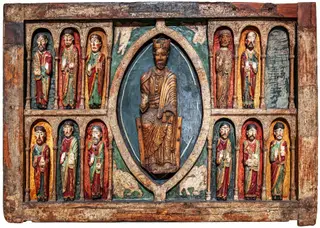 Altar frontal from Santa Maria in Taüll
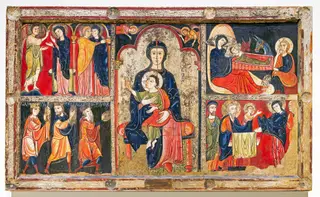 Altar frontal from Avià
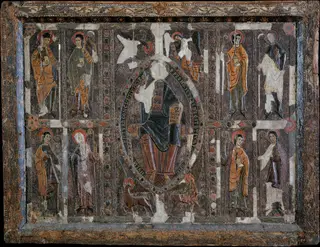 Altar frontal from Planès
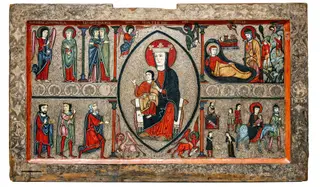 Altar frontal from Cardet
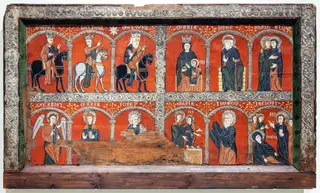 Altar frontal from Mosoll
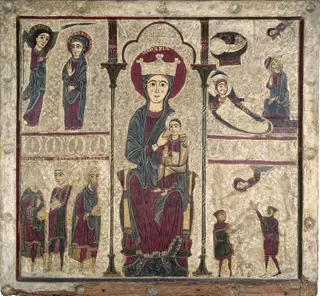 Altar frontal from Rigatell
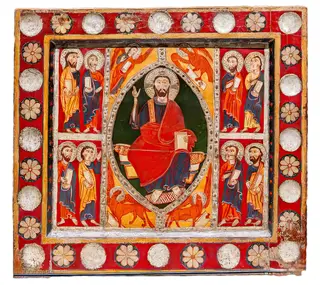 Altar frontal from Sant Romà de Vila
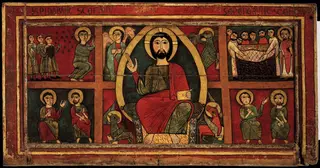 Altar frontal
 Untitled
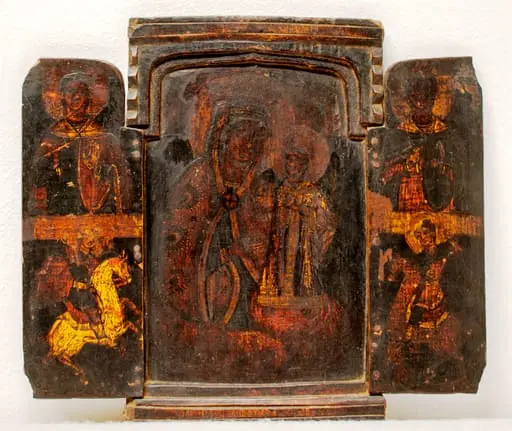 Pe panoul central este reprezentată Maica Domnului Hodighitria(Călăuzitoarea). Pruncul stă în picioare, amândoi fiind înveșmântați în straie împărătești. Maica ține Pruncul cu mâna stângă, cu dreapta arată către El. Voleul stâng, jumătatea inferioară - Sfântul Gheorghe călare pe cal alb. Înveșmântat în costum românesc de oștean medieval, mantie roșie. Calul cu picioarele din față ridicate, harnașament de culoare roșie. Deasupra e posibil să fie tot sfântul Gheorghe, în stânga ținând crucea, cu dreapta face gestul păcii, al liniștii.(prin analogie cu 34530). Simetric, pe latura dreaptă a tripticului se află jos, Sf. Dumitru, călare pe cal roșu, în poziție asemănătoare cu a SF. Gheorghe, iar sus probabil tot el, în altă ipostază iconografică(analogie) . Veșmintele au culorile inversate(tunica roșie -dreapta, albastru-stânga, mantie roșu -stânga, albastru - dreapta), la fel la sfinții războinici, probabil în legătură cu reprezentarea populară a timpului. Inițial, tripticul se închidea, dovadă inscripția care se continuă pe cele două uși. Ulterior a fost fixat cu cuie de fier, iar prinderea se făcea cu o sfoară legată de două cuie bătute pe cant.
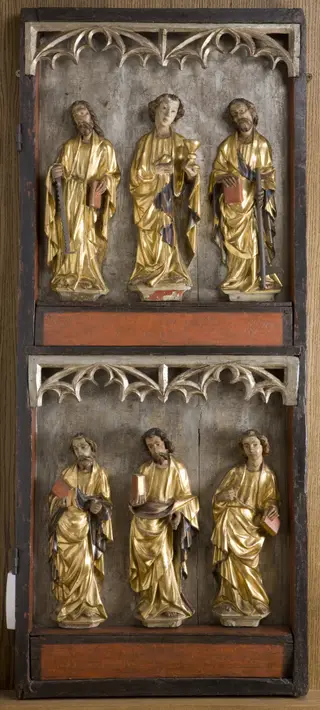 Saint Apostles (reverse: Our Lady of Sorrows). The right panel of the retable from Stary Żywiec
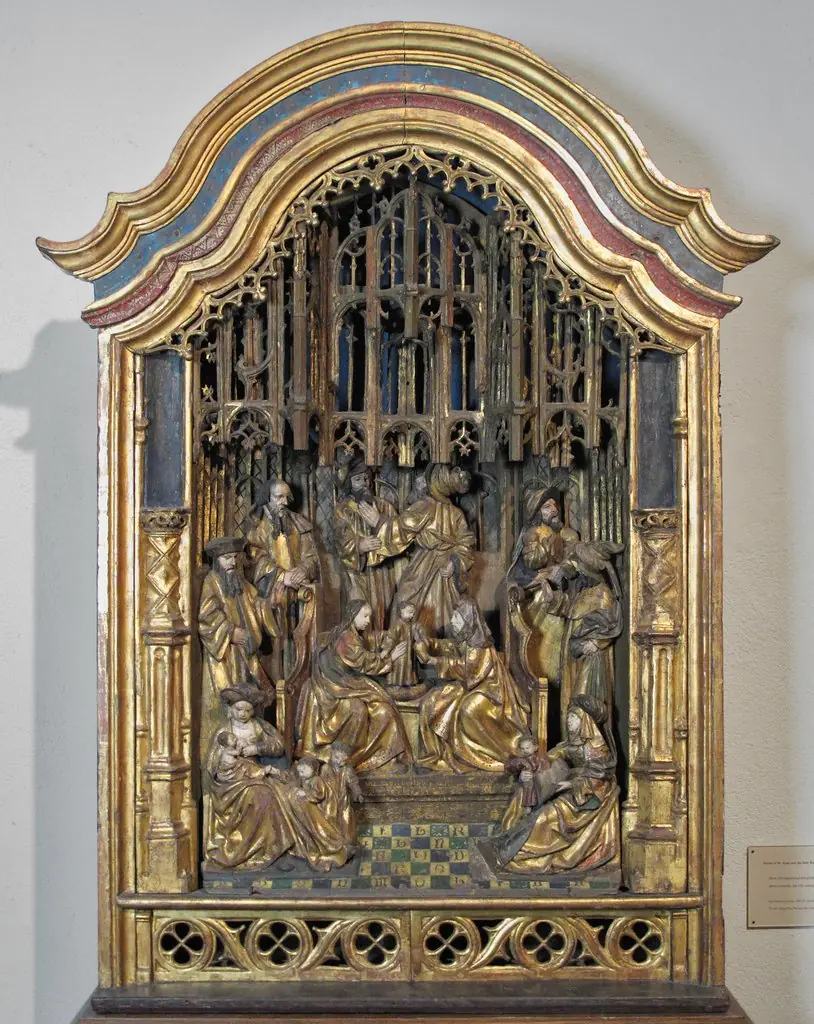 Shrine of Saint Anne and the Holy Kinship
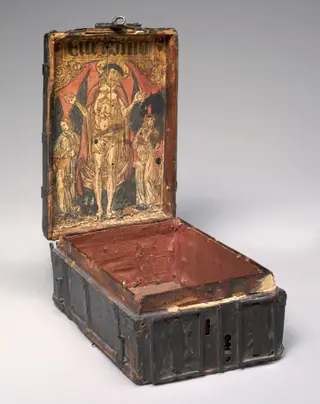 Christ as the Man of Sorrows
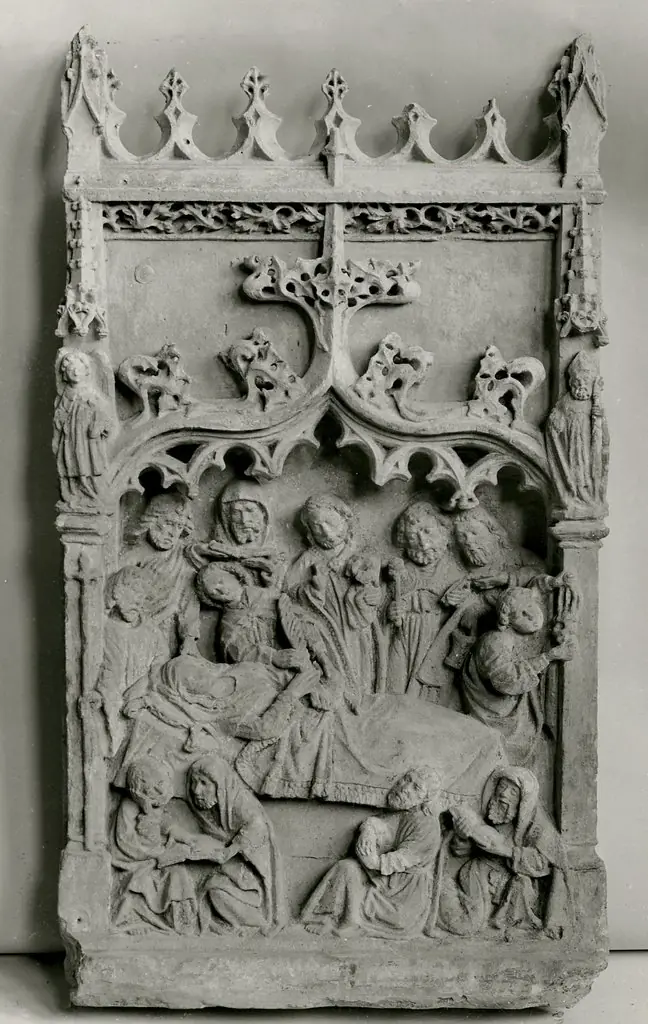 Dormition of the Virgin Relief
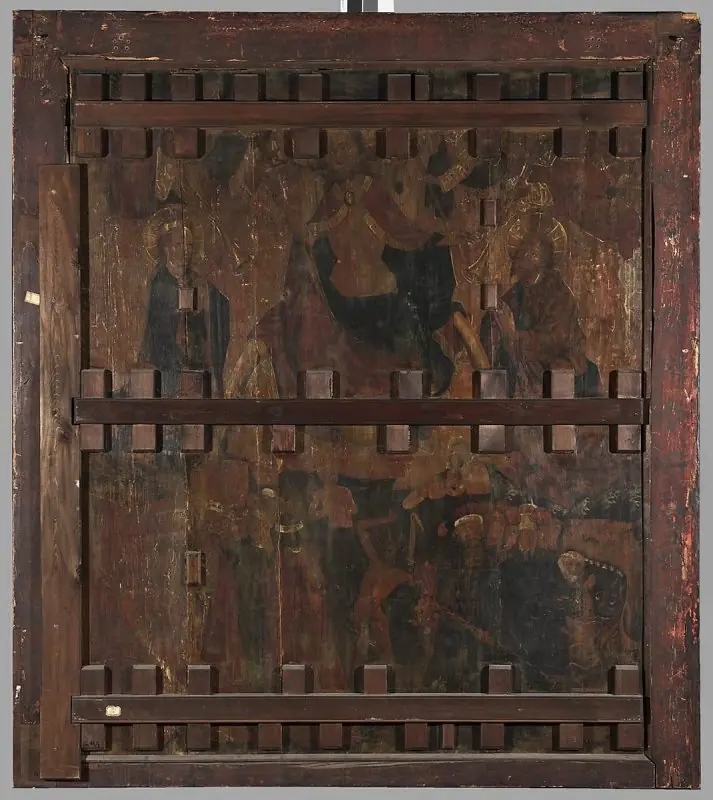 Legnica polyptych - right wing external - lower panel - obverse: Resurrection of Christ; reverse: Last judgement