Artwork
Manuscript Cover Interior with Mahasiddhas, Bodhisattvas, and Protectors
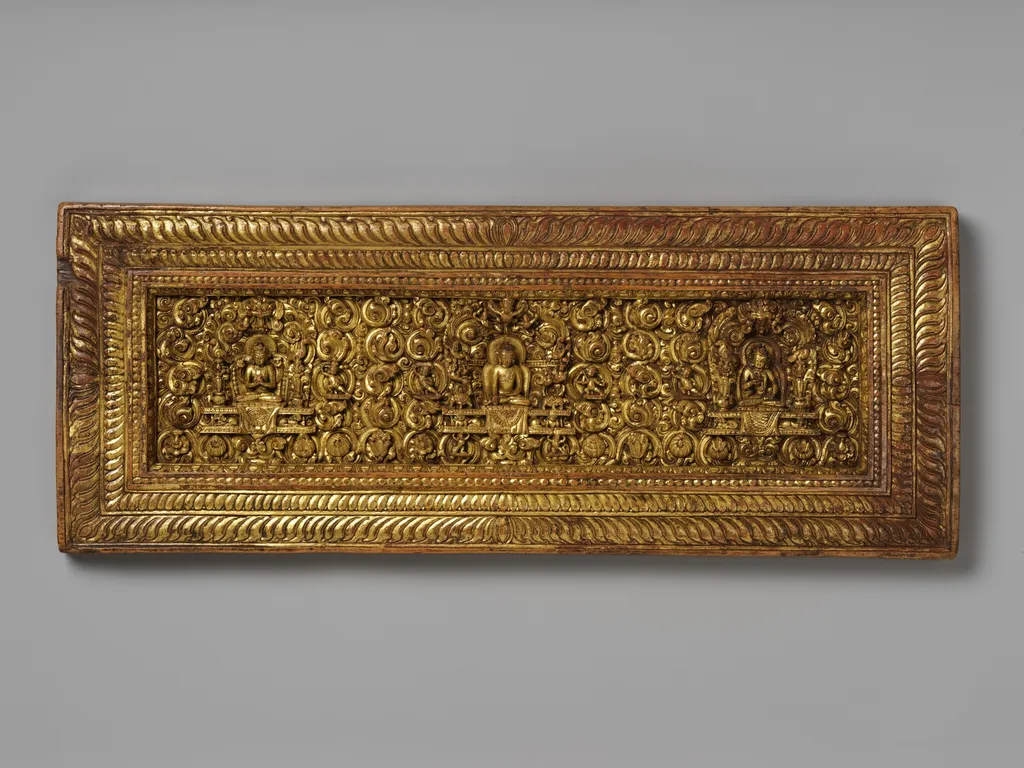
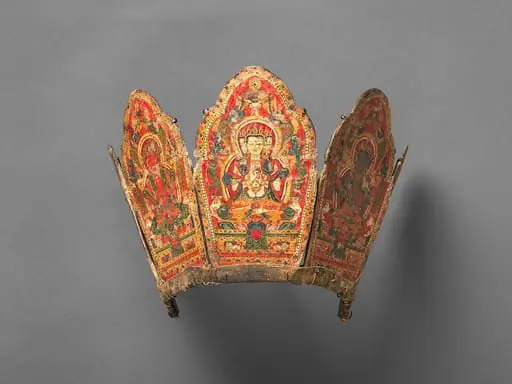
Manuscript Cover Interior with Mahasiddhas, Bodhisattvas, and Protectors is an unspecified painting by Unknown. It dates from 1392 and is held in the collection of the Metropolitan Museum of Art. The interior of this manuscript cover is fashioned like a miniature treasure chest, its surface entirely gilded.
About this work
Overview
The interior of this manuscript cover is fashioned like a miniature treasure chest, its surface entirely gilded. Central to the composition are three seated figures rendered in low relief, encircled by a profusion of smaller, anthropomorphic forms. The surrounding border is a dark, brownish field edged with thin gold lines, creating a formal frame that contains the intricate decorative program.
Subject & Meaning
Together the iconography conveys a spiritual hierarchy, emphasizing the transmission of esoteric teachings within a safeguarded, sacred space.
The three central figures are identified as Mahasiddhas, advanced tantric practitioners, flanked by bodhisattvas and protective deities. The surrounding diminutive figures serve as guardians or attendants, reinforcing the protective aura surrounding the enlightened masters. Together the iconography conveys a spiritual hierarchy, emphasizing the transmission of esoteric teachings within a safeguarded, sacred space.
Technique & Style
Executed in gold leaf applied to a wooden or lacquered substrate, the design combines carving and painting to achieve a subtle relief effect. Fine incised lines delineate the swirling motifs that interlace the figures, while the dark border provides contrast, highlighting the luminous gold. The overall aesthetic reflects a synthesis of metalwork and manuscript illumination characteristic of high medieval Tibetan art.
History & Provenance
The cover belongs to a larger religious manuscript, likely produced in a Tibetan monastic workshop between the 12th and 14th centuries. Though its original volume is missing, the gilded interior survived as a separate object, eventually entering a Western collection through early 20th‑century antiquities trade. Its current location is a major museum dedicated to Asian art.
Context
Such gilded manuscript covers functioned both as protective casings and as devotional objects, embodying the convergence of textual and visual transmission of Buddhist doctrine. The elaborate goldwork exemplifies the period’s devotion to material splendor as a means of honoring sacred content, influencing later Tibetan book‑binding practices and informing contemporary scholarship on Buddhist art.

Artist & collection









 Untitled
 Christ
 Rajput Box with Various Scenes
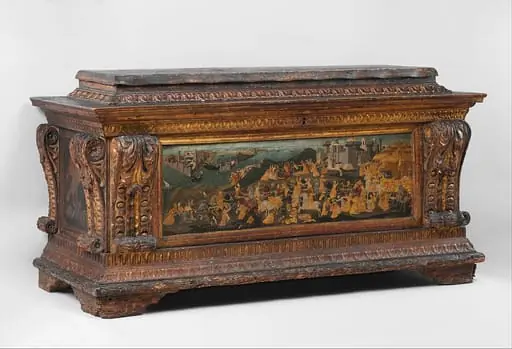 Cassone with painted front panel depicting the Conquest of Trebizond
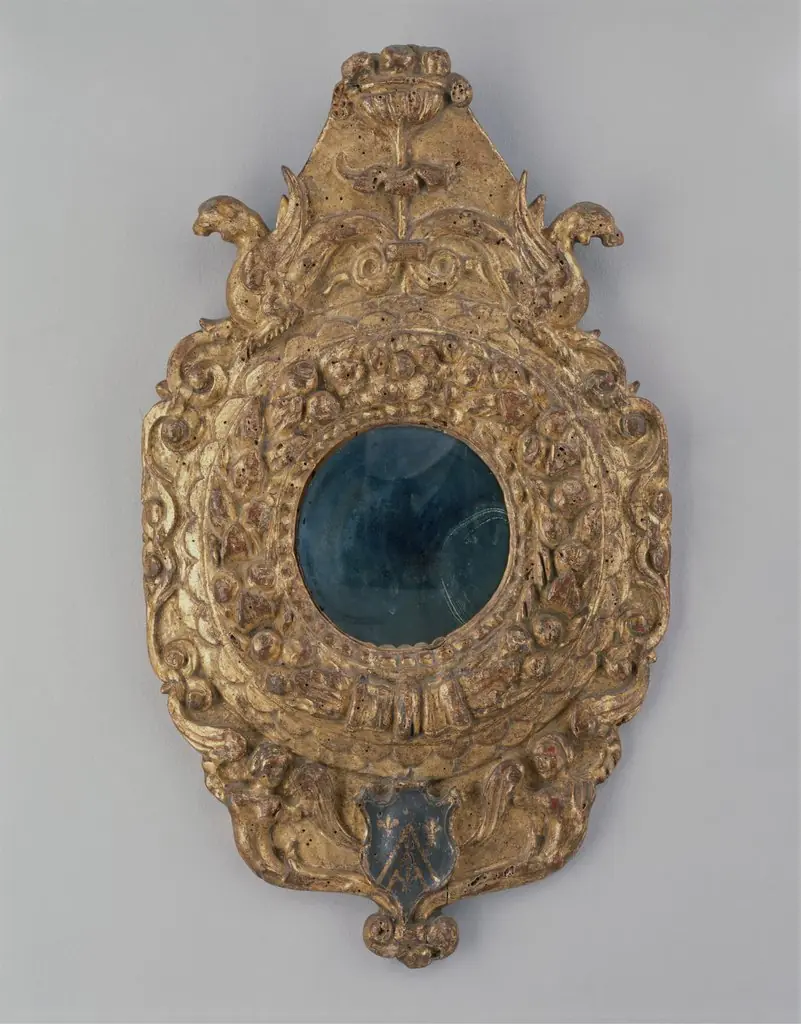 Tondo mirror frame
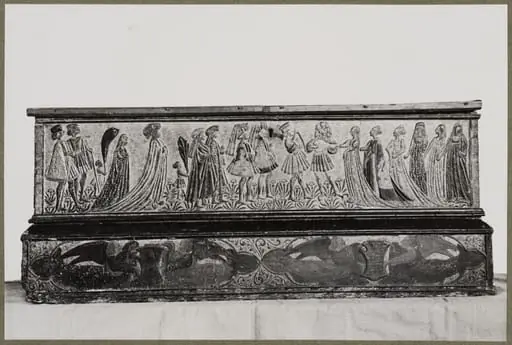 Excavations, 1869, Plan and View of a part of the Circus Maximus of the time of the Trajan, on the curve
 Untitled
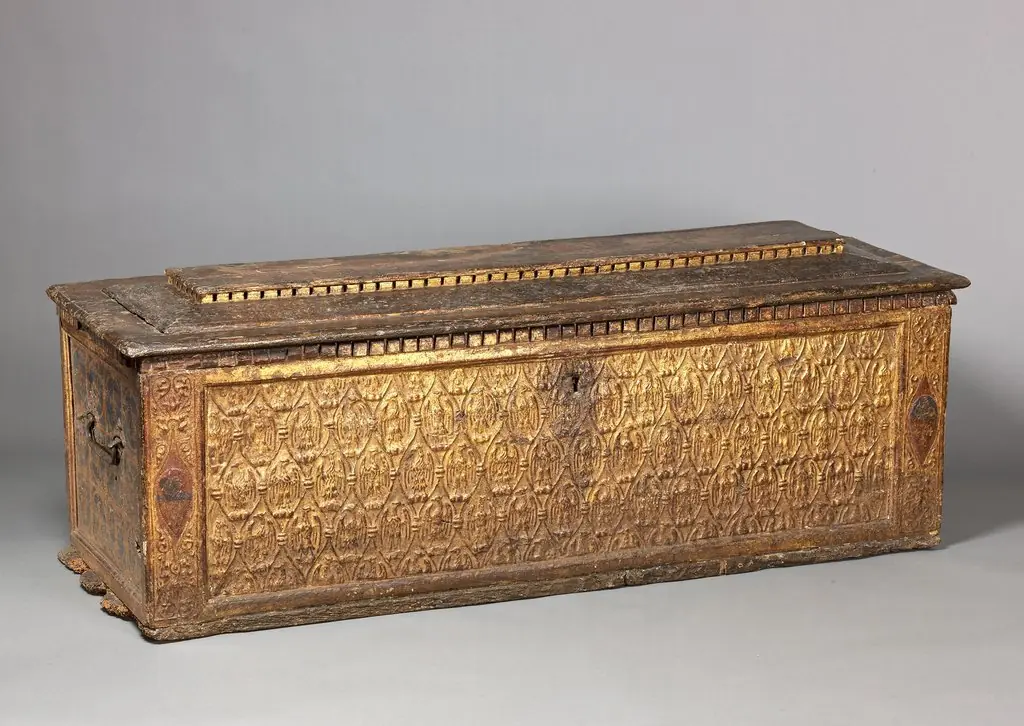 Cassone
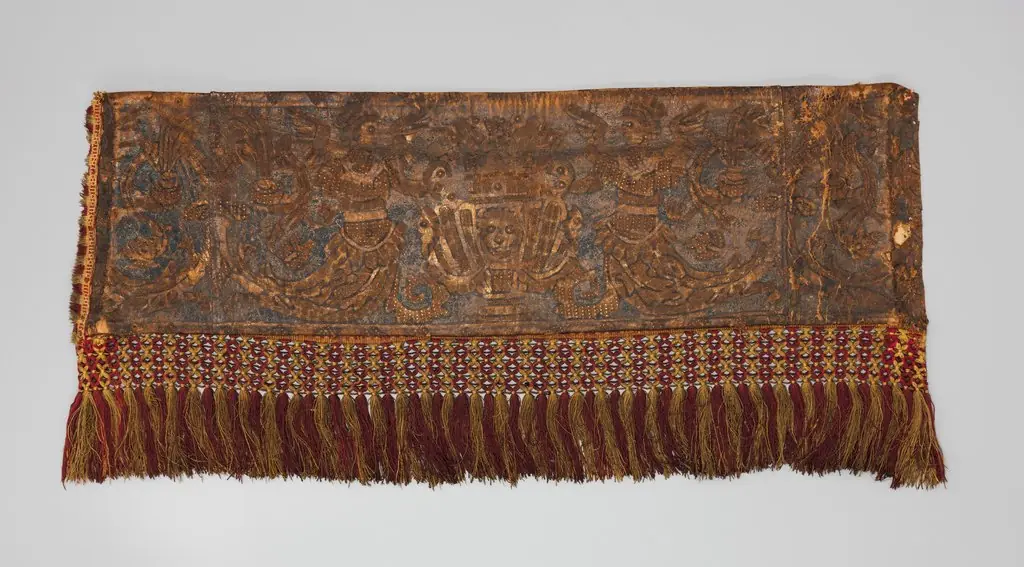 Dante Chair back
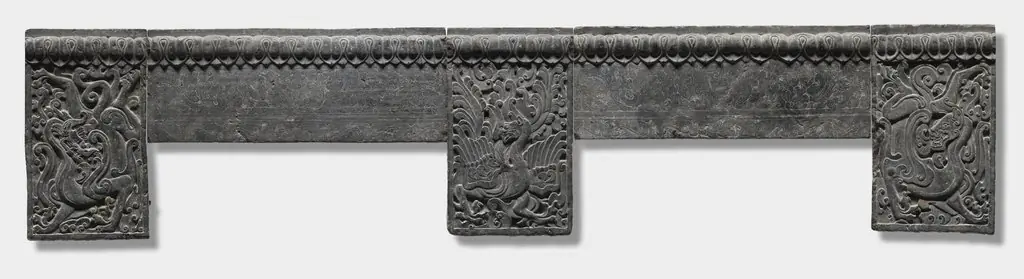 Demon Intoning the Name of the Buddha
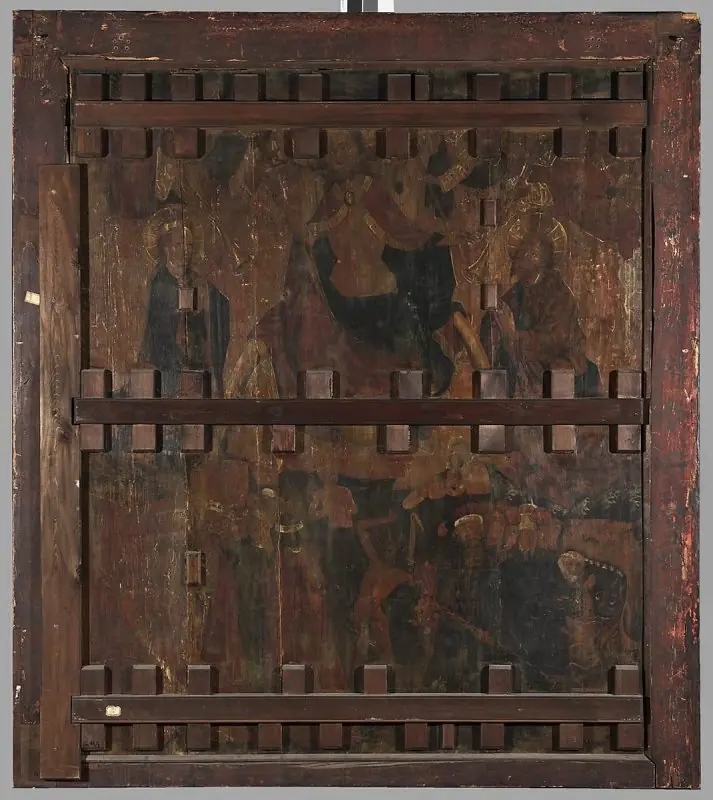 Legnica polyptych - right wing external - lower panel - obverse: Resurrection of Christ; reverse: Last judgement
- Manuscript of the Perfection of Wisdom in Eight Thousand Lines (Ashtasahasrika Prajnaparamita-sutra)