Artwork
Rajput Box with Various Scenes
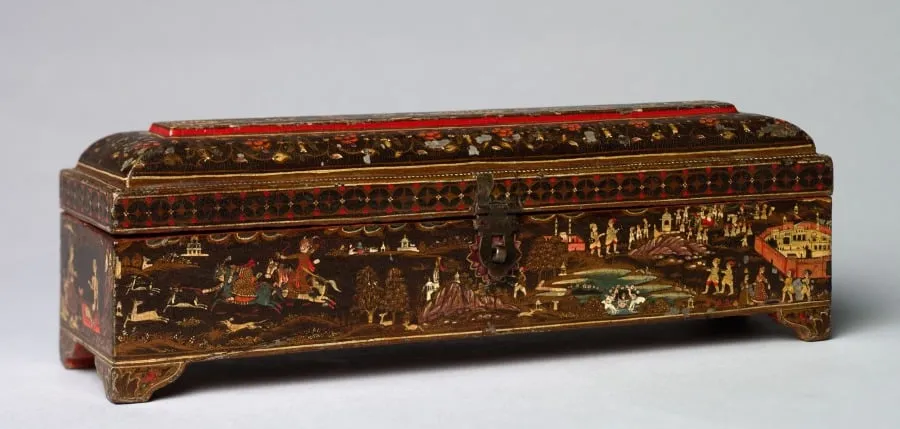
Rajput Box with Various Scenes is an unspecified painting by the Rajput painting artist Unknown. It dates from 1800 and is held in the collection of the Cleveland Museum of Art. This wooden box, crafted in the Rajput tradition, is adorned with numerous miniature painted scenes across its surfaces.
- Accession no.
- 1979.56
- Credit line
- Edward L. Whittemore Fund
About this work
Overview
The entire surface is densely covered with figures, architecture, and movement, rendered in vivid reds, golds, and deep tones.
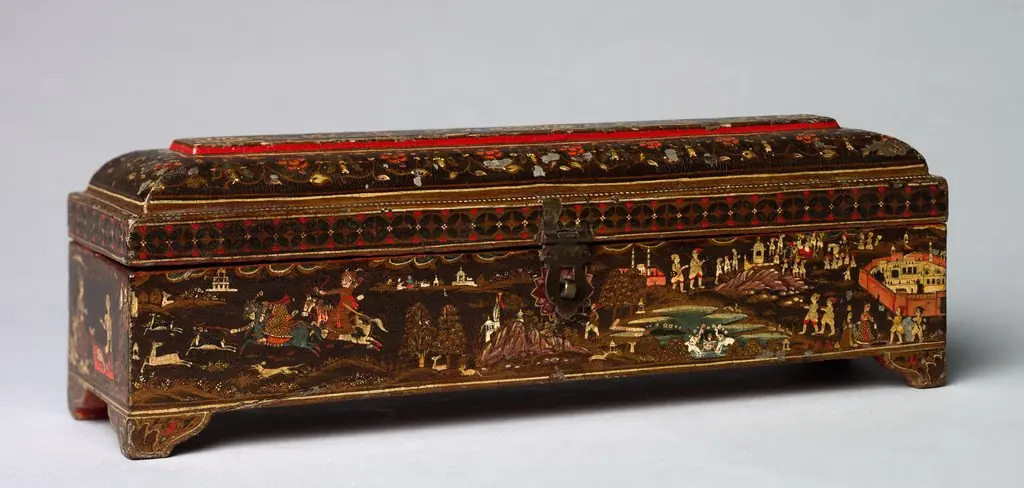
This wooden box, crafted in the Rajput tradition, is adorned with numerous miniature painted scenes across its surfaces. Its form resembles a decorative chest, with a lid marked by a narrow red band and a metallic clasp. The entire surface is densely covered with figures, architecture, and movement, rendered in vivid reds, golds, and deep tones. The composition avoids stillness, favoring energetic arrangements that suggest narrative activity.
Subject & Meaning
The painted scenes depict moments of courtly life, including processions, military engagements, and gatherings. These episodes likely reference historical events, royal ceremonies, or literary tales valued in Rajput courts. The emphasis on action and crowd dynamics reflects a cultural interest in valor, spectacle, and the visibility of power. No single scene dominates; instead, the box functions as a visual chronicle of aristocratic ideals.
Technique & Style
Artists applied fine brushwork to achieve intricate detail, using mineral pigments on a wooden substrate. Colors are saturated and contrasted against dark grounds to enhance visibility. Patterns along the edges, floral and arabesque, frame the central imagery, a common decorative convention in Rajput art. The perspective is flattened, and figures are stylized, prioritizing symbolic clarity over naturalistic depth.
History & Provenance
Produced in a Rajput workshop, likely in Rajasthan or the Punjab Hills during the 17th or 18th century, such boxes were commissioned by nobility for storage or display. Their portability and ornamentation suggest use in royal households or as diplomatic gifts. Few comparable examples survive intact, making this object a rare testament to the craftsmanship of regional ateliers.
Context
This box belongs to a broader tradition of Indian miniature painting, where narrative detail and ornamental richness were prized. It aligns with courtly art forms that celebrated lineage and martial prowess, often inspired by epics like the Mahabharata or local heroic ballads. Unlike Mughal painting, which favored refined restraint, Rajput works embraced exuberance and emotional intensity.
Legacy
The box exemplifies a regional aesthetic that persisted through centuries of political change. Its visual language influenced later folk and commercial art in North India. While not widely known outside specialist circles, it remains a key example of how everyday objects were transformed into carriers of cultural memory and artistic skill in pre-colonial India.
Artist & collection









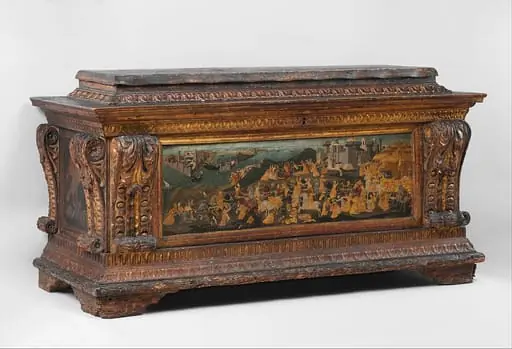 Cassone with painted front panel depicting the Conquest of Trebizond
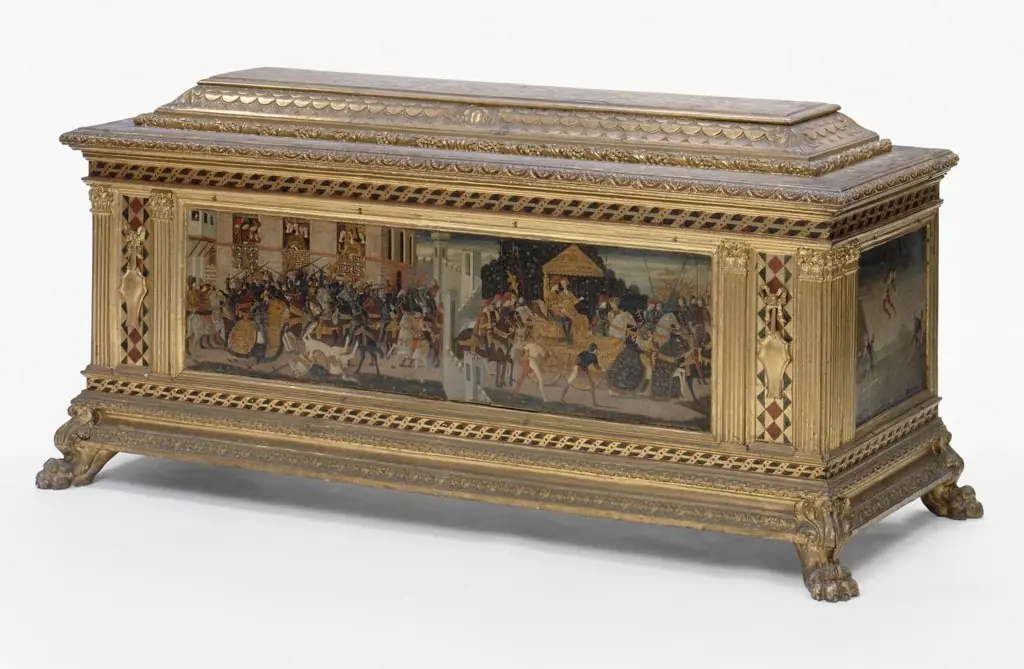 Cassone with three painted panels
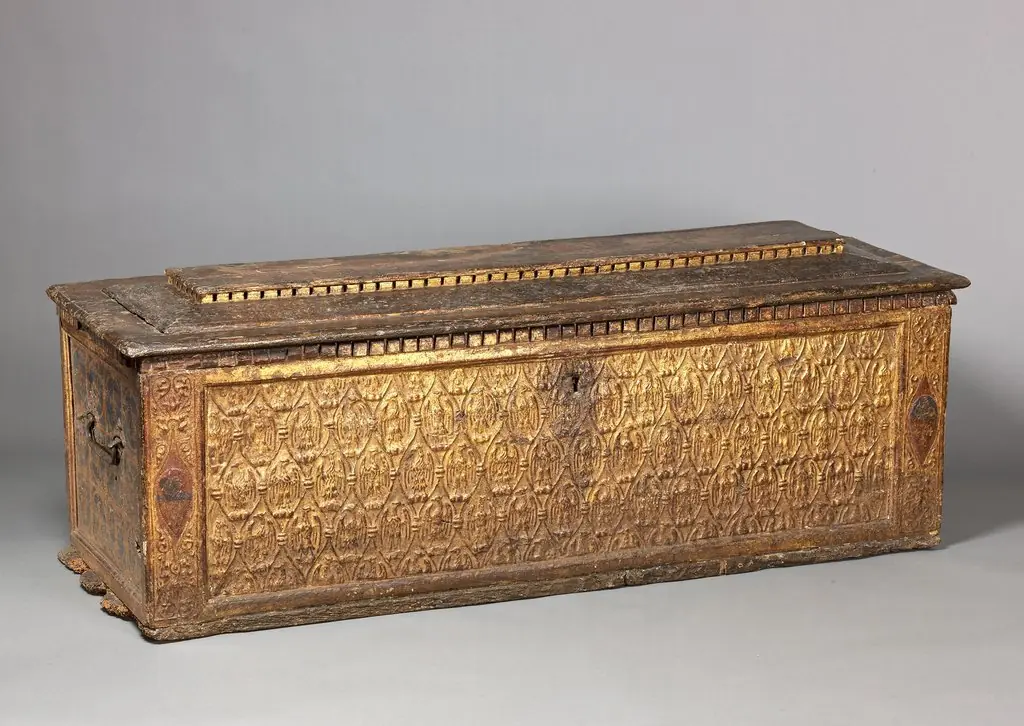 Cassone
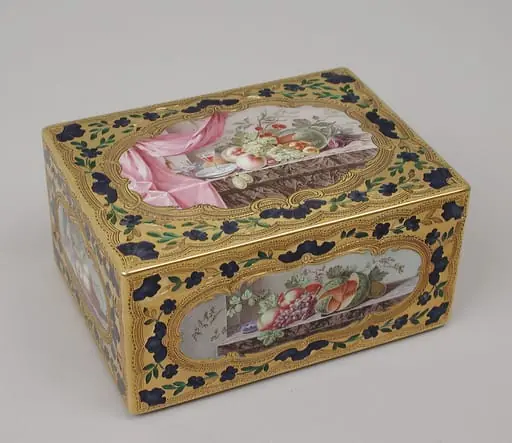 Snuffbox
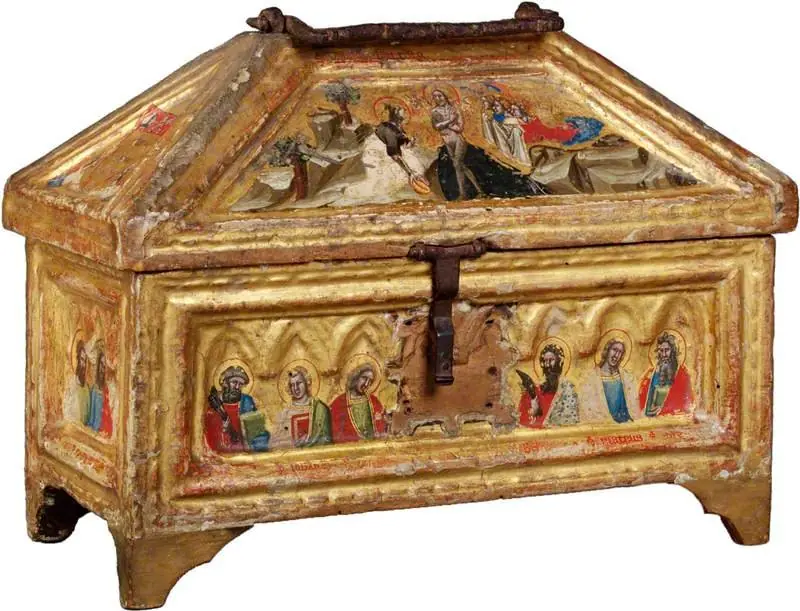 The Baptism of Christ (casket lid, front); Saint Peter, Saint John the Evangelist, Saint Matthew and Two Unknown Saints (casket, front)
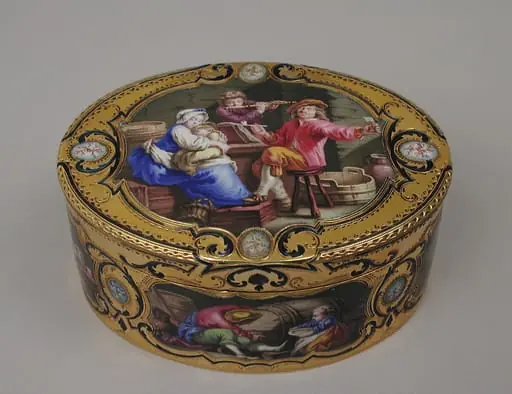 Snuffbox
 Snuffbox
 Untitled
 rasia
rasia Snuffbox
- Rajput Box with Various Scenes
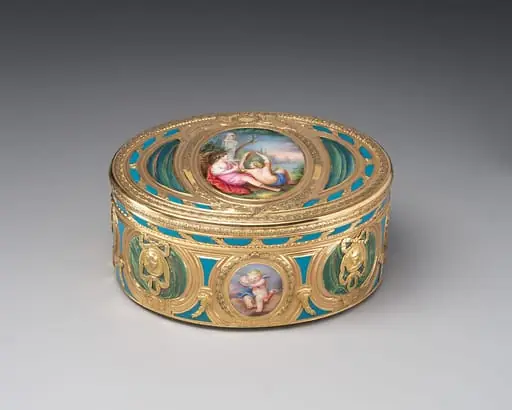 Snuffbox