Artwork
Rajput Box with Various Scenes
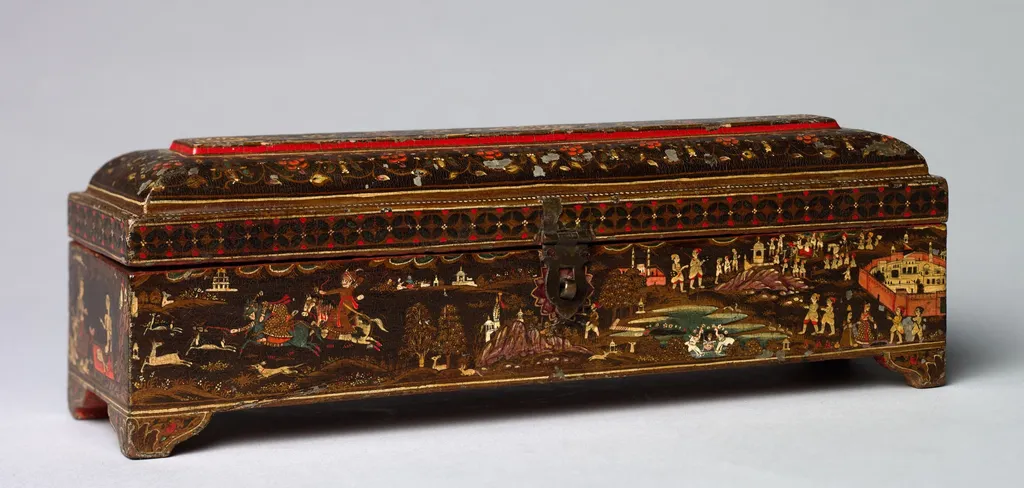
Rajput Box with Various Scenes is an unspecified painting. It dates from 1800 and is held in the collection of the Cleveland Museum of Art. The object is a modestly sized rectangular wooden box with a hinged lid, whose surfaces are covered in painted decoration.
About this work
The scenes depicted on the box seem to be from everyday life, with people engaging in various activities.
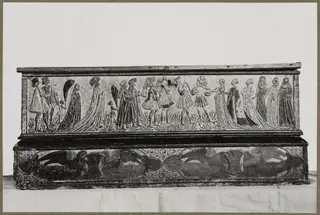
This painting shows a small, rectangular box with a hinged lid. The box is decorated with intricate designs and scenes, including people, animals, and buildings. The colors are muted, with shades of brown, red, and gold.
The box appears to be made of wood, and the paintings on it are detailed and ornate. The scenes depicted on the box seem to be from everyday life, with people engaging in various activities.
The box is a beautiful example of Indian art from the early 19th century. To learn more about similar artworks, check out the collection at The Cleveland Museum of Art.
History & Provenance
The Rajput Box with Various Scenes is a painting created circa 1800 by an unknown artist. The work is held in the collection of the Cleveland Museum of Art, cataloged under the accession number 1979.56. It was displayed in the museum's 2019 exhibition "Nature and Color: Indian Paintings from the Rajput Courts."
No further details regarding its specific commission, earlier ownership history, or the circumstances of its acquisition by the museum are provided in the available records.
Overview
The object is a modestly sized rectangular wooden box with a hinged lid, whose surfaces are covered in painted decoration. The panels display a series of finely rendered scenes that include figures, animals and architectural elements, rendered in a restrained palette of brown, red and gold. The overall effect is one of elaborate yet subdued ornamentation typical of Indian decorative arts of the early nineteenth century.
Subject & Meaning
The painted panels portray quotidian activities, suggesting a visual record of daily life. Human figures are shown engaged in various tasks, accompanied by domestic animals and surrounding structures, offering insight into the social and environmental context of the period. The selection of scenes reflects a narrative intent to celebrate ordinary experiences rather than mythological or religious themes.
Technique & Style
The box is executed in tempera or oil-based pigments applied to a prepared wooden surface, allowing for precise line work and subtle shading. The decorative motifs combine linear detailing with flat areas of color, characteristic of Rajput miniature traditions adapted for three‑dimensional objects. The muted tonal scheme and gold accents enhance the visual depth while maintaining a cohesive aesthetic.
Artist & collection

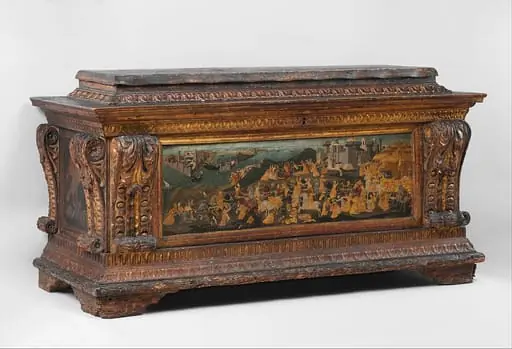 Cassone with painted front panel depicting the Conquest of Trebizond
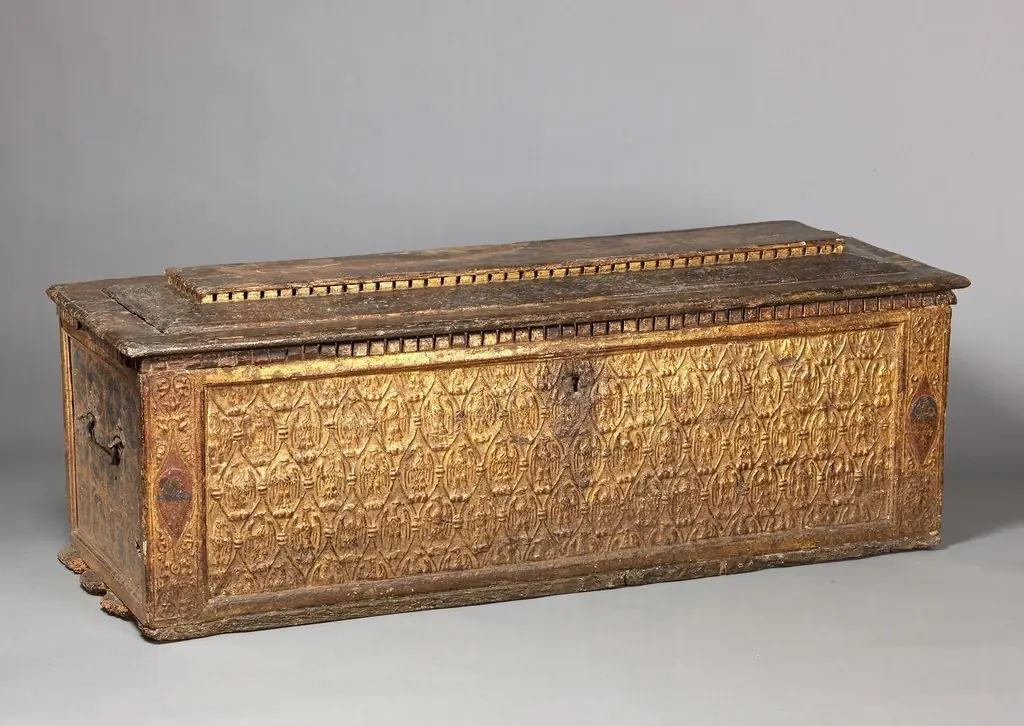 Cassone
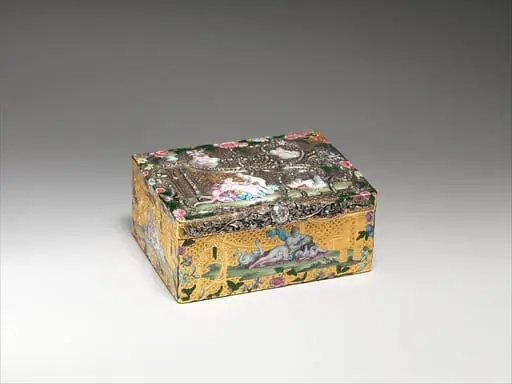 Snuffbox with portrait of Frederick the Great (1712–1786), King of Prussia
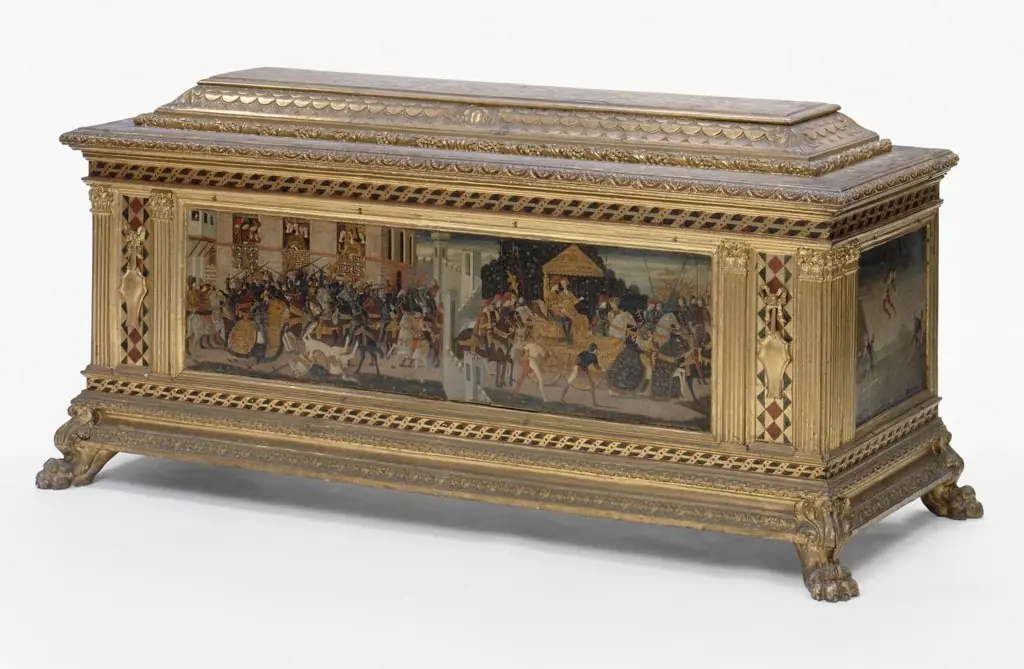 Cassone with three painted panels
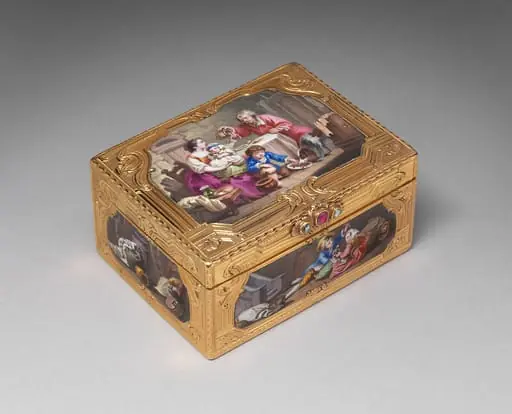 Snuffbox
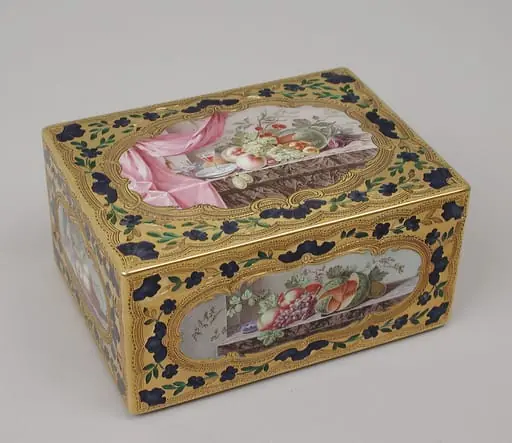 Snuffbox
 Manuscript Cover Interior with Mahasiddhas, Bodhisattvas, and Protectors
 Untitled
 Christ
 Snuffbox
 Excavations, 1869, Plan and View of a part of the Circus Maximus of the time of the Trajan, on the curve
- Rajput Box with Various Scenes