Artwork
Cherry, Plum and Willow Trees
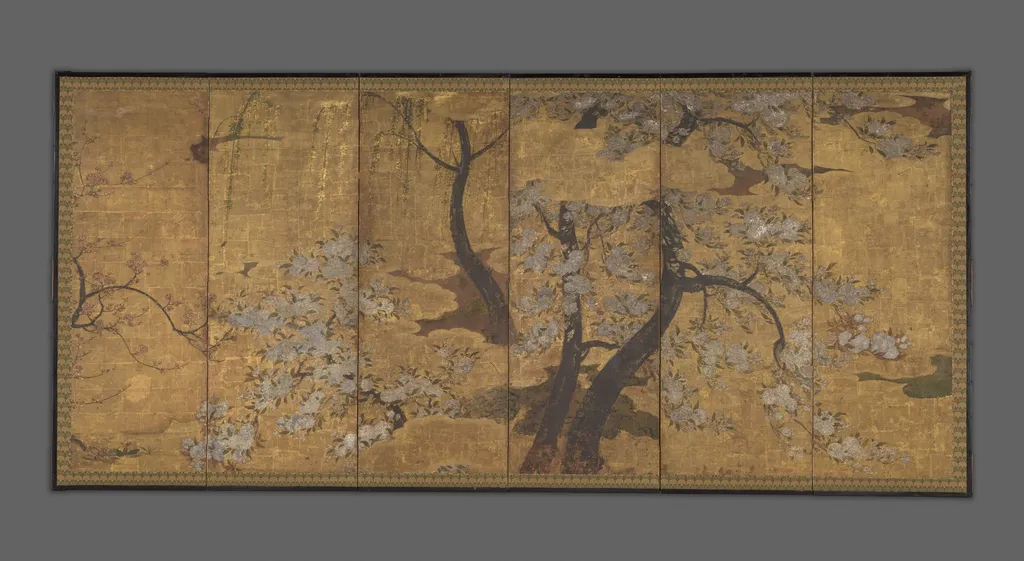
Cherry, Plum and Willow Trees is an unspecified painting. It dates from 1616 and is held in the collection of the Metropolitan Museum of Art. The work presents a composition of three distinct trees, cherry, plum and willow, set against a uniform gold background.
About this work
Subject & Meaning
The work was created in Japan in 1616 and is housed in the Metropolitan Museum of Art, where it remains part of their collection of Japanese paintings.
The painting depicts a traditional East Asian composition featuring cherry, plum, and willow trees arranged in a harmonious landscape. These plants carry layered symbolic weight in East Asian visual culture: cherry blossoms often signify transience and renewal, plum blossoms represent resilience and hope amid hardship, and willows are associated with endurance and scholarly contemplation. Together they evoke seasonal cycles and philosophical concepts tied to impermanence and perseverance.
The work was created in Japan in 1616 and is housed in the Metropolitan Museum of Art, where it remains part of their collection of Japanese paintings.
History & Provenance
The work titled Cherry, Plum and Willow Trees was created in 1616 in Japan and is classified as a painting. It entered the collection of the Metropolitan Museum of Art, where it remains on view. The attribution to an unidentified artist is recorded in the work's provenance, and its inception date is documented as 1616-01-01.
Overview
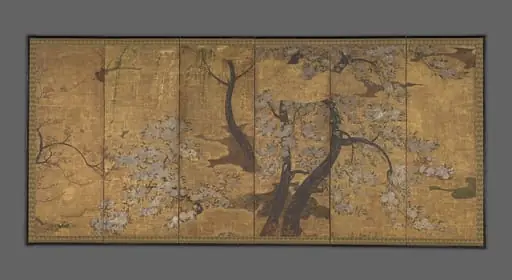
The work presents a composition of three distinct trees, cherry, plum and willow, set against a uniform gold background. Each tree is rendered with skeletal branches that bear either buds or blossoms in shades of white, pink, and occasional green, brown or gray foliage. The arrangement emphasizes the contrast between the luminous blossoms and the muted, flat field behind them.
Technique & Style
Executed with a panel-like edge that suggests a foldable format, the piece employs a limited palette and simplified forms. The branches are delineated with thin, linear strokes, while the blossoms are rendered in soft washes of white and pink that stand out sharply against the golden field. The restrained use of color and flat background reflect a decorative aesthetic reminiscent of traditional East Asian screen painting.
Artist & collection

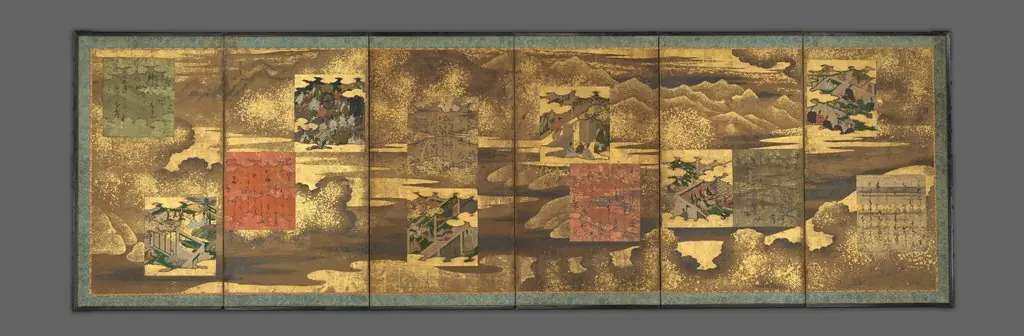 Tale of Genji Screen (Genji monogatari zu shikishi harimaze byōbu)
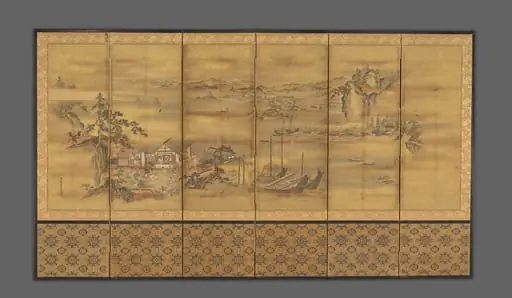 Untitled
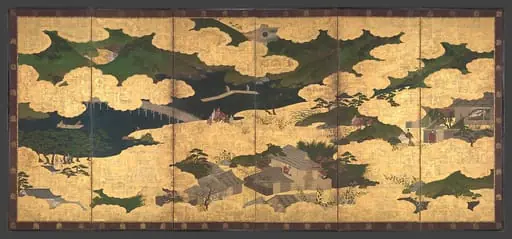 平家物語図屏風 「小督」 「大原御幸」|"Kogō" and "The Imperial Procession to Ōhara", from The Tale of the Heike (Heike monogatari)
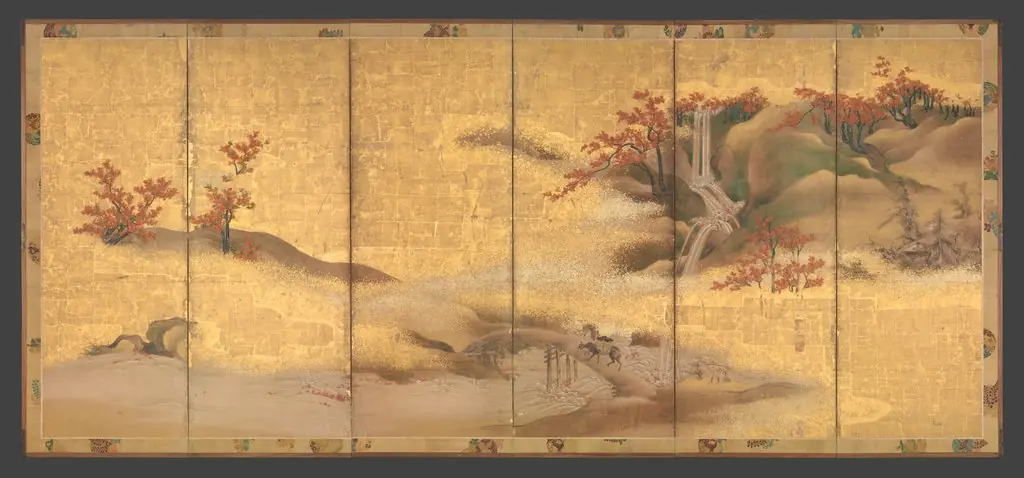 Mountains and Rivers in Autumn
 Peonies
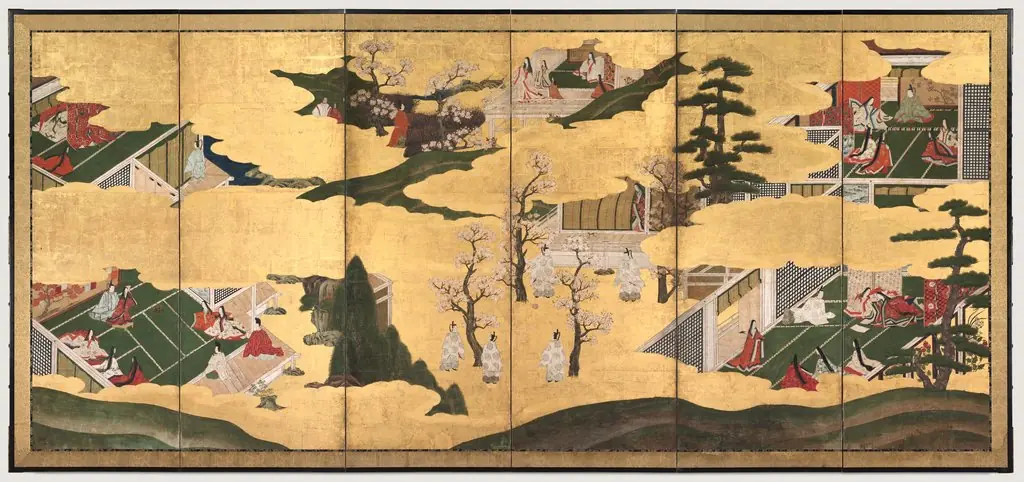 Scenes from the Tale of Genji
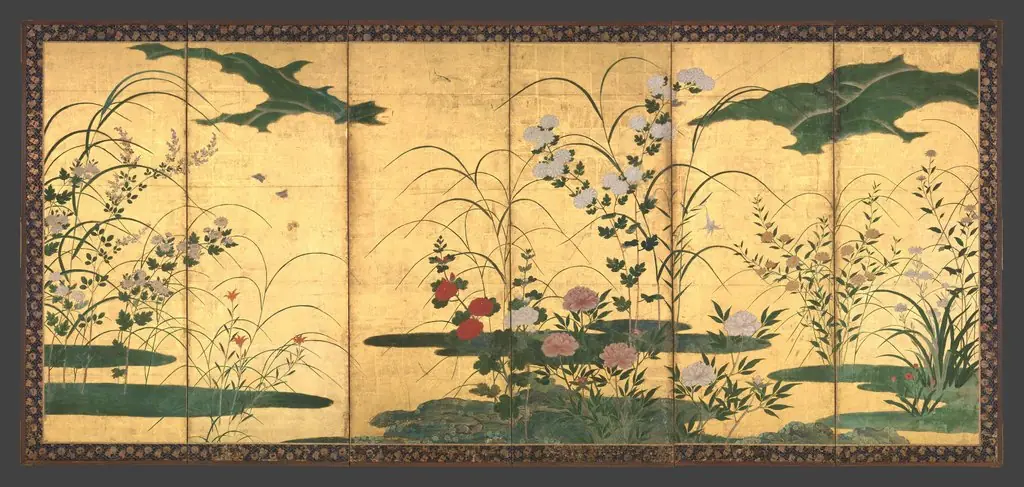 Flowers and Grasses of the Four Seasons
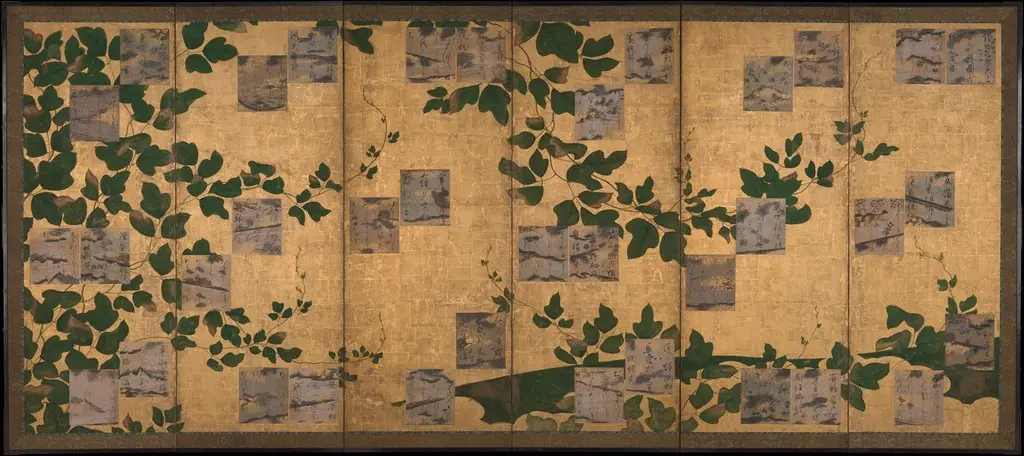 Anthology of Japanese and Chinese Poems (Wakan rōeishū) with Underpainting of Arrowroot Vines
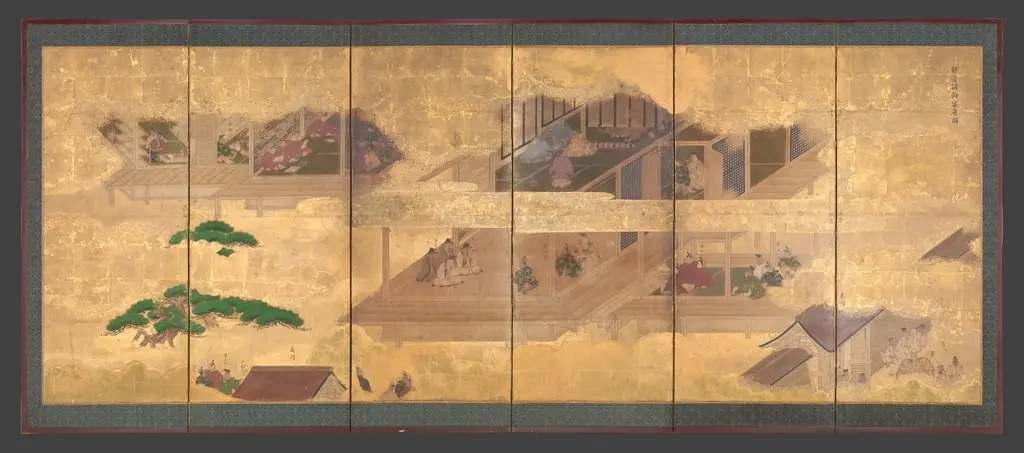 Scenes at the University with Images of the Ancient Sages; Debate and Banquet at the Administration Offices
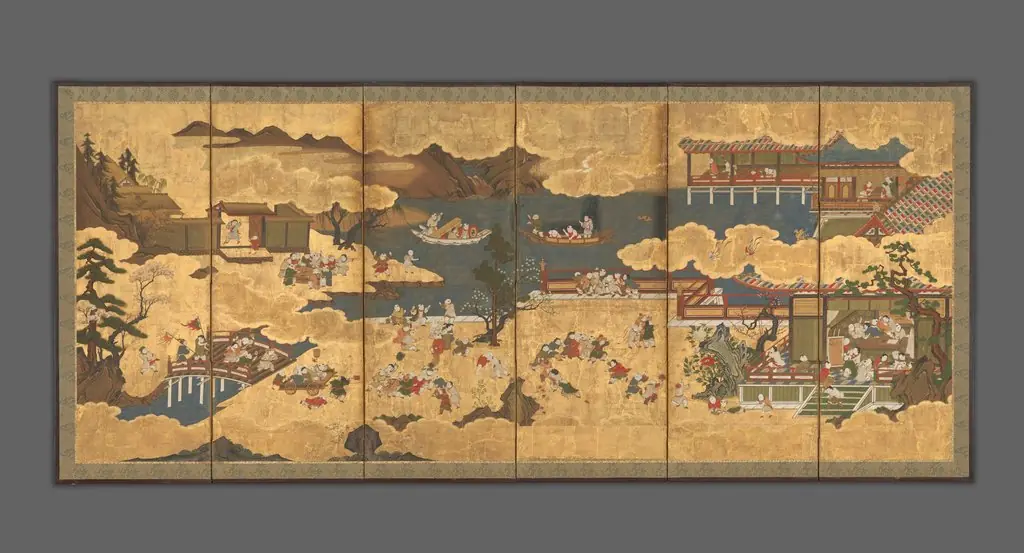 One Hundred Chinese Boys