Artwork
Tale of Genji Screen (Genji monogatari zu shikishi harimaze byōbu)
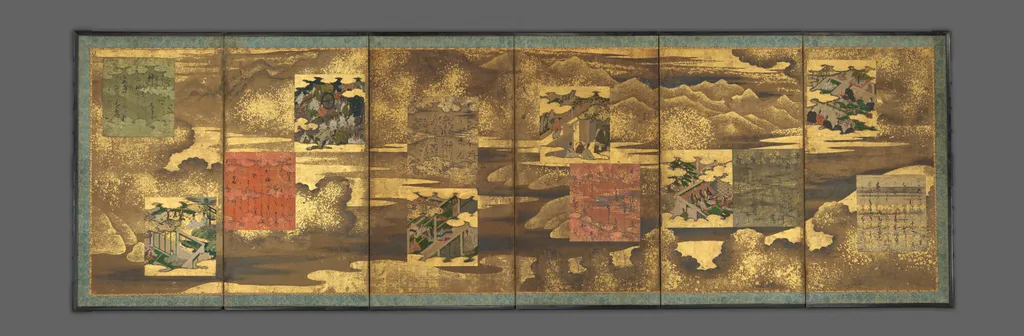
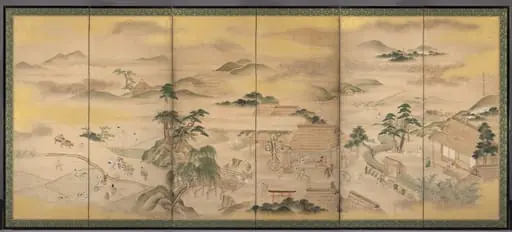
Tale of Genji Screen (Genji monogatari zu shikishi harimaze byōbu) is an unspecified painting. It dates from 1616 and is held in the collection of the Metropolitan Museum of Art.
About this work
Technique & Style
The composition balances delicate line work with muted color fields, reflecting Heian-period aesthetic principles adapted to early Edo decorative sensibilities.
The Tale of Genji screen is a folding screen painted on paper using mineral pigments and ink, depicting scenes from the Genji Monogatari. Executed in 1616 by a member of the Tosa School, the work employs layered pigments applied to a wooden panel format, creating a narrative sequence across multiple panels. The composition balances delicate line work with muted color fields, reflecting Heian-period aesthetic principles adapted to early Edo decorative sensibilities. The surface shows minor craquelure consistent with age and handling, though structural integrity remains stable.
History & Provenance
The painting is part of the collection at the Metropolitan Museum of Art in New York, where it is cataloged under accession number 1983.442. It has been featured in exhibitions at the museum, including the 1983 exhibition "Japanese Art from the 17th to 19th Century," which highlighted works from the Tosa School and other Edo-period artists.
Overview
Created in 1616, this six‑panel folding screen belongs to the Tosa school of Japanese painting and is part of the Metropolitan Museum of Art’s collection. Each panel functions as an individual tableau, loosely arranged like the pages of a book, and together they illustrate episodes drawn from the classic literary work, The Tale of Gengen.
Subject & Meaning
The imagery depicts selected moments from the Heian‑era narrative, featuring courtly figures in vivid kimono, as well as architectural interiors and landscape vistas. Interspersed red panels bear calligraphic verses that echo the poetic sensibility of the original text, linking visual and literary expression.
Context
Folding screens (byōbu) served both decorative and functional roles in Japanese interiors, often partitioning spaces while displaying narrative art. This piece reflects the Tosa school’s dedication to courtly subjects, contrasting with the contemporaneous Kanō school’s emphasis on monochrome ink landscapes, thereby illustrating the diversity of early‑modern Japanese visual culture.
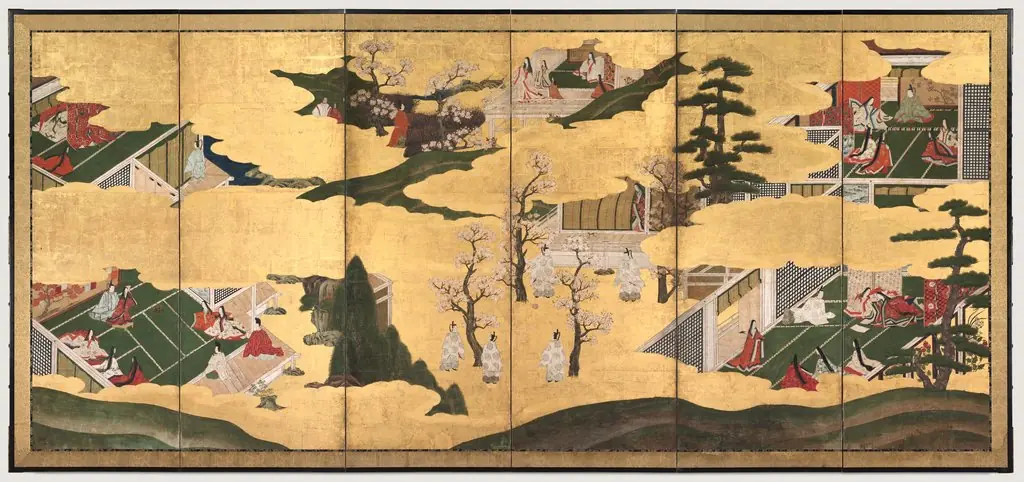
Artist & collection

- Scenes from the Tale of Genji
 Scenes from the Tale of Genji
 The Tale of Genji
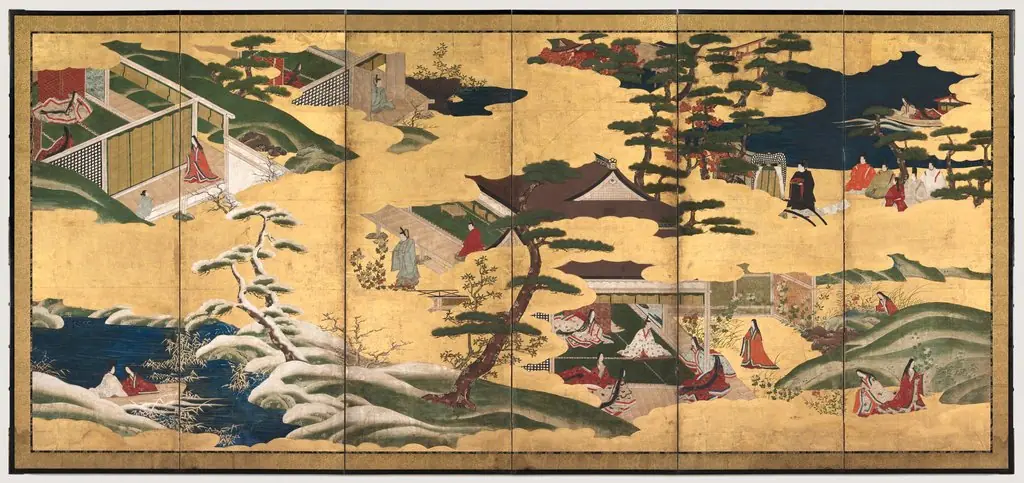 Scenes from the Tale of Genji
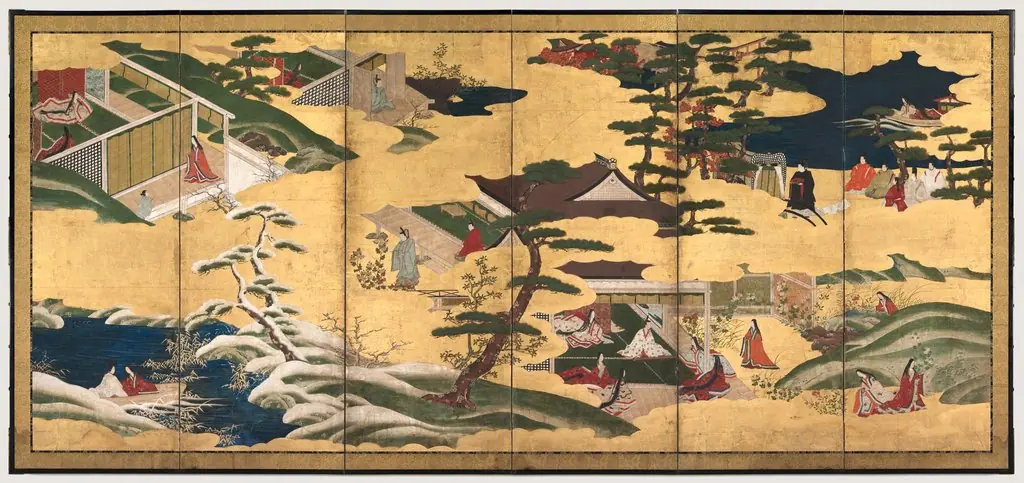 Scenes from the Tale of Genji
 Scenes from the Tale of Genji
 The Tale of Genji
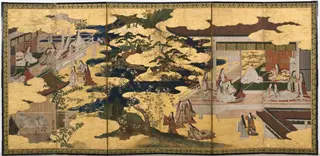 Scene from "The Tale of Genji": from the chapter "The Maiden"
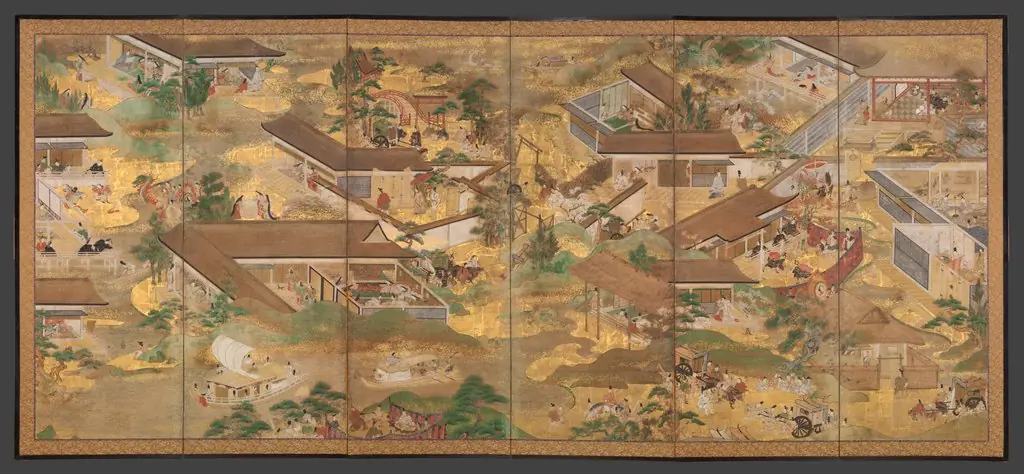 Fifty-Four Scenes from The Tale of Genji
 Genre Scenes (Fuzoku byobu)
 Scenes from the Tales of Ise
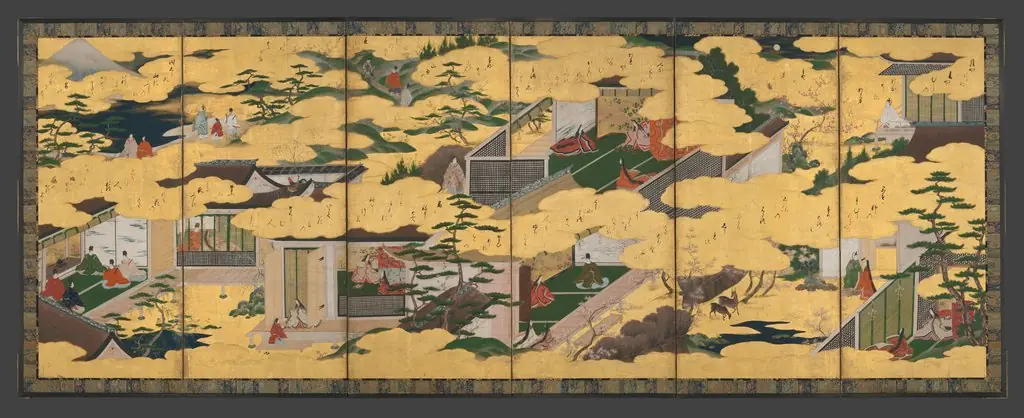 Scenes from the Tales of Ise
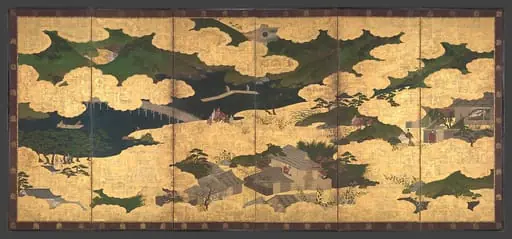 平家物語図屏風 「小督」 「大原御幸」|"Kogō" and "The Imperial Procession to Ōhara", from The Tale of the Heike (Heike monogatari)
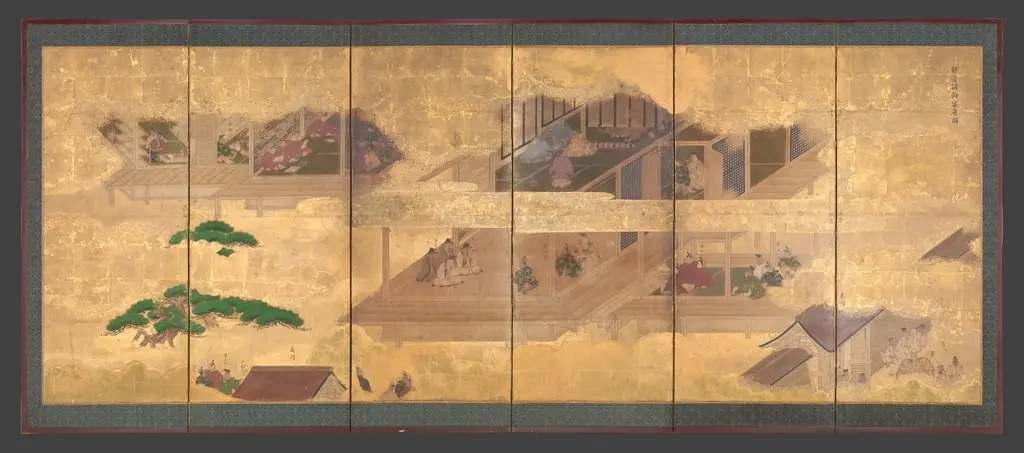 Scenes at the University with Images of the Ancient Sages; Debate and Banquet at the Administration Offices
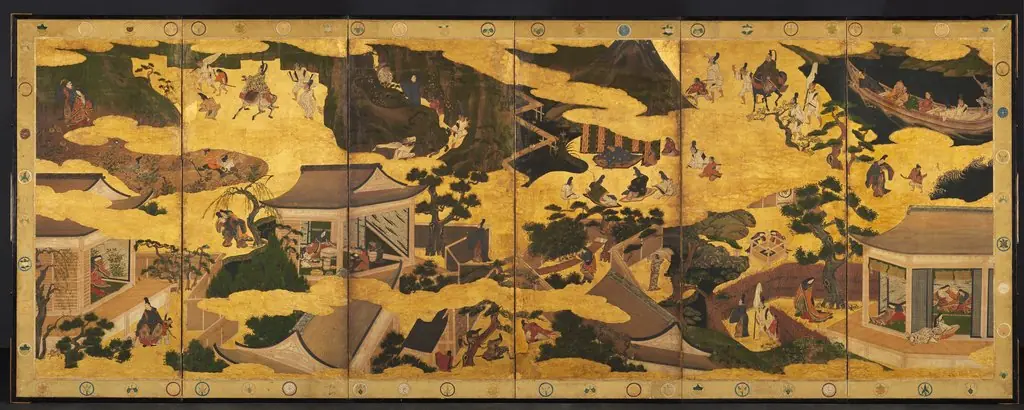 Scenes from the Tales of Ise
 Famous Views of Ōmi
 One Hundred Chinese Boys
 Famous Views of Ōmi
 Famous Views of Ōmi
 Spring and Autumn Farming (Spring)