Artwork
Children Playing with a Goat
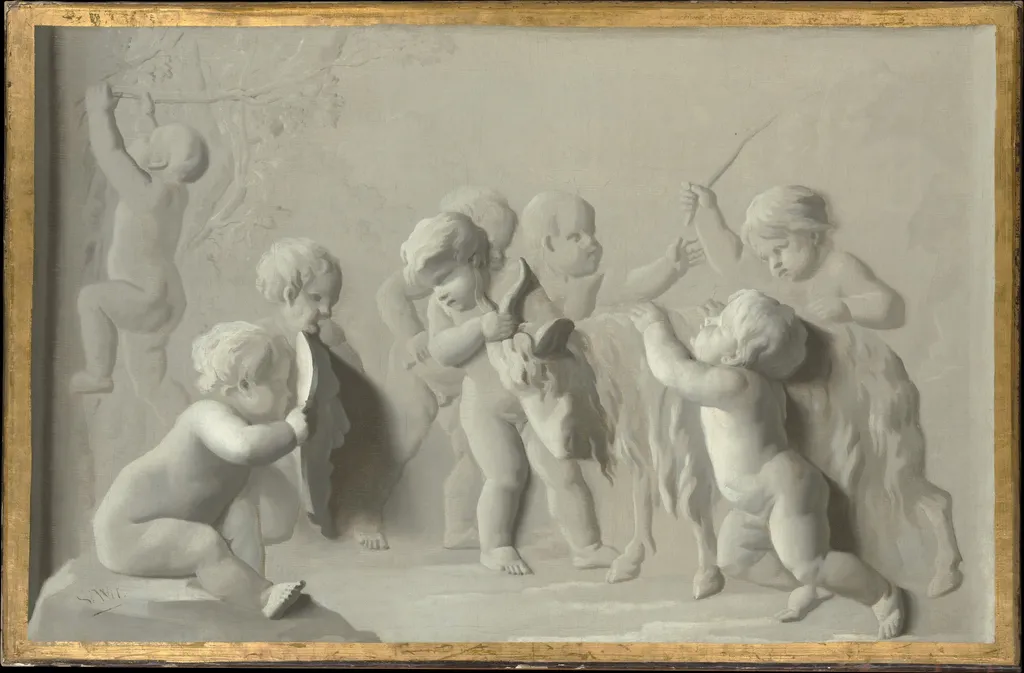
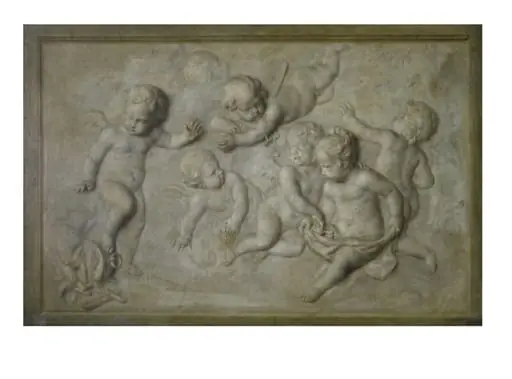
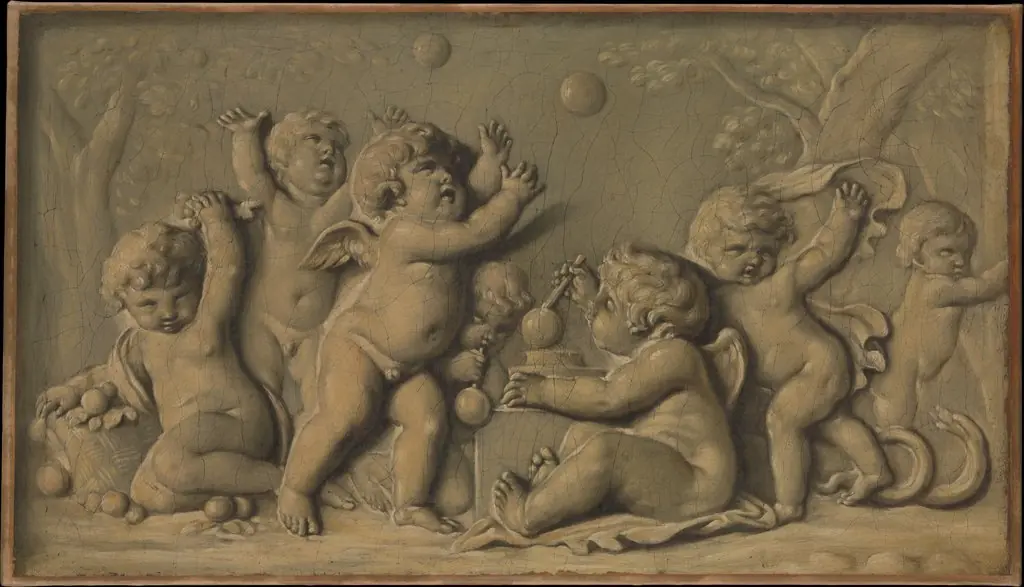
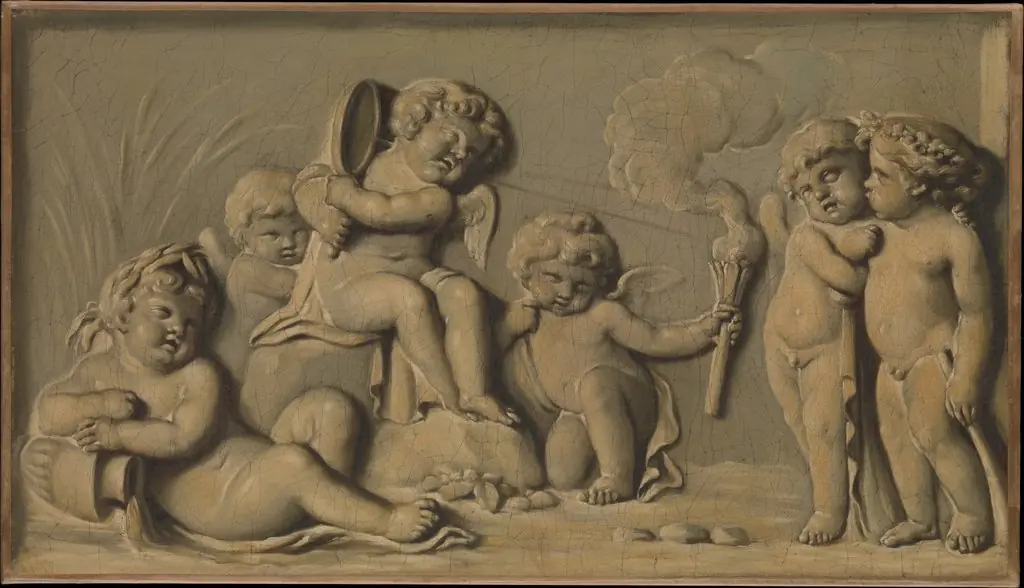
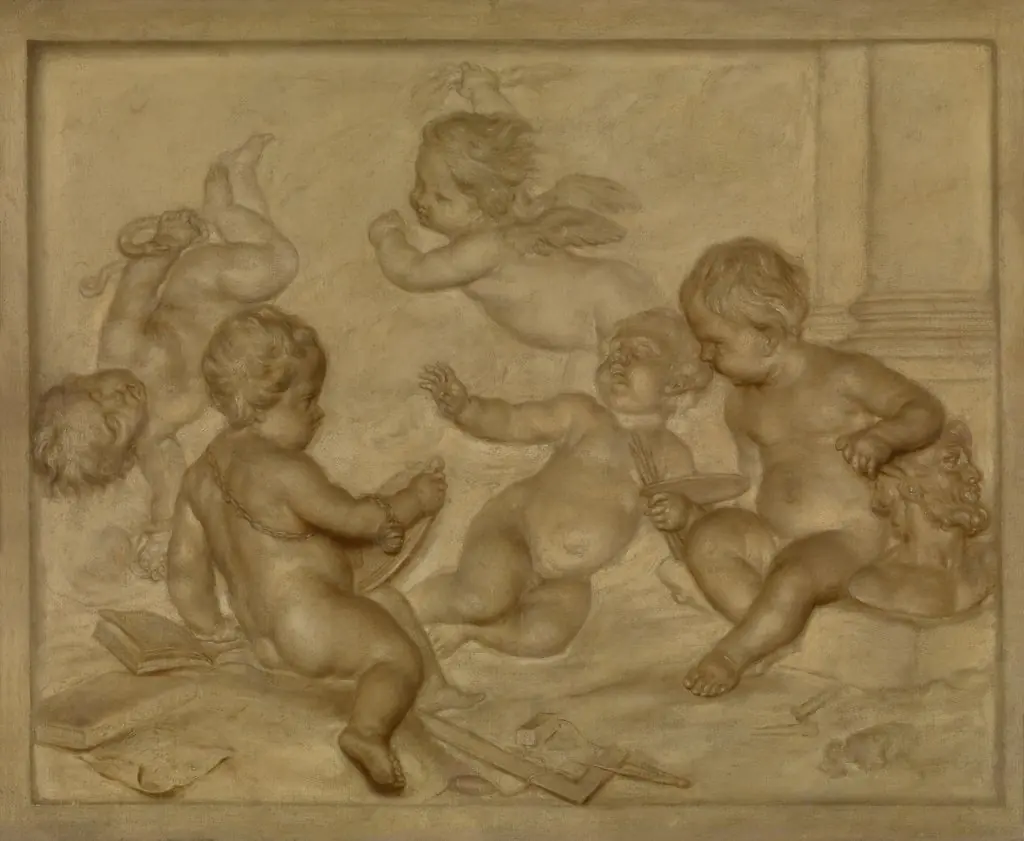
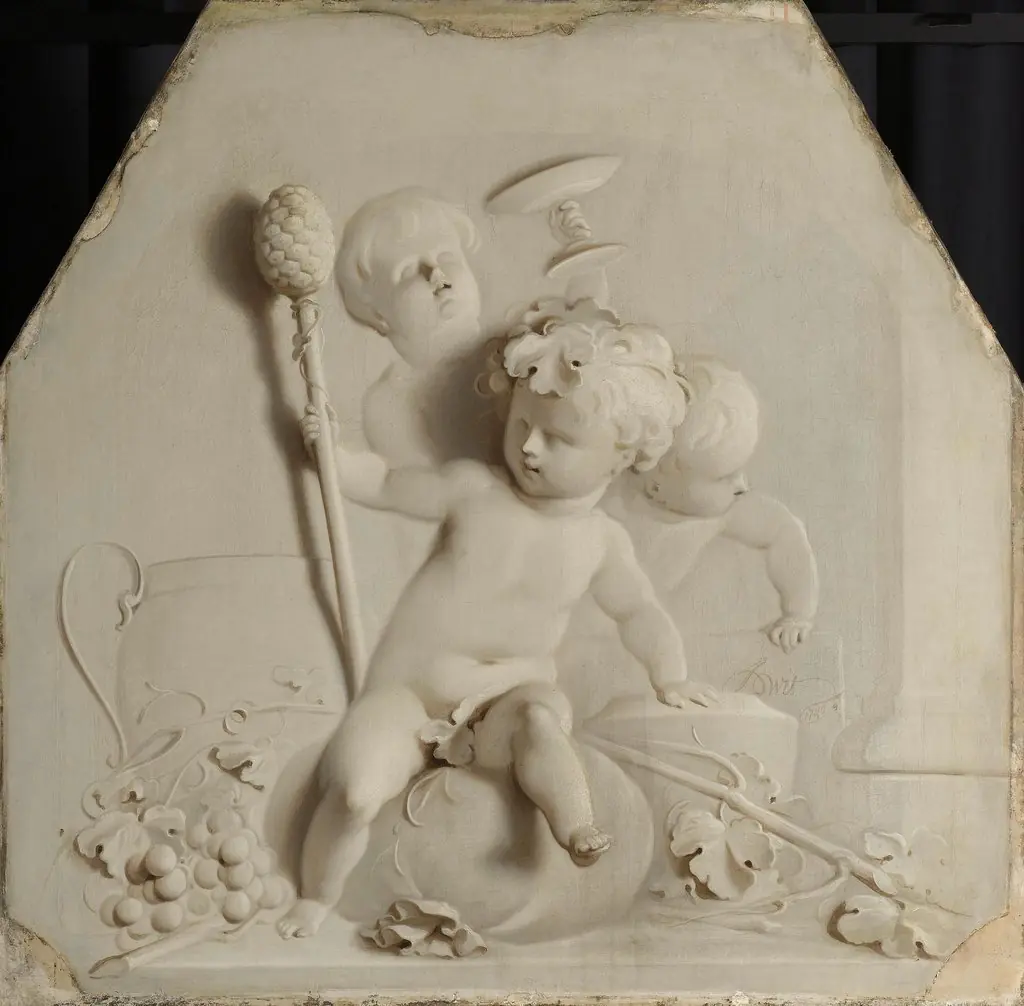
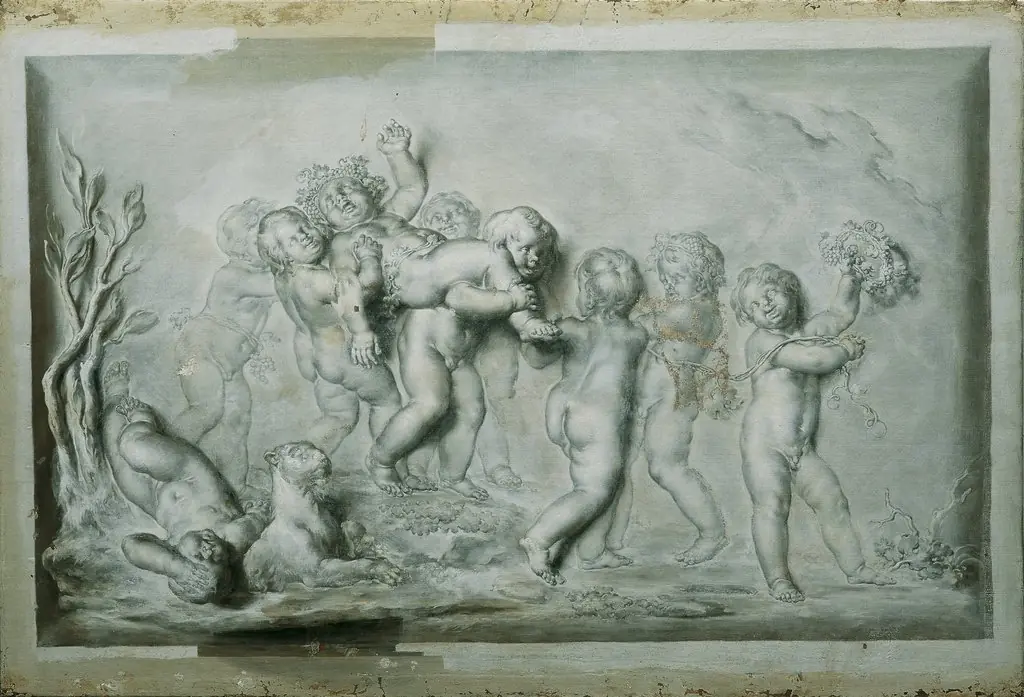
Children Playing with a Goat is an oil painting. It dates from 1800 and is held in the collection of the Metropolitan Museum of Art. This 18th‑century oil on canvas presents a monochrome scene of children interacting with a goat.
About this work
Subject & Meaning
These decorative overdoor panels used trompe-l'œil effects to simulate stucco relief, valued for clarity in varied lighting and ease of relocation.
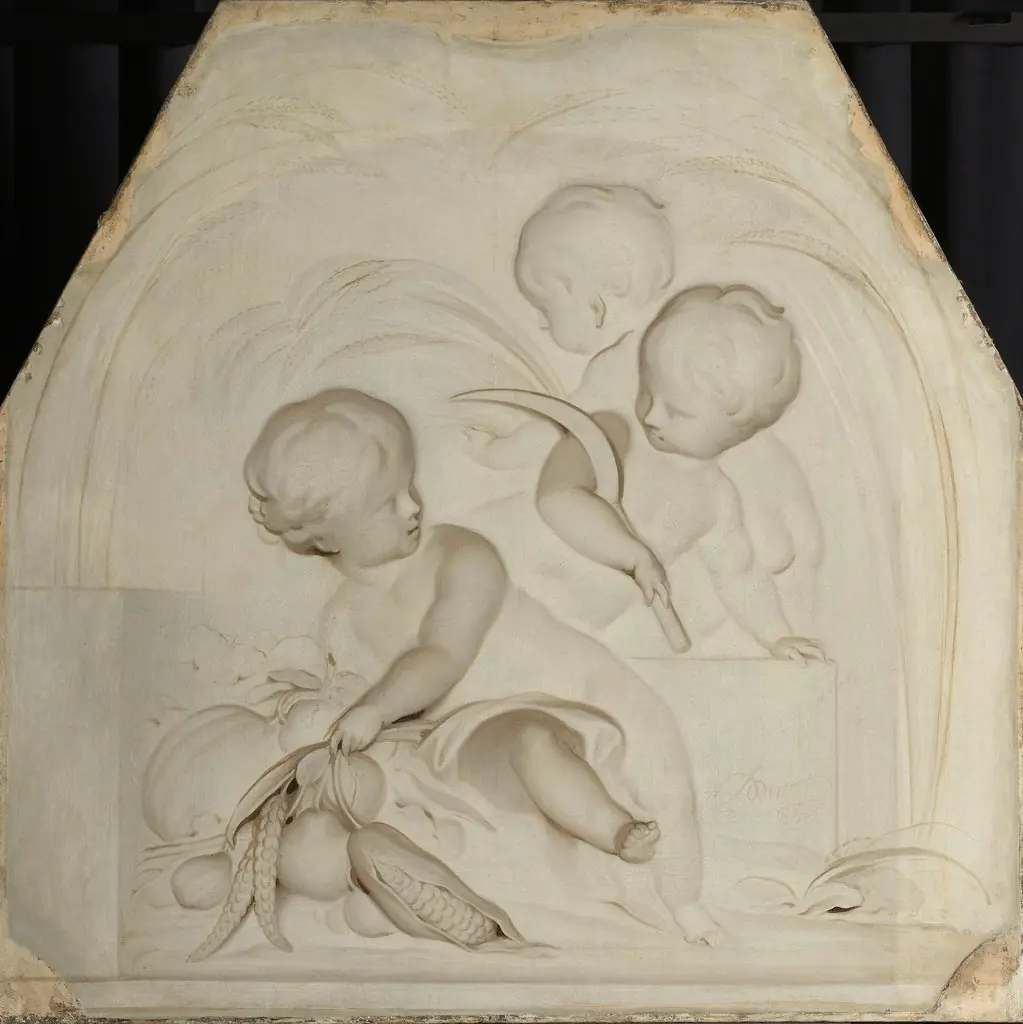
The painting depicts putti playing with a goat, a motif rooted in 17th-century relief sculpture by François Duquesnoy and later rendered in grisaille by Jacob de Wit as 'witjes'. These decorative overdoor panels used trompe-l'œil effects to simulate stucco relief, valued for clarity in varied lighting and ease of relocation. Though no autograph version by de Wit survives, copies by followers like Piat Sauvage were collected, including by John Pierpont Morgan.
The subject also appears in Gerard Dou’s self-portrait, reflecting its prevalence in Dutch niche genre painting. Its significance lies in representing a decorative genre that bridged sculpture and painting, rather than artistic mastery.
Technique & Style
The work is an oil painting on canvas, classified as a grisaille in the style of Jacob de Wit, depicting a relief of children playing with a goat after a relief by Francois Duquesnoy. The composition uses chiaroscuro to align shadows with a left-side light source, creating a trompe-l'œil effect typical of overdoor installations. Formal qualities include precise rendering of putti, restrained palette, and emphasis on linear bas-relief illusion.
Contemporary accounts note its cleverness and clarity even without natural shadows, and its ease of relocation contributed to the dispersal of such works.
History & Provenance
Children Playing with a Goat is dated to 1800 and is an 18th-century grisaille oil painting on canvas executed in the manner of Jacob de Wit, after a relief by François Duquesnoy. No autograph version of this specific scene by De Wit is known, and art historian Walter Liedtke judged the work as not as masterful as an actual Jacob de Wit. The painting eventually entered the collection of the Metropolitan Museum of Art, where it is catalogued as no. 221 in Walter Liedtke's Dutch Paintings in the Metropolitan Museum of Art, Volume I (2007).
The sources do not document a specific commission, prior owners, or a detailed chain of custody before the painting reached the museum.
The difficulty of tracing such imitation-stucco grisailles is noted in the literature: because they were valued for the ease with which they could be moved and reinstalled, their provenance histories are often incomplete.
Context
The painting is recognized as an 18th-century grisaille work in the style of Jacob de Wit, referred to as a 'witje', and is housed in the Metropolitan Museum of Art. It depicts a relief of children playing with a goat inspired by François Duquesnoy, reflecting the decorative use of 'witjes' as trompe-l'œil overdoors in Dutch interiors during the late 17th and 18th centuries. Scholars note its significance stems from its subject matter rather than painterly mastery, as comparisons with autograph works by de Wit reveal it to be less refined.
The motif appears in Gerard Dou's self-portrait in the Met's collection, linking it to the broader 'niche painting' genre, and influenced followers such as Piat Sauvage, who produced copies of the scene.
Legacy
The painting's significance lies primarily in its subject matter rather than its painterly execution, which experts note is less masterful than autograph works by Jacob de Wit. Its importance is reinforced by the theme's appearance in other works within the same collection, specifically a self-portrait by Gerard Dou that features the well-known relief by François Duquesnoy. The popularity of this grisaille genre, known as "witjes," inspired numerous followers, including Piat Sauvage, who produced a copy of this specific composition that also entered the John Pierpont Morgan bequest.
The motif maintained cultural resonance into the 19th century, evidenced by sculptor P.E. van den Bossche utilizing the scene for a frieze on a building along the Prinsengracht in Amsterdam.
Overview
This 18th‑century oil on canvas presents a monochrome scene of children interacting with a goat. Rendered in the grisaille manner associated with Jacob de Wit, the work imitates the appearance of a sculptural relief, creating the illusion of marble figures set against a plain, light background. The painting belongs to the Metropolitan Museum of Art’s collection.
Artist & collection