Artwork
colaciu la palincă
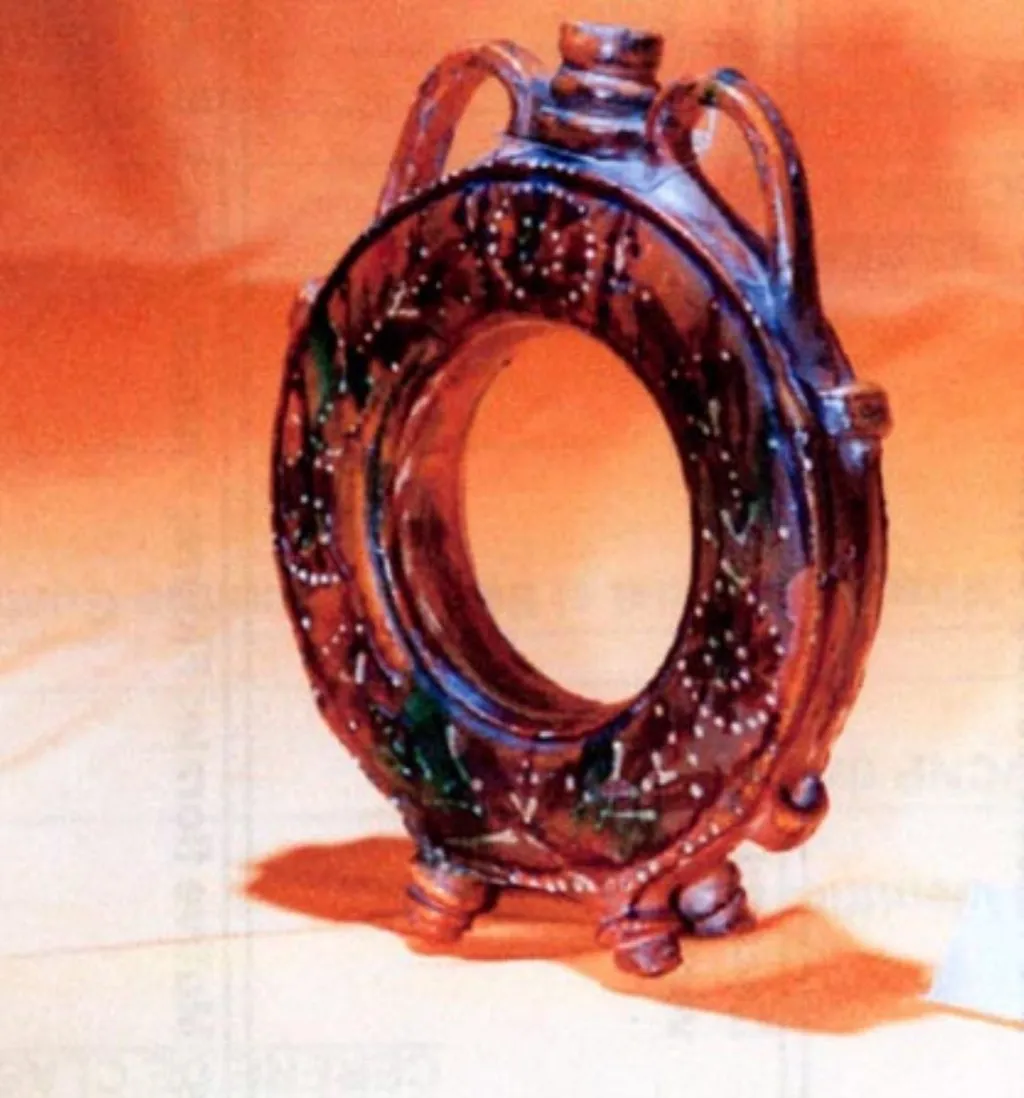
colaciu la palincă is a photography by Unknown. It dates from 1850 and is held in the collection of the "Dimitrie Gusti" National Village Museum.
About this work
Overview
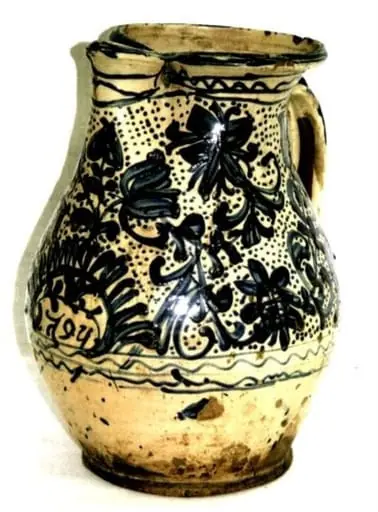
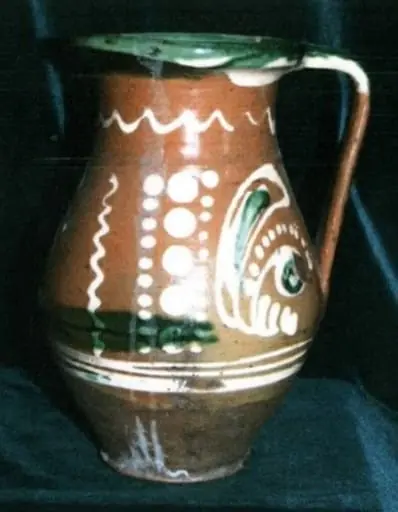
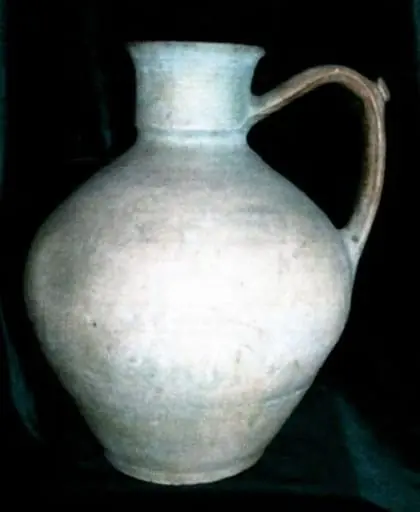
A small ceramic vessel with a rounded body and a single handle, this object is characterized by its dark, glossy glaze and subtle speckling within the walls.
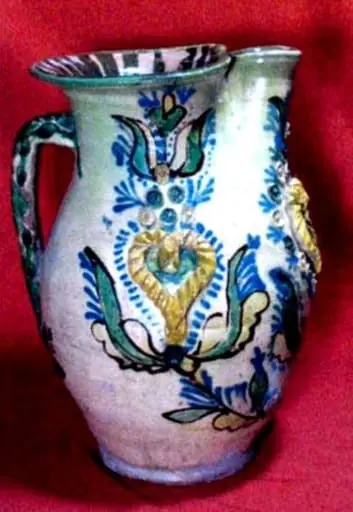
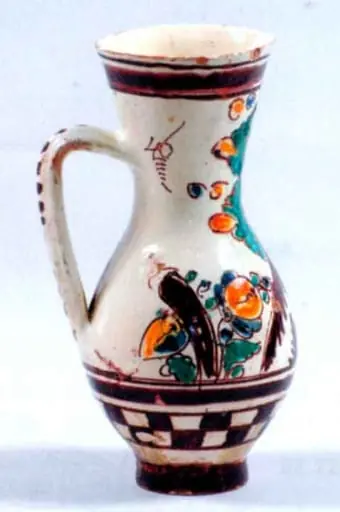
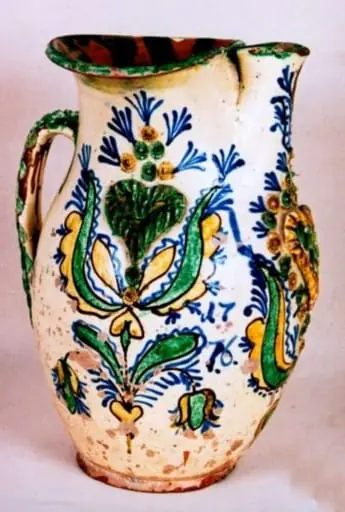
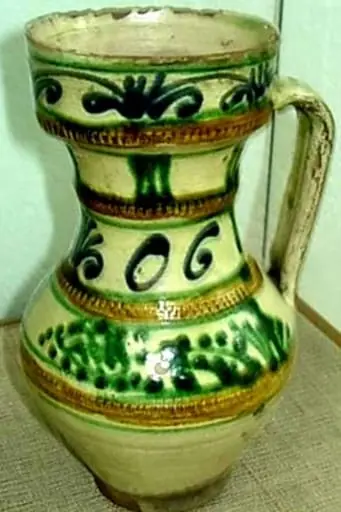
A small ceramic vessel with a rounded body and a single handle, this object is characterized by its dark, glossy glaze and subtle speckling within the walls. The surface suggests hand-thrown production, with irregularities typical of artisanal pottery. Placed against a light, neutral background, the form is isolated to emphasize its materiality and shape. Its size and structure indicate a functional use, likely for storing or serving a liquid substance.
Subject & Meaning
The vessel appears designed for holding palincă, a traditional distilled spirit from Eastern Europe. Its compact form and sealed construction suit storage and transport, reflecting practical needs in rural households. The specks visible inside may be mineral inclusions from local clay or intentional decorative elements. The object embodies everyday craftsmanship, tied to domestic rituals rather than ceremonial use.
Technique & Style
Made using hand-building or slow wheel-throwing methods, the vessel displays a thick, uneven glaze with a high sheen, likely fired at moderate temperatures. The speckled texture results from impurities in the clay or added materials, not painted decoration. The handle is rudimentary, attached without refinement, reinforcing its utilitarian origin. The overall aesthetic is unadorned, prioritizing durability over ornamentation.
History & Provenance
This object likely originates from rural Romania or Moldova, where such vessels were commonly produced in home or village kilns until the mid-20th century. Similar examples are held in ethnographic collections, particularly those documenting folk material culture. Its preservation suggests it was kept as a household item rather than discarded, possibly passed through generations before entering a collection.
Context
In traditional communities, ceramic containers like this were essential for storing alcoholic beverages made from fermented fruit. Production was seasonal, often tied to harvests, and vessels were rarely signed or marked. Their forms varied slightly by region, but shared functional traits: thick walls for insulation, narrow necks to reduce evaporation, and handles for easy carrying.
Legacy
While mass-produced alternatives have replaced such vessels in daily use, they remain symbols of pre-industrial domestic life. Museums of ethnography preserve them as records of local material practices. Their quiet simplicity continues to inform contemporary ceramic artists interested in vernacular traditions and the aesthetics of utility.
Artist & collection
Museum
"Dimitrie Gusti" National Village Museum
Continue through works from the same source collection.