Artwork
cahlă
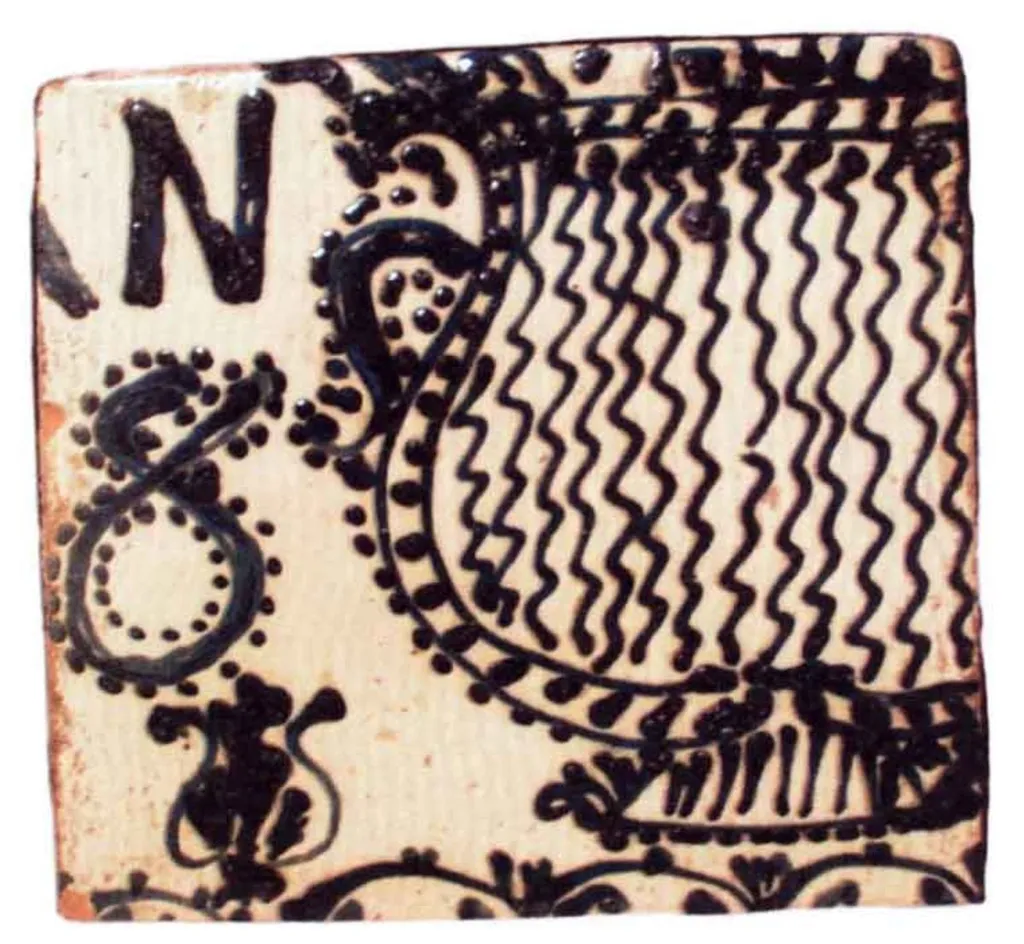
cahlă is a photography by the Romanticist artist Unknown. It dates from 1847 and is held in the collection of the Romanian Peasant Museum.
About this work
Overview
This object is a square ceramic tile, approximately 15 centimeters on each side, with a beige ground and a surface covered in irregular, dark brown markings.
This object is a square ceramic tile, approximately 15 centimeters on each side, with a beige ground and a surface covered in irregular, dark brown markings. The design consists of sinuous lines and raised dots that create a tactile, non-repeating pattern. The edges are uneven, suggesting hand-formed production rather than industrial molding. Its texture invites close physical engagement, distinguishing it from flat decorative surfaces.
Subject & Meaning
The abstract arrangement of lines and dots resists clear narrative interpretation. Rather than depicting figures or scenes, the pattern evokes natural erosion or organic growth, possibly reflecting a preference for spontaneous, unstructured forms. This aligns with broader 19th-century interests in material authenticity and the aesthetic value of imperfection, though no specific symbolic meaning is documented.
Technique & Style
The tile was likely molded and fired with applied relief elements, where the raised dots were added before firing. The dark pigments may have been brushed or stamped into the clay surface, then sealed with a glaze or left unglazed for a matte finish. The irregularity of the lines suggests hand-drawn execution, emphasizing artisanal control over mechanical precision.
History & Provenance
No documented origin or maker is associated with this tile. Its style resembles decorative ceramics produced in small workshops across Europe during the late 1800s, particularly those influenced by the Arts and Crafts movement. It may have been part of a domestic interior or architectural feature, though its current context is unknown.
Context
While sometimes linked to Romanticism for its emphasis on texture and organic form, this tile more directly reflects the broader 19th-century revival of handcrafted objects in reaction to industrial mass production. Similar tiles appear in regional European interiors where artisans prioritized tactile richness over standardized ornamentation.
Legacy
This tile contributes to a quiet but persistent tradition of ceramic art that values materiality and handwork over representational imagery. Though not widely exhibited, such objects inform contemporary studio pottery and design practices that prioritize process, texture, and the trace of the maker’s hand.
Artist & collection









 castron
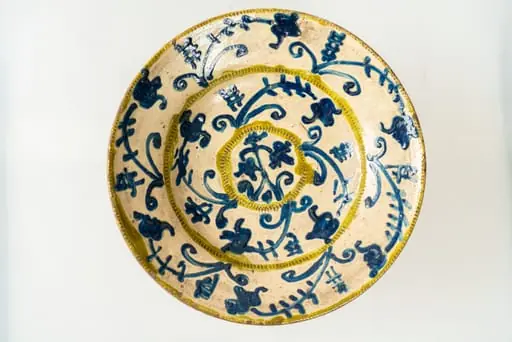 Farfurie mare, semi-adâncă, cu corp scund și buză lată, răsfrântă. Piesa este modelată la roata olarului, angobată cu humă albă pe fața interioară a acesteia. Decorul este realizat prin pictare cu pensula și cu cornul și constă în motive decorative florale și vegetale stilizate (flori și frunze), dispuse pe toată suprafața farfuriei, încadrate în trei registre separate de cercuri concentrice formate dintr-o linie verde și un șir continu de linii mici, paralele, incizate (cercuri localizate: central - pe fundul farfuriei; pe bordura interioară a buzei și pe muchia acesteia). Cromatica decorului: alb, albastru, verde. Farfuria este smălțuită pe interior, cu smalț transparent.
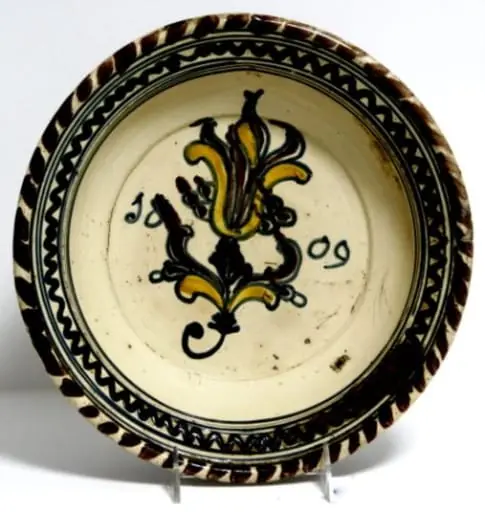
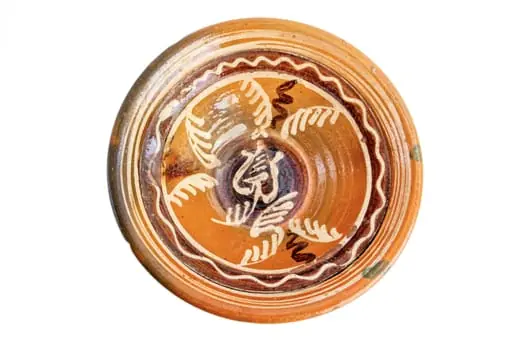 Formă tronconică; fond cărămiziu. În centru vasului este amplasată o lalea albă pe un fond maro închis încadrată de șase frunze de culoare albă și două valuri de culoare maro închis dispuse vertical. Pe peretele vasului dispusă o bandă circulară de culoare maro decorată cu un val de culoare albă. Sub buza vasului sînt trei cercuri concentrice de culoare albă. Compoziția este înscrisă într-un cerc de culoare albă. Folosită la decorarea interiorului țărănesc în așa numita - cameră bună.
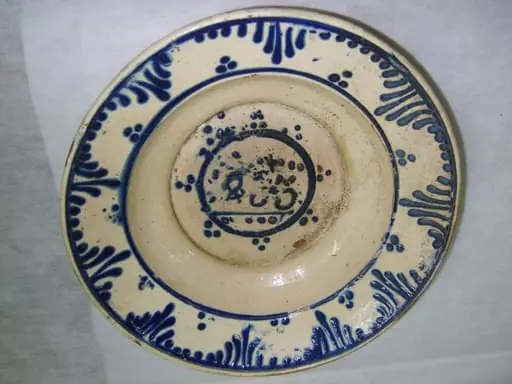
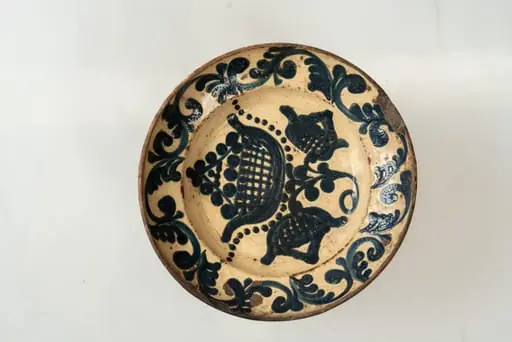 Farfurie semi-adâncă, cu corp scund și buză lată, răsfrântă și muchia buzei ușor concavă spre interior. Piesa este modelată la roata olarului, angobată cu humă albă pe fața interioară a acesteia. Decorul este realizat prin pictare cu pensula și cu cornul, cu linii groase, și constă în motive decorative florale și vegetale stilizate (flori și frunze), dispuse pe toată suprafața farfuriei. Cromatica decorului: alb, albastru. Farfuria este smălțuită pe interior, cu smalț transparent.
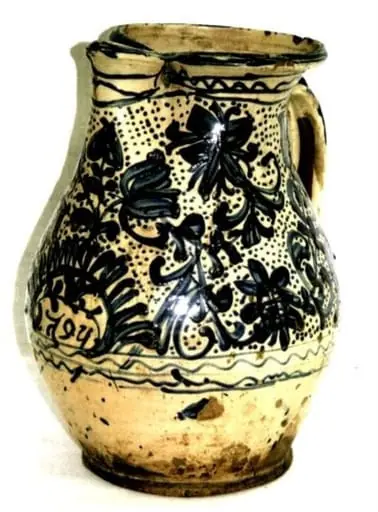
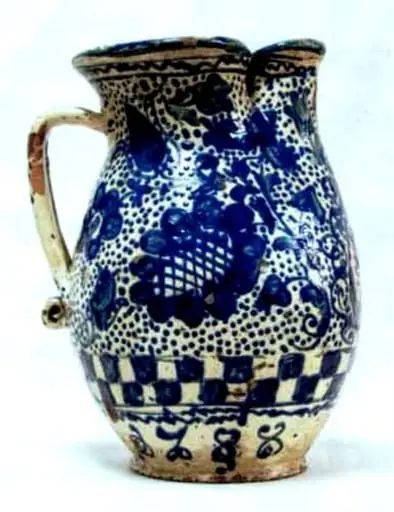 cană de vin
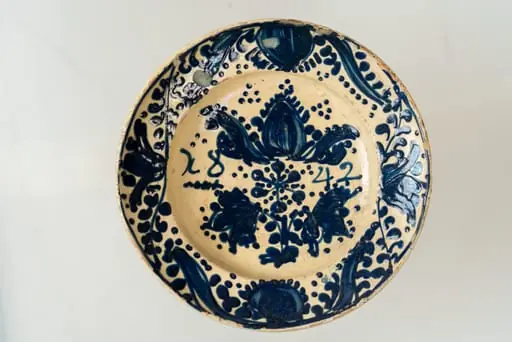 Farfurie adâncă, cu corp scund și buză lată, răsfrântă. Piesa este modelată la roata olarului, angobată cu humă albă pe fața interioară a acesteia. Decorul este realizat prin pictare cu cornul și cu pensula și constă în motive decorative vegetale stilizate (flori și frunze) și geometrice (puncte), dispuse pe întreaga suprafață a farfuriei. Central, pe fundul farfuriei, este înscris anul fabricației "1842", deoparte și de alta a registrului decorativ central. Cromatica decorului: alb, albastru. Farfuria este smălțuită pe interior, cu smalț transparent.
 Blid mare
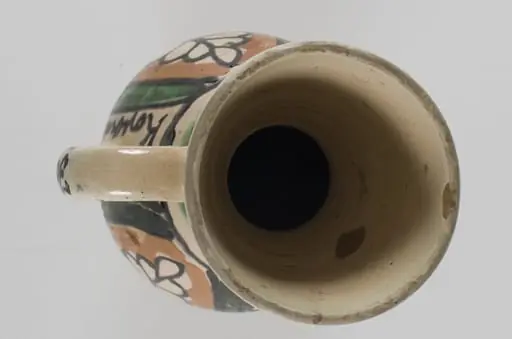 Cană cu gât lung, cu buza evazată și o toartă. Este smălțuită în interior și în exterior. Prezintă decor pe toată suprafața cu motive fitomorfe, motive florale stilizate și motive geometrice: linie, linie ondulată, punct, tablă de șah. Pe toartă scrie ”Jozsa Janos”, iar pe corp, chiar lângă toartă, scrie ”Korond 1974”. Cromatică: fond: alb; motive: bej, maro, verde, negru.
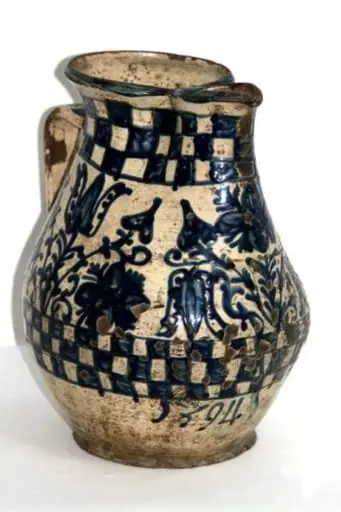 cană cu cioc