Artwork
Cross
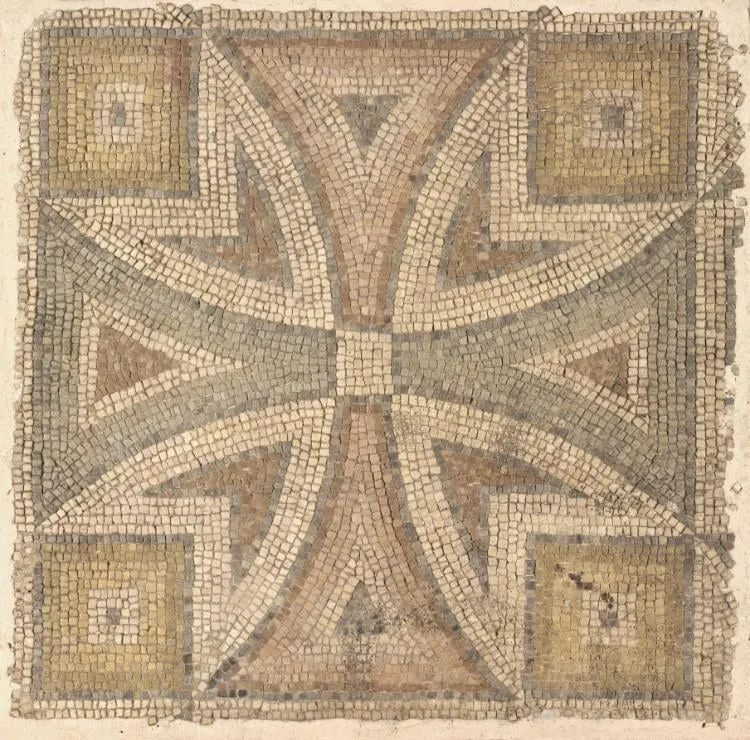
Cross is a mosaic by Unknown. It dates from 400 and is held in the collection of the Cleveland Museum of Art.
- Accession no.
- 1968.270
- Credit line
- Gift of Mr. and Mrs. J. J. Klejman
About this work
Overview
A uniform border of small tiles frames the composition, emphasizing its architectural function as a decorative floor element in a sacred or elite space.
This square floor mosaic depicts a simple, symmetrical cross formed from small, colored stone tesserae. Designed for viewing from above, its four equal arms extend outward with geometric interiors, contrasting light and dark tones to create visual rhythm. A uniform border of small tiles frames the composition, emphasizing its architectural function as a decorative floor element in a sacred or elite space.
Subject & Meaning
The cross serves as a symbolic focal point, likely representing Christian faith through its clear, unadorned form. Its geometric precision and lack of figural elements suggest an emphasis on spiritual abstraction rather than narrative. Positioned on the floor, it may have guided movement or marked a sacred area, inviting contemplation through repeated footfall and overhead sight.
Technique & Style
Crafted with meticulously placed tesserae, the mosaic uses contrasting hues to define each arm of the cross. The patterns within the arms are composed of repeating shapes, likely squares, diamonds, or zigzags, arranged with deliberate symmetry. The border, uniform and restrained, anchors the design, reflecting a preference for order and clarity over ornamental excess.
History & Provenance
Though exact origins are unrecorded, similar floor mosaics date to late antiquity or early medieval periods in the Eastern Mediterranean. Its style aligns with liturgical spaces in Byzantine or early Christian contexts. The Cleveland Museum of Art holds comparable examples, suggesting this piece may have been part of a larger architectural complex now dispersed or lost.
Context
Such floor mosaics were common in churches, baptisteries, and elite residences between the 4th and 7th centuries. They served both practical and devotional roles, reinforcing religious identity through durable, visible symbolism. The absence of human or animal imagery reflects early Christian aniconism, favoring geometric forms to convey divine order.
Legacy
This mosaic exemplifies a widespread tradition of liturgical floor decoration that influenced later medieval and Islamic geometric design. Its enduring presence in museum collections underscores its role as a quiet but significant artifact of early Christian material culture, preserving aesthetic values rooted in simplicity and spatial harmony.
Artist & collection









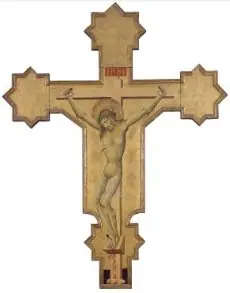
- Christ on the Cross
 Untitled
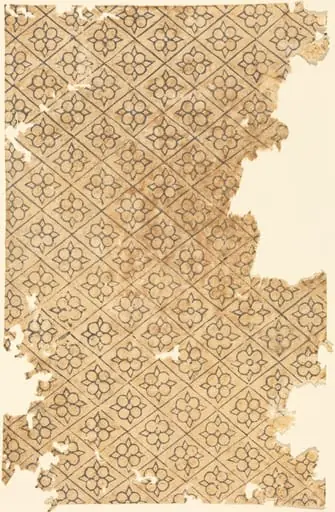 Sheet with Flower and Diamond Pattern
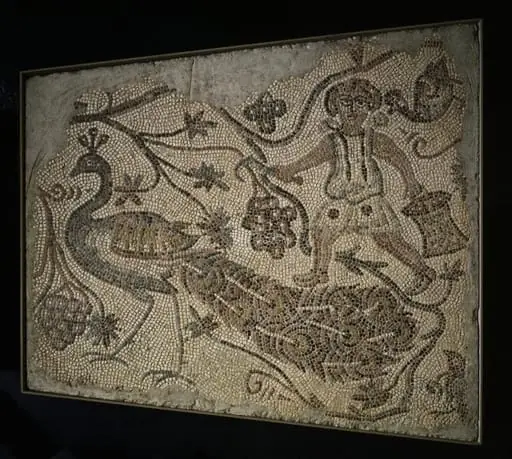 Floor Mosaic Panel: Grape Harvester with Peacock
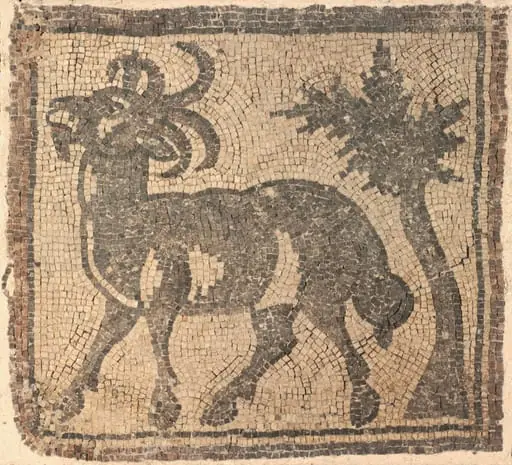 Ram near a Tree
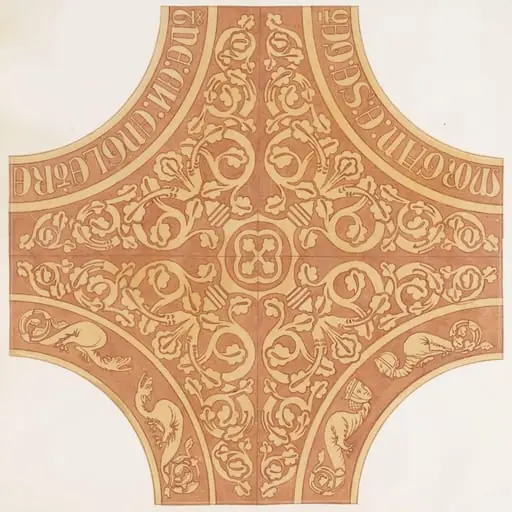 Untitled
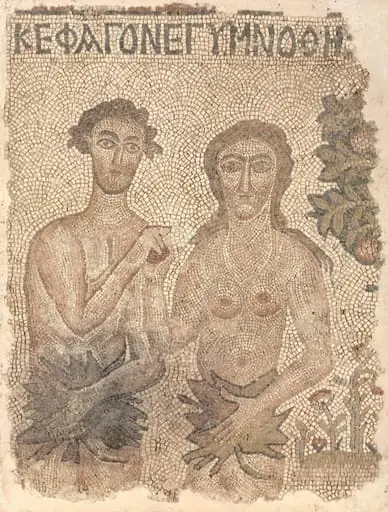 Fragment of a Floor Mosaic: Adam and Eve
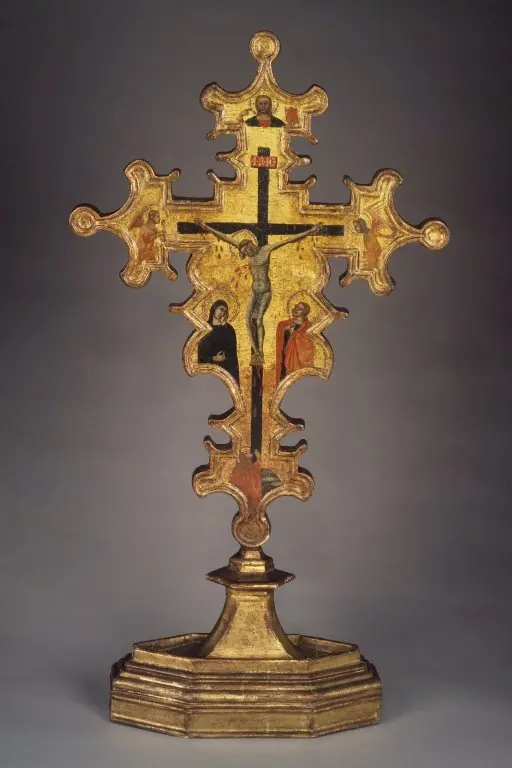 Double-Sided Processional Cross
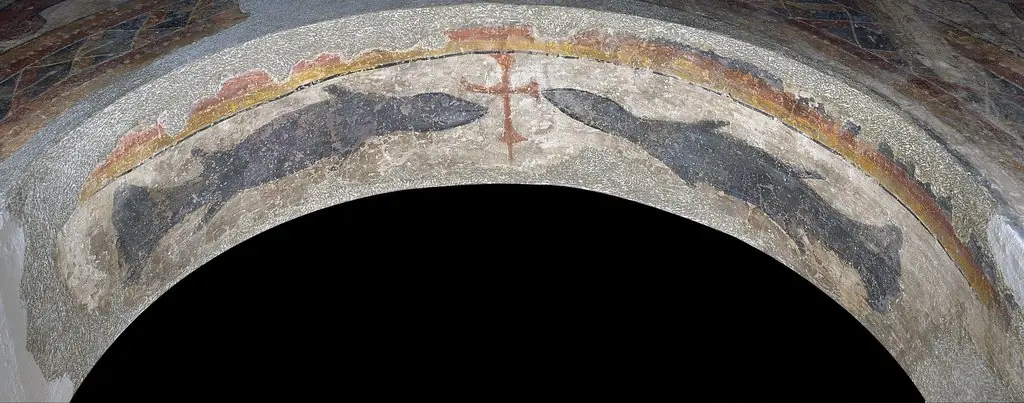 Fish flanking a cross from Santa Maria de Taüll
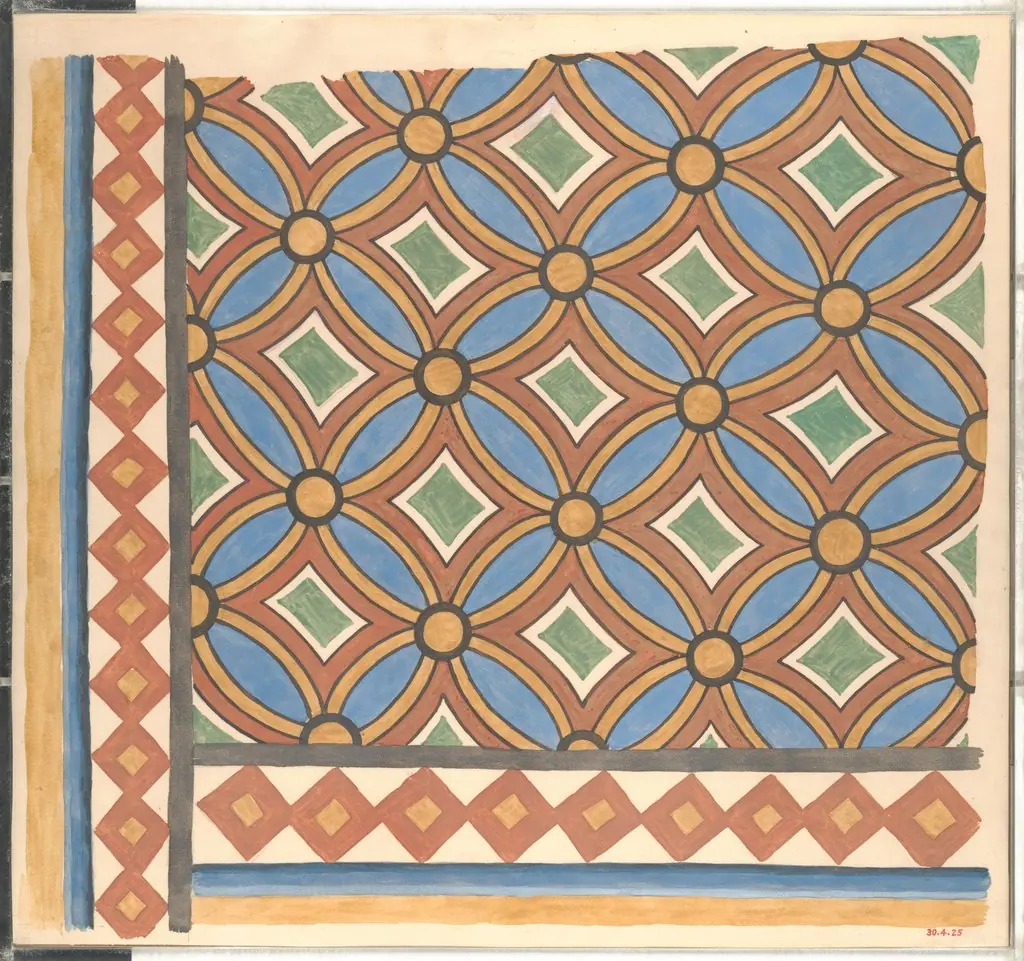 Ceiling Fragment
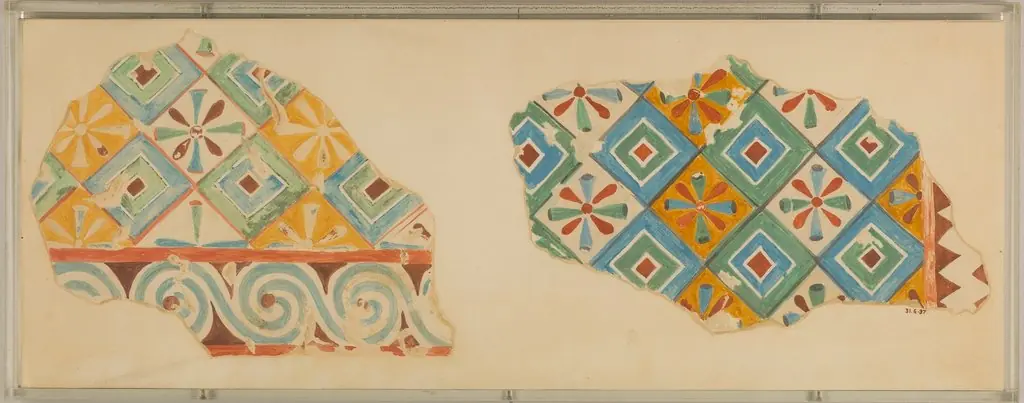 Two Fragments of Ceiling Patterns, Tomb of Senenmut
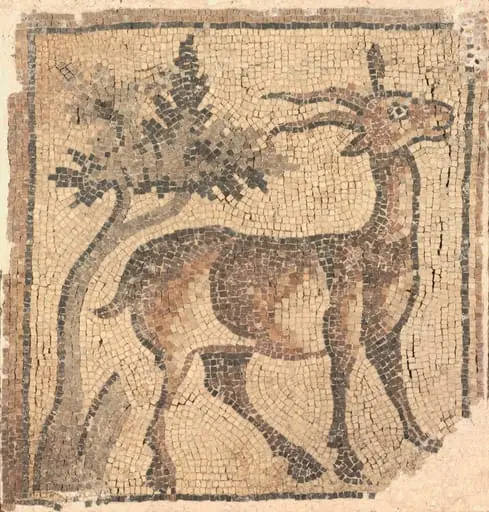 Fragment of a Floor Mosaic: Ibex near a Tree