Artwork
Calvary
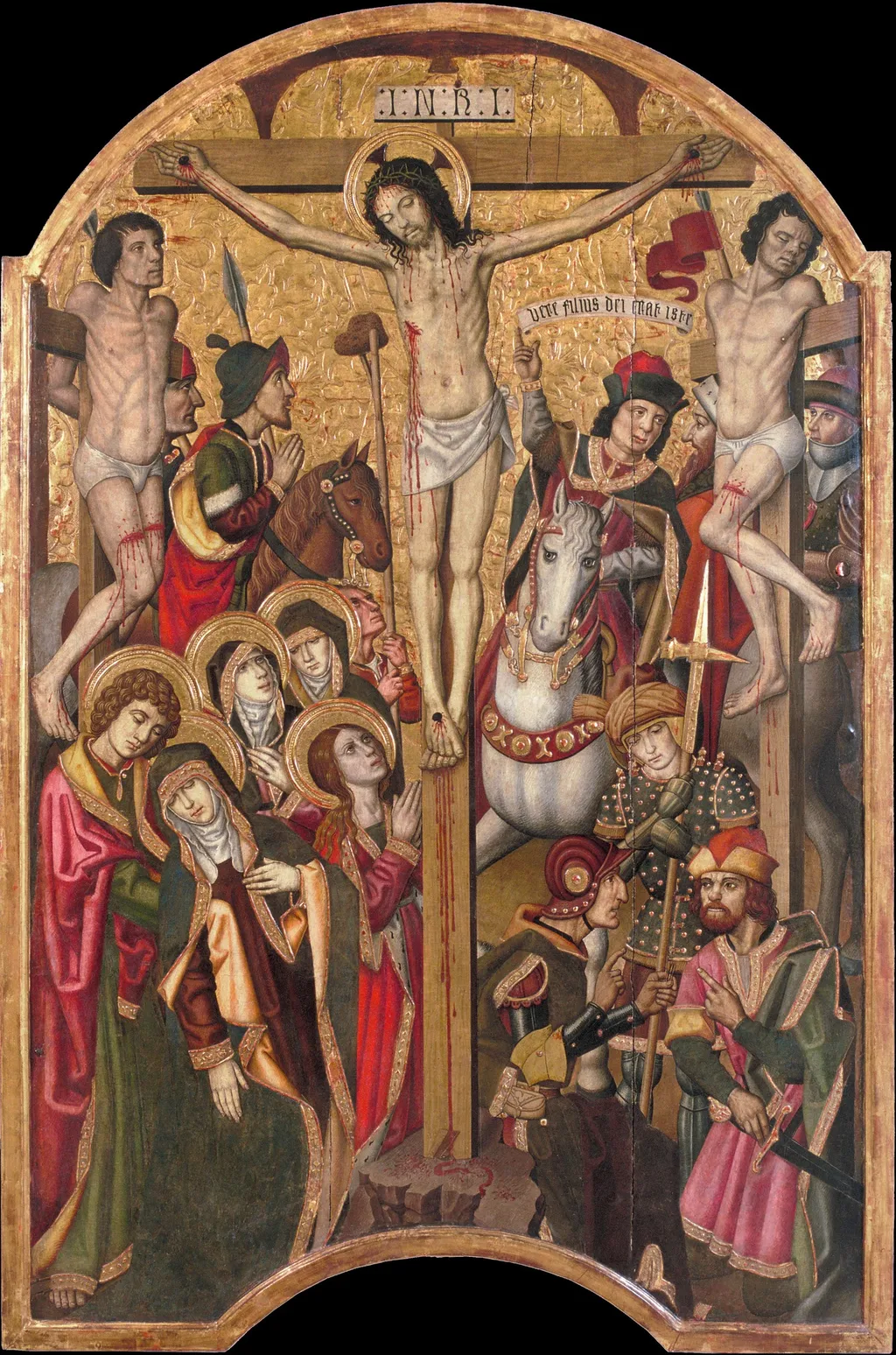
Calvary is an unspecified painting by the Italo Byzantine artist Vergos family. It dates from 1450 and is held in the collection of the Museu Nacional d'Art de Catalunya.
About this work
Overview
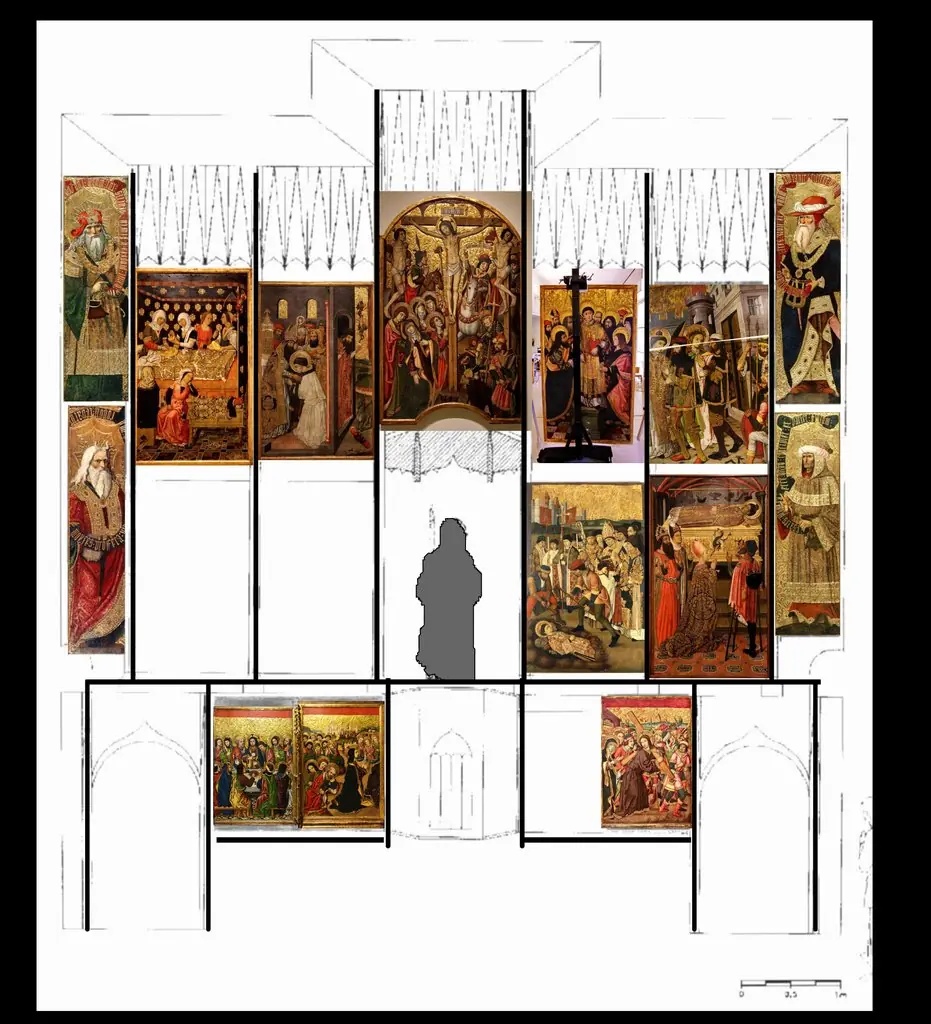
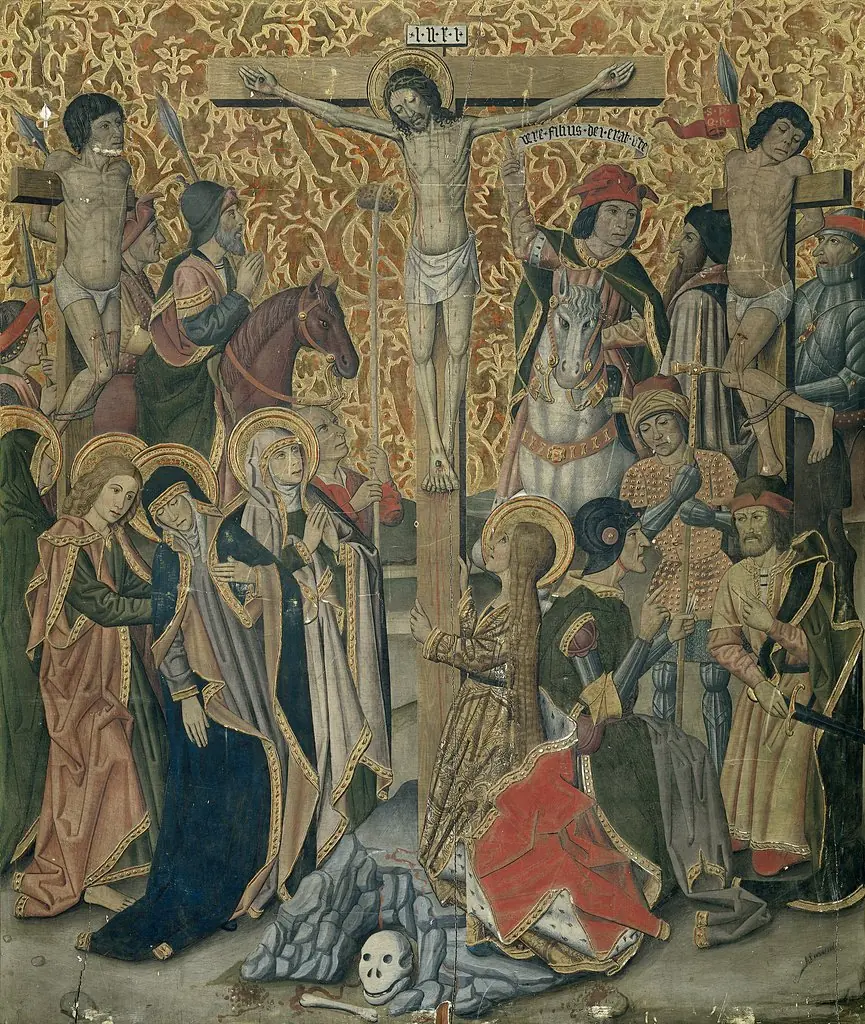
Painted around 1450 by members of the Vergos family, Calvary is a devotional panel depicting the crucifixion of Jesus Christ.
Painted around 1450 by members of the Vergos family, Calvary is a devotional panel depicting the crucifixion of Jesus Christ. It is housed in the Museu Nacional d'Art de Catalunya and exemplifies late medieval Catalan religious art. The composition centers on Christ’s crucifixion, framed by two other condemned men and a gathering of mourners, all rendered with solemn precision against a gold-leaf background that elevates the sacred nature of the scene.
Subject & Meaning
The painting presents the crucifixion as a moment of divine sacrifice and human grief. Christ, central and lifeless, bears the wounds of his torment, while the two thieves on either side echo his suffering. Below, figures express sorrow through gestures of prayer and lamentation, reinforcing the theological theme of redemption through death.
The scene is not merely narrative but intended as an object of contemplation, inviting viewers to witness and internalize the weight of Christ’s sacrifice.
Technique & Style
Executed in tempera and gold leaf on wood, the painting employs a flattened perspective and stylized forms typical of late Gothic Catalan painting. Figures are arranged hierarchically, with Christ’s larger scale emphasizing his spiritual centrality. The gold background, unmodulated and luminous, creates a timeless, otherworldly space.
Details in facial expressions and drapery are rendered with careful line work, reflecting a tradition that prioritizes symbolic clarity over naturalistic depth.
History & Provenance
The painting likely originated in a Catalan church or private chapel, serving as a focus for liturgical devotion. It entered the collection of the Museu Nacional d'Art de Catalunya in the early 20th century, following the consolidation of religious artworks from dissolved monasteries and parishes. Its attribution to the Vergos family, known for workshop production in the mid-15th century, is based on stylistic parallels with signed works from their circle.
Context
Created during a period of intense religious devotion in Catalonia, Calvary reflects the region’s strong tradition of panel painting for ecclesiastical use. The emphasis on Christ’s suffering aligns with contemporary devotional practices that encouraged emotional identification with the Passion. Gold backgrounds, common in altarpieces of the era, signaled the sacred realm beyond earthly space, reinforcing the painting’s role in worship.
Legacy
Calvary remains a key example of 15th-century Catalan religious art, illustrating the persistence of Gothic conventions well into the Renaissance. Its preservation in a major national museum underscores its importance as a cultural artifact. While not widely known outside Catalonia, it contributes to understanding the regional diversity of medieval Christian imagery and the role of workshop production in sustaining devotional traditions.
Own this work as a print
Artist & collection
Artist
These painters from an unsung Crete-based family made altarpieces and panels filled with gold leaf and jewel-like colors, telling the life of Saint Stephen.