Artwork
涅槃図|Death of the Historical Buddha (Nehan-zu)
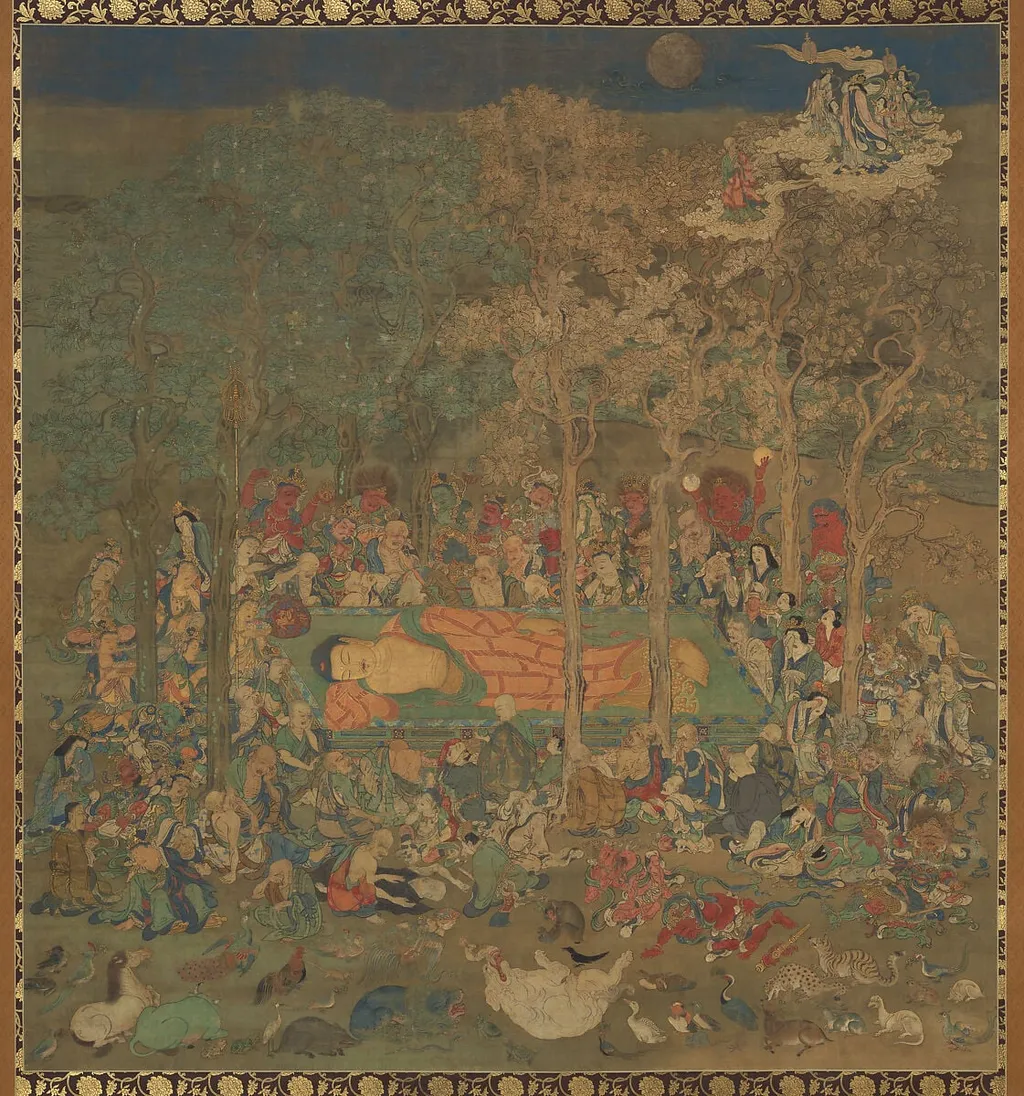
涅槃図|Death of the Historical Buddha (Nehan-zu) is an ink painting. It dates from 1316 and is held in the collection of the Metropolitan Museum of Art.
About this work
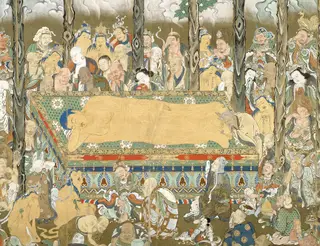
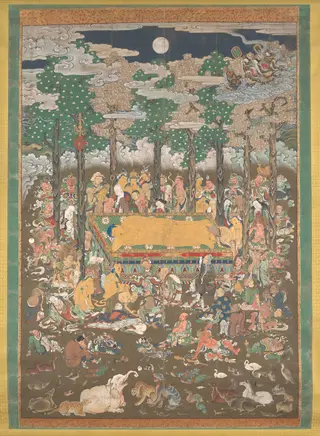
Gold leaf catches the light on the bier where the historical Buddha Shakyamuni lies facing west, his cranial protuberance and elongated earlobes marking his enlightened nature, while his mother Queen Maya descends weeping from the upper right. Painted in fourteenth-century Kyoto during the Kamakura period, this monumental hanging scroll, nearly two meters square, shows serene bodhisattvas, shaven-headed disciples, and more than thirty grieving animals. The Met acquired it in 1912.
Subject & Meaning
The painting depicts the death of the historical Buddha (parinirvana), as indicated by the central figure of the Buddha surrounded by various beings including birds, an elephant, a horse, a monkey, and human figures, all expressing sadness. This subject represents the universal grief over the Buddha's passing, encompassing both humans and animals in mourning.
Technique & Style
The painting is executed as a hanging scroll on a silk support. The medium combines ink, color, and gold, a typical technique for elaborate Japanese narrative scrolls of this period. No further information on brush handling, condition, or stylistic characteristics is provided in the sources.
History & Provenance
Created in 1316 (Kamakura period) in Japan, this hanging scroll depicting the parinirvāṇa of the historical Buddha is by an unknown artist.
Created in 1316 (Kamakura period) in Japan, this hanging scroll depicting the parinirvāṇa of the historical Buddha is by an unknown artist. Its medium, ink, color, and gold on silk, is typical of Buddhist devotional painting of the era. The work was later accessioned by the Metropolitan Museum of Art (object number 12.134.10), where it remains in the collection. No details of its original commission or early provenance are recorded.
Overview
This large 14th-century Japanese hanging scroll, created in Kyoto during the Kamakura period, illustrates the parinirvana of Shakyamuni Buddha. Rendered in ink, color, and gold on silk, it captures the moment of the historical Buddha's final release from earthly suffering. The monumental scale of this painting suggests its use as a significant ritual object, traditionally displayed during annual ceremonies.
Context
This monumental painting served a crucial ritual function within Japanese Buddhist temples. It was traditionally displayed annually during the Nehan-e ceremony, observed on the fifteenth day of the second lunar month. During this commemorative event, the scroll provided a focal point for devotees to reflect on the Buddha's final moments and the profound significance of his passing into ultimate liberation.
Artist & collection

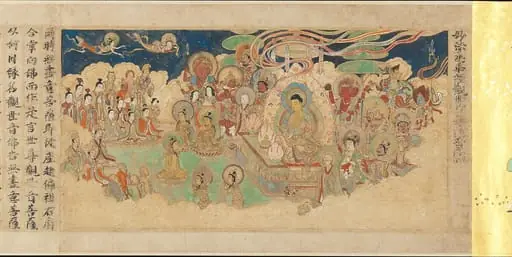 『妙法蓮華経』 「観世音菩薩普門品」|“Universal Gateway,” Chapter 25 of the Lotus Sutra
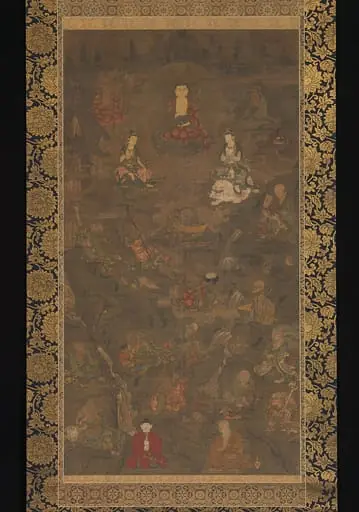 釈迦三尊十六羅漢像|Shaka (Shakyamuni), the Historical Buddha, with Two Attendant Bodhisattvas and Sixteen Arhats
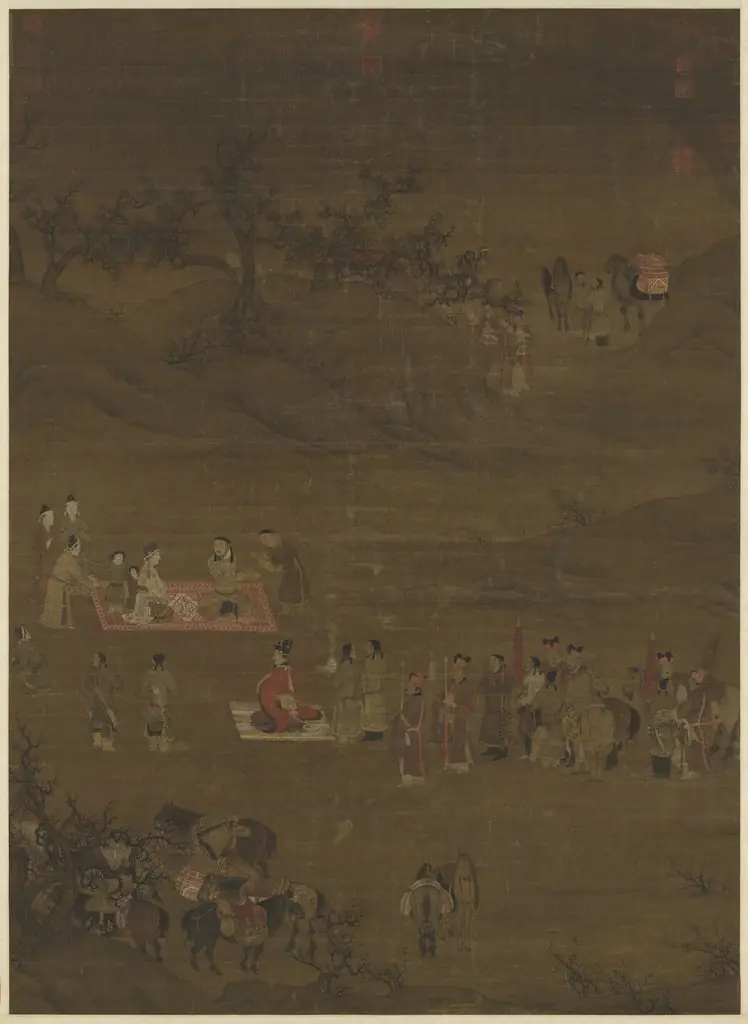 宋陳居中文姬歸漢圖軸
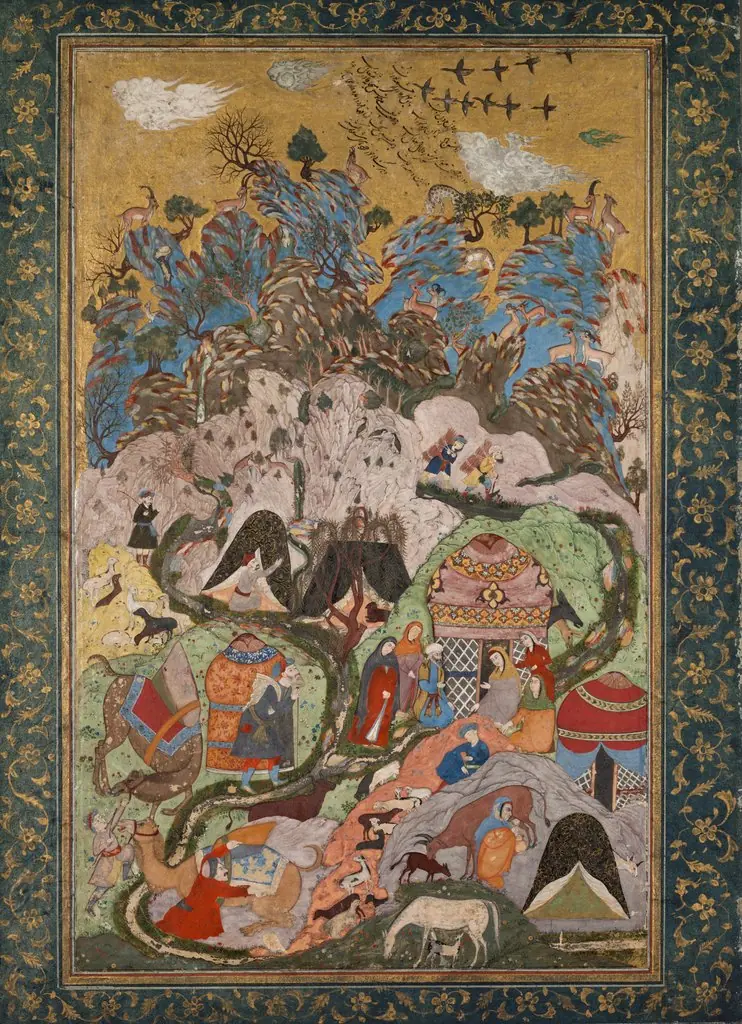 Encampment in the Mountains
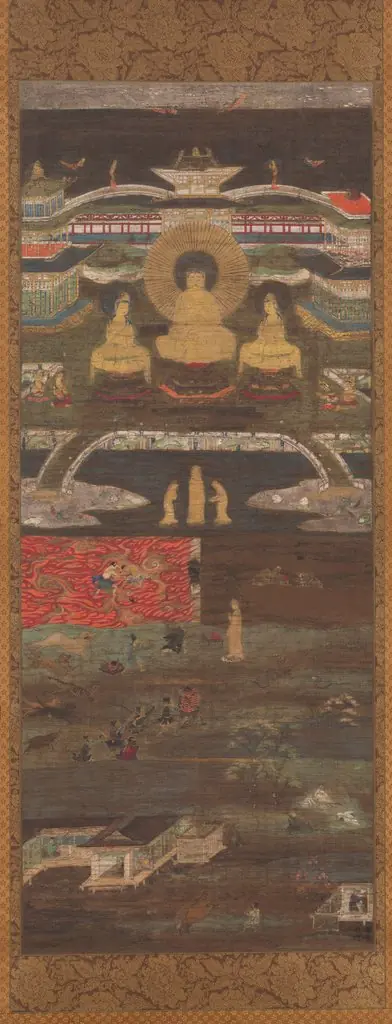 The White Path Between Two Rivers
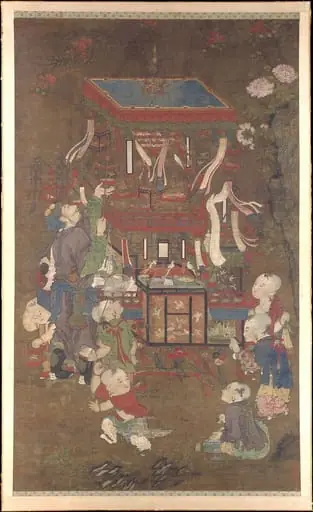 明 佚名 絹本設色 鳥販圖 軸|Bird peddler
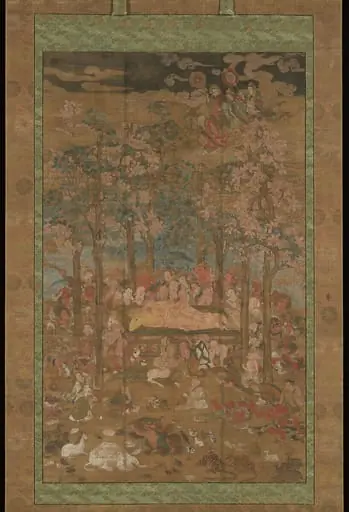
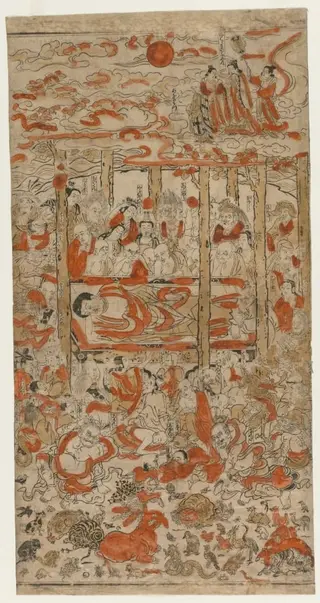 The Parinirvana of the Buddha
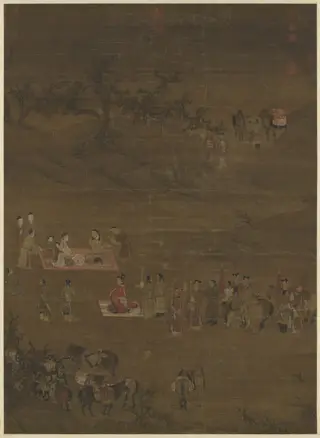 Lady Wen-chi's Return to China
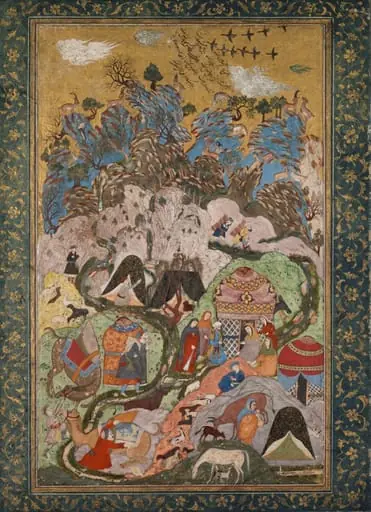 Encampment in the Mountains