Artwork
Nehan: Death of the Buddha
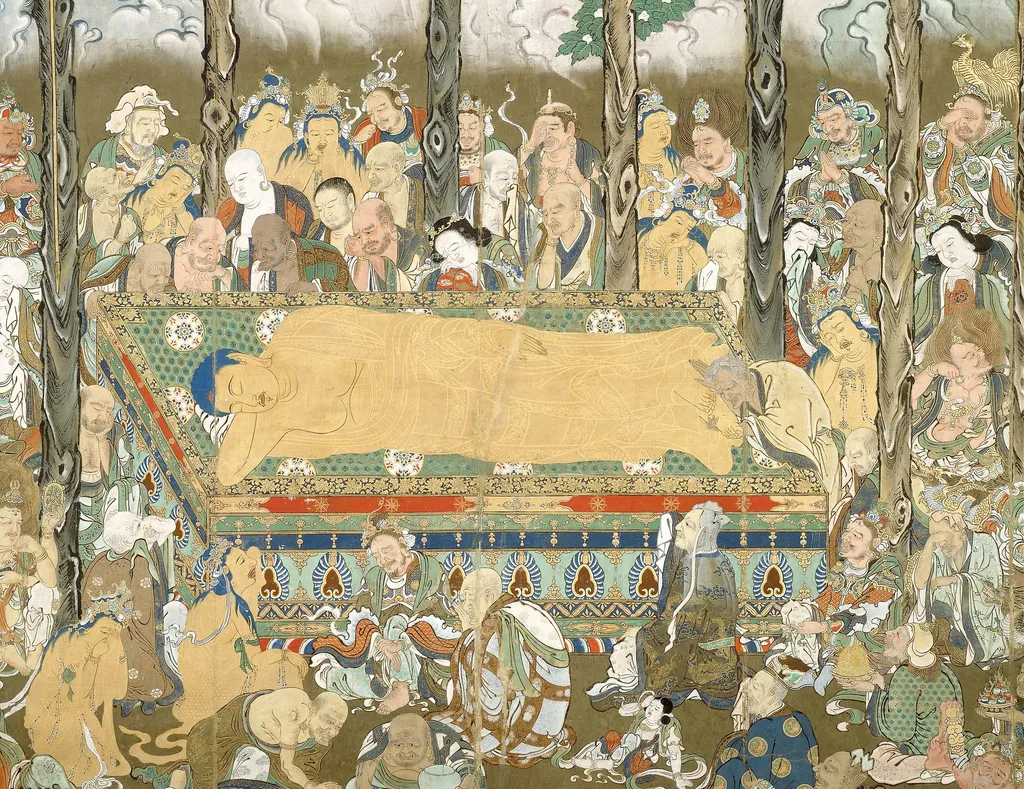
Nehan: Death of the Buddha is an unspecified painting by Unknown. It dates from 1650 and is held in the collection of the Art Institute of Chicago.
About this work
Overview
The work employs vivid pigments and strong outlines to convey solemnity and spiritual gravity, distinguishing it from more naturalistic traditions.
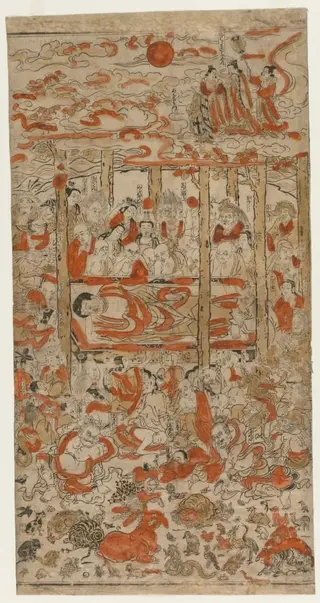
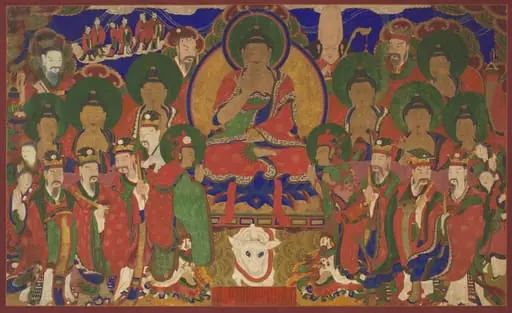
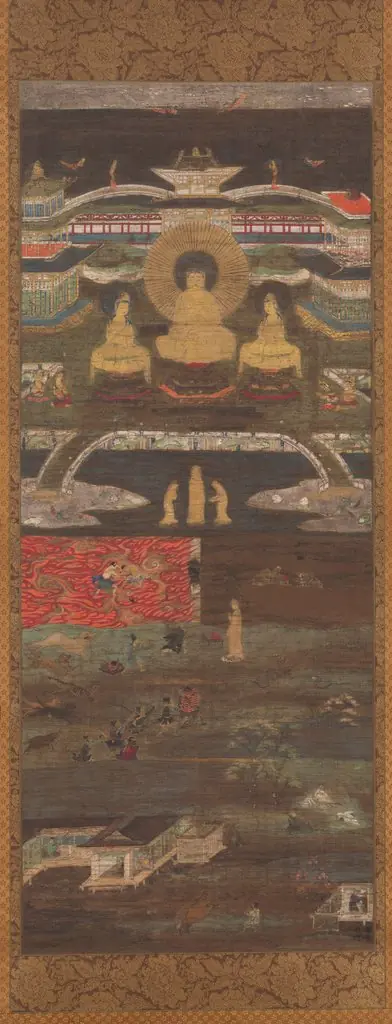
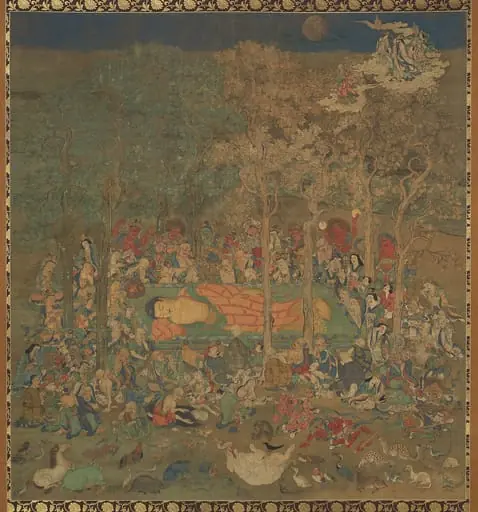
Nehan: Death of the Buddha is a large-scale painting depicting the final moments of the historical Buddha’s life. A reclining figure lies at the center, encircled by a dense assembly of mourners in traditional attire. The composition is framed by an ornamental border, and the background suggests a forested setting.
The work employs vivid pigments and strong outlines to convey solemnity and spiritual gravity, distinguishing it from more naturalistic traditions.
Subject & Meaning
The scene illustrates the Buddha’s parinirvana, the moment of his final passing beyond rebirth. Surrounding figures, including disciples, deities, and celestial beings, express grief through varied postures: kneeling, bowing, and gazing in silence. The arrangement emphasizes communal reverence rather than individual emotion, reflecting Buddhist teachings on impermanence and the transcendence of suffering through detachment.
Technique & Style
The painting uses bold, clean contours and saturated hues to define forms, creating a decorative yet emotionally resonant surface. While often compared to chiaroscuro, its contrast arises from color intensity rather than tonal gradation. The flatness of space and stylized figures align with East Asian religious painting traditions, prioritizing symbolic clarity over illusionistic depth to guide contemplation.
History & Provenance
This work originates from Japan’s Edo period, likely produced in a temple workshop for devotional use. Its format and iconography follow established models of Nehan-e, a genre developed to commemorate the Buddha’s death during annual rituals. Though specific artist and patron records are lost, its preservation in temple collections suggests ongoing liturgical significance into the 19th century.
Context
Nehan paintings were central to Buddhist memorial services in Japan, particularly during the spring observance of the Buddha’s passing. They served as visual aids for meditation on mortality and enlightenment. The forest setting echoes the traditional account of the Buddha’s death in Kushinagar, while the stylized figures reflect a synthesis of Indian, Chinese, and Japanese artistic conventions adapted for local religious practice.
Legacy
The painting remains a key example of Edo-period Buddhist art, illustrating how doctrinal themes were rendered through accessible visual language. Its enduring presence in temple collections highlights its role in sustaining communal memory of the Buddha’s teachings. Later artists and scholars have studied its formal choices as a bridge between devotional function and aesthetic tradition in Japanese religious art.
Artist & collection