Artwork
The Parinirvana of the Buddha
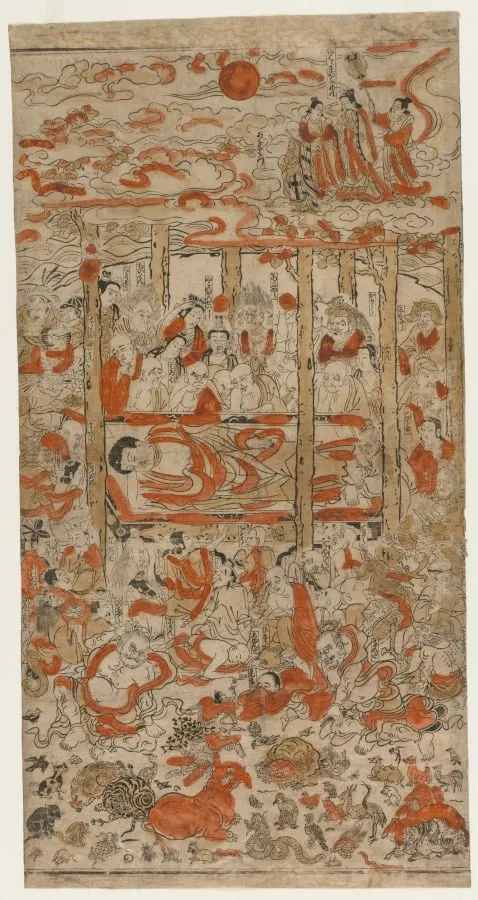
The Parinirvana of the Buddha is a print by the Baroque artist Unknown. It dates from 1714 and is held in the collection of the Cleveland Museum of Art.
- Accession no.
- 1916.1141
- Credit line
- Gift of Mr. and Mrs. J. H. Wade
About this work
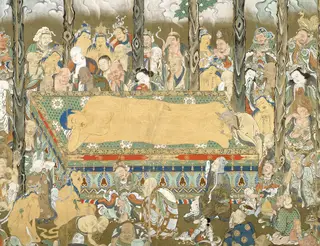
You see the Buddha lying on his side, surrounded by people, some crying, some calm, some just watching.
You see the Buddha lying on his side, surrounded by people, some crying, some calm, some just watching. A full moon glows in the sky, and tiny gods float above the scene.
This painting shows the moment the Buddha dies and reaches parinirvana, the end of his earthly life. It’s not a sad scene, though. The mood is quiet, almost peaceful, like he’s just falling asleep. The artist made sure even the smallest figures have their own reactions, from grief to wonder.
If you like this, look up more about japan, edo period (1615–1868), it’s full of art like this.
Overview
The print portrays the Buddha’s final passing, known as parinirvana, when the historical Shakyamuni leaves his mortal form and enters an eternal state. Set beneath a full moon on a cloudy night, the figure reclines on a platform, his right hand supporting his head, while a varied assembly of disciples, lay followers, deities, and animals gathers around him.
Subject & Meaning
The composition conveys a spectrum of responses to the Buddha’s death: some mourners weep, others observe with calm acceptance, and a few appear curious. An elderly woman stands at his feet, and the presence of numerous animals underscores the Buddhist teaching that the Dharma extends to all sentient beings. The scene emphasizes transition rather than tragedy, suggesting a peaceful release.
Technique & Style
Executed as a woodblock print, the image is hand‑colored in shades of yellow and reddish‑tan. The pigments were applied loosely, often spilling beyond the carved outlines, giving the work a fluid, almost impressionistic quality. This approach reflects early Edo‑period printmaking practices, where color was added after printing to enhance visual impact.
History & Provenance
The piece represents the earliest hand‑colored print in the museum’s holdings. Its design follows a lineage of earlier painted depictions of the Buddha’s parinirvana, with the first known woodcut of this subject dating to 1402. The particular block used for this work was likely produced in the early Edo period, though the exact date of this impression remains uncertain.
Context
Parinirvana scenes were a common devotional motif in Japanese Buddhist art, especially during the Edo era, when woodblock printing expanded access to religious imagery. By integrating celestial deities and everyday believers, the print illustrates the inclusive nature of Buddhist practice, bridging the sacred and the mundane within a single visual narrative.
Artist & collection









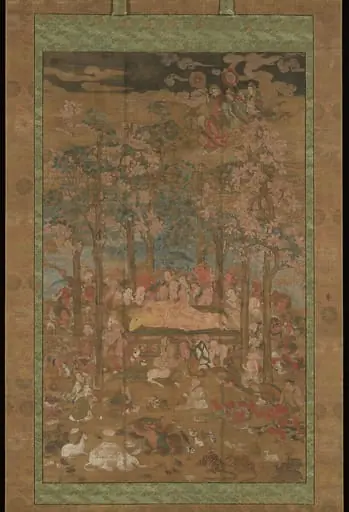 仏涅槃図|Death of the Historical Buddha (Nehan-zu)
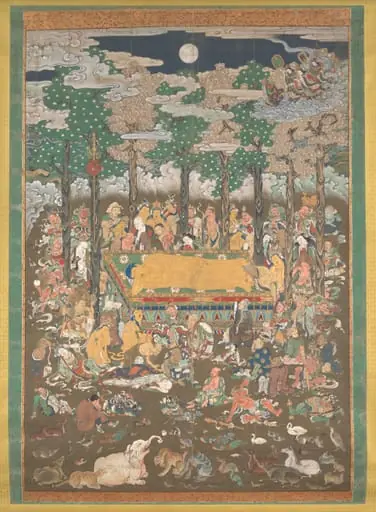 Nehan: Death of the Buddha
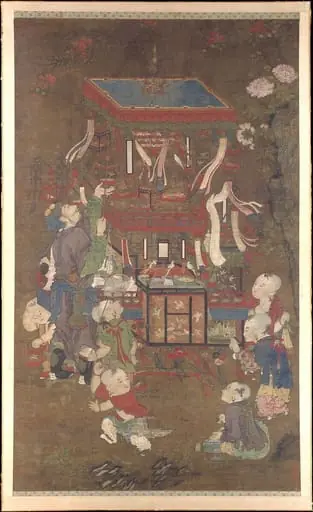 明 佚名 絹本設色 鳥販圖 軸|Bird peddler
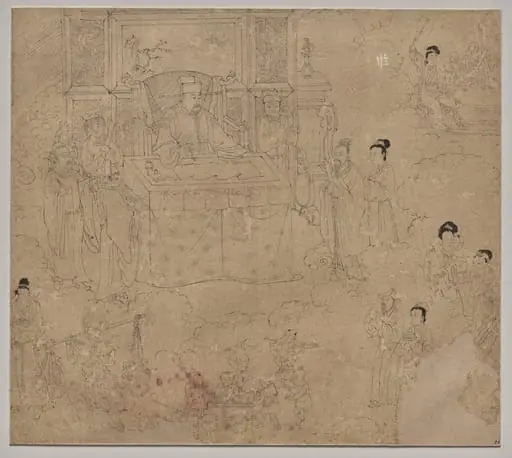 Album of Daoist and Buddhist Themes: Kings of Hells: Leaf 28
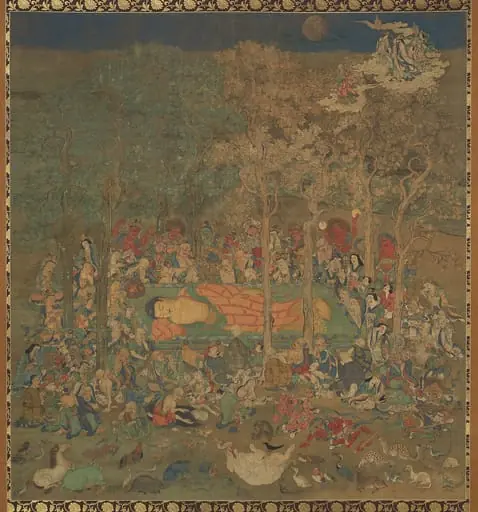 涅槃図|Death of the Historical Buddha (Nehan-zu)
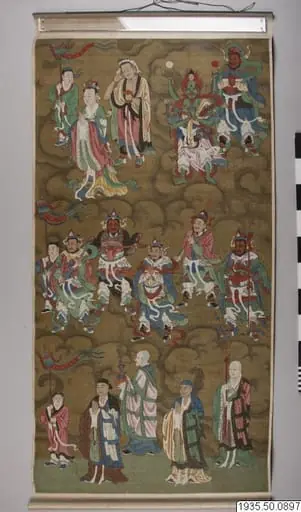 picture roller, duck, painting, painting,
 Nehan: Death of the Buddha
 Untitled
 Album of Daoist and Buddhist Themes: Kings of Hells: Leaf 31