Artwork
仏涅槃図|Death of the Historical Buddha (Nehan-zu)
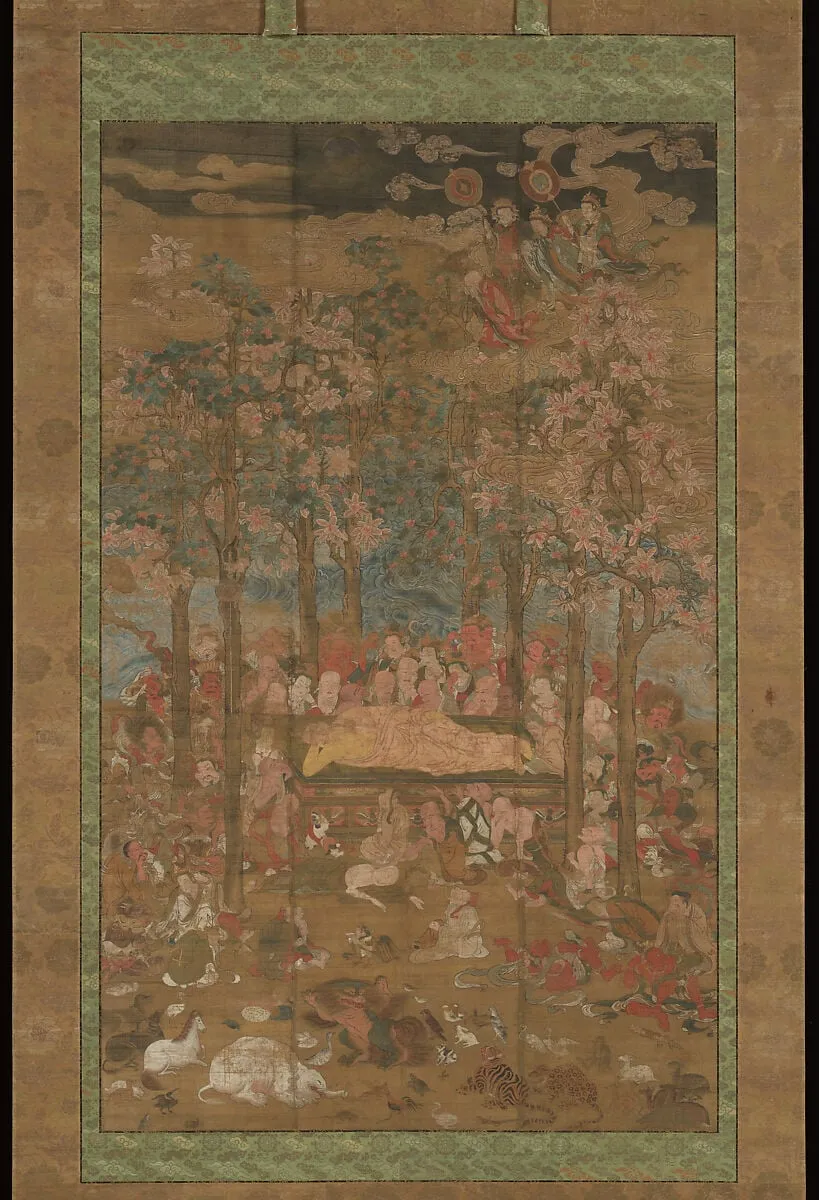
仏涅槃図|Death of the Historical Buddha (Nehan-zu) is an ink painting. It dates from 1449 and is held in the collection of the Metropolitan Museum of Art. This hanging scroll, titled Death of the Historical Buddha (Nehan-zu), depicts the moment of the Buddha's passing into nirvana.
About this work
Subject & Meaning
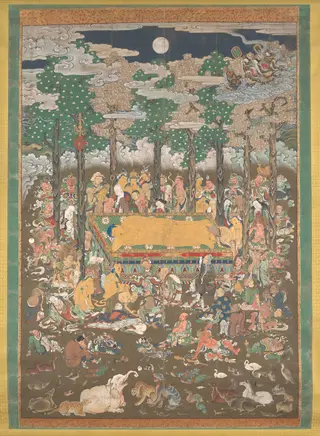
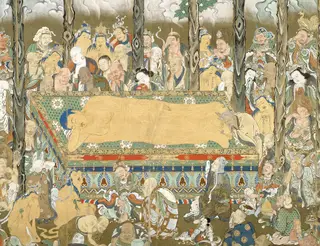
This painting represents the Parinirvana of the Buddha, depicting the historical Buddha's final passage into death and liberation from the cycle of rebirth.
This painting represents the Parinirvana of the Buddha, depicting the historical Buddha's final passage into death and liberation from the cycle of rebirth. The central iconography focuses on the reclining Buddha surrounded by a grieving assembly of human figures and animals, symbolizing the universal sorrow and sadness provoked by his passing. The inclusion of an elephant alongside the human mourners emphasizes the profound, cross-species impact of the event within the Buddhist tradition.
Through this combination of divine transcendence and earthly mourning, the work encapsulates core Buddhist themes of mortality and spiritual release.
Technique & Style
Executed in 1449, this Japanese painting of the Buddha's Parinirvana is rendered as a hanging scroll utilizing ink, color, and gold applied to a silk support. The composition stylistically integrates human and animal figures, specifically featuring elephants alongside grieving mourners to convey sadness and death. This formal arrangement reflects the traditional iconographic conventions of Nehan-zu, emphasizing the emotional gravity of the historical Buddha's passing through the juxtaposition of diverse figures within the pictorial field.
History & Provenance
The work titled 仏涅槃図, also known as Death of the Historical Buddha, was created in Japan in 1449 as a hanging scroll executed in ink, color, and gold on silk. The artist remains unidentified. Its subject is the Parinirvana of the Buddha, depicted with an elephant and figures expressing sorrow.
The painting entered the collection of the Metropolitan Museum of Art, where it is catalogued under accession number 44.35.1 and displayed in the museum’s galleries. Its provenance traces from its creation in the mid‑15th century to its acquisition by the museum, after which it has been part of the institution’s permanent holdings.
The painting is held by the Metropolitan Museum of Art, New York, with the accession number 44.35.1. It has been part of the museum’s collection since its acquisition in 1944. The work has been exhibited in the museum’s galleries dedicated to Japanese Buddhist art, including displays organized to highlight Muromachi-period religious painting and Nehan imagery.
Overview
This hanging scroll, titled Death of the Historical Buddha (Nehan-zu), depicts the moment of the Buddha's passing into nirvana. Executed with ink, color, and gold on silk, the expansive composition presents a serene Buddha surrounded by a multitude of grieving figures and creatures. This particular Nehan-zu is notable for its substantial size, positioning it among the largest extant examples of its type.
Context
Depictions of the Buddha's death, known as Nehan-zu in Japan, hold a significant place within Buddhist devotional art. Such scrolls were often central to rituals and commemorations, serving as visual aids for meditation on impermanence and the path to enlightenment. The considerable scale of this specific work suggests its potential importance for a temple or a large assembly, reflecting a long tradition of illustrating this pivotal moment in Buddhist narrative.
Artist & collection

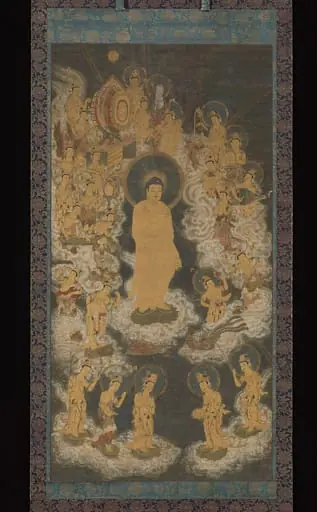 阿弥陀聖衆来迎図 |Welcoming Descent of Amida and Bodhisattvas
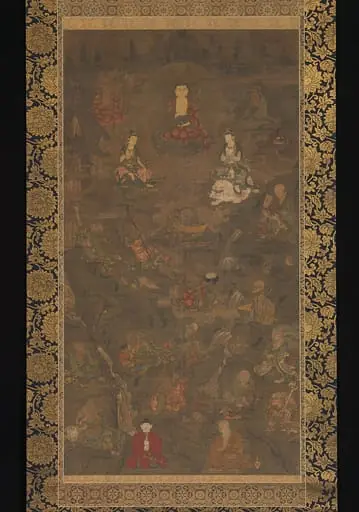 釈迦三尊十六羅漢像|Shaka (Shakyamuni), the Historical Buddha, with Two Attendant Bodhisattvas and Sixteen Arhats
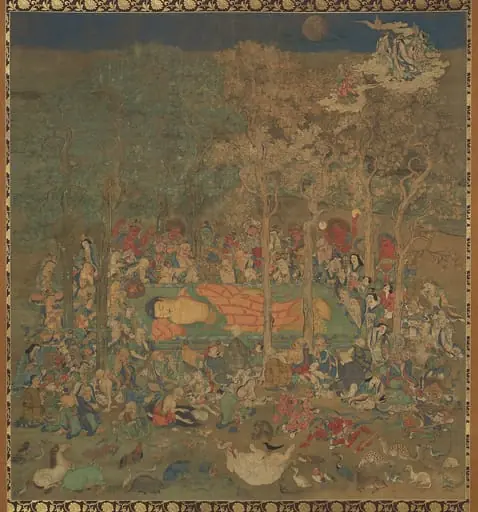
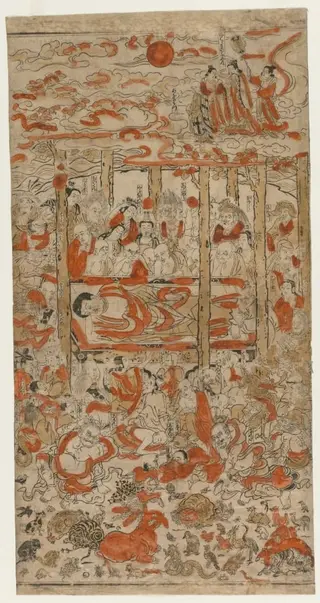 The Parinirvana of the Buddha
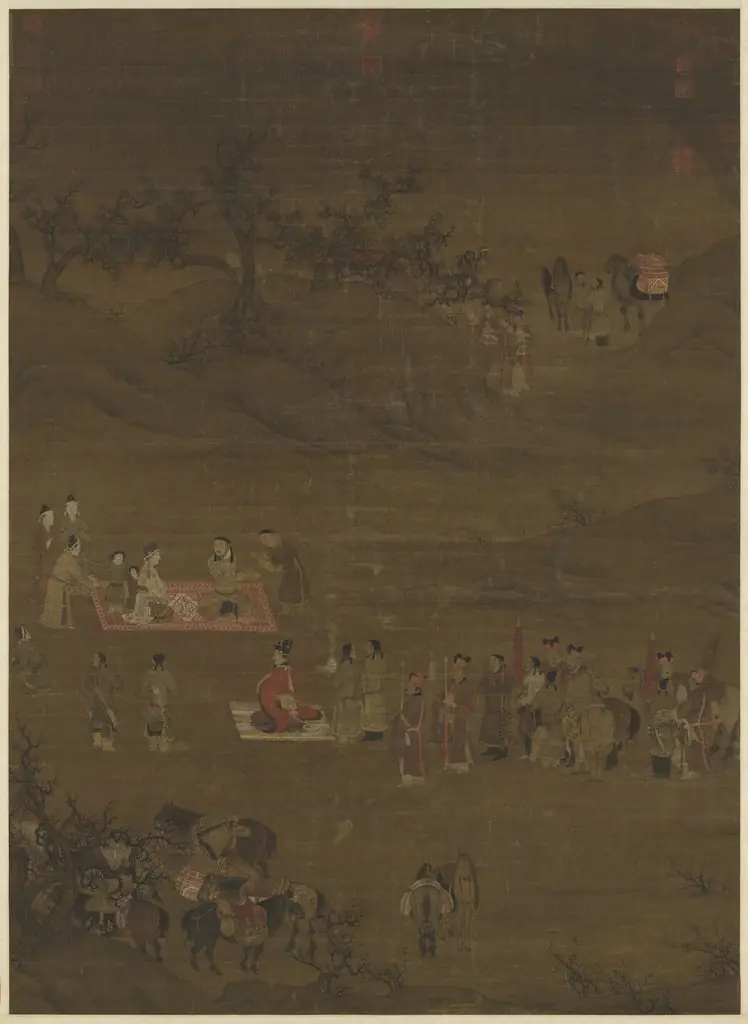 宋陳居中文姬歸漢圖軸
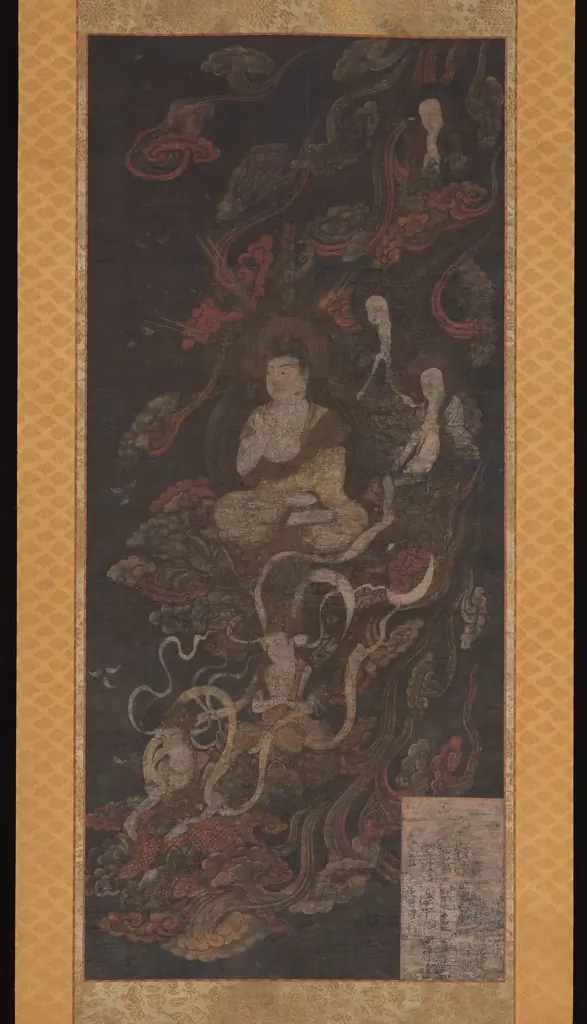 Welcoming Descent of Amida, the Buddha of Infinite Light, and His Holy Retinue
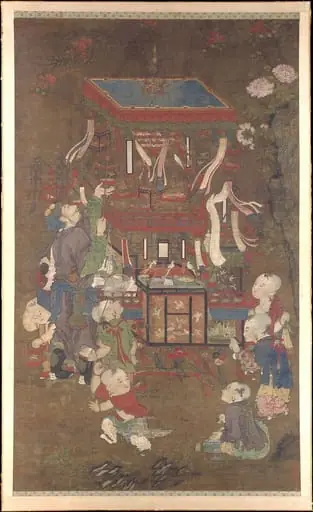 明 佚名 絹本設色 鳥販圖 軸|Bird peddler
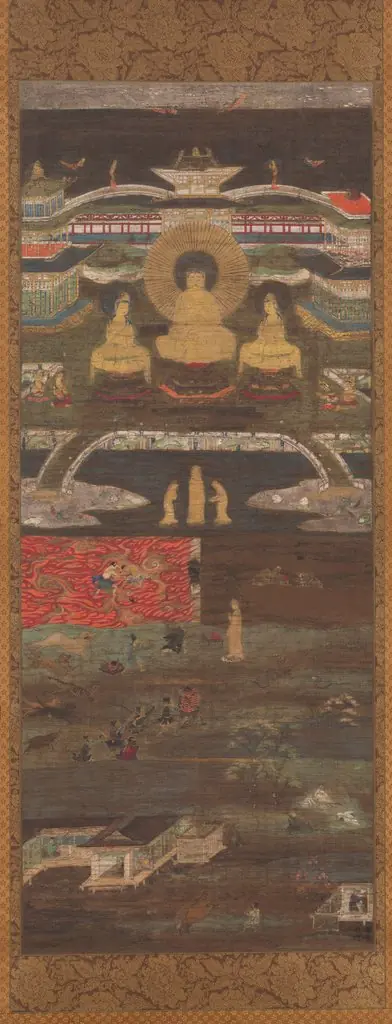 The White Path Between Two Rivers
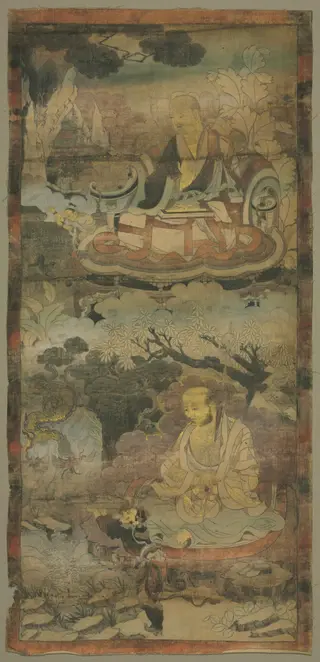 Lohans
 Untitled