Artwork
Dog Walker
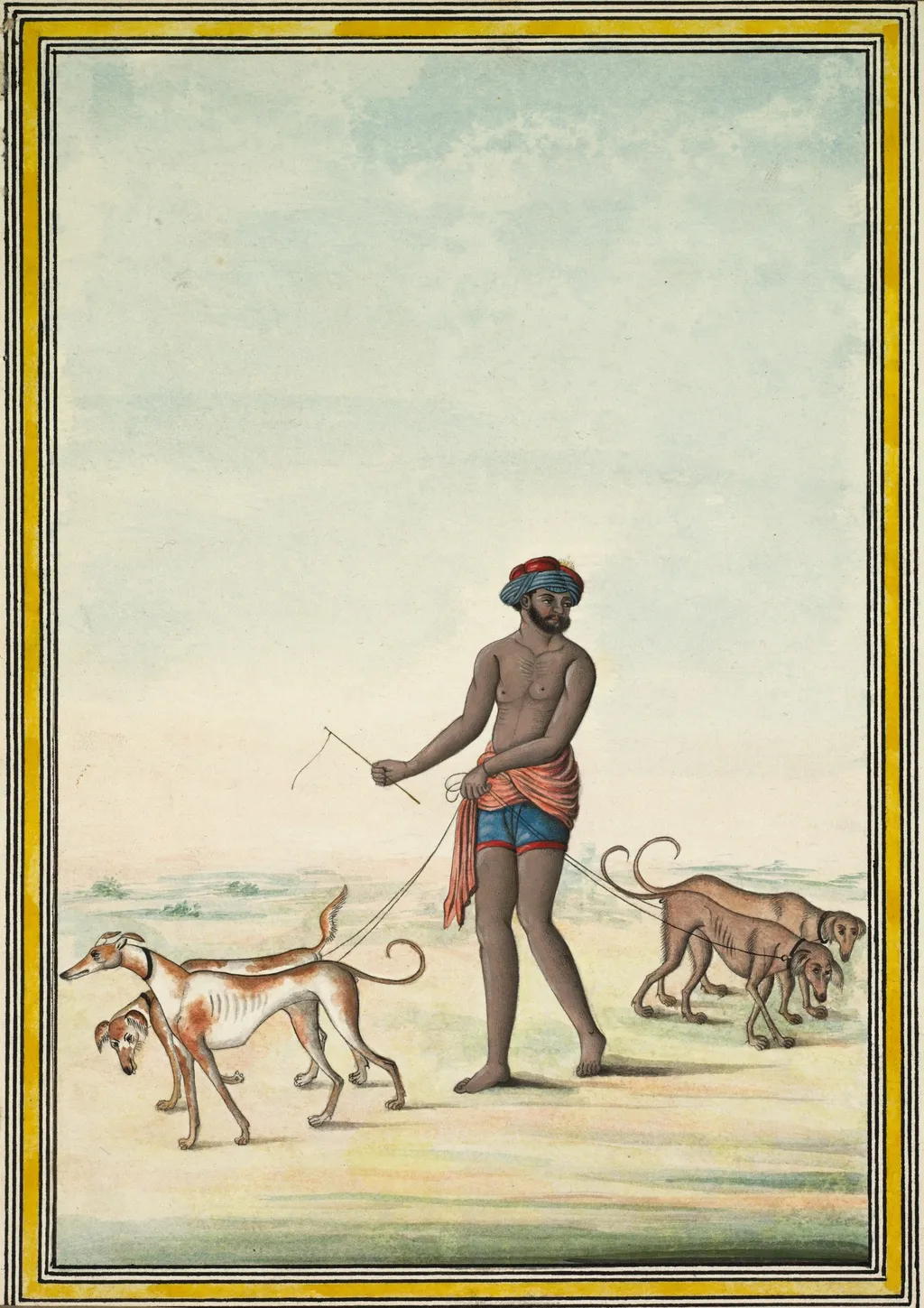
Dog Walker is an unspecified painting. It dates from 1832 and is held in the collection of the Cleveland Museum of Art.
About this work
History & Provenance
No specific details regarding the original commission, earlier ownership history, or the circumstances of its creation are provided in the available records.
The painting Dog Walker was created in 1832 by an artist who remains unidentified. The work entered the collection of the Cleveland Museum of Art, where it is currently housed and cataloged under the accession number 1992.143. No specific details regarding the original commission, earlier ownership history, or the circumstances of its creation are provided in the available records.
Dog Walker is an 1832 painting by an unknown artist that is held in the Cleveland Museum of Art's permanent collection under accession number 1992.143. The work has remained in the museum's holdings since its acquisition in 1992. According to the sources, no exhibition history or loan record is documented for the painting, and it continues to reside in the museum's collection. It remains available for study by researchers today.
Context
The painting, created in 1832 by an unknown artist, is part of the Cleveland Museum of Art's collection and is cataloged under the identifier 1992.143. It has been discussed in scholarly contexts regarding 19th-century genre painting and the evolution of domestic scene representations. Its significance lies in its contribution to understanding artistic engagement with everyday life during the period, though specific critical reception details remain undocumented in available records.
The work's provenance and institutional history reflect its integration into a major museum's holdings, providing context for its study within broader art historical narratives about 19th-century European painting traditions.
Overview
The canvas presents a barefoot, shirtless figure wrapped in a blue garment and a red turban, guiding three slender, long‑legged dogs across a flat, pale terrain. The sky is a muted blue, while the ground blends light brown and greenish tones that recede into the distance, creating a tranquil yet active composition.
Subject & Meaning
The central figure, modestly dressed and holding a walking stick, appears as a humble caretaker, directing the alert dogs that follow in a single line. The arrangement suggests a harmonious relationship between human and animal, emphasizing routine, guidance, and the quiet rhythm of daily labor in an open landscape.
Technique & Style
The work demonstrates careful modulation of light and color, with subtle shifts that give the dogs a faint, luminous quality. Brushwork is smooth and controlled, rendering the sky and ground in soft gradients, while the figures are delineated with precise, yet understated, detail that balances realism with a gentle, atmospheric tone.
Artist & collection