Artwork
Don Juan José de Austria (¿?)
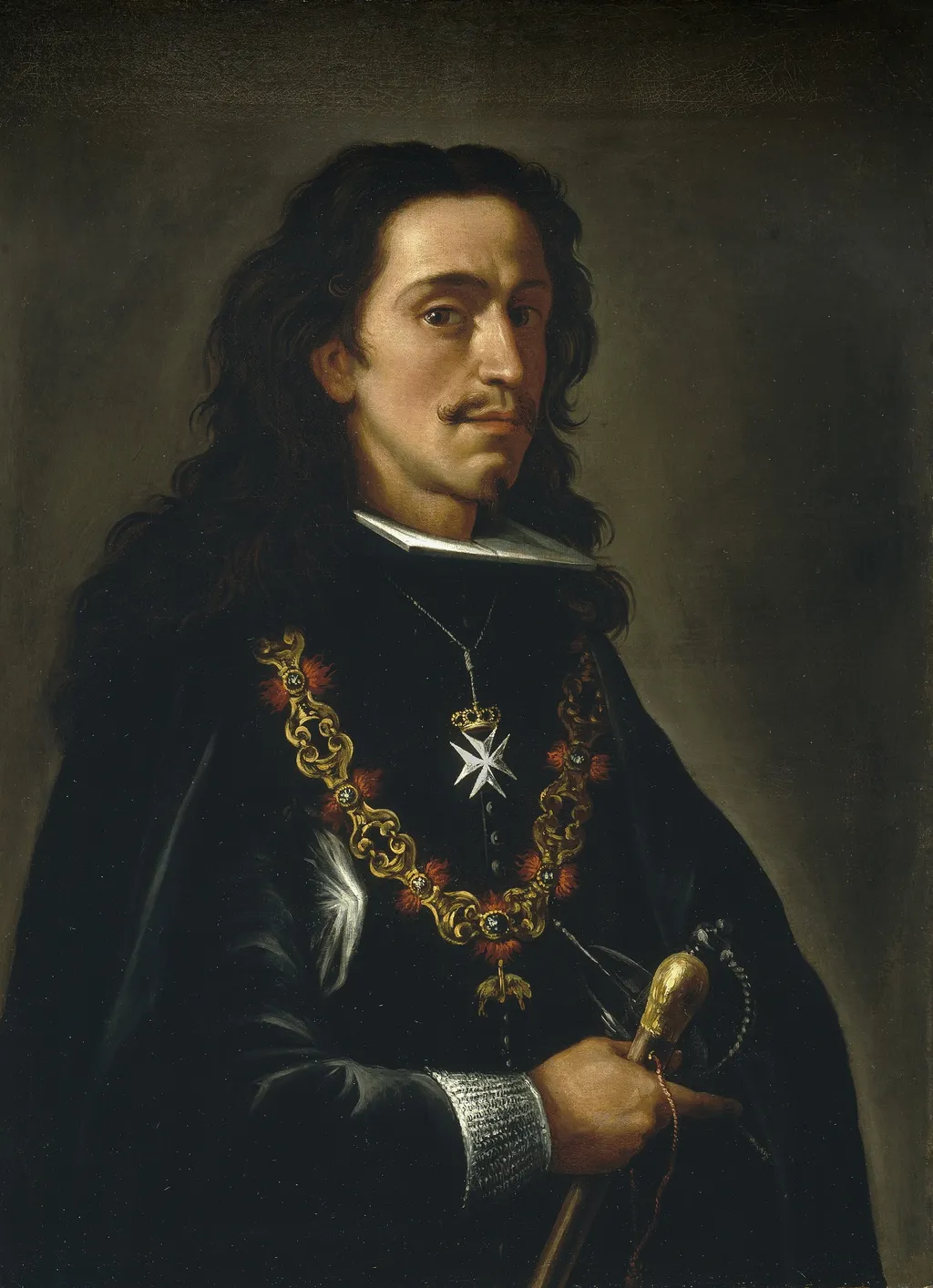
Don Juan José de Austria (¿?) is an oil painting. It dates from 1669 and is held in the collection of the Museo del Prado.
About this work
Subject & Meaning
Additionally, the inclusion of the Order of the Golden Fleece signifies his noble rank and membership in one of Europe's most prestigious chivalric orders.
This 1669 oil painting portrays John of Austria the Younger, also known as Don Juan José de Austria. The work functions as a formal portrait emphasizing the subject's high status and military role through specific iconographic elements. He is depicted with a sword, symbolizing his authority as a military commander.
Additionally, the inclusion of the Order of the Golden Fleece signifies his noble rank and membership in one of Europe's most prestigious chivalric orders. Together, these attributes construct an image of power, lineage, and martial leadership appropriate for an illegitimate son of King Philip IV of Spain who held significant political and military offices.
Technique & Style
Executed in 1669, this portrait is an oil painting on canvas measuring 83 cm in height by 60 cm in width. The work depicts John of Austria the Younger, characterized by the inclusion of a sword and the insignia of the Golden Fleece as key attributes of his status. Stylistically, the piece functions as a formal representation of its subject, utilizing the medium to render these specific symbols of power and nobility within a traditional portrait format.
History & Provenance
The work was created in 1669 as an oil on canvas portrait commissioned to depict John of Austria the Younger, a celebrated military leader. It entered the collection of the Museo del Prado and was listed in the museum’s holdings by the early twentieth century, remaining on display there as of the latest records.
The painting shows the sitter holding a sword and wearing the Golden Fleece, emphasizing his status and achievements. Its dimensions measure 83 centimeters in height and 60 centimeters in width.
The painting is held at the Museo del Prado in Madrid, where it forms part of the institution's collection. It is also associated with the Museo de la Trinidad, a collection historically linked to the Prado.
No specific inventory or accession number is recorded in the available sources, and no exhibition history is documented for the work.
Overview
The oil painting presents a solitary male figure, distinguished by long dark hair, a moustache, and a richly embroidered black coat trimmed with a white collar. He grips a sword in his right hand and wears a prominent white eight‑pointed cross on a necklace, signifying high rank or chivalric affiliation. The composition is dominated by dramatic light and shadow, directing focus toward the sitter.
Context
Portraits of high‑ranking nobles in the Baroque era often combined realistic likeness with symbolic elements such as orders of chivalry and weapons. This piece aligns with that tradition, reflecting the period’s emphasis on visual authority and the use of light to convey the sitter’s prominence within courtly and military circles.
Artist & collection

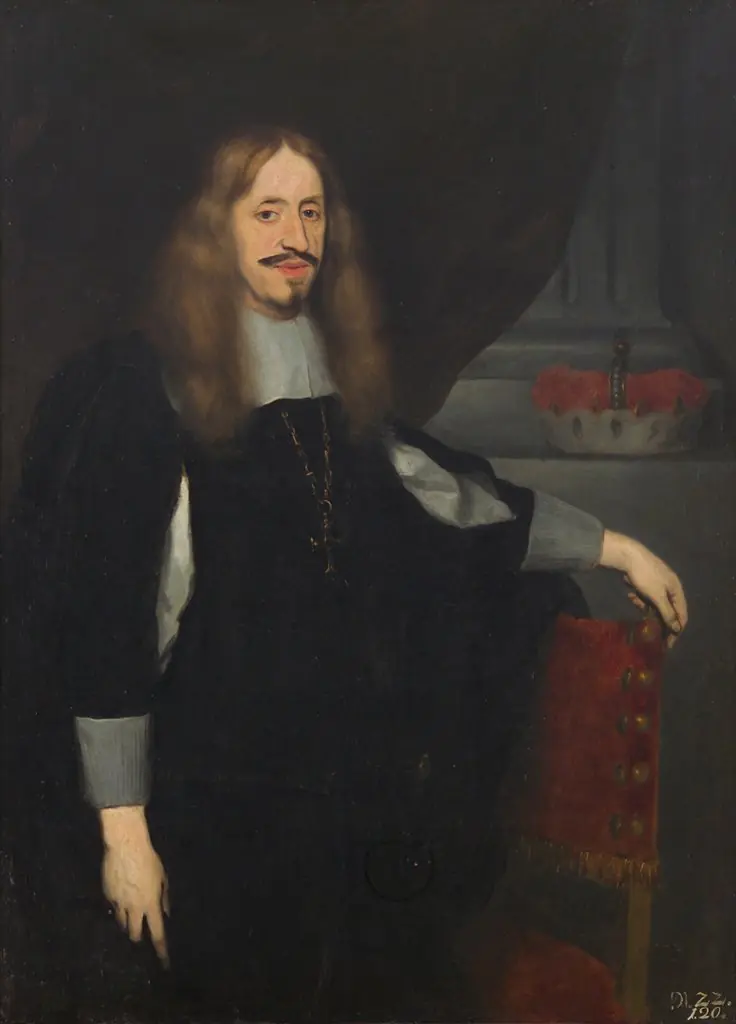 Portrait of archduke Leopold Wilhelm (1614-1662)
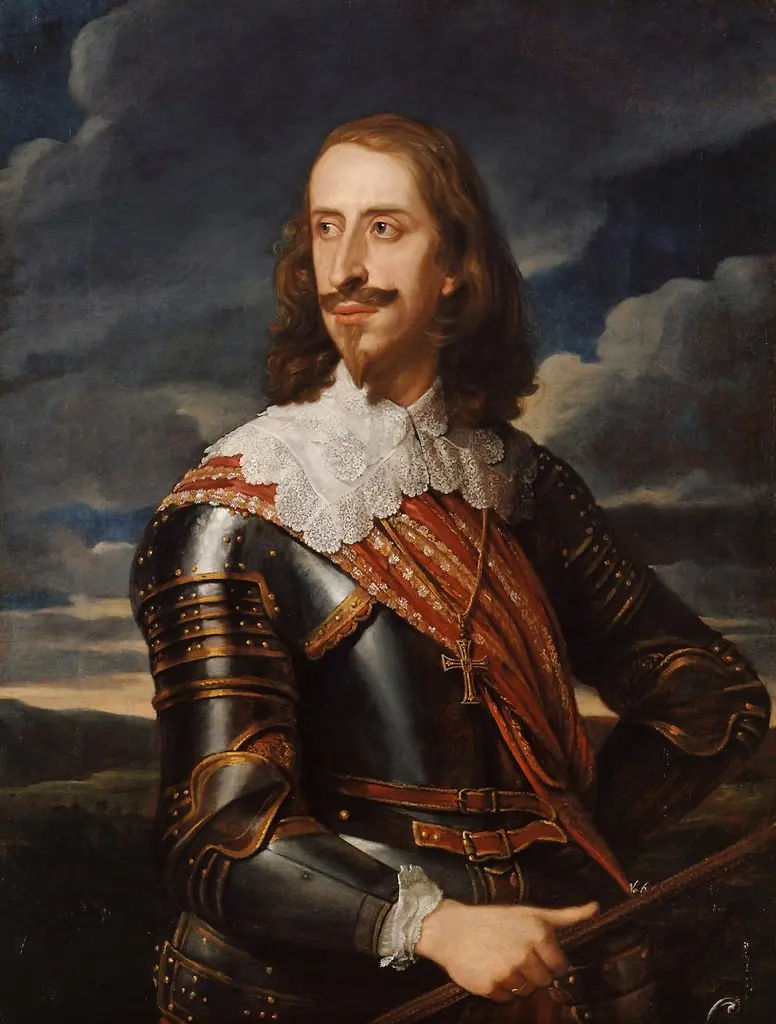 Archduke Leopold Wilhelm in armor (1614-1662)
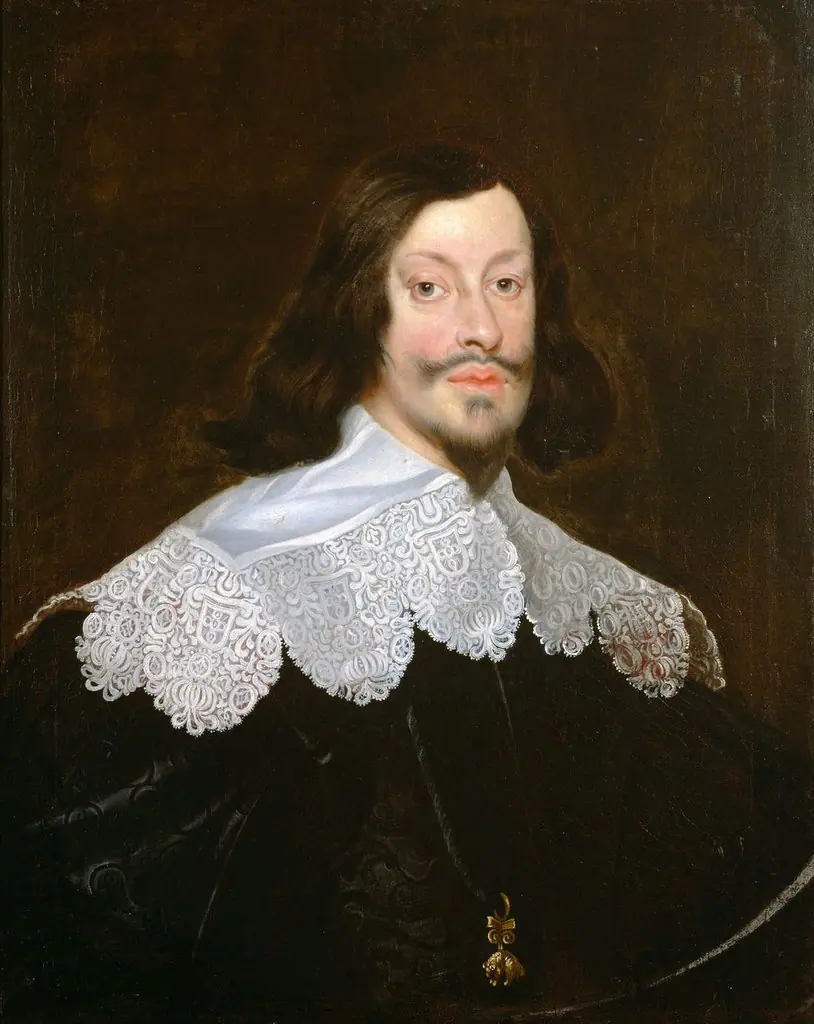 Kaiser Ferdinand III. (1608-1657), Brustbild
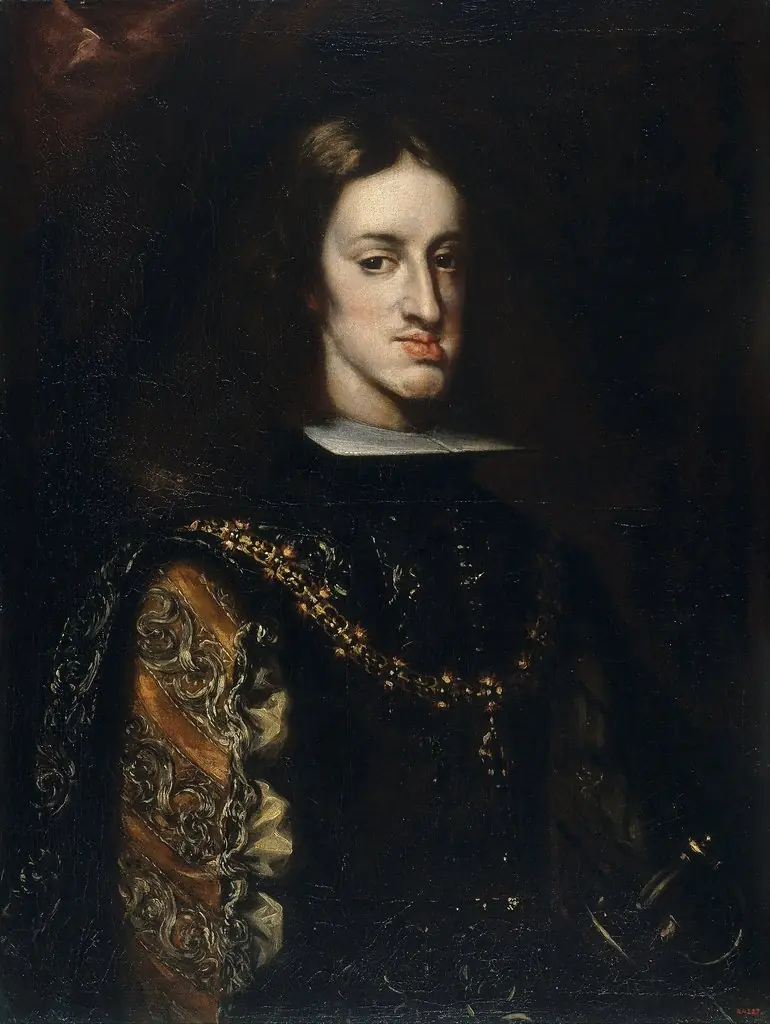 Portrait of Charles II
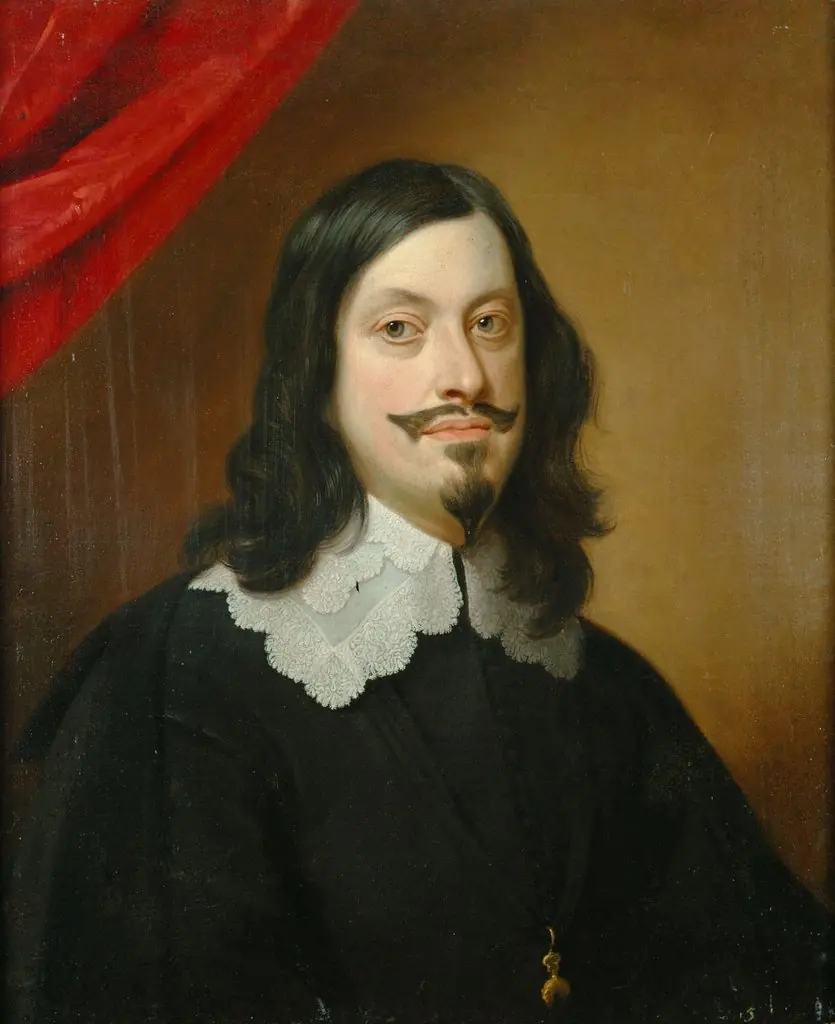 Portrait of Emperor Ferdinand III (1608-1657)
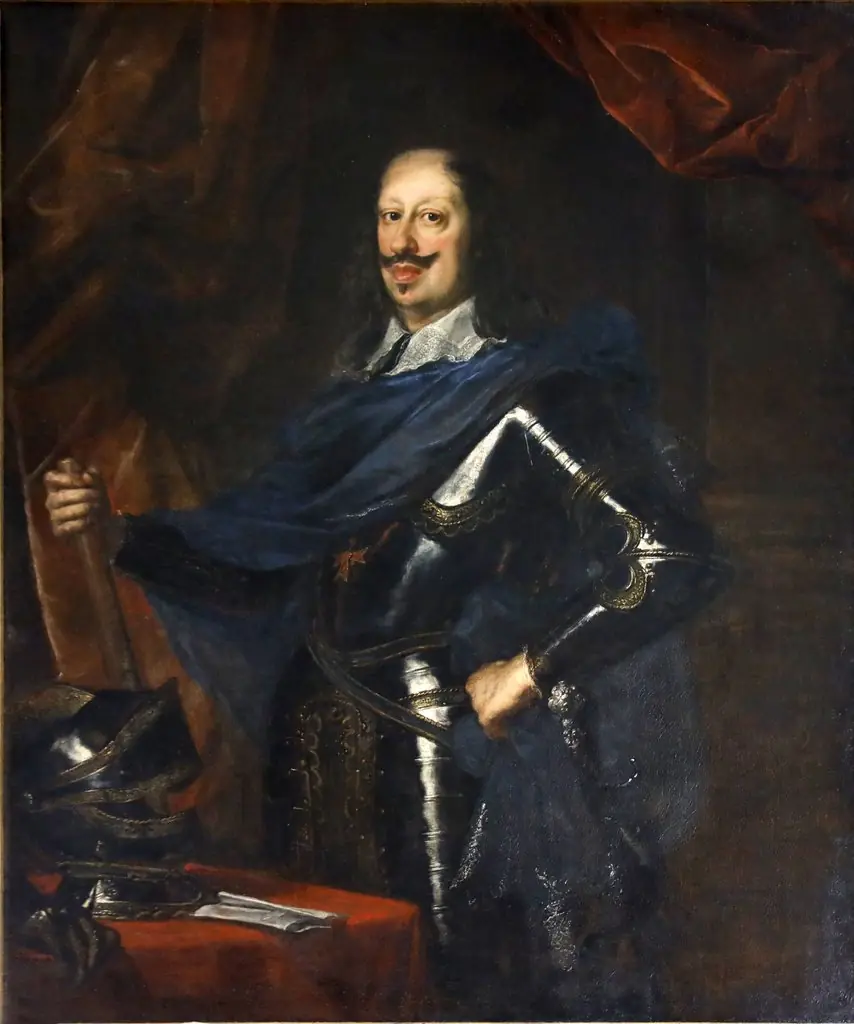 Portrait of Ferdinando II de'Medici
 Portrait of an officer
 Portrait of Archduke Leopold Wilhelm (1614-1662)
 Fernando el Católico
 Portrait of Charles I of England