Artwork
Durga Slaying Mahisha
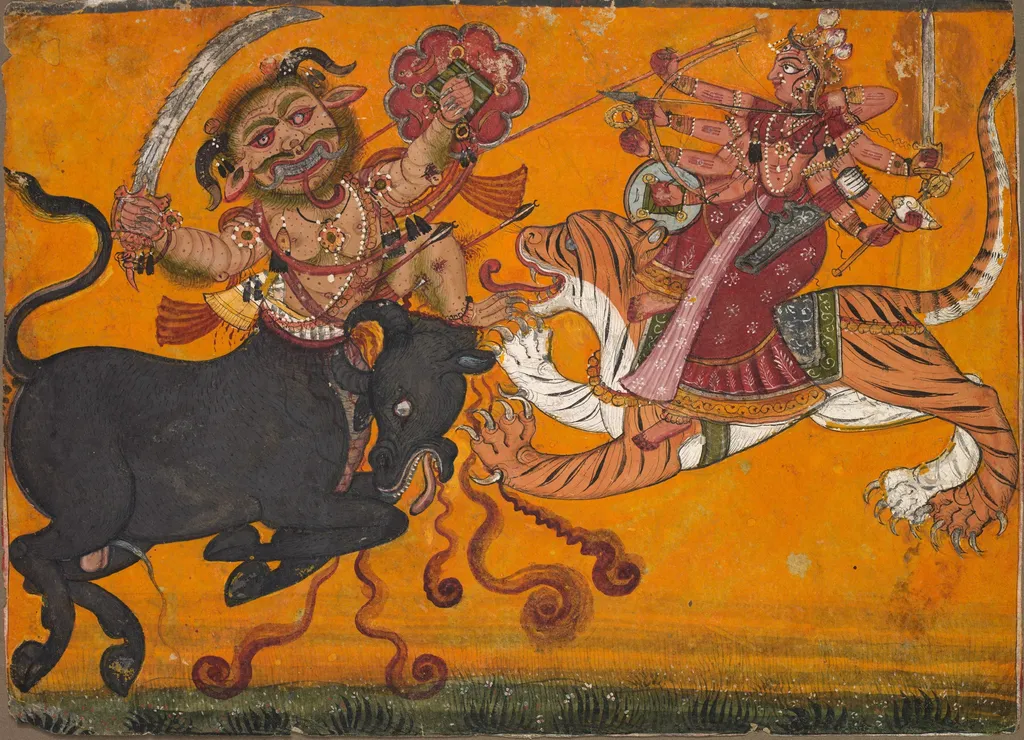
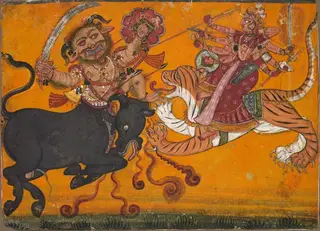
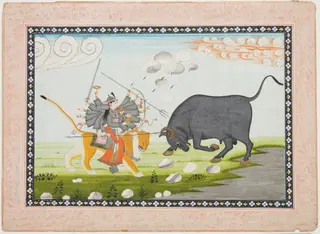
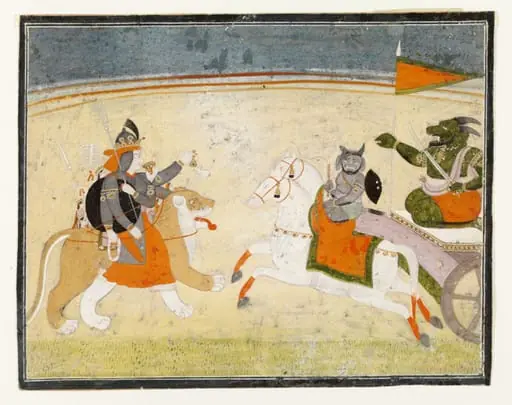
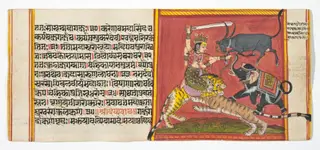
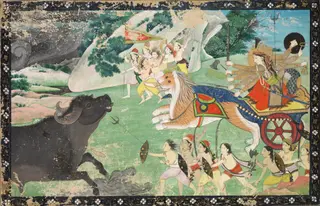
Durga Slaying Mahisha is an unspecified painting. It dates from 1705 and is held in the collection of the Cleveland Museum of Art. The work portrays a multi‑armed female figure astride a tiger, confronting a boar‑headed male wielding a sword.
About this work
Subject & Meaning
This iconography draws from Hindu mythology where Durga's triumph over Mahisha is celebrated as a testament to feminine strength and divine intervention.
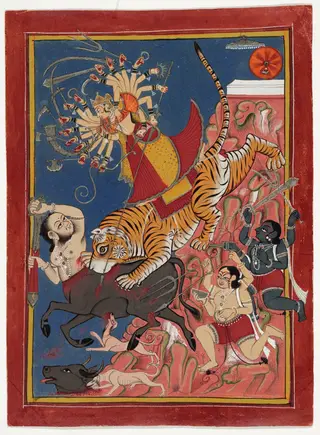
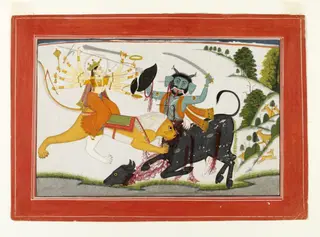
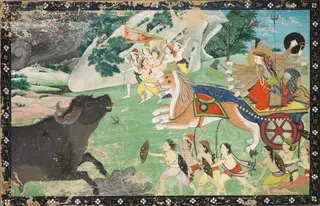
Durga Slaying Mahisha depicts the Hindu goddess Durga in the climactic moment of her battle against the demon Mahisha, embodying her divine power to overcome evil. The painting shows Durga riding a lion, wielding multiple weapons, and triumphing over the buffalo-headed demon, symbolizing the victory of good over chaos and the protection of cosmic order. This iconography draws from Hindu mythology where Durga's triumph over Mahisha is celebrated as a testament to feminine strength and divine intervention.
History & Provenance
The painting Durga Slaying Mahisha is dated to 1705 based on internal documentation, which provides the canonical date for the work’s creation.
The painting entered the Cleveland Museum of Art in 1960 as part of its permanent collection, where it remains held today. The Cleveland Museum of Art records the painting’s provenance from its acquisition in 1960 to the present, with no earlier ownership chain documented in the available sources.
Context
Durga Slaying Mahisha, painted in 1705, depicts the Hindu goddess Durga in combat with the demon Mahisha, symbolizing the triumph of good over evil. This subject reflects the devotional intensity of Rajput court patronage during the 18th century, where divine feminine power was frequently visualized in miniature painting traditions. The work is part of the Cleveland Museum of Art's collection, underscoring its significance within institutional holdings of South Asian art.
Scholarly attention to such works contributes to broader understandings of narrative painting in Indian art history, particularly in relation to manuscript culture and religious iconography. Its stylistic analysis remains relevant to studies of Pahari and Mughal-influenced schools of painting.
Overview
The work portrays a multi‑armed female figure astride a tiger, confronting a boar‑headed male wielding a sword. Both figures are clad in red and white garments, set against an orange backdrop. The composition captures a moment of intense motion, with the woman's arms extended and sword raised, while the male opponent adopts a defensive stance. The tiger and boar are also locked in combat, heightening the scene’s dynamism.
Technique & Style
Executed with bold, saturated hues, the artist employs a vivid orange field to unify the tableau. Contrasting reds and whites on the figures emphasize their movement and delineate form. Dynamic poses and exaggerated gestures create a sense of kinetic energy, while the interplay of light and shadow on the tiger and boar adds depth to the violent encounter.
Artist & collection