Artwork
The Goddess Annihilates the Demon Raktabija, from a Devi-Mahatmya
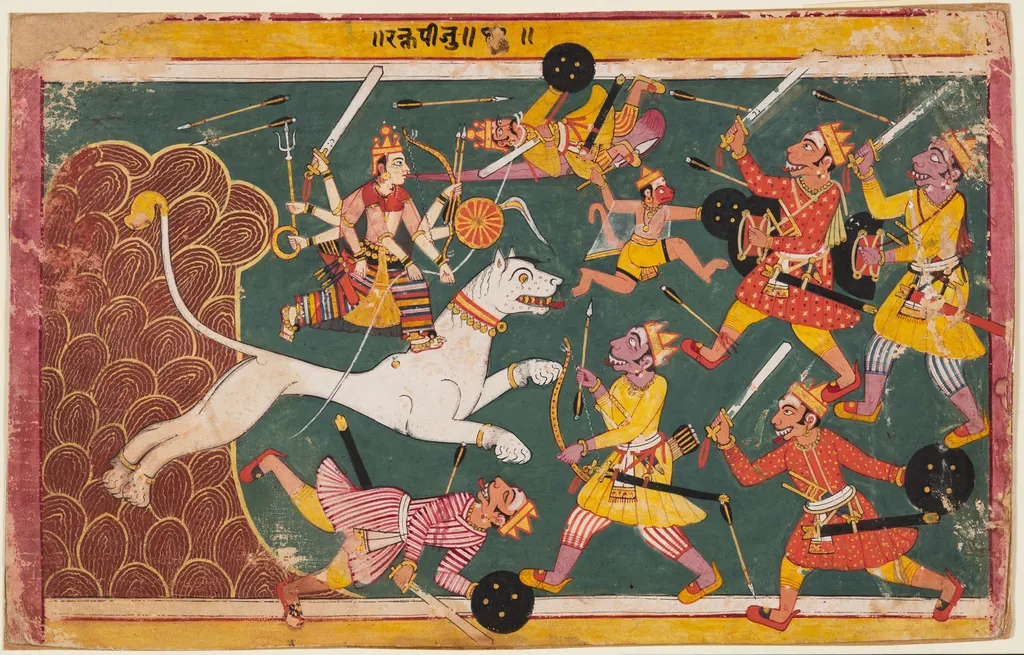
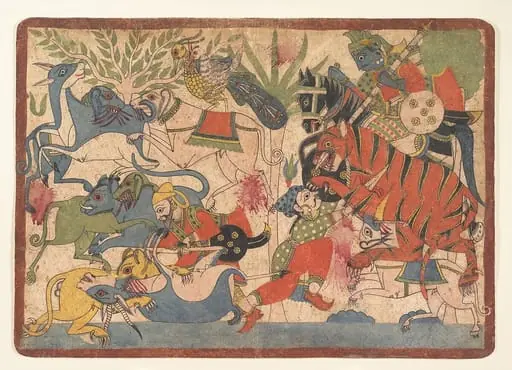
The Goddess Annihilates the Demon Raktabija, from a Devi-Mahatmya is an unspecified painting. It dates from 1640 and is held in the collection of the Cleveland Museum of Art. The work portrays a dynamic confrontation between a divine figure and a host of demons.
About this work
Subject & Meaning
The scene symbolizes the protective role of the feminine divine in restoring dharma, a theme central to the text’s narrative of goddess-fueled victory.
The painting portrays the Hindu goddess Durga in the act of destroying the demon Raktabija, an episode drawn from the Devi-Mahatmya. Her dynamic pose, multiple arms wielding weapons, and the severed demon’s head convey divine power that annihilates evil. The work’s iconography follows traditional Hindu visual codes: Durga is shown riding a lion, her fierce expression underscoring the triumph of cosmic order over chaos.
The scene symbolizes the protective role of the feminine divine in restoring dharma, a theme central to the text’s narrative of goddess-fueled victory.
The composition reflects 17th-century Malwa painting styles, blending bold outlines with vivid color fields characteristic of early Rajput art. The Cleveland Museum of Art holds the work, which was created in 1640 and exemplifies the period’s synthesis of devotional subject matter and regional aesthetic conventions.
Technique & Style
The painting depicts the goddess Durga slaying the demon Raktabija in a scene drawn from the Devi-Mahatmya, a Hindu mythological text. Executed in tempera on paper, it measures 30.5 cm by 20.3 cm and was created in the Malwa region of India around 1640. The composition features bold outlines and vivid flat colors characteristic of Rajasthani miniature painting, with the goddess shown in dynamic motion as she destroys the demon’s regenerating heads.
The figure is rendered with symbolic attributes such as multiple arms and a fierce expression, emphasizing divine power. The work is housed in the Cleveland Museum of Art, where it is cataloged under accession number 2018.128.
History & Provenance
The painting was created in 1640 in the Malwa region, a center of manuscript painting in central India. It is classified as a painting and is associated with an unknown artist.
The work entered the collection of the Cleveland Museum of Art, where it is currently held. Its Cleveland Museum of Art inventory designation is 2018.128, indicating that it was accessioned by the museum in 2018.
Context
The painting depicting the Goddess defeating the demon Raktabija was created in 1640 in Malwa and is classified as a work of the Devi-Mahatmya narrative. It entered the collection of the Cleveland Museum of Art, where it remains on view. Scholars have noted its significance within the broader corpus of Rajput visual storytelling, situating it amid contemporaneous devotional paintings that dramatize divine intervention.
The piece is often discussed in studies of regional artistic production during the 17th century, highlighting the interplay between local patronage and transregional religious motifs.
Its stylistic features align with known trends in Malwa workshops of the period, though the attribution remains linked to an unnamed artist recorded in archival records.
Overview
The work portrays a dynamic confrontation between a divine figure and a host of demons. Central to the scene is a goddess astride a white tiger, brandishing a sword in one hand and a shield in the other, while a multitude of vividly dressed demons clash around her. The composition is saturated with intense reds, yellows, oranges, and contrasting greens, creating a sense of kinetic energy.
Artist & collection

- The Goddess Annihilates the Demon Raktabija, from a Devi-Mahatmya
 Durga Killing the Buffalo Demon
 Goddesses and Demons Approaching Combat
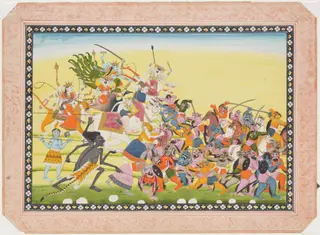 Godesses in Combat with Demons
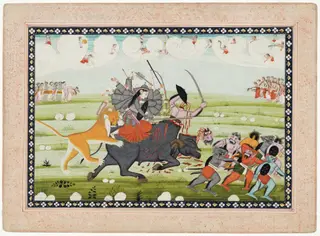 Durga, Having Decapitated Bull and Mahishasura Within, Drives off Remaining Demons while Gods in Clouds Applaud
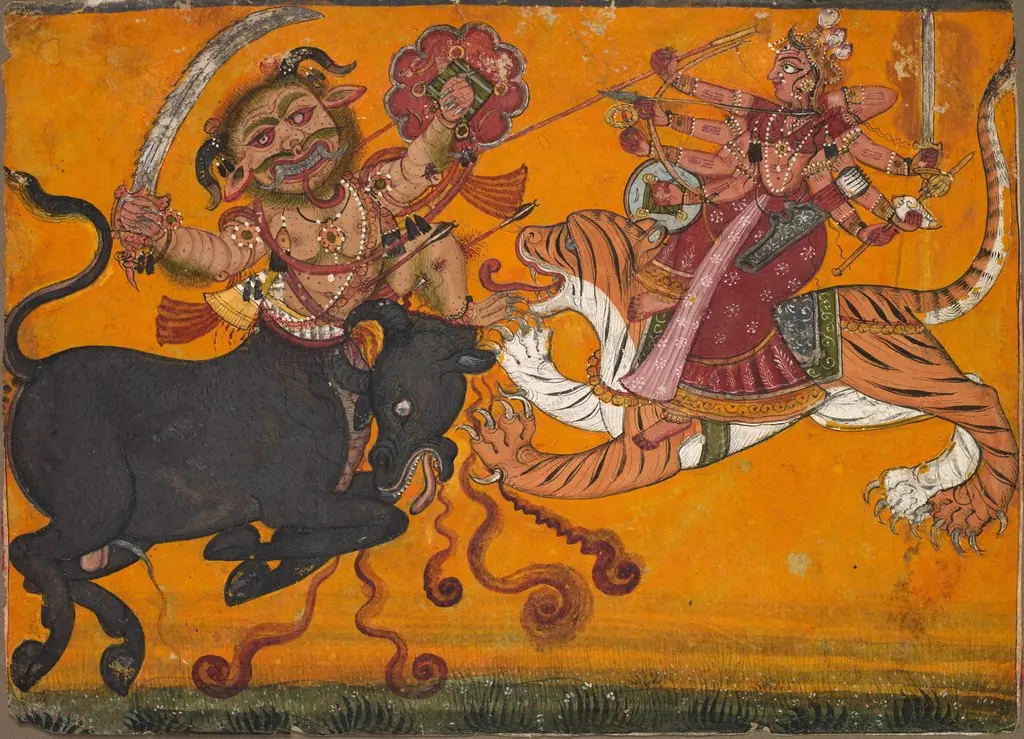 Durga Slaying Mahisha
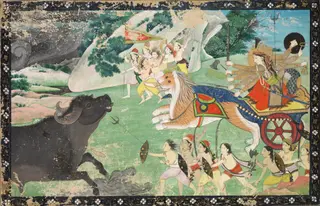 Durga Slaying Mahisha
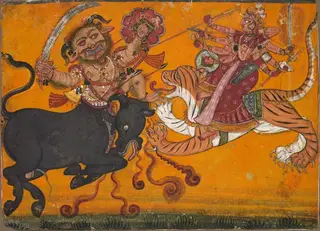 Durga Slaying Mahisha
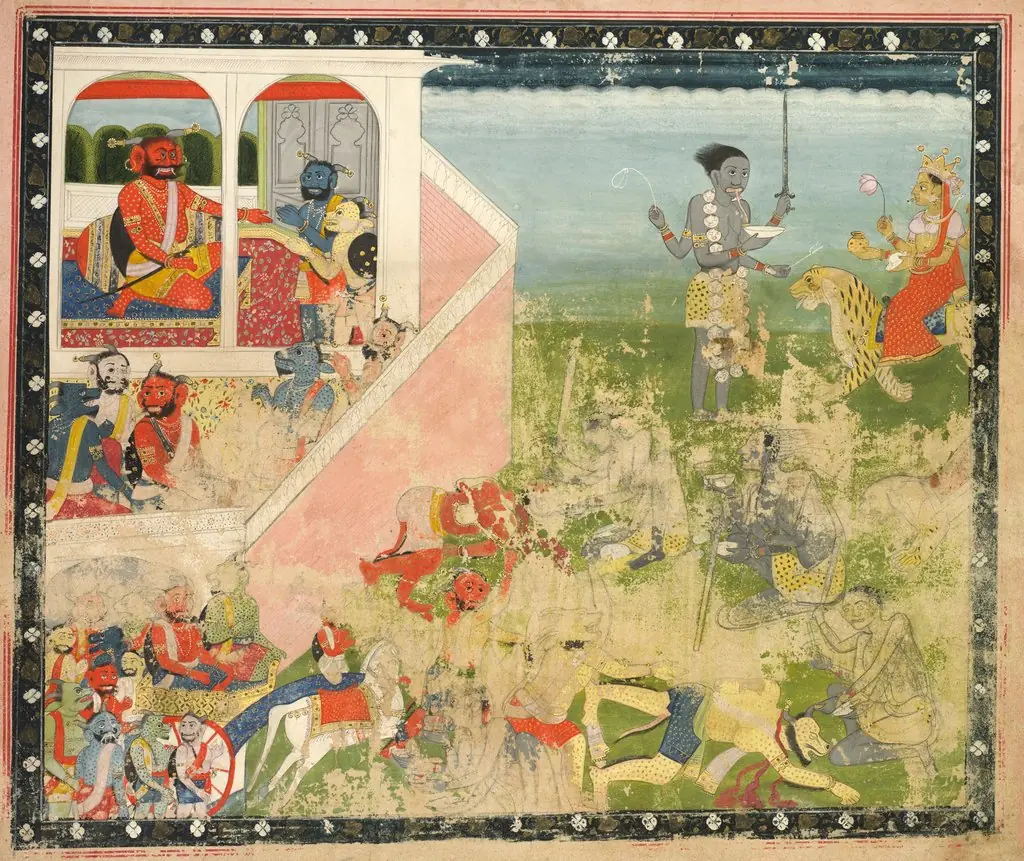 Kali and Devi Attack: Leaf from a Devi Mahatmya
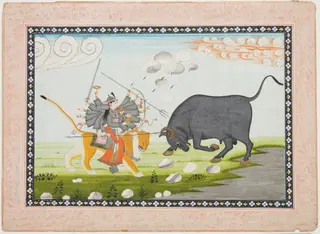 Durga in Combat with the Bull, Mahishasura
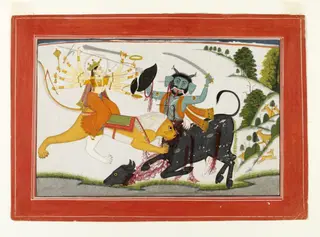 Durga and Mahishasura
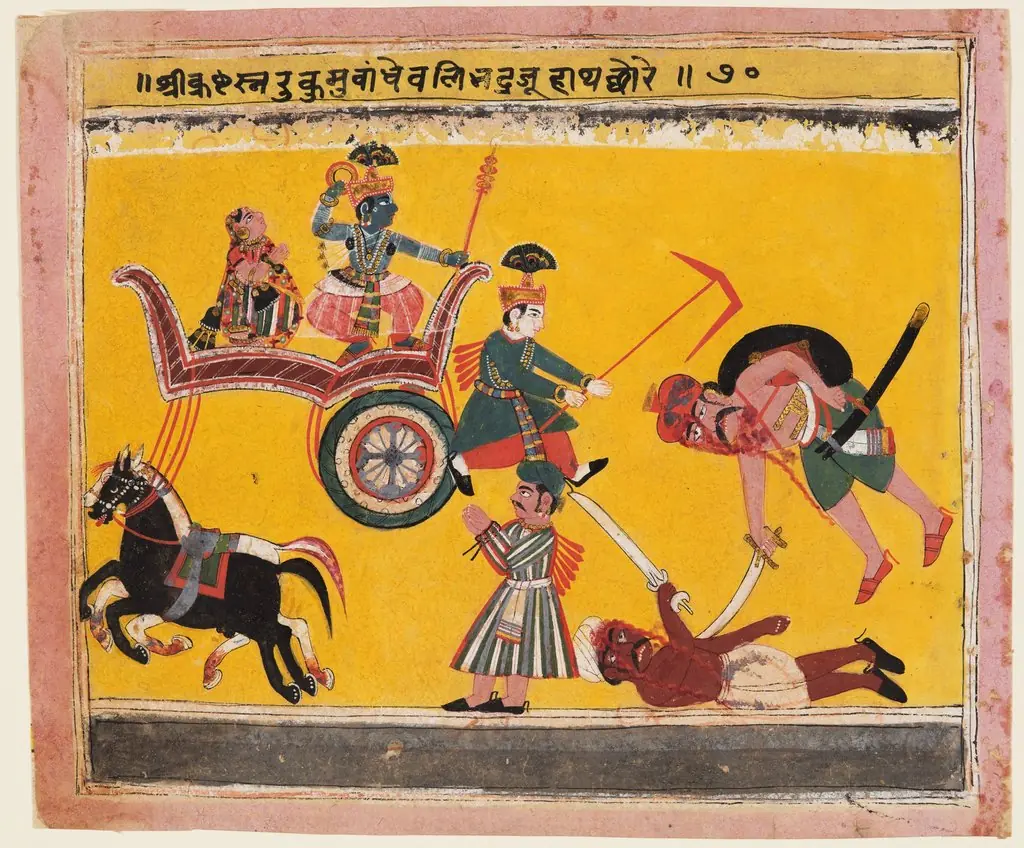 Abduction of Rukmini: Krishna Tied the Hands of Rukma, from a Bhagavata Purana
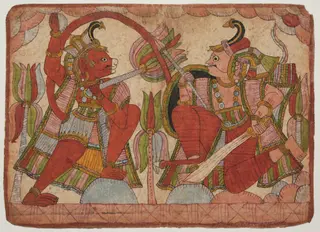 Scene from the Ramayana
 Abduction of Rukmini: Krishna Tied the Hands of Rukma, from a Bhagavata Purana
 Scene from the Ramayana
 Untitled
 Shiva Intercedes for Vanasura: Scene from the Aniruddha Usha Section of Krishna Lila