Artwork
Echipa de bob a României, campioni mondiali la Schreiberhau, Germania, 1933
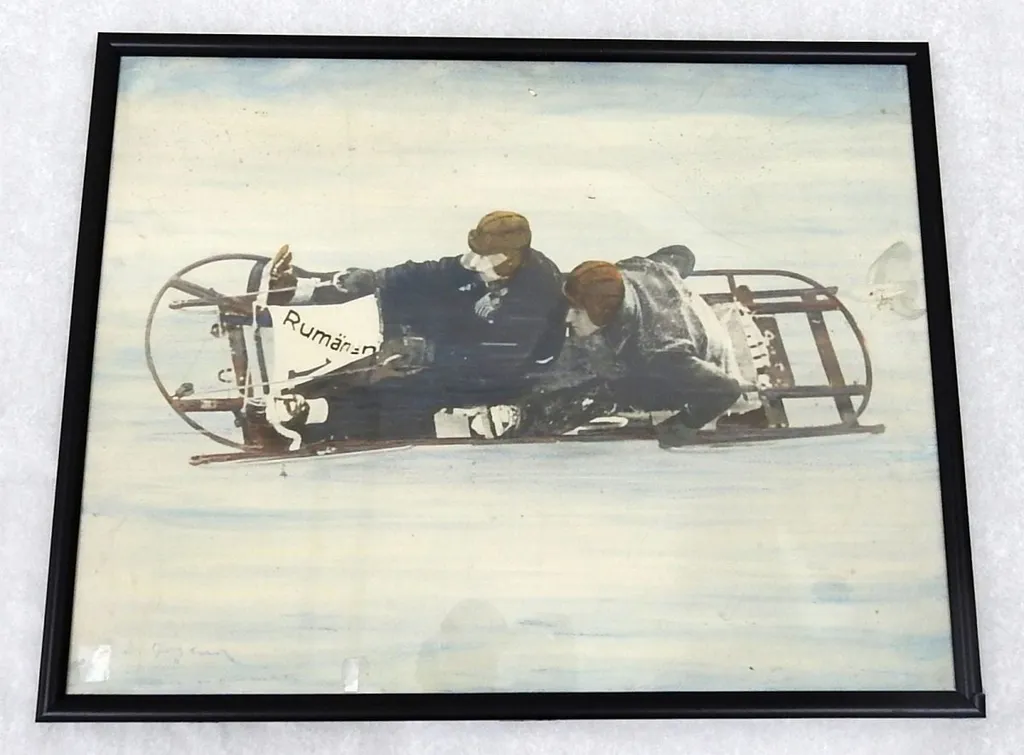
Echipa de bob a României, campioni mondiali la Schreiberhau, Germania, 1933 is a print by Unknown. It dates from 1933 and is held in the collection of the sports museum.
About this work
Look up the Museum of Ethnography in Cluj to see more winter sports art from that era.
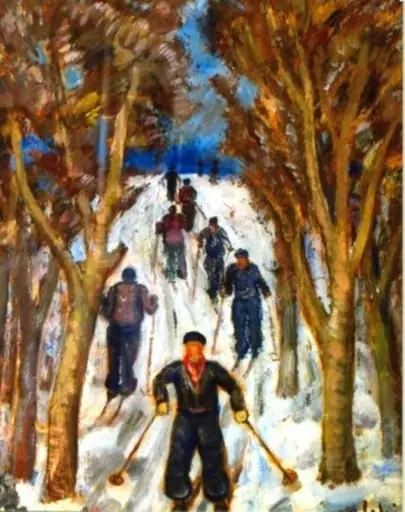
This print shows Romania’s four-man bobsled team on a snowy track in Germany, 1933. They stand in a tight line, each gripping a sled handle. Their wool uniforms look heavy with frost and pride.
The photo isn’t a painting, it’s a print made from a small original painting. That makes it rare: most bobsled images from the 1930s were just photos.
Look up the Museum of Ethnography in Cluj to see more winter sports art from that era.
Overview
This image is a printed reproduction derived from a small original painting, depicting Romania’s four-man bobsled team after their 1933 world championship win in Schreiberhau, Germany. Unlike typical photographic records of the era, this artwork was created as a painted composition and later reproduced, making it an uncommon visual artifact of early 20th-century winter sports in Eastern Europe.
Subject & Meaning
The team stands in disciplined formation, hands gripping their sled’s handles, uniforms thick with frost. Their posture conveys quiet triumph rather than exuberance, reflecting the solemn pride of a national achievement. The image elevates athletic accomplishment into a symbol of collective effort and national identity during a period when Romania sought recognition on international stages.
Technique & Style
The work originated as a painted study, likely executed in tempera or oil on a small panel, then transferred to a printed format. The rendering emphasizes texture, frost-laden wool, metallic sled parts, through controlled brushwork and muted tones. The composition is formal and static, prioritizing clarity and dignity over motion, aligning with the era’s documentary aesthetic in sports portraiture.
History & Provenance
Created shortly after Romania’s 1933 world title in Schreiberhau, the painting was reproduced for public circulation, possibly as a commemorative item. Its survival as a print suggests institutional or state sponsorship. The original painting’s current location is unconfirmed, but related materials may be held in the Museum of Ethnography in Cluj, which preserves regional winter sports imagery from the interwar period.
Context
In the early 1930s, bobsledding was a niche but prestigious winter sport in Europe, dominated by Alpine nations. Romania’s victory was unexpected and marked a rare moment of international athletic success. The choice to commission a painted image, rather than rely on photography, indicates a desire to frame the achievement as culturally significant, not merely sporting.
Legacy
As one of few painted representations of Romanian winter sports from the period, the image offers insight into how athletic triumphs were visually memorialized outside mainstream media. Its rarity underscores the limited documentation of Eastern European participation in international winter sports, making it a valuable artifact for understanding national identity through sport in interwar Romania.
Artist & collection








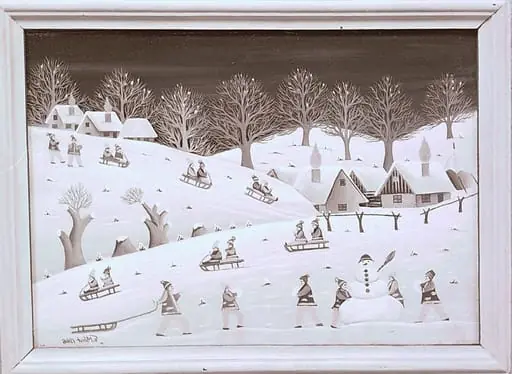
- Sequences from the Village Museum, naive painting by Petru Mihuțe - Children at sling (1988)
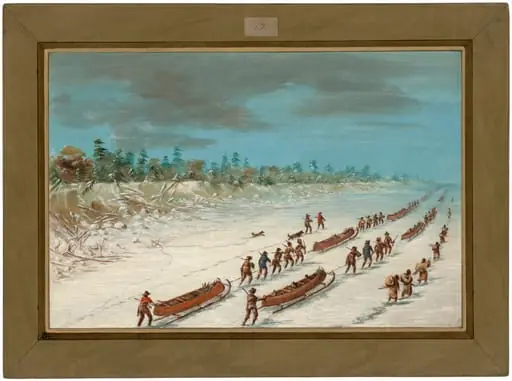 La Salle Crossing Lake Michigan on the Ice. December 8, 1681
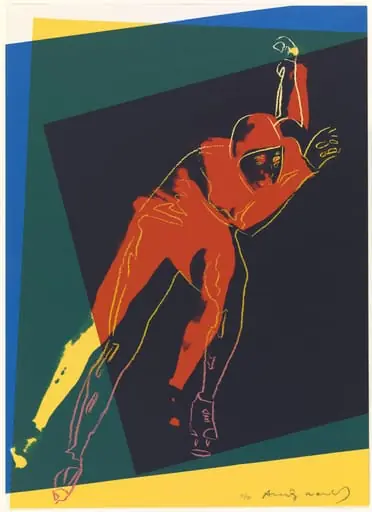 Untitled
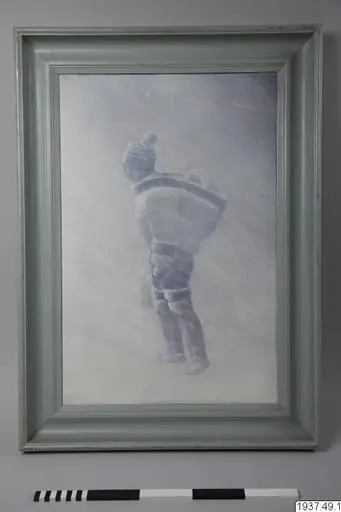 board, painting, graphics,
 'Cagoule'
 Painting
 Untitled
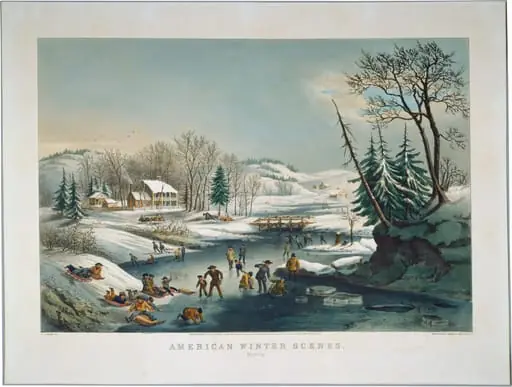 American Winter Scenes: Morning
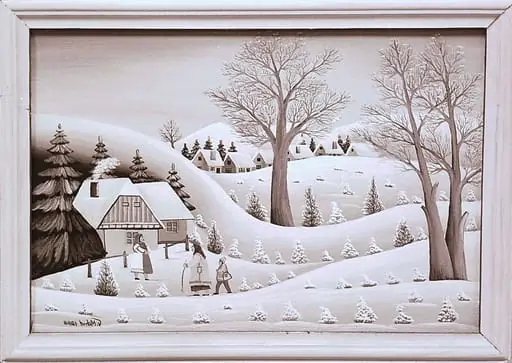 Sequences from the Village Museum, naive painting by Petru Mihuțe - The beggar (1988)
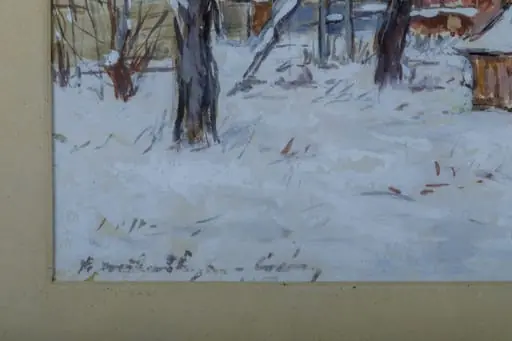 Din curtea mea
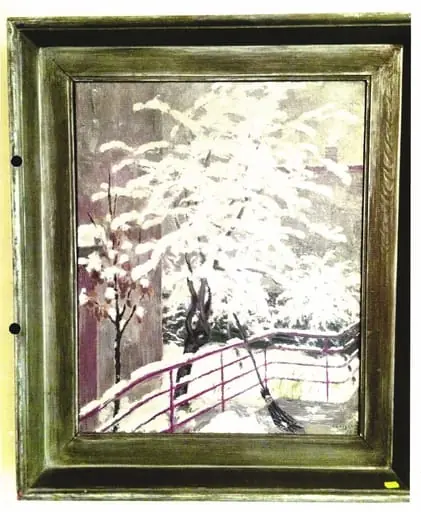 Prima zăpadă
 Peisaj cu schiori