Artwork
La Salle Crossing Lake Michigan on the Ice. December 8, 1681
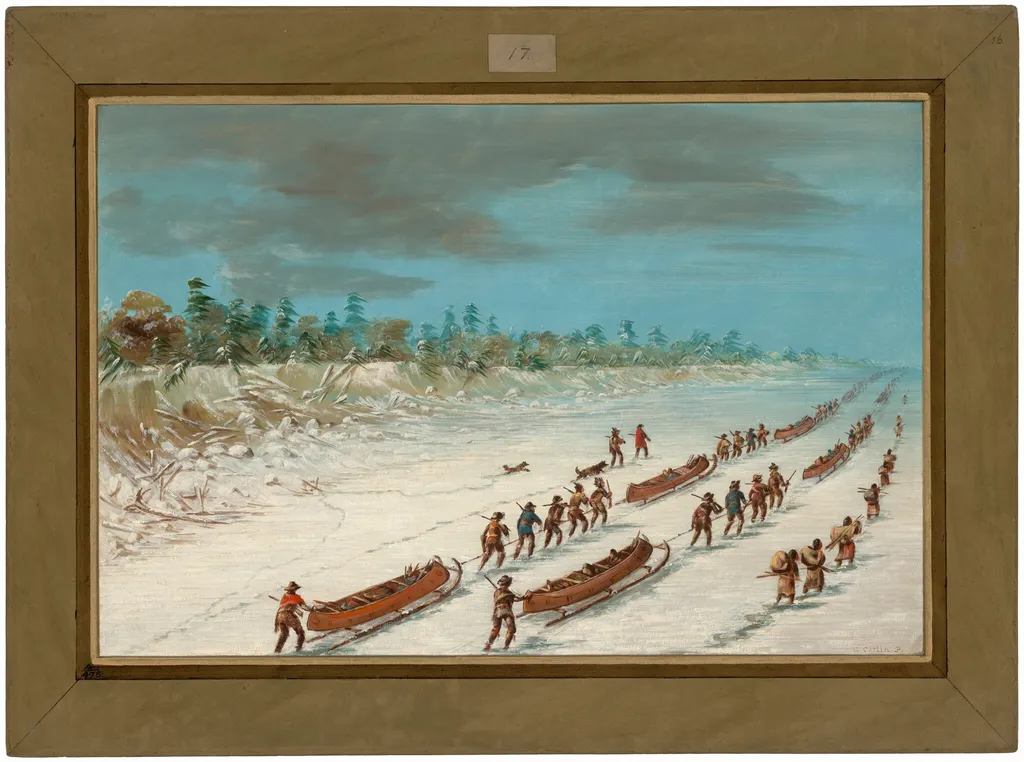
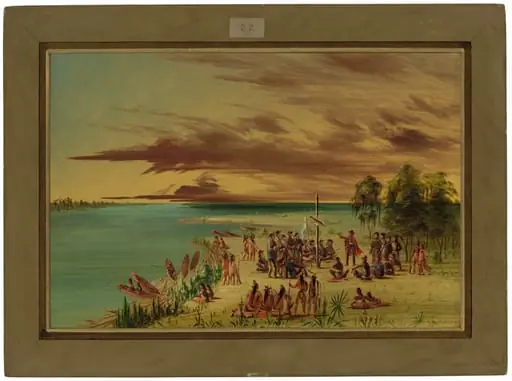
La Salle Crossing Lake Michigan on the Ice. December 8, 1681 is an oil painting by the Romanticist artist George Catlin. It dates from 1848 and is held in the collection of the National Gallery of Art.
- Inscription
- Inscribed:lower right: G. Catlin p.
About this work
Subject & Meaning
The visual composition includes representations of a boat and trees, which serve as the primary iconographic elements anchoring the narrative scene.
The painting depicts the historical event of La Salle crossing Lake Michigan on ice, specifically dated to December 8, 1681. As a work of history painting created by George Catlin in 1850, the subject centers on this specific moment of exploration. The visual composition includes representations of a boat and trees, which serve as the primary iconographic elements anchoring the narrative scene.
The artwork functions as a commemorative record of this 17th-century expedition, capturing the figures and setting associated with the crossing.
Technique & Style
The work titled La Salle Crossing Lake Michigan on the Ice, painted in 1850, is executed in oil on canvas. The support is a canvas substrate, and the pigment medium consists of oil paint applied to achieve a realistic depiction of a frozen lake scene. The composition centers on a small boat and a solitary tree, rendered with careful attention to atmospheric depth and the texture of ice.
The painting measures 37.8 cm in height and 56.4 cm in width, reflecting the scale typical of Catlin’s historical narratives. Its formal qualities emphasize the contrast between the stark white ice and the darker forms of the boat and tree, creating a balanced yet dynamic visual rhythm.
History & Provenance
George Catlin created the oil-on-canvas painting La Salle Crossing Lake Michigan on the Ice in 1850. The work remained in the artist's possession until his death in 1872, after which it passed by descent to his three daughters: Clara Gregory Catlin, Louise Catlin Kinney, and Elizabeth Wing Catlin. In 1912, the American Museum of Natural History acquired the piece from Elizabeth Wing Catlin.
The museum sold the painting in 1959 through Kennedy Galleries in New York to collector Paul Mellon of Upperville, Virginia. Mellon subsequently donated the work to the National Gallery of Art in Washington, D.C., in 1965, where it remains part of the collection.
La Salle Crossing Lake Michigan on the Ice is held by the National Gallery of Art in Washington, D.C. The painting entered the museum’s collection in 1965 as a gift from Paul Mellon, who had acquired it in 1959 through Kennedy Galleries from the estate of Elizabeth Wing Catlin. Prior to that, it had been owned by the American Museum of Natural History after its purchase from the Catlin family in 1912. The work is catalogued as part of the Mellon gift accession.
Context
La Salle Crossing Lake Michigan on the Ice, an 1850 oil on canvas history painting by George Catlin, illustrates the 1681 crossing of Lake Michigan by the French explorer René-Robert Cavelier, Sieur de La Salle. The work belongs to Catlin’s broader series documenting early American exploration and frontier encounters, a focus that figures prominently in scholarship on his contribution to 19th‑century American art. Measuring 37.8 cm by 56.4 cm, the canvas entered the National Gallery of Art, Washington, D.C., in 1965 after a sale to Paul Mellon via Kennedy Galleries; its provenance traces back to the artist’s descendants.
Art historical analyses place the painting within the tradition of history painting and note its significance for representing early exploration in United States visual culture.
Overview
George Catlin's 1848 oil on canvas, La Salle Crossing Lake Michigan on the Ice, December 8, 1681, captures a specific moment from early American exploration. This painting is an example of a history painting, a genre that often depicts significant historical events. It portrays the French explorer René-Robert Cavelier, Sieur de La Salle, navigating the frozen expanse of Lake Michigan, underscoring a theme of human endeavor against natural elements.
Own this work as a print
Artist & collection

Artist
George Catlin ( KAT-lin; July 26, 1796 – December 23, 1872) was an American lawyer, painter, author, and traveler, who specialized in portraits of Native Americans in the American frontier.

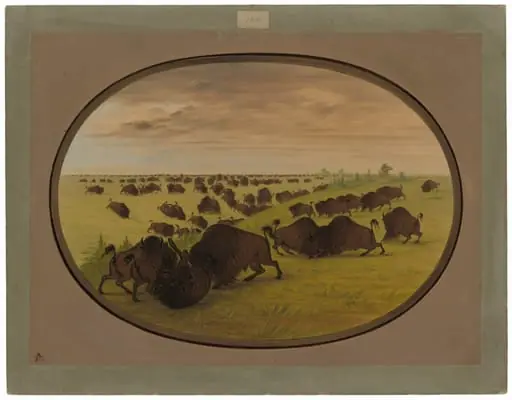 Bulls Fighting
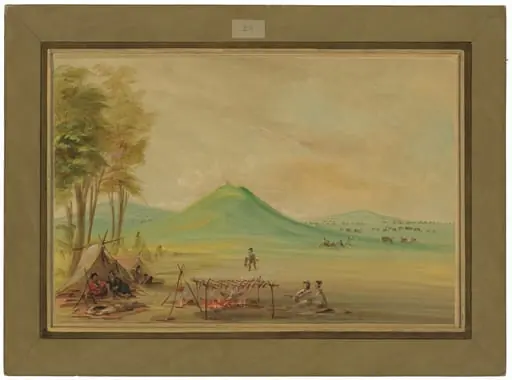 Expedition Encamped on a Texas Prairie. April 1686
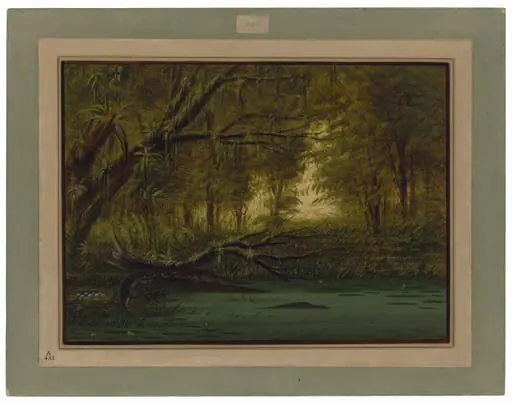 An Alligator's Nest
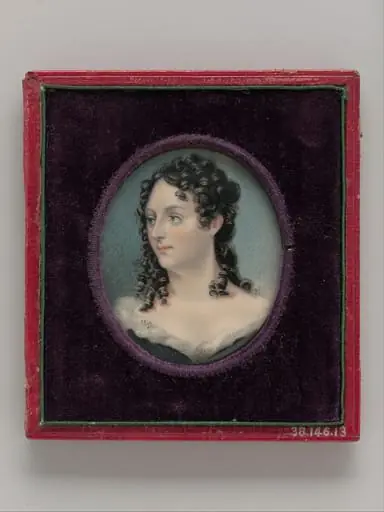 Mrs. George Catlin (Clara Bartlet Gregory)
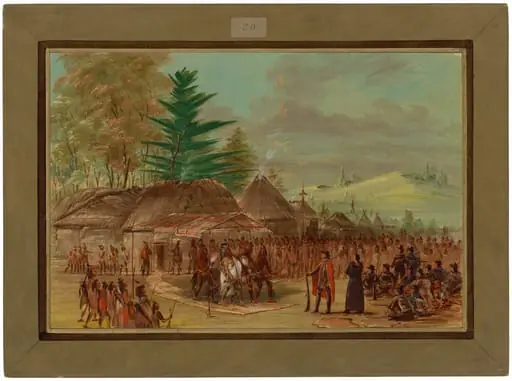 Chief of the Taensa Indians Receiving La Salle. March 20, 1682
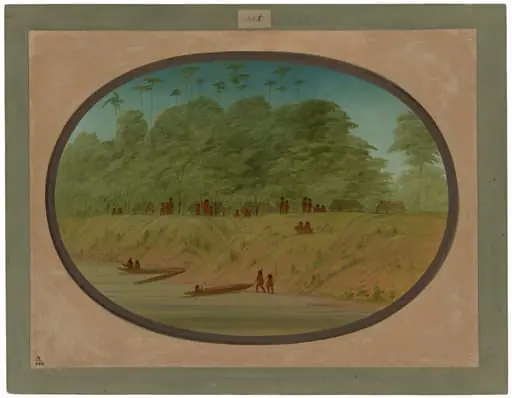 A Small Village - Payaguas Indians
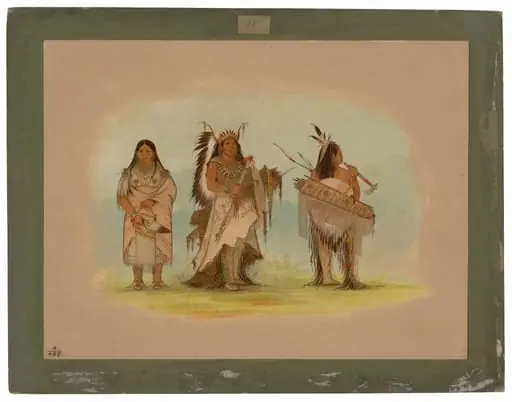 Omaha Chief, His Wife, and a Warrior
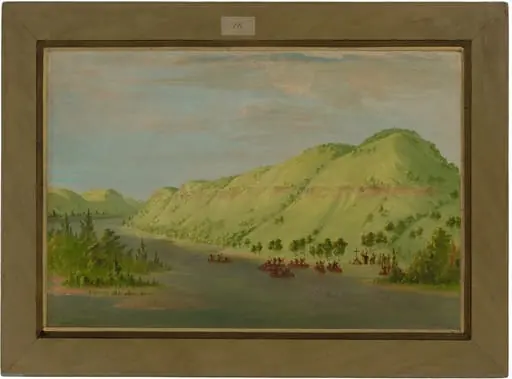 Father Hennepin Leaving the Mississippi to Join La Salle. May 8, 1680
- La Salle and Party Arrive at the Village of the Illinois. January 1, 1680
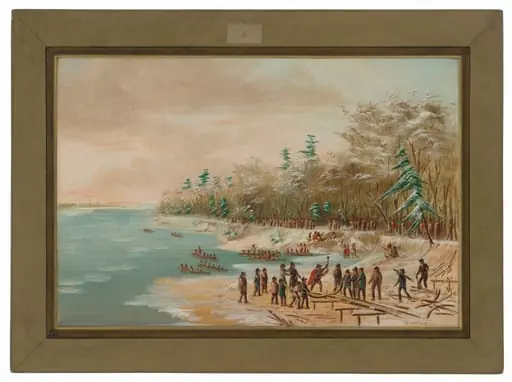 La Salle Driving the First Bolt for the Griffin. January 26, 1679
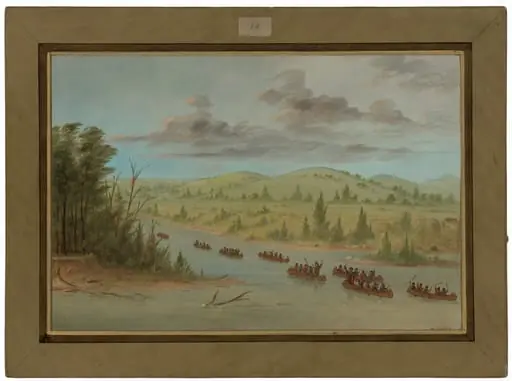 La Salle's Party Entering the Mississippi in Canoes. February 6, 1682
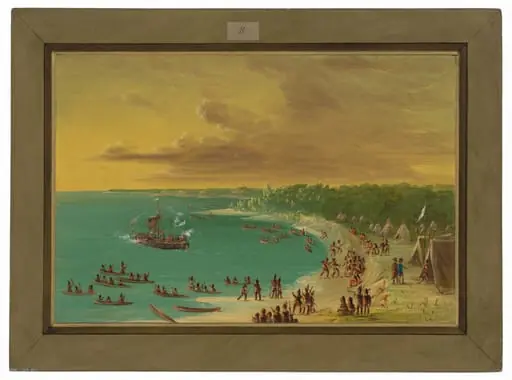 First Sailing of the Griffin on Lake Erie. August 7, 1679
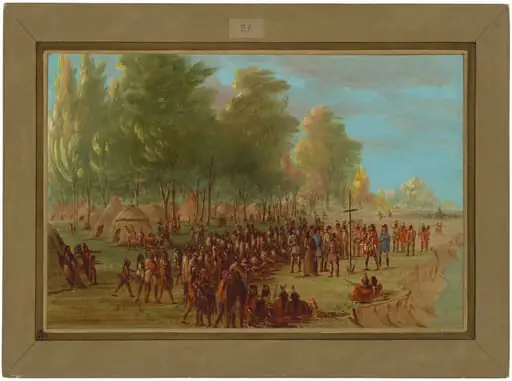 La Salle Erecting a Cross and Taking Possession of the Land. March 25, 1682
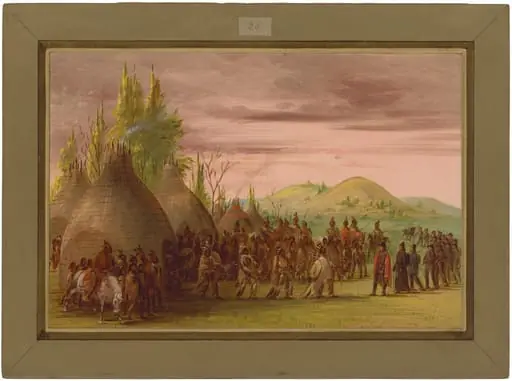 La Salle Received in the Village of the Cenis Indians. May 6, 1686
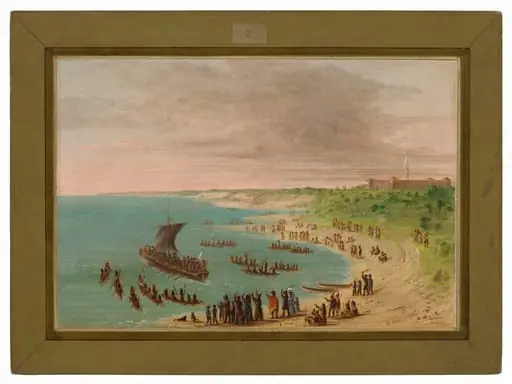 The Expedition Leaving Fort Frontenac on Lake Ontario. November 18, 1678
 La Salle Claiming Louisiana for France. April 9, 1682