Artwork
牡丹に唐獅子図絵馬 「奉掛絵馬慶 安二年三月廿五日」|Ema (Votive Painting) of Chinese Lion and Peony Tree
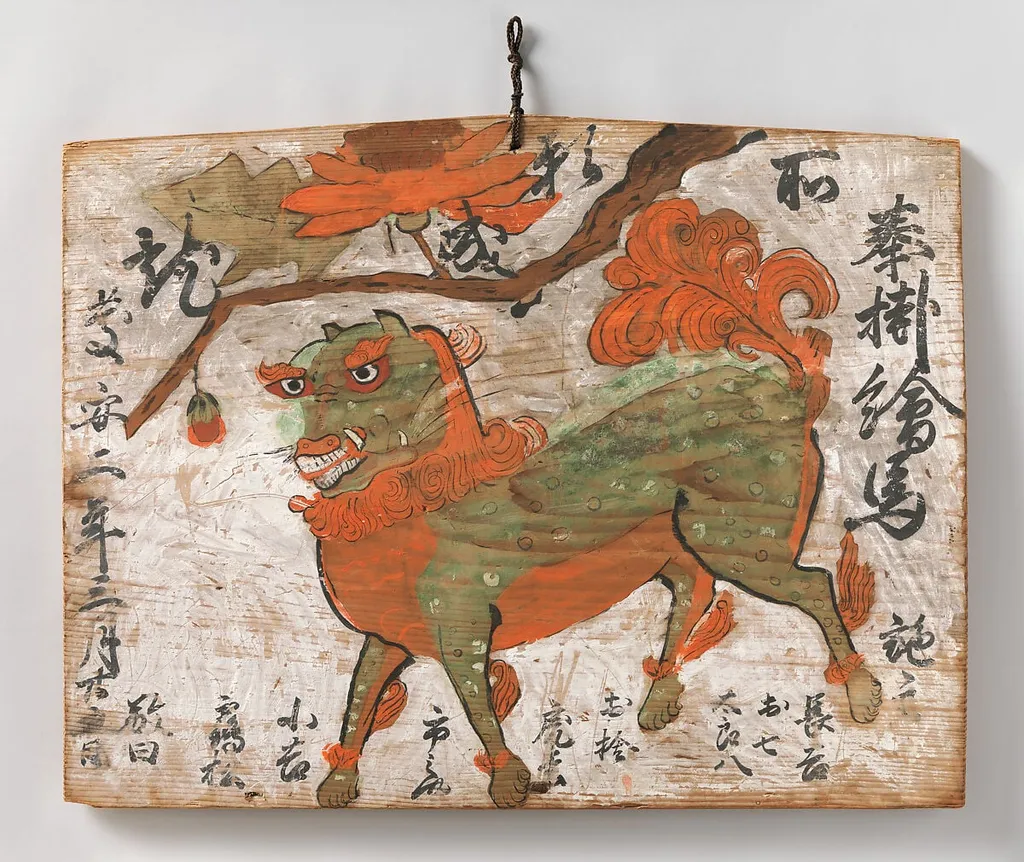
牡丹に唐獅子図絵馬 「奉掛絵馬慶 安二年三月廿五日」|Ema (Votive Painting) of Chinese Lion and Peony Tree is an ink painting. It dates from 1649 and is held in the collection of the Metropolitan Museum of Art. This ema (votive painting) is a wooden board featuring a Chinese lion and a peony tree, executed in ink and color.
About this work
The lion, a Chinese symbol of power, was probably meant to scare off bad luck.
This wooden board shows a snarling lion standing over a peony bush. Bright red and green paint pops against the plain wood.
It’s a ema, a Japanese prayer plaque people hung at shrines to ask for help. The lion, a Chinese symbol of power, was probably meant to scare off bad luck. The date, 1649, is carved right into the paint.
If you like bold, simple designs, look up japan for more paintings like this.
Subject & Meaning
The work depicts a Chinese lion, a mythical creature often associated with protection and power in East Asian iconography, standing amidst peony blossoms. In this Ema (votive painting) tradition, the lion serves as a guardian figure, while the peony symbolizes wealth, honor, and prosperity. The combination of these elements reflects a prayer for safety and abundance, consistent with the devotional purpose of votive offerings hung at shrines.
The imagery draws on established symbolic associations where the lion wards off evil and the flower represents high status and flourishing fortune.
Technique & Style
Executed in 1649, the ema employs ink and opaque mineral pigments applied to a wooden plank support, with the lion and peony rendered in bold, flat washes and outlined in fine ink lines typical of early Edo-period votive panels.
The composition is organized around a large peony in full bloom to the right and a recumbent Chinese lion below, its shaggy mane articulated with short, layered brushstrokes that suggest volume while retaining a decorative flatness. Stylistic features include the use of tarashikomi for petal edges and a restrained palette dominated by mineral reds, greens, and indigo against the natural wood ground.
History & Provenance
Created in Japan in 1649, this votive painting bears the specific dedication date of the 25th day of the third month of the Keian era. The work was produced by an anonymous artist using ink and color applied to a wooden panel. As an ema, it was commissioned for religious devotion, likely intended to be hung at a shrine. The piece is currently held in the collection of the Metropolitan Museum of Art.
Context
The painting is a 1649 ink and color work on wood depicting a Chinese lion amid peonies, created in Japan and now held by the Metropolitan Museum of Art. It is classified as a religious votive painting, reflecting devotional practices of the Edo period. Scholarship emphasizes its role within anonymous East Asian devotional art, situating it in the broader context of 17th-century Japanese religious imagery.
The work’s composition and iconography have been studied for insights into cross-cultural exchange, particularly the transmission of Chinese lion symbolism into Japanese visual culture. Its stylistic analysis contributes to understanding anonymous painter workshops in Edo-period Japan.
Overview
This ema (votive painting) is a wooden board featuring a Chinese lion and a peony tree, executed in ink and color. Dated to 1649, it was intended for hanging at a shrine as a prayer plaque.
Artist & collection

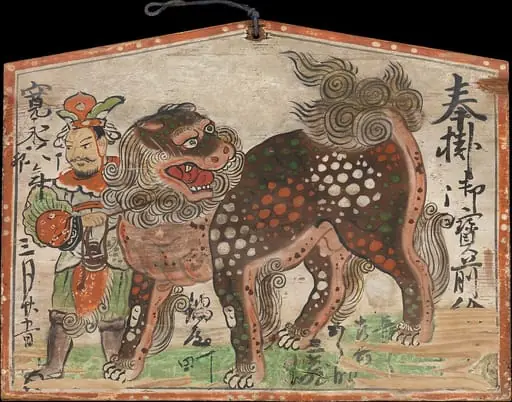
- 優闐王と唐獅子図絵馬「奉掛御宝前 絵馬 寛永丁卯年三月廿五日」|Ema (Votive Painting) of Chinese Lion Led by Utenō
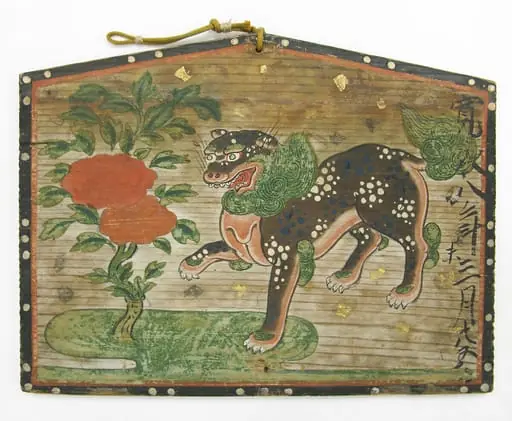 水辺に牡丹と唐獅子図絵馬「寛永八 年末三月廿五日」|Ema (Votive Painting) of a Chinese Lion and Peony Tree by Flowing Water
 唐 法慧等 菩薩像二幅|Two Buddhist Paintings
 明 佚名 柳馬圖 冊頁|Horse and Willow Tree
 Lions and Tigers in Peony and Bamboo
 Lions and Tigers in Peony and Bamboo
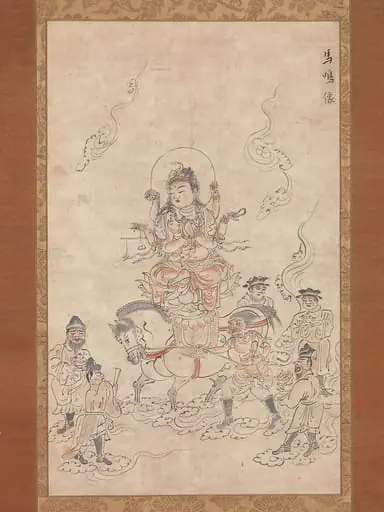 馬鳴菩薩図像|Iconographic Drawing of the Bodhisattva Memyō (Ashvaghosha)