Artwork
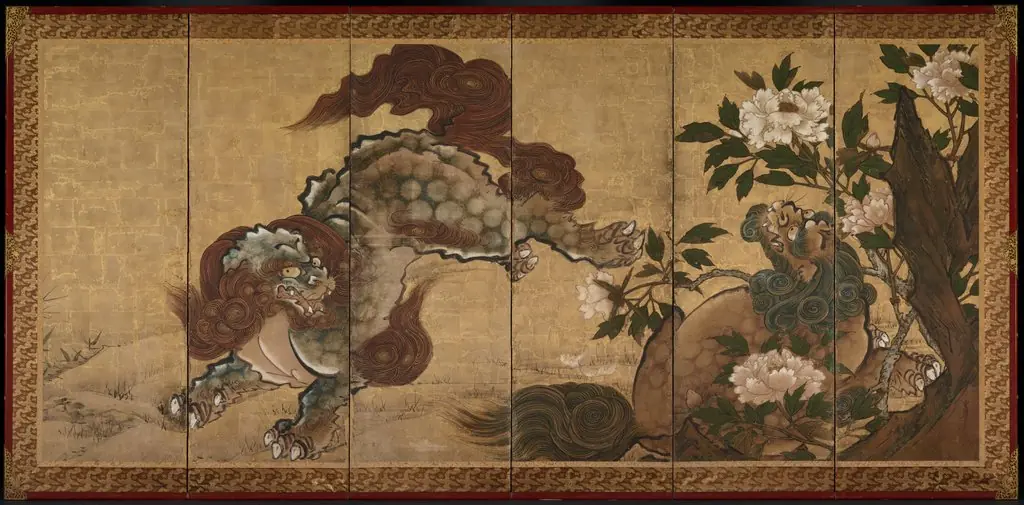
水辺に牡丹と唐獅子図絵馬「寛永八 年末三月廿五日」|Ema (Votive Painting) of a Chinese Lion and Peony Tree by Flowing Water
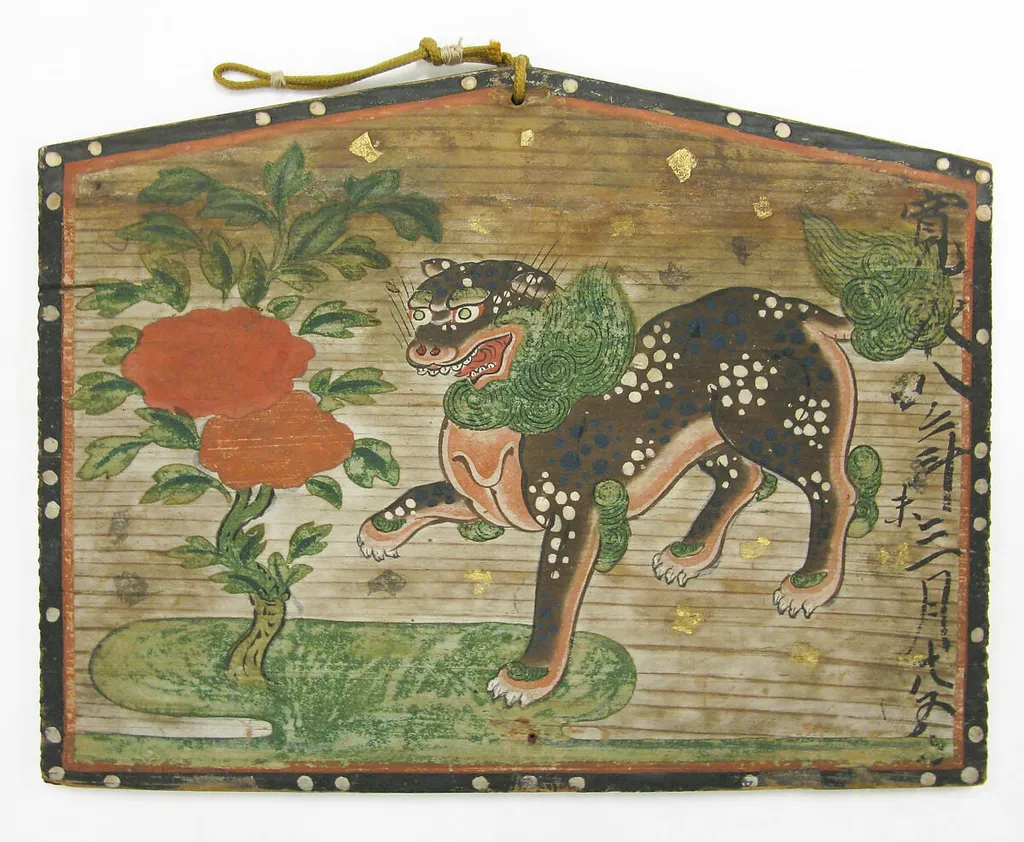
水辺に牡丹と唐獅子図絵馬「寛永八 年末三月廿五日」|Ema (Votive Painting) of a Chinese Lion and Peony Tree by Flowing Water is an ink painting. It dates from 1631 and is held in the collection of the Metropolitan Museum of Art.
- Accession no.
- 1975.268.139
- Credit line
- The Harry G. C. Packard Collection of Asian Art, Gift of Harry G. C. Packard, and Purchase, Fletcher, Rogers, Harris Brisbane Dick, and Louis V. Bell Funds, Joseph Pulitzer Bequest, and The Annenberg Fund Inc. Gift, 1975
About this work
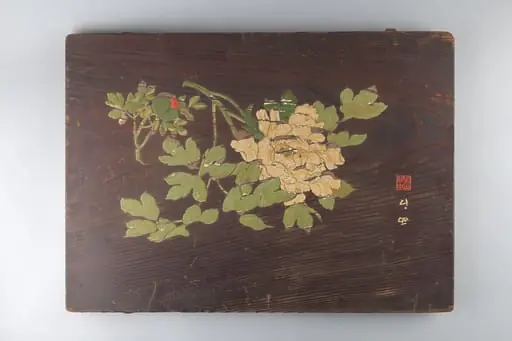
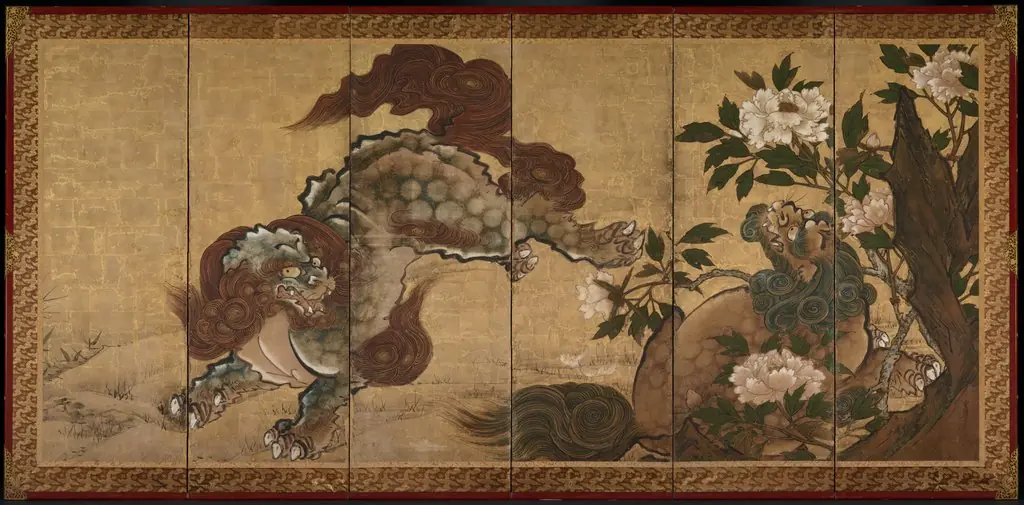
You see a wooden board painted with a gold-leaf lion, peonies, and a stream.
This is an ema, a Japanese prayer plaque. People hung it at a shrine in 1631 to ask for help. The lion isn’t a real animal; it’s a Chinese guardian symbol. The gold leaf makes it glow like a wish.
Look up Japan for more paintings like this.
Subject & Meaning
The lion represents power, protection, and guardianship, while the peony is revered as the "king of flowers," symbolizing wealth, honor, and prosperity.
This 1631 Japanese votive painting, or ema, depicts a Chinese lion (karajishi) positioned near a peony tree beside flowing water. The composition combines these elements within a religious context, using ink, color, and gold leaf on a wooden support.
In traditional East Asian iconography, the pairing of lion and peony is highly symbolic. The lion represents power, protection, and guardianship, while the peony is revered as the "king of flowers," symbolizing wealth, honor, and prosperity. The flowing water adds connotations of purity or the continuous flow of life.
As an ema, the work functioned as a dedicated offering at a shrine or temple, where the motifs collectively expressed the donor's prayers for safety, fortune, and divine favor.
Technique & Style
Created in 1631, this votive painting is executed on a wooden support using ink, color, and gold leaf. The work depicts a Chinese lion and a peony tree situated by flowing water, rendered in a style characteristic of religious Japanese art from the early Edo period. The composition balances the dynamic form of the lion against the floral elements, using gold leaf to enhance the visual richness of the scene. The physical dimensions measure 18.7 cm in height and 24.8 cm in width.
History & Provenance
Created in 1631 in Japan, this votive painting (ema) depicts a Chinese lion and a peony tree near flowing water, executed in ink, color, and gold leaf on a wooden support. The artist is unknown, but the piece bears an inscription dating it to the third month of the eighth year of the Kan'ei era. It entered the collection of the Metropolitan Museum of Art, New York, where it is held and measures 18.7 by 24.8 cm. No further details of original commission or intermediate ownership are provided, no accession number is listed, and the sources record no exhibition history.
Context
The painting, dated 1631 and recorded in the Metropolitan Museum of Art collection, exemplifies early Edo-period religious votive art in Japan. Its anonymous authorship and depiction of a Chinese lion amid a peony tree reflect the period's tendency to incorporate continental motifs within a Buddhist-Shinto visual language. Its classification as a religious painting indicates a ritual function within a shrine or temple context.
The work's dimensions, its medium of ink, color, and gold leaf on wood, and its placement in a Western museum illustrate the transnational circulation of Japanese Edo art, while the fusion of Chinese iconography with local devotional practice marks its place in cross-cultural artistic exchange.
Overview
This wooden votive plaque, dated to the twenty‑fifth day of the third month in the eighth year of the Kan’ei era (1631), depicts a stylized Chinese guardian lion, a cluster of peonies, and a flowing stream. Executed in ink, pigments, and gold leaf, the work functions as an ema, an object offered at a Shinto shrine for petitioning divine assistance.
Artist & collection