Artwork
優闐王と唐獅子図絵馬「奉掛御宝前 絵馬 寛永丁卯年三月廿五日」|Ema (Votive Painting) of Chinese Lion Led by Utenō
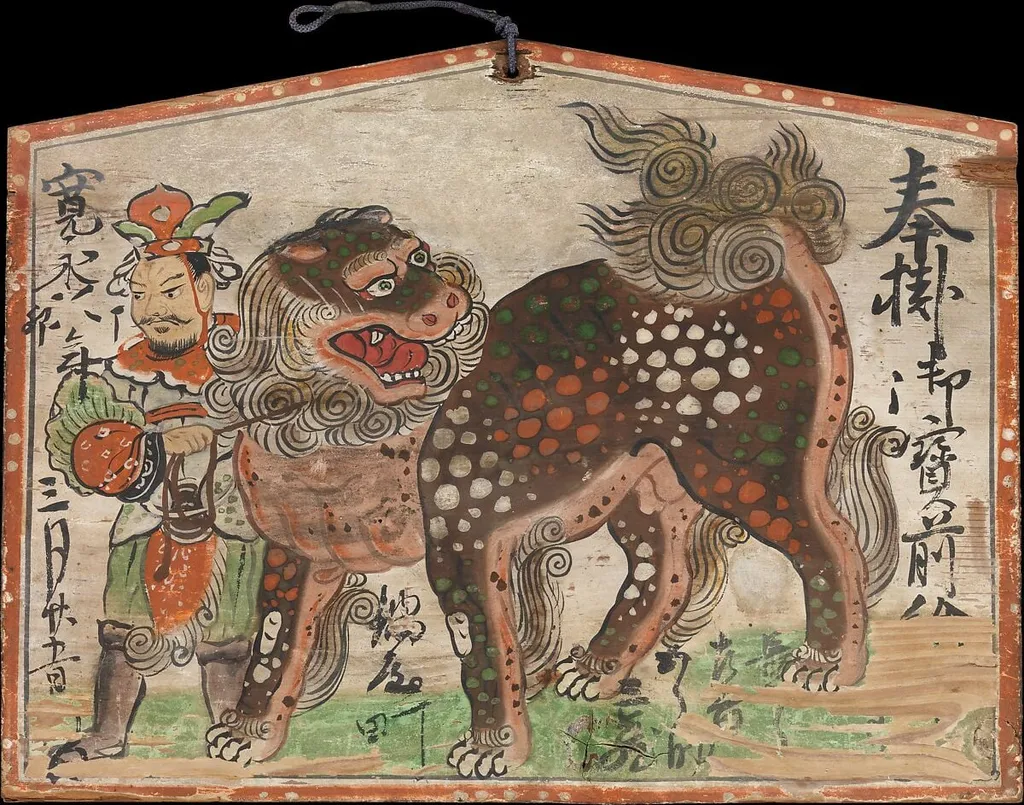
優闐王と唐獅子図絵馬「奉掛御宝前 絵馬 寛永丁卯年三月廿五日」|Ema (Votive Painting) of Chinese Lion Led by Utenō is an ink painting. It dates from 1627 and is held in the collection of the Metropolitan Museum of Art. This votive plaque, an ema, consists of a wooden board painted with ink and color.
About this work
The lion isn’t a real animal in Japan; it’s a Chinese symbol of power, brought over in stories and art.
You see a wooden board painted with a man leading a big, curly-maned lion on a red leash.
This is a ema, a Japanese prayer plaque. People hung these at shrines to ask for help or say thanks. The date carved on it, 1627, makes it one of the oldest surviving examples. The lion isn’t a real animal in Japan; it’s a Chinese symbol of power, brought over in stories and art.
Look up ema at The Metropolitan Museum of Art to see more of these painted wishes.
Subject & Meaning
The ema depicts a Chinese-style lion led by a figure identified as Utenō, rendered in ink and color on wood. The lion, a symbol of protection and power in East Asian iconography, is shown in a stylized, ceremonial manner consistent with depictions of guardian lions in Japanese art of the period.
Utenō, likely a deity or revered figure, holds a leading rope attached to the lion’s mouth, emphasizing control and guidance. This composition reflects the ema’s votive function, where such imagery was believed to invoke blessings or protection when displayed at shrines or temples.
Technique & Style
Created in 1627, this votive painting (ema) is executed in ink and color applied directly onto a wooden support. The work measures 27.3 cm in height and 36.5 cm in width. Stylistically, it depicts a man leading a Chinese lion, adhering to the religious genre typical of Japanese ema intended for temple offerings.
The anonymous artist utilized traditional materials to render the figures, combining ink outlines with colored pigments on the wood panel.
History & Provenance
The work known as 'Utenō and the Tang Lion' is housed in the collection of the Metropolitan Museum of Art in New York. It is listed as part of the museum's holdings of Japanese religious paintings, though no accession number is provided in the source material. The painting, created in 1627 using ink and color on wood, portrays a lion accompanied by a man and is categorized under religious art. Exhibition histories for this piece are not documented in the referenced sources.
Context
The 1627 votive ema titled 'Utenō and the Chinese Lion' portrays a lion guided by the figure Utenō and belongs to the religious paintings genre of early Edo Japan. Executed in ink and color on wood, the work measures 27.3 cm by 36.5 cm and is held in the Metropolitan Museum of Art, where it is catalogued as an anonymous piece. Scholarship emphasizes its role in illustrating cross‑cultural motifs within Japanese devotional art and situates it among contemporaneous ema that functioned as prayer offerings.
Although the anonymity of the creator limits direct stylistic attribution, comparative analyses highlight its technical refinement and its significance for understanding artistic exchange between China and Japan during the Kanei era.
Overview
This votive plaque, an ema, consists of a wooden board painted with ink and color. The central image shows a figure, identified as the Chinese ruler Utenō, guiding a large, curly‑maned lion on a red leash. The plaque bears the date 1627 (Kan'ei 4, 3rd month, 25th day), placing it among the earliest surviving examples of painted ema.
Legacy
As one of the oldest dated painted ema, the plaque serves as a reference point for scholars studying the evolution of shrine votive art and the integration of Chinese motifs into Japanese religious expression.
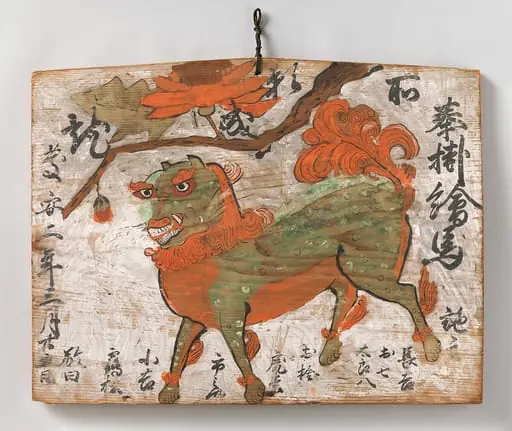
Artist & collection

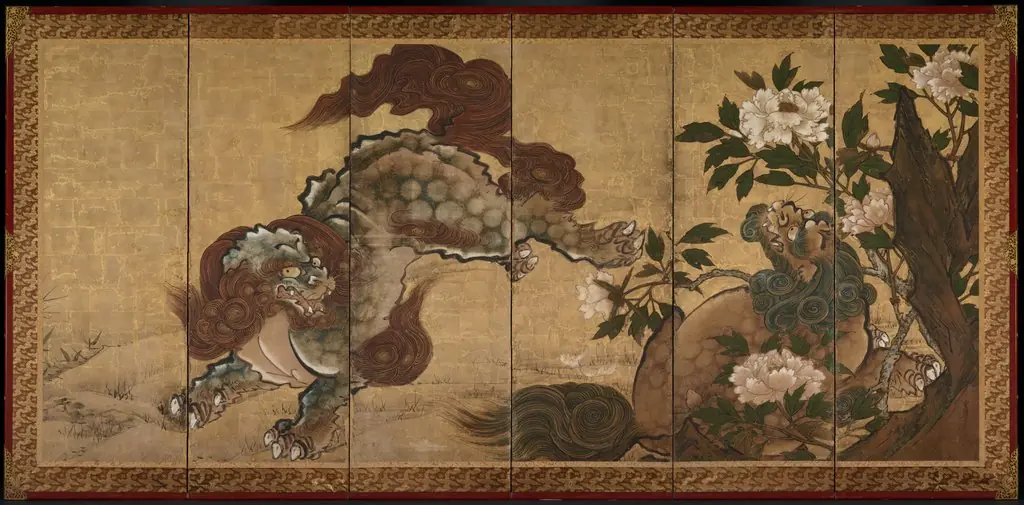
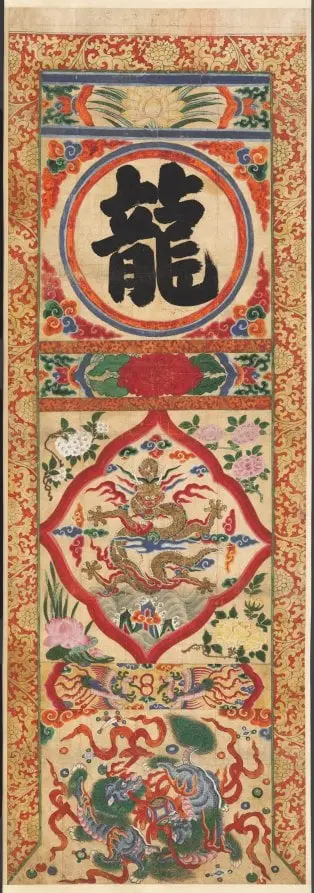
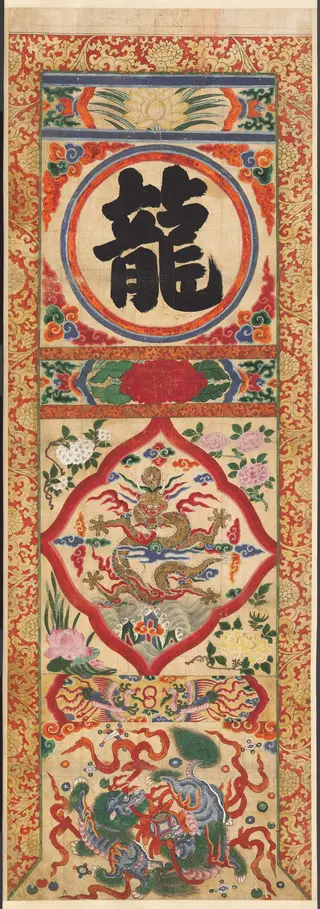
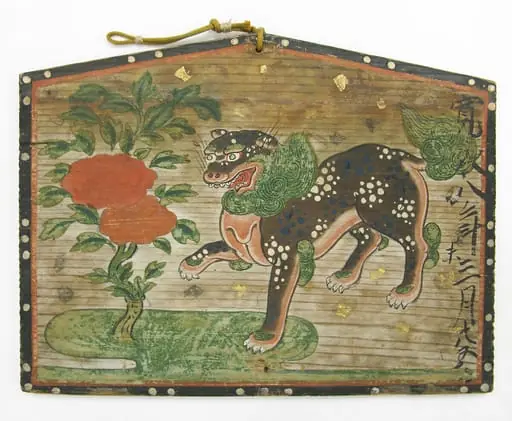
- 牡丹に唐獅子図絵馬 「奉掛絵馬慶 安二年三月廿五日」|Ema (Votive Painting) of Chinese Lion and Peony Tree
 水辺に牡丹と唐獅子図絵馬「寛永八 年末三月廿五日」|Ema (Votive Painting) of a Chinese Lion and Peony Tree by Flowing Water
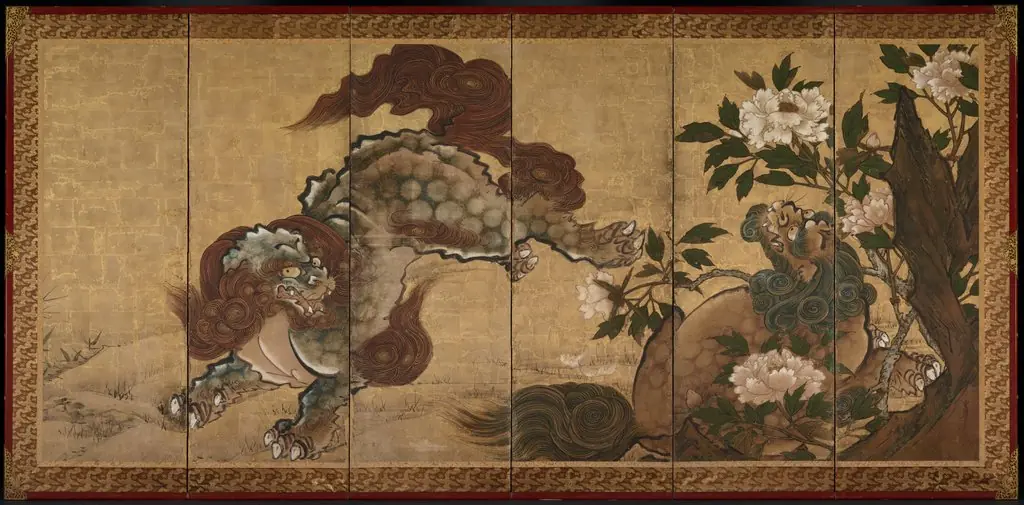
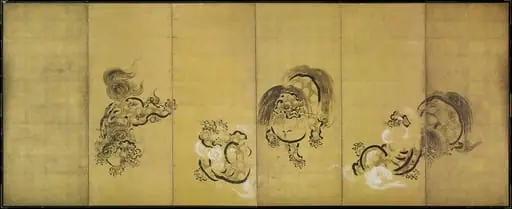 舞楽図屏風 ・唐獅子図屏風|Bugaku Dances (front); Chinese Lions (reverse)
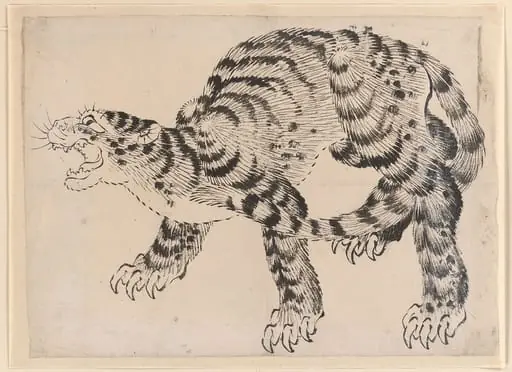
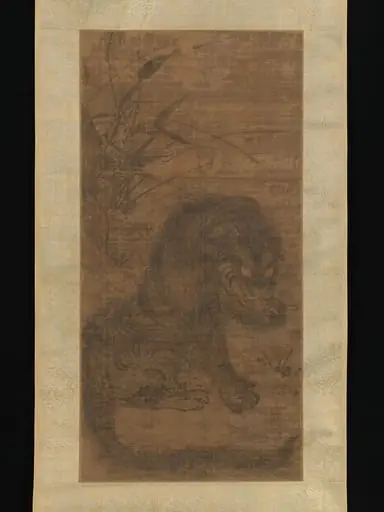 元 佚名 龍虎圖 軸|Tiger
 無款 清末 京劇一百人物像 冊 絹本|One hundred portraits of Peking opera characters