Artwork
Scenes from the Tales of Ise
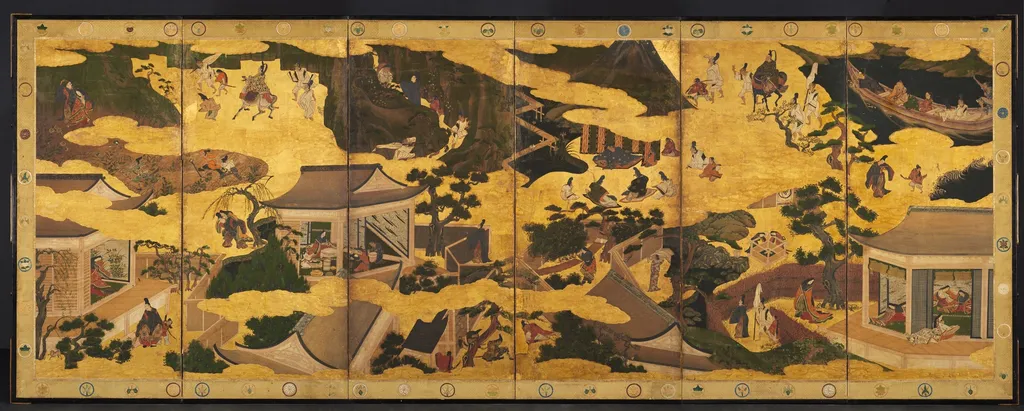
Scenes from the Tales of Ise is an unspecified painting. It dates from 1660 and is held in the collection of the Cleveland Museum of Art.
About this work
History & Provenance
The painting was produced during the mid-17th century in Japan, aligning with the broader tradition of narrative scroll painting in the ukiyo-e school.
Scenes from the Tales of Ise is a 1660 painting created in Japan, depicting moments from the classical Japanese poetry anthology Ise Monogatari. The work entered the Cleveland Museum of Art collection, where it remains on view today.
The painting was produced during the mid-17th century in Japan, aligning with the broader tradition of narrative scroll painting in the ukiyo-e school. It was later acquired by the Cleveland Museum of Art, which catalogues it under the accession number 1969.127.2. The museum's records confirm its provenance as part of its permanent collection since the mid-20th century.
Scenes from the Tales of Ise is held at the Cleveland Museum of Art, where it is cataloged under accession number 1969.127.2. The work dates to 1660 and originates from Japan. It has been part of the museum’s collection since at least the mid-20th century, reflecting its established presence in institutional holdings.
The painting was included in the Cleveland Museum of Art’s exhibition "Japanese Art from the Collection," highlighting its significance within the museum’s Japanese art holdings.
Overview
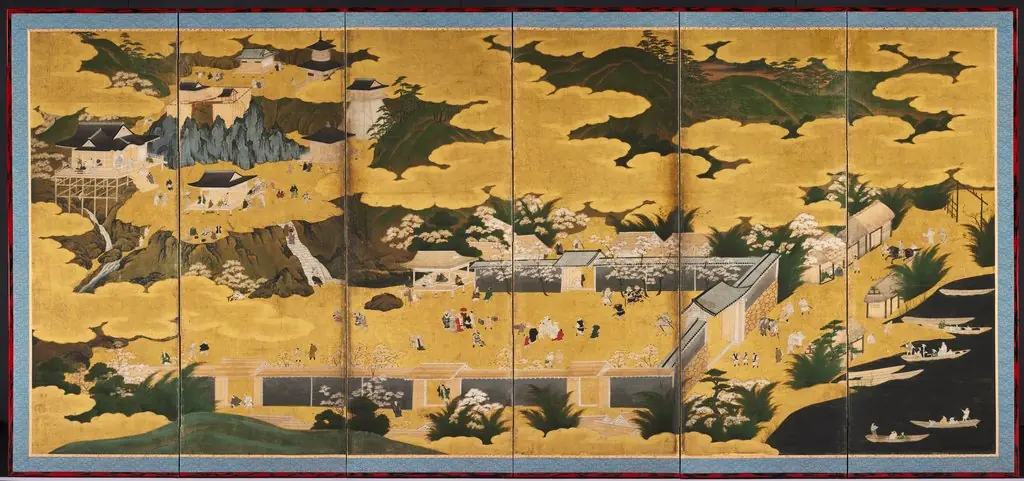
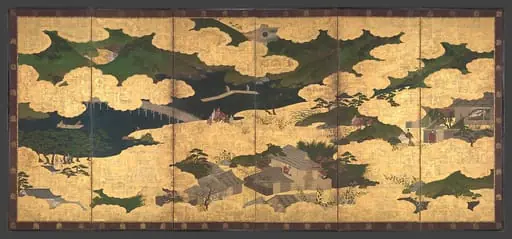
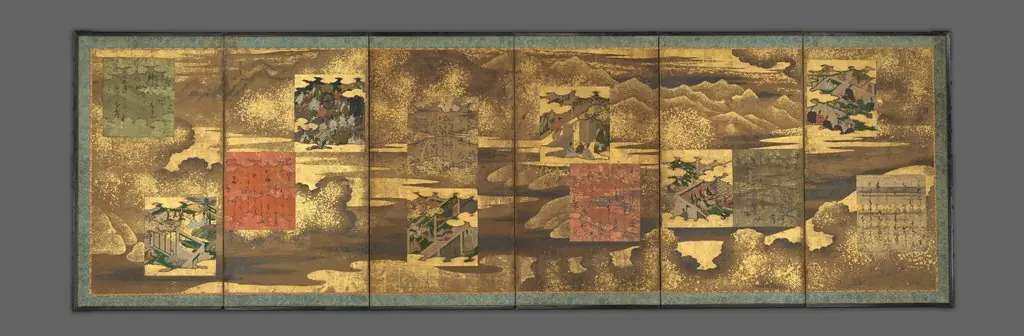
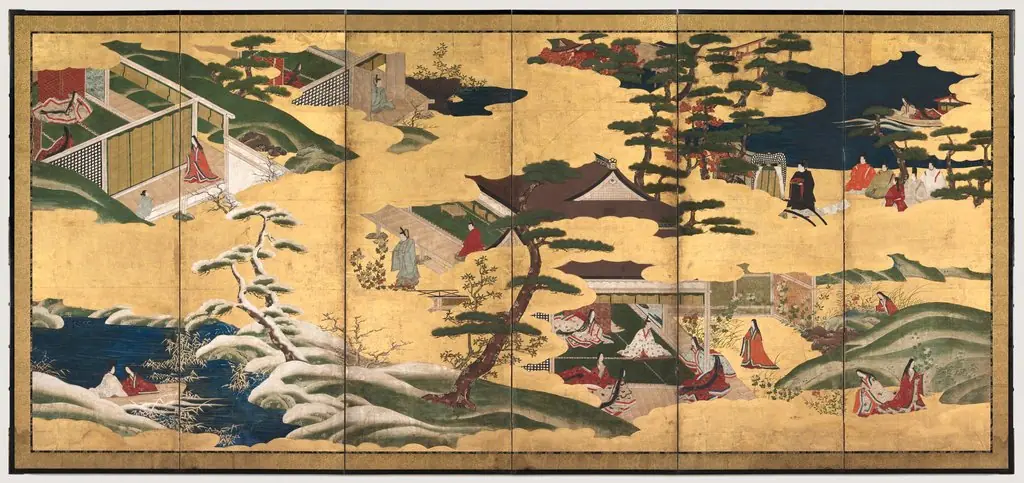
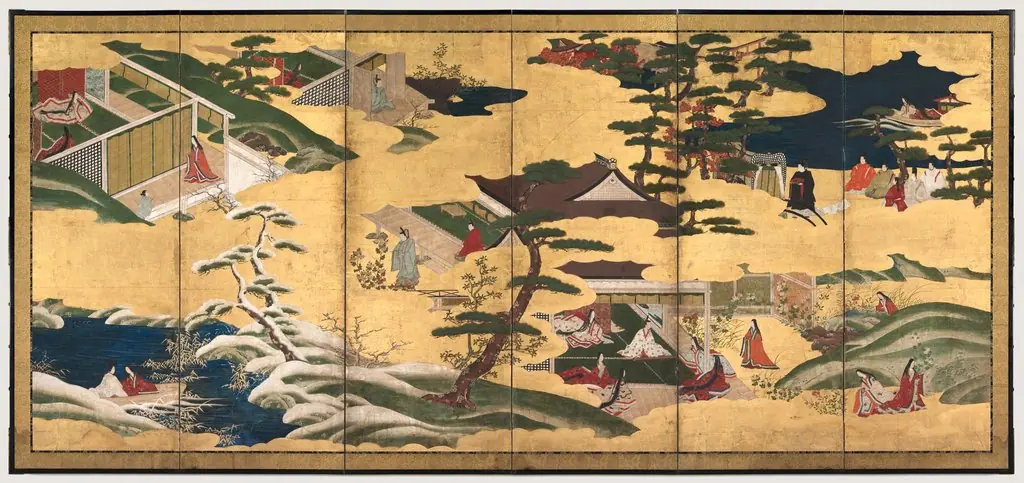
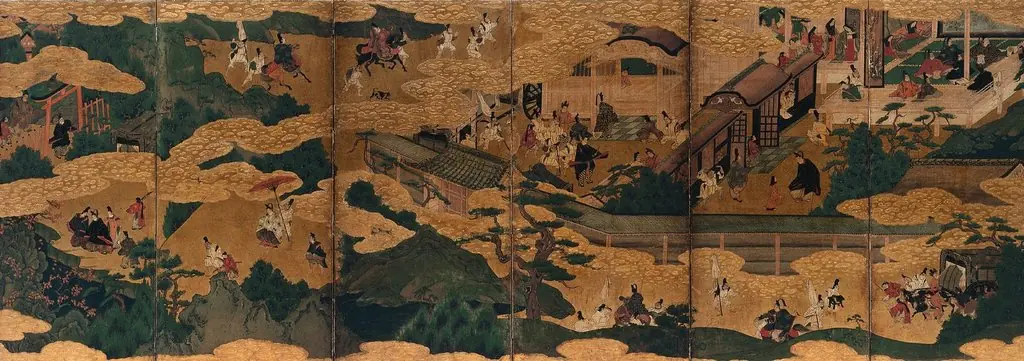
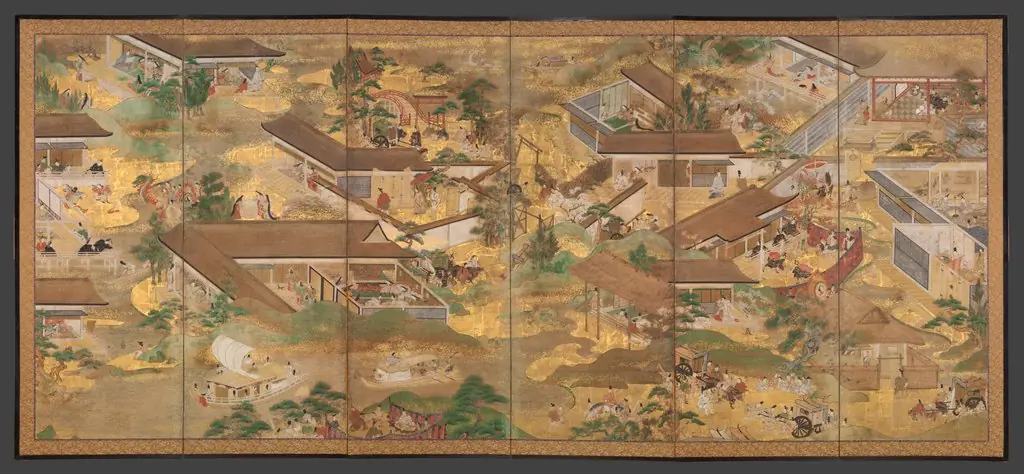
Scenes from the Tales of Ise is a painted folding screen that presents a continuous narrative across a series of compact vignettes. The work unfolds like a visual manuscript, each panel populated with figures in vivid attire moving through gardens, waterways, and architectural settings, all set against a luminous golden ground.
Subject & Meaning
The scenes depict episodes drawn from the classical Japanese collection of poetry and prose known as the Tales of Ise. Characters are shown strolling in landscaped gardens, traveling by boat, and performing dances beneath trees, suggesting moments of courtly romance and literary allusion that echo the source text’s themes of love and travel.
Technique & Style
Executed in bright mineral pigments, the artist renders fabrics with meticulous attention to folds and the subtle play of light on silk. The golden background, punctuated by stylized clouds and distant hills, unifies the composition, while decorative borders of circles and patterned motifs frame the narrative flow.
Context
Folding screens of this type were popular in the Edo period for their ability to partition space while showcasing elaborate storytelling. The integration of literary subjects with detailed genre scenes reflects a broader cultural interest in visualizing classic texts for elite audiences.
Artist & collection

- Scenes from the Tales of Ise
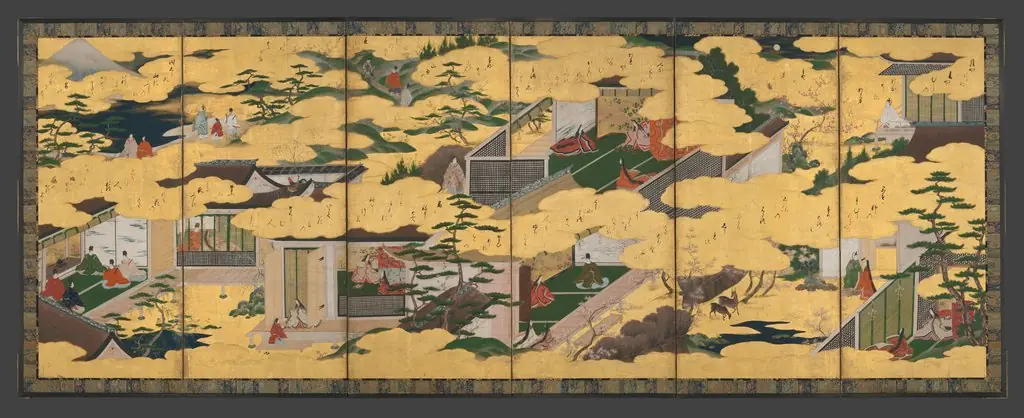 Scenes from the Tales of Ise
 Scenes from the Tales of Ise
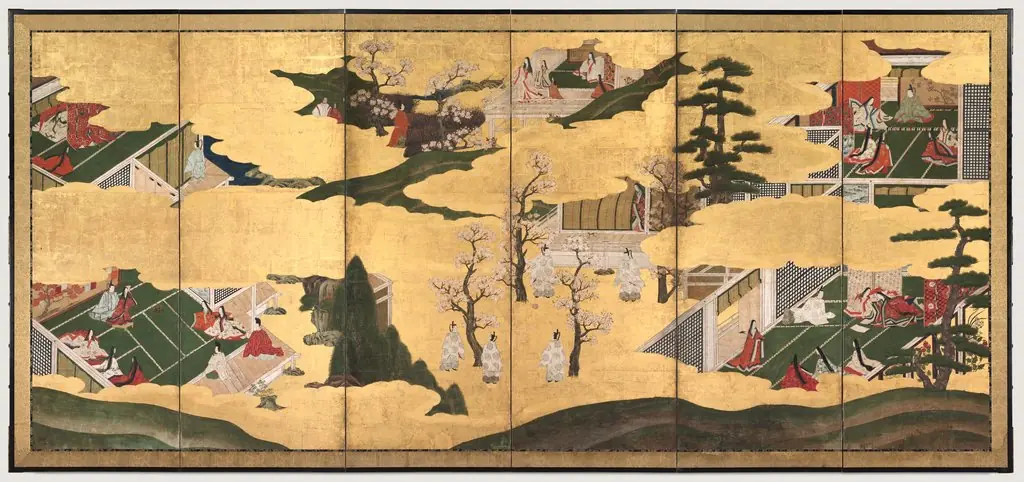 Scenes from the Tale of Genji
 Scenes from the Tales of Ise
 Scenes from the Tale of Genji
 Scenes from the Tale of Genji
 Scene from "The Tale of Genji": from the chapter "The Maiden"
 Scenes from the Tales of Ise
 Fifty-Four Scenes from The Tale of Genji