Artwork
Folding Fan Depicting the Chariot of Aurora
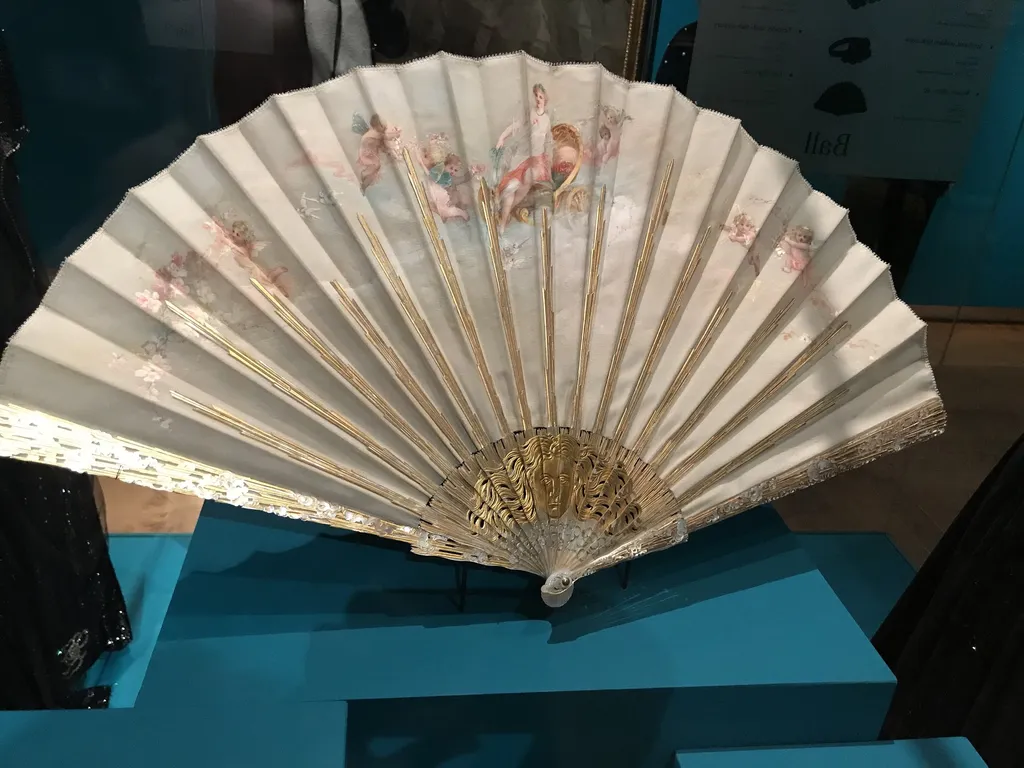
Folding Fan Depicting the Chariot of Aurora is a gouache painting by the Impressionist artist Unknown. It dates from 1896 and is held in the collection of the Hermitage Museum. The object is a folding hand‑fan painted with gouache, a water‑based opaque pigment.
About this work
Subject & Meaning
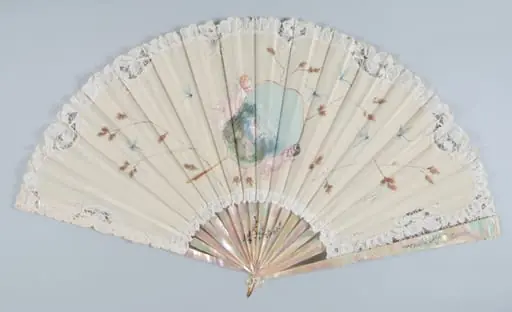
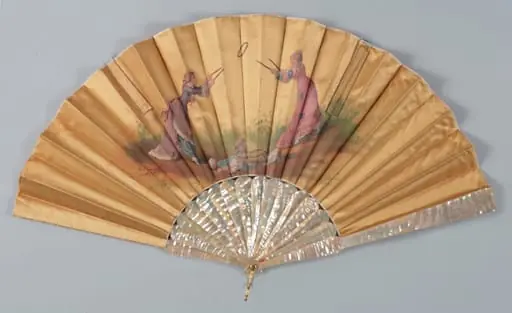
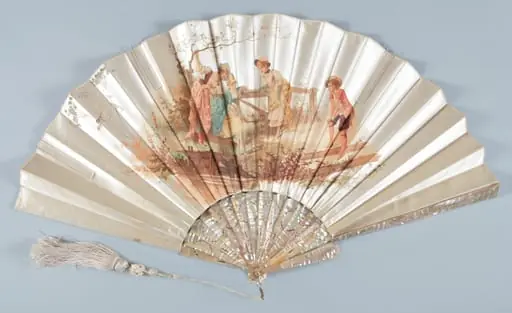
The fan depicts Aurora, the Roman goddess of dawn, shown in her chariot alongside the Sun, a pairing drawn from classical mythology in which Aurora is traditionally portrayed driving her chariot across the sky to herald the sunrise. Rendered in gouache on a folding fan, the imagery translates the mythological subject into a decorative format suited to late nineteenth-century French taste, where allegorical scenes from antiquity were popular motifs on luxury accessories. The combination of nacre, gauze, and gouache paint underscores the object's dual function as both a narrative image and an ornamental object, with the dawn chariot serving as a symbol of renewal and the triumph of light over darkness.
Technique & Style
The composition depicts Aurora's chariot, a celestial subject rendered in a late nineteenth-century French decorative style consistent with its 1890 date.
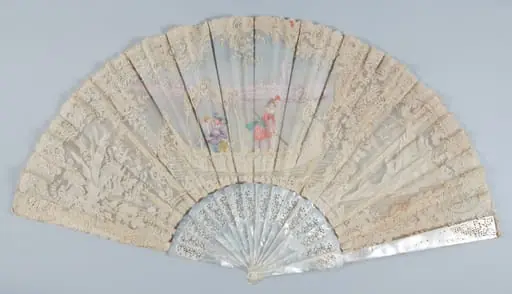
The folding fan is executed in gouache paint, a water-based opaque medium suited to the delicate surface of a fan leaf. According to the Wikidata record, the object is constructed from nacre (mother-of-pearl) for the sticks and ribs, with gauze serving as the support or mount, and finished with gouache paint for the imagery. The composition depicts Aurora's chariot, a celestial subject rendered in a late nineteenth-century French decorative style consistent with its 1890 date.
The combination of nacre, gauze, and gouache is characteristic of high-end fans of the period, in which painted leaves were mounted between iridescent mother-of-pearl sticks. No condition notes are recorded in the available sources.
History & Provenance
The folding fan titled Folding Fan Depicting the Chariot of Aurora was created in 1890 using gouache paint on a surface incorporating nacre and gauze. It was made in France during the 1890s and is part of the Hermitage Museum's collection, where it has been exhibited in the show Jewels! The Glitter of the Russian Court.
The work has no recorded creator and entered the museum's holdings as part of its decorative arts assemblage from the late 19th century.
Overview
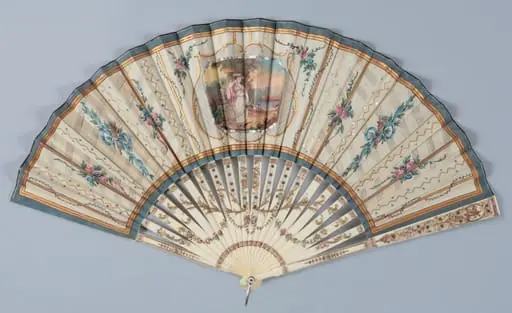
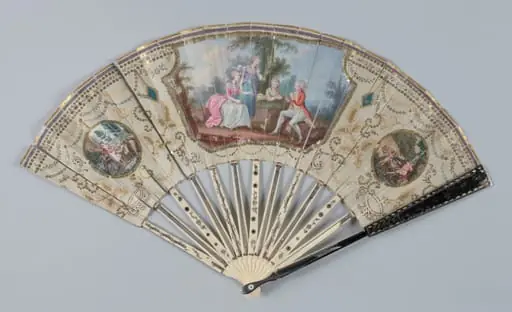
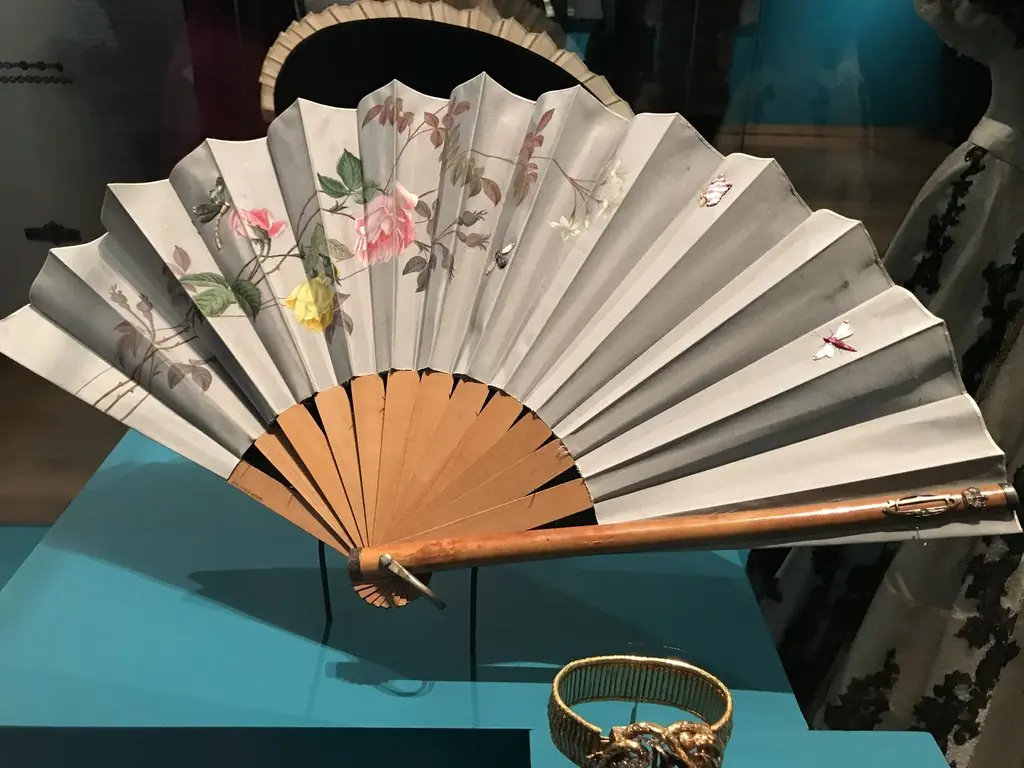
The object is a folding hand‑fan painted with gouache, a water‑based opaque pigment. When opened, the fan presents a light‑toned background divided into panels by thin gold lines. Central to the composition is a chariot drawn by horses, surrounded by figures rendered in soft pinks and blues. The peripheral panels contain smaller vignettes of people and floral motifs, creating a cohesive decorative scheme.
Context
Folding fans decorated with narrative scenes were popular luxury items among aristocratic and merchant classes, serving both functional and decorative purposes. The inclusion of a classical subject like Aurora aligns the piece with the broader European fascination with mythological iconography, while the use of gouache and gold detailing reflects cross‑cultural influences in decorative arts.
Artist & collection