Artwork
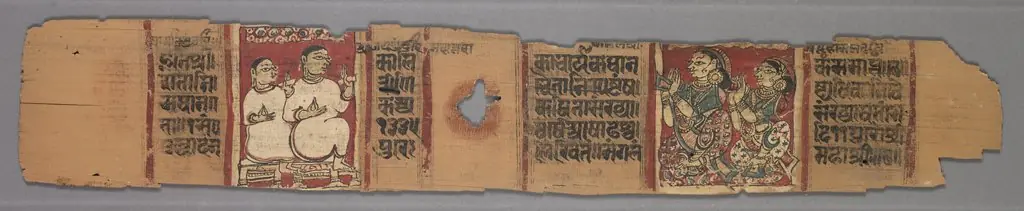
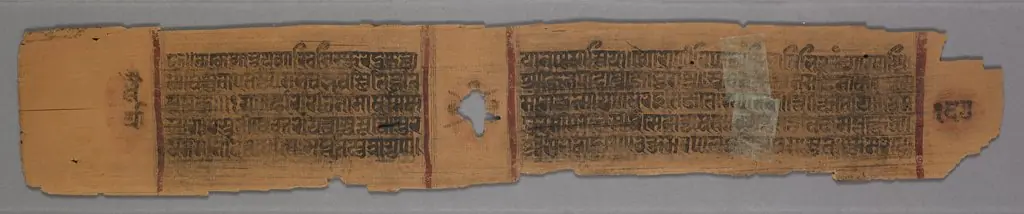
Folio 167, from a Kalpa-sutra and Story of Kalakacharya: two nuns teaching lay women (recto); genealogical text (verso)

Folio 167, from a Kalpa-sutra and Story of Kalakacharya: two nuns teaching lay women (recto); genealogical text (verso) is an unspecified painting. It dates from 1290 and is held in the collection of the Cleveland Museum of Art. Folio 167 is a painted page from a Kalpa‑sutra manuscript that also contains a genealogical text on its reverse.
About this work
Subject & Meaning
The recto depicts two Buddhist nuns instructing laywomen, illustrating the transmission of doctrine to the laity. The verso contains genealogical text, linking spiritual teaching to ancestral lineage. This folio belongs to a 13th-century Kalpa-sutra and the narrative of Kalakacharya, reflecting the religious and didactic purpose of Jain manuscript painting in Gujarat.
History & Provenance
The folio is held by the Cleveland Museum of Art, where it is recorded under the inventory number 1971.
The folio was produced in Gujarat around 1278, as indicated by its inception date; the artist remains unknown and no record of a specific patron or commission survives. After its creation the manuscript passed through undocumented hands before entering the collection of the Cleveland Museum of Art, where it is registered under accession number 1971.126 and has been housed since its acquisition in 1971. The work’s provenance prior to 1971 is not recorded in the available sources.
The folio is held by the Cleveland Museum of Art, where it is recorded under the inventory number 1971.126. It was produced in Gujarat and entered the collection as a religious painting dating to 1278.
No exhibition history is documented in the available sources.
Overview
Folio 167 is a painted page from a Kalpa‑sutra manuscript that also contains a genealogical text on its reverse. The recto depicts two Buddhist nuns seated centrally, surrounded by laywomen who stand attentively. The scene is rendered against a warm golden background, creating an intimate atmosphere of instruction and contemplation.
Technique & Style
Executed with fine brushwork on paper, the illustration employs a limited palette dominated by gold and muted earth tones. Figures are rendered with delicate line and subtle shading, while the gold background provides a luminous field that unifies the scene and highlights the central act of teaching.
Context
Kalpa‑sutras were used in monastic settings to instruct both clergy and lay adherents. The inclusion of a genealogical text on the verso suggests the manuscript served multiple functions, linking doctrinal instruction with lineage records, a common practice in Buddhist literary culture.
Artist & collection

- Genealogical text, folio 167 (verso) from a Kalpa-sutra and Story of Kalakacharya
 Two nuns teaching lay women, colophon page of folio 167 (recto) from a Kalpa-sutra and Story of Kalakacharya
 Folio 167, from a Kalpa-sutra and Story of Kalakacharya: two nuns teaching lay women (recto); genealogical text (verso)
 Folio 2 (verso), from a Kalpa-sutra and Story of Kalakacharya
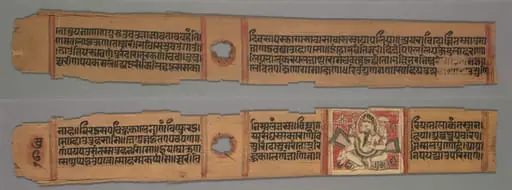 Folio from a Kalpa-sutra and Story of Kalakacharya of Devachandra: Text (recto); Brahmanshanti Yaksha (verso)
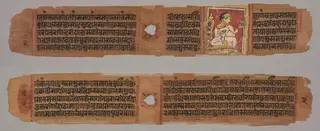 Folio 2, from a Kalpa-sutra and Story of Kalakacharya: Monk Holding a Flower (recto); text (verso)
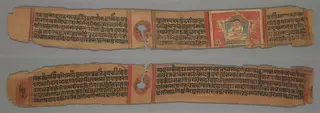 Folio 2, from a Kalpa-sutra and Story of Kalakacharya of Devachandra: Enthroned Monk Gautama (recto); Text (verso)
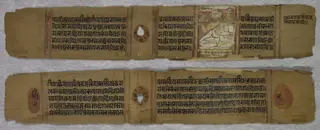 Folio 2, from a Kalpa-sutra: A Monk Preaching (recto); Text (verso)
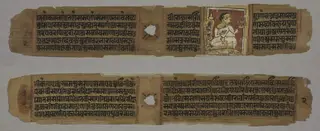 Folio 2, from a Kalpa-sutra and Story of Kalakacharya: Monk Holding a Flower (recto); text (verso)
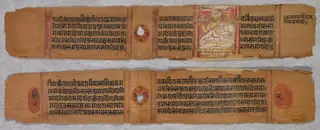 Folio 2, from a Kalpa-sutra: A Monk Preaching (recto); Text (verso)
 Folio (recto) from a Kalpa-sutra and Story of Kalakacharya of Devachandra: Text
 Text: Folio 2 (verso), from a Kalpa-sutra
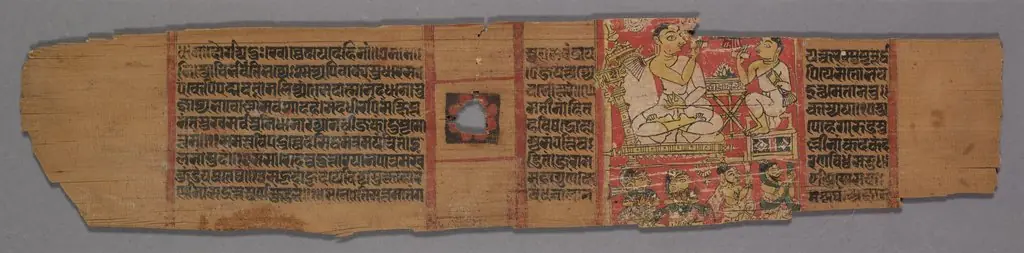 Text, folio 2 (verso) from a Parshvanatha Charitra (Life and Stories of Lord Parshva) of Bhavadeva-suri
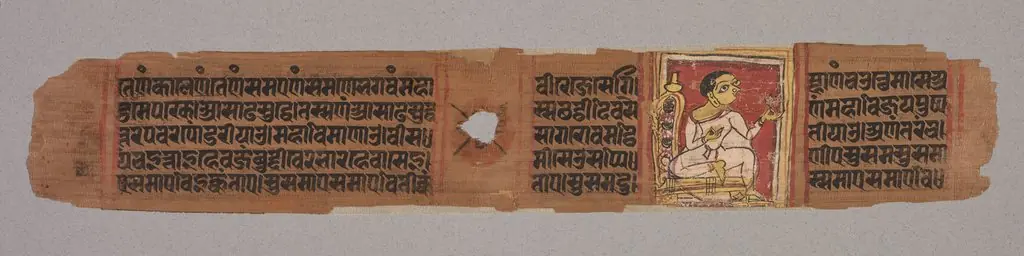 Leaf from a Jain Manuscript: Kalpa-sutra: Monk Holding a Flower (recto); Leaf from a Jain Manuscript: Kalpa-sutra: text describing descent of Mahavira into the womb of the Brahman woman Devananda (verso)
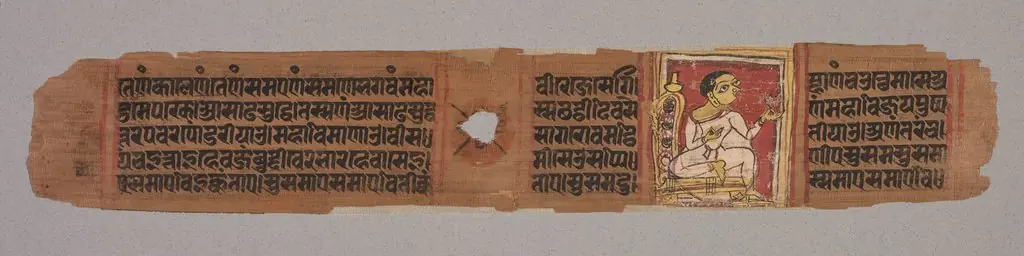 Leaf from a Jain Manuscript: Kalpa-sutra: Monk Holding a Flower (recto)
 Leaf from a Jain Manuscript: Kalpa-sutra: Text (verso)
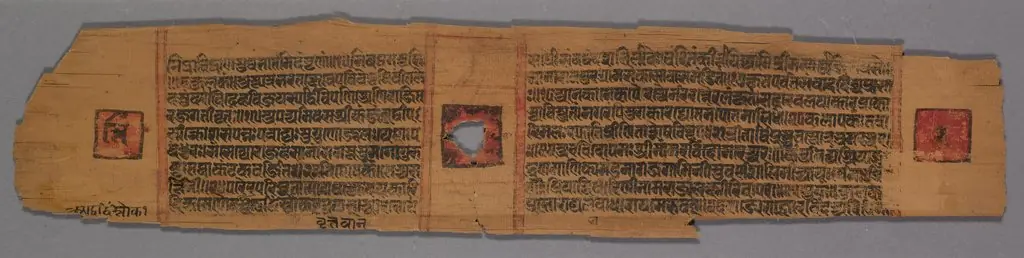 Folio 2 from a Parshvanatha Charitra (Life and Stories of Lord Parshva) of Bhavadeva-suri: Monk preaching to a disciple with a lay audience (recto); Text (verso)
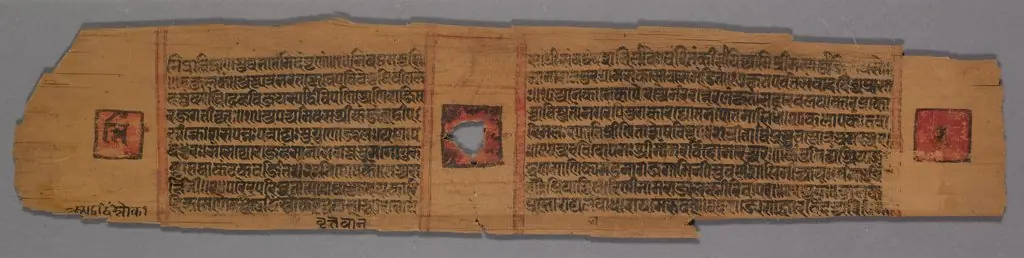 Monk preaching to a disciple with a lay audience, folio 2 (recto) from a Parshvanatha Charitra (Life and Stories of Lord Parshva) of Bhavadeva-suri
 Two nuns teaching lay women, colophon page of folio 167 (recto) from a Kalpa-sutra and Story of Kalakacharya
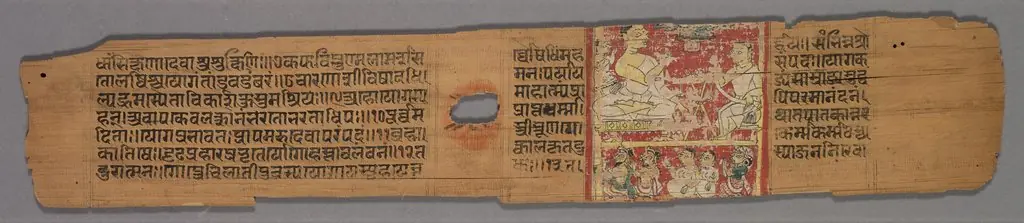 Leaf from a Jain Manuscript: Yoga-shastra: Jain monk with Disciple and Two Laymen, Two Nuns and a Laywoman below (verso)
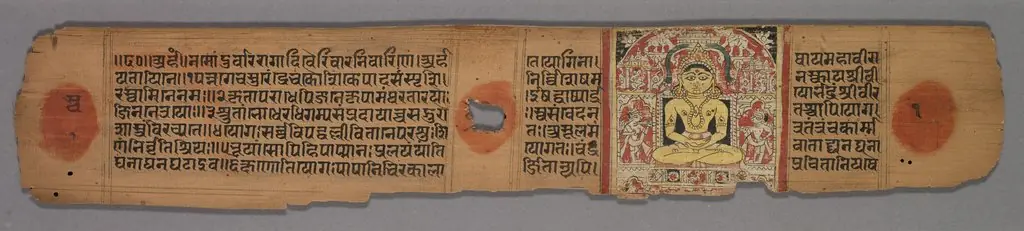 Seated Rishabha Enthroned, Folio 1 verso of a Yoga-shastra of Hemachandra
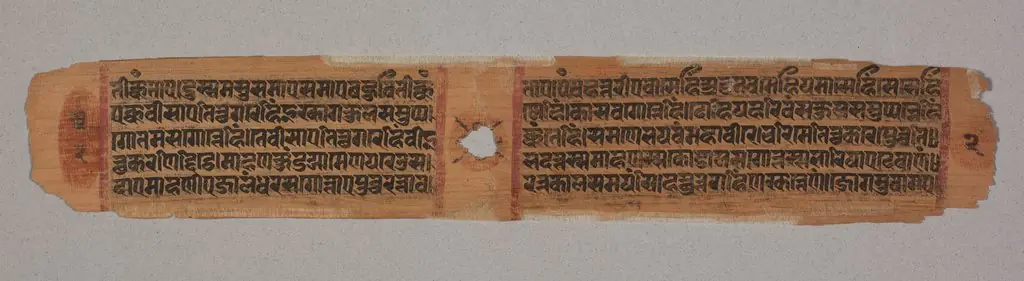 Leaf from a Jain Manuscript: Kalpa-sutra: text describing descent of Mahavira into the womb of the Brahman woman Devananda (verso)