Artwork
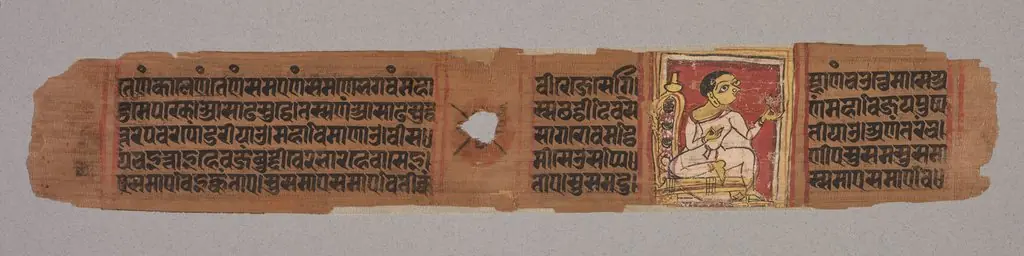
Folio 2, from a Kalpa-sutra and Story of Kalakacharya: Monk Holding a Flower (recto); text (verso)
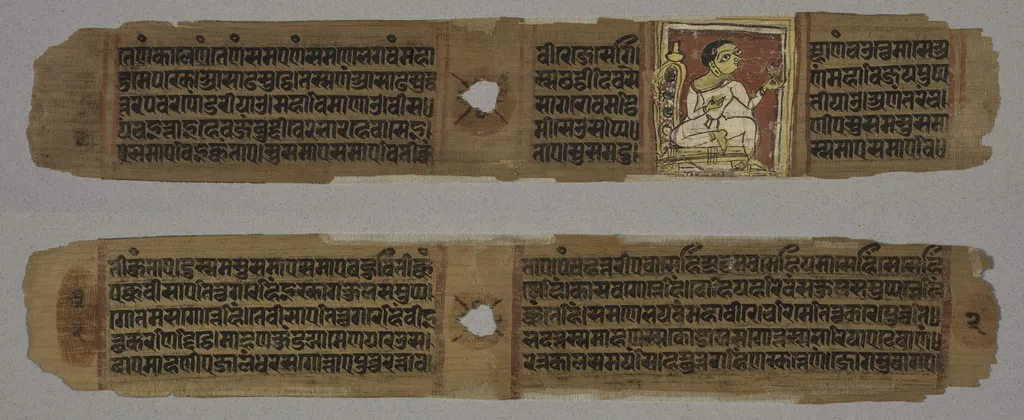
Folio 2, from a Kalpa-sutra and Story of Kalakacharya: Monk Holding a Flower (recto); text (verso) is an unspecified painting by the Indian Miniature artist Unknown. It dates from 1290 and is held in the collection of the Cleveland Museum of Art. This folio consists of two fragments from a manuscript likely associated with Jain religious literature.
About this work
Overview
The surfaces show signs of age, including fading and minor physical damage, consistent with centuries of handling and storage.
This folio consists of two fragments from a manuscript likely associated with Jain religious literature. The recto bears a painted image of a monk holding a flower, while the verso contains handwritten text in a regional script. Both elements are rendered in subdued earth tones, with minimal contrast and delicate brushwork.
The surfaces show signs of age, including fading and minor physical damage, consistent with centuries of handling and storage.
Subject & Meaning
The monk depicted is likely a Jain ascetic, identified by his white robe and calm demeanor. The flower he holds may symbolize non-attachment or the transient nature of life, themes central to Jain philosophy. The absence of elaborate ornamentation emphasizes renunciation.
The pairing of image and text suggests this folio served a devotional or instructional purpose, guiding contemplation through visual and verbal elements.
Technique & Style
The painting employs fine brushwork and muted pigments, ochres, browns, and soft whites, to create a restrained palette. Shading is subtle, avoiding dramatic contrasts, and forms are outlined with precision rather than modeled with heavy volume. The script on the verso is written in a flowing, ornate hand, typical of regional manuscript traditions, with careful attention to letterform and spacing, reflecting the scribe’s disciplined craftsmanship.
History & Provenance
The folio originates from a larger manuscript, possibly produced in western India between the 14th and 16th centuries, a period when illustrated Jain texts were commonly commissioned by monastic communities. Its survival in fragmented form suggests it was once part of a bound codex, later disassembled. The wear on the paper and pigment indicates prolonged use in ritual or scholarly contexts before entering modern collections.
Context
This folio belongs to a tradition of Jain manuscript illumination that paired narrative imagery with sacred texts, often recounting the lives of Tirthankaras or ascetic figures like Kalakacharya. Such manuscripts were used in monastic settings for teaching and meditation, not public display. The emphasis on simplicity and textual fidelity reflects Jain values of austerity and reverence for the word as a vehicle of truth.
Legacy
Though incomplete, this folio preserves key characteristics of pre-modern Jain artistic practice: the integration of image and text, the use of restraint in color and form, and the prioritization of spiritual quietude over visual spectacle. It contributes to the understanding of how religious ideas were transmitted through material culture in pre-colonial India, influencing later regional styles of manuscript art.
Artist & collection









- Folio 2, from a Kalpa-sutra and Story of Kalakacharya: Monk Holding a Flower (recto); text (verso)
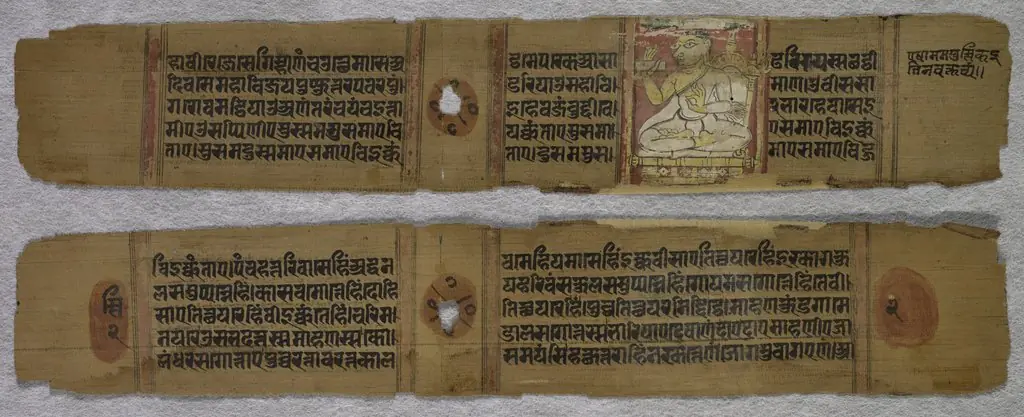 Folio 2, from a Kalpa-sutra: A Monk Preaching (recto); Text (verso)
 Folio 2, from a Kalpa-sutra: A Monk Preaching (recto); Text (verso)
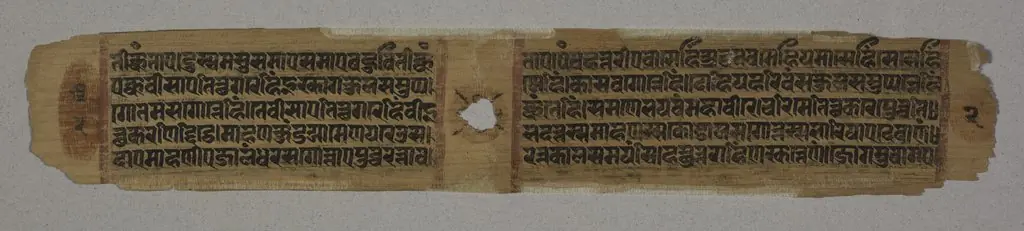 Folio 2 (verso), from a Kalpa-sutra and Story of Kalakacharya
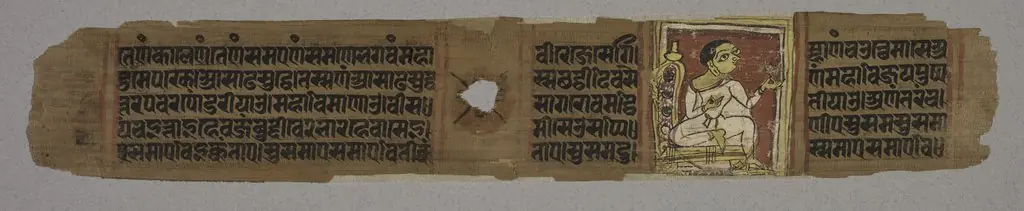 Monk Holding a Flower: Folio 2 (recto), from a Kalpa-sutra and Story of Kalakacharya
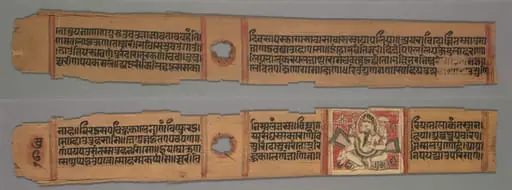 Folio from a Kalpa-sutra and Story of Kalakacharya of Devachandra: Text (recto); Brahmanshanti Yaksha (verso)
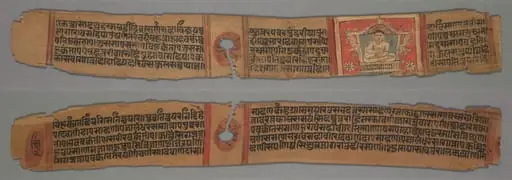 Folio 2, from a Kalpa-sutra and Story of Kalakacharya of Devachandra: Enthroned Monk Gautama (recto); Text (verso)
 Leaf from a Jain Manuscript: Kalpa-sutra: Monk Holding a Flower (recto)
 Folio 167, from a Kalpa-sutra and Story of Kalakacharya: two nuns teaching lay women (recto); genealogical text (verso)